
Cakes & pastry
Lemon Curd: A Smooth, Tangy Filling for Cakes and Tarts
For this small batch, use 50 g lemon juice, 3 egg yolks, 40 g sugar, 50 g butter and the finely grated zest of 1 lemon. Stir the juice, yolks, sugar and zest over controlled heat until the mixture coats a spatula, then remove it from the heat and mix in the butter. Strain if needed and chill before filling a dessert.
7 min read
What makes lemon curd different from jam?
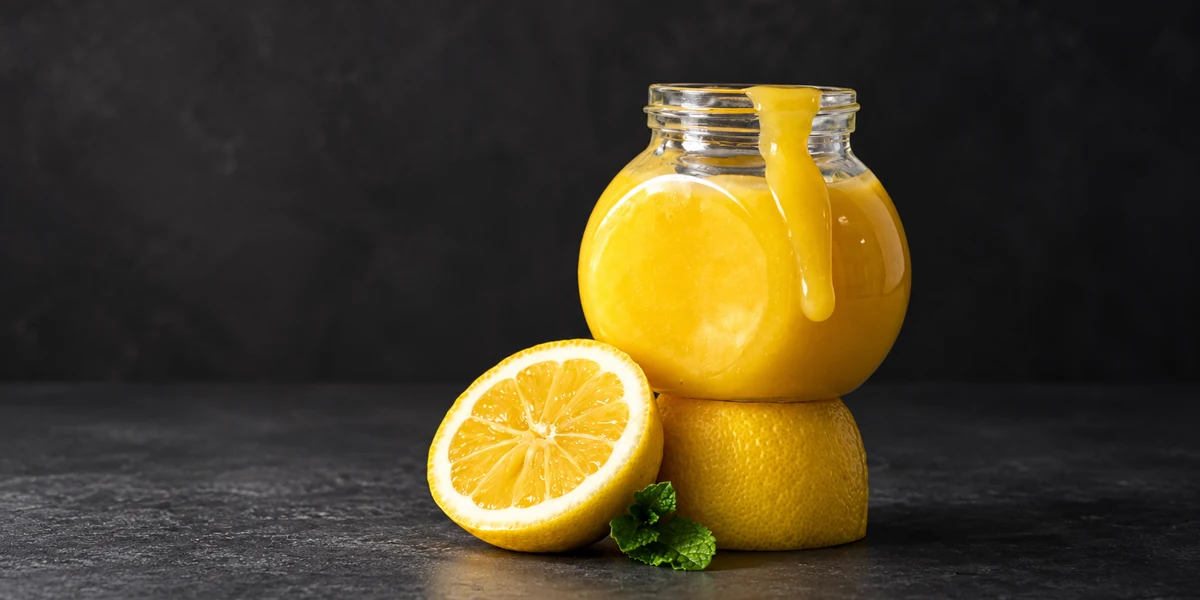
Lemon curd is a cooked citrus-and-egg filling. The yolks help it thicken as it heats; butter gives the chilled filling a richer, rounder texture. It is smooth and spreadable rather than a clear fruit gel, and its sharp lemon flavour is especially useful beside a sweet cream or meringue.
This version contains no cornstarch, gelatin or cream. It is deliberately a small batch, useful for learning the cooking stage or filling a few individual desserts. Its final firmness depends on the yolks, cooking and chilling. Do not expect an unchilled spoonful to support a deep cake layer.
A curd is not interchangeable with every fruit filling. Cherry or strawberry preparations thickened with starch behave differently, while a frozen insert may require a formula designed around a gelling agent. Choose the filling for the way it will be served.
Prepare the lemon and eggs first
Wash and dry the lemon, then grate only the coloured surface. The white layer beneath the zest can make the filling unpleasantly bitter. Zesting the whole fruit is much easier before squeezing it.
Strain the juice to remove seeds and weigh 50 g. A lemon count is not a reliable measure of juice: size, ripeness and variety all change the yield. Keep the zest separate until everything is measured.
Separate the eggs carefully and use the three yolks for this recipe. The whites can be kept for a separate meringue project. Replacing the yolks with whole eggs changes the balance of water, protein and fat, so it needs its own formula rather than a casual substitution.
The small-batch lemon curd recipe
Have a fine sieve, a flexible spatula and a clean heatproof container ready before heating the mixture. The curd can change quickly near the end, so prepare the cooling container before you need it.
Use a small, heavy-bottomed saucepan with enough depth to stir this quantity. A very wide pan gives a small batch a thin, fast-heating layer that is easier to overcook. A stainless-steel or suitable non-reactive pan keeps the bright citrus flavour clean.
Lemon curd with egg yolks
Ingredients
- 50 g strained lemon juice
- 3 egg yolks
- 40 g sugar
- 50 g unsalted butter, cut into pieces
- 1 lemon finely grated zest, coloured part only
Method
- Prepare and weigh the ingredients. Finely zest the washed lemon and strain its juice.
- Place the yolks in the saucepan. You can pass them through a sieve if there are obvious strings or pieces you want to remove; straining is for texture, not a substitute for proper cooking.
- Add the lemon juice, sugar and zest. Stir thoroughly until the yolks and sugar are evenly combined, then begin heating.
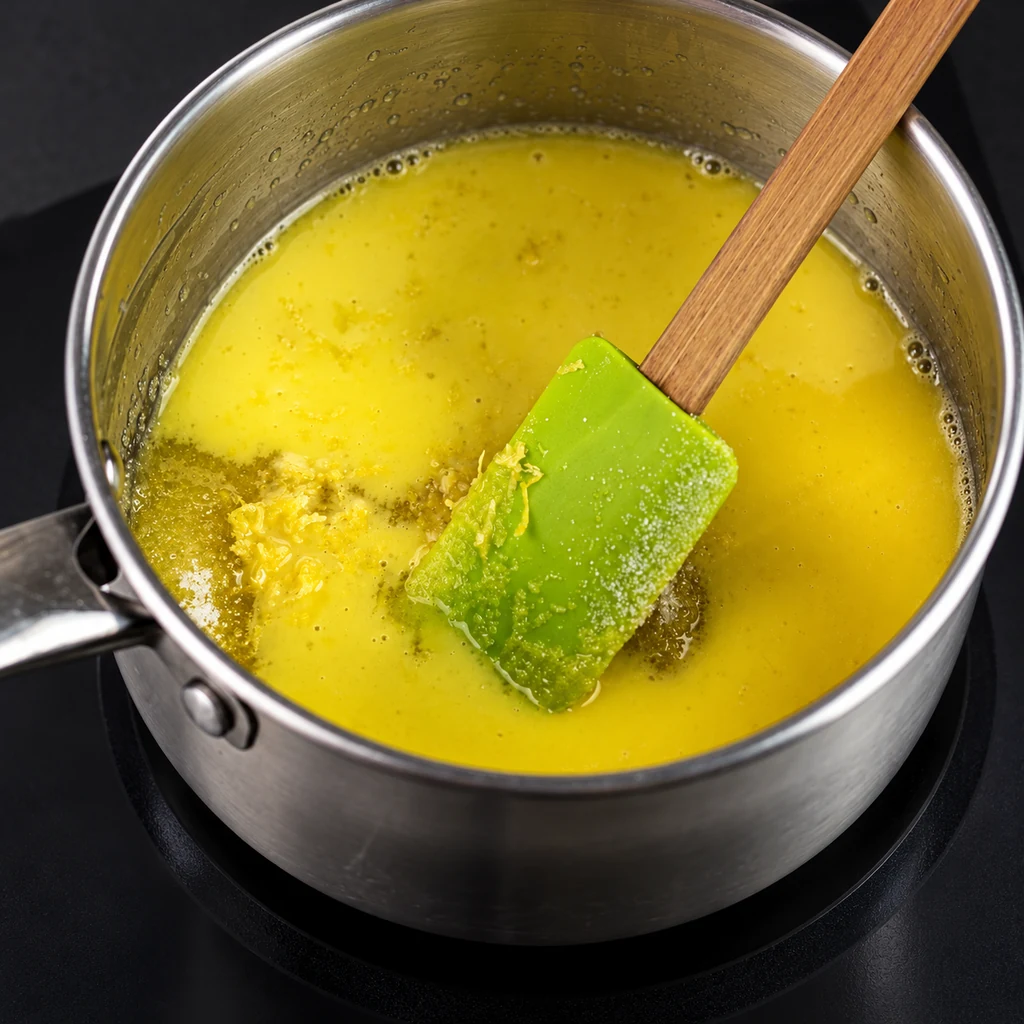
- Cook over low to moderate heat, stirring continuously across the whole base and into the corners. The mixture should thicken gradually; avoid a rolling boil or leaving it unattended.
- When the curd coats the spatula and a line drawn through the coating stays open rather than immediately flooding back, remove the pan from the heat. Do not keep cooking in an attempt to make hot curd as firm as chilled curd.
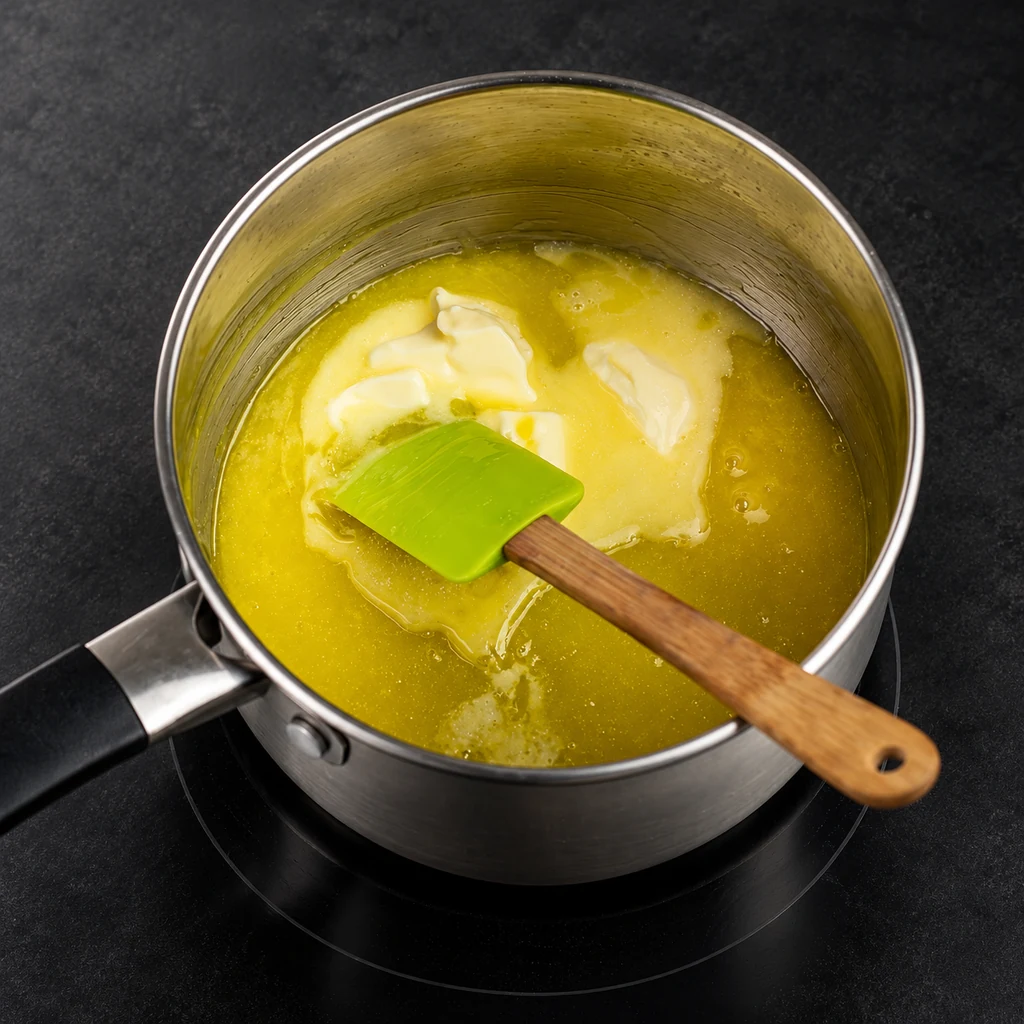
- Add the butter in pieces and stir until it has melted into a smooth mixture. If necessary, pass the finished curd through a fine sieve to remove zest or small cooked particles.
- Transfer to a clean, shallow container, cover the surface and cool promptly. Refrigerate until thoroughly cold and thicker before using it as a filling.
The yolks are measured by count, not weight. Egg size therefore changes the exact yield and final texture; note the size you use when repeating the batch.
This is a refrigerated dessert filling, not a shelf-stable preserve or a home-canning recipe.
Watch the coating, not just the clock
At first the mixture runs off the spatula like a liquid. As it cooks, it leaves an even film. The useful endpoint is a visible coating that holds a clear trail when tested. Stirring should still move a smooth mixture, not push around separate egg particles.
Cooking time varies with the pan, heat and starting temperature. A smaller burner or cooler ingredients may need longer; a thin pan can produce hot spots before the whole batch looks ready. Keep scraping gently along the base so the same area does not sit over the heat.
Once the mixture has thickened, transfer it out of the hot pan. Residual heat continues to cook egg-rich fillings. Butter and chilling will change the texture further, so extra cooking at this stage is not a reliable way to make it more stable.
If the curd is lumpy, thin or oily
Small pale flecks usually suggest that part of the egg mixture heated too quickly. Remove the pan from the heat, stir and strain the curd while it is still fluid. A sieve can remove small particles, but it cannot restore the flavour or texture of a badly scrambled batch.
If the finished curd seems too thin, chill it before judging it. If it is still loose when cold, review the amount of juice, the egg size and whether the cooking stage was reached. Adding more cold butter or a spoonful of dry starch at random changes the formula and can create another problem.
An oily surface after adding the butter means the mixture is not fully combined. Stir gently until the butter is incorporated while the curd is still warm enough to mix. Avoid prolonged high heat. If it remains separated, test a small portion before committing it to a cake.
The finished flavour should be sharply lemony with a rounded buttery finish. Excess pith creates a different, lingering bitterness; additional sugar may hide some of it but does not remove the pith.
Pair it with sponge, cream and meringue
For a layer cake, use fully cooled sponge and cold curd. Spread a restrained layer inside a border of firmer cream, rather than filling right to the edge. A generous pool of curd can make layers move even when each component tastes good on its own.
Classic sponge keeps the citrus flavour clear. Cream cheese frosting gives a softer dairy contrast, while a sweet Italian meringue topping balances the acidity in a tart or individual dessert. Add the topping as part of a complete, compatible dessert plan rather than treating every cream as structural support.
Lemon curd also works in cupcake centres, tart shells, choux pastries and dessert cups. In cups you can keep it deliberately soft, because the container supports the layers. Use small alternating portions so that a single spoonful contains both the sharp filling and the sweeter components.
For a crisp shell or meringue base, fill close enough to serving that moisture does not have time to soften the texture more than you want. The same filling that improves a sponge can gradually soften a crisp pastry.
Bake the classic sponge for a lemon layer cake.
Choose a cream cheese frosting to pair with citrus.
Other flavours and making ahead
Orange, raspberry and other fruit curds can be lovely, but fruit is not a neutral replacement for lemon juice. Acidity, water, seeds and natural thickness differ. Use a dedicated formula for a new fruit instead of assuming an equal weight will set in exactly the same way.
Keep this egg-and-butter filling covered in the refrigerator and use clean utensils when portioning it. Cool it promptly in a shallow container and refrigerate within two hours, or within one hour if the room is hotter than 32°C (90°F). The sugar and lemon do not make an open jar shelf-stable.
Make a small quantity for the dessert you have planned. Once the curd is part of a cake, the whole dessert also needs storage suitable for its cream and other components. If you want to freeze a filling for a mousse cake, test that specific formula after thawing before relying on its shape or texture.
Common questions
Can I use whole eggs instead of yolks?
Not as a direct substitution in this formula. Whole eggs add more water and a different protein balance. Use a whole-egg curd recipe if that is the version you want.
Does lemon curd need gelatin?
This version thickens with yolks and butter and contains no gelatin. A cuttable insert or a different dessert format may need a separate formula.
Why does it become thicker in the fridge?
Cooling changes the texture of the cooked egg mixture and firms the butter. Judge it cold before deciding the recipe is too loose.
Must I remove all the zest?
No. Fine zest can stay in the curd if you like that texture. Strain the finished filling when you want it completely smooth.