
Cakes & pastry
Strawberry Cake Filling: Four Ways to Set the Fruit
For a simple chilled strawberry filling, use 300 g strawberries, 100 g sugar and 15 g cornstarch. For other textures, use a complete recipe built around pectin NH, agar or gelatin. These thickeners are not interchangeable gram for gram, and the best choice depends on whether the filling must spread, pipe or hold as a layer.
9 min read

Start with the dessert you want to fill
A strawberry layer can be spoonable, spreadable or firm enough to cut. Those are different goals. Before choosing a thickener, decide whether the fruit is going into a dessert cup, a cupcake centre, a layer cake or a mousse insert that will be frozen.
The four recipes below keep their own fruit, sugar and thickener quantities. Do not lift the agar amount out of one recipe and insert it into the pectin recipe. The complete mixture matters, including the type and strength of the product you buy.
For a simple fresh cake or cup, the cornstarch version is a useful place to start. Pectin NH is useful when the product is designed for the fruit layer and freezing you need. Agar produces a firmer, less creamy set; gelatin gives a softer, chilled gel.
- Cornstarch: a cooked, spoonable fruit filling for chilled desserts.
- Pectin NH: a fruit gel whose result depends on the specific pectin, fruit and sugar balance.
- Agar: a comparatively firm gel that starts setting as it cools.
- Gelatin: a refrigerated fruit layer that softens when warmed.
Fresh berries, frozen berries or purée?
Choose ripe, aromatic strawberries and discard damaged or mouldy fruit. Wash and drain fresh berries, remove the stalks, then weigh the prepared fruit. Weighing before trimming makes the amount of usable strawberry smaller than the recipe expects.
Plain frozen strawberries work too. Keep their own thawing juice with the fruit unless a formula specifically tells you to drain it. Added syrup or sweetened purée changes the sugar and water balance.
For a smooth filling, blend the berries. For a little fruit texture, purée part of the batch and cut the remainder into small pieces. Thaw frozen berries enough for your blender to handle them safely. Large pieces should be sized for the dessert: they can block a piping tip or make a very thin cake layer uneven.
Straining removes seeds and coarse fibres, but also removes some material. If you use a fine, ready-made purée, weigh the purée itself and check that it is unsweetened. Do not replace missing fruit weight with water.
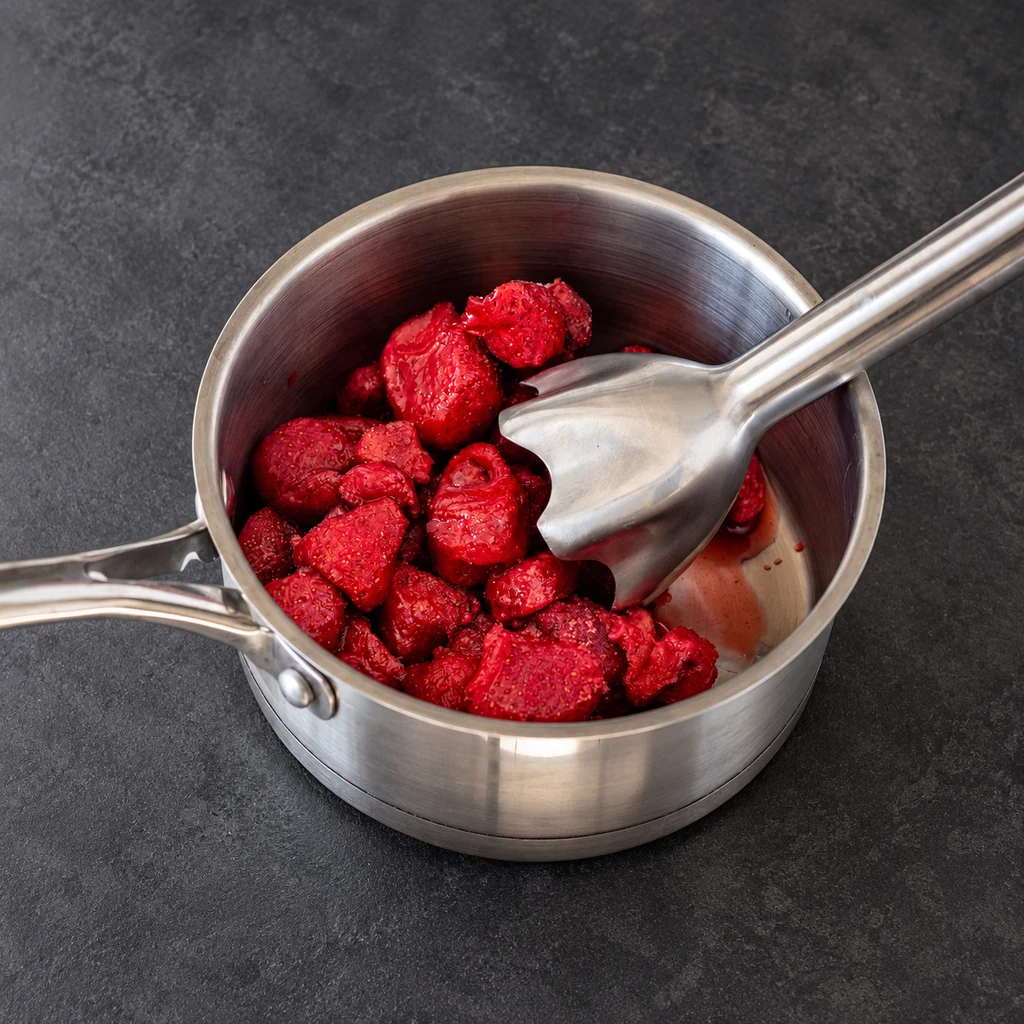
1. A simple cornstarch filling
This is the most straightforward option when you want fruit that can be spooned into a cupcake, spread inside a cream border or layered in a glass. It thickens as it cooks and becomes thicker again as it cools.
Use the fine white cornstarch sold as cornflour in some countries. Cornmeal is a different ingredient. Mixing the starch with the sugar first helps distribute it without dry lumps.
Strawberry filling with cornstarch
Ingredients
- 300 g prepared strawberries, fresh or frozen
- 100 g sugar
- 15 g cornstarch
Method
- Cut or blend the prepared strawberries to the texture you want. Combine the sugar and cornstarch in a separate bowl.
- Place the fruit and its juice in a heavy-bottomed saucepan. Add the sugar-and-starch mixture and stir evenly.
- Begin over gentle heat if the fruit is frozen. Once enough liquid has released, cook over moderate heat, stirring along the base and sides.
- Bring the mixture to a bubbling simmer and continue until the juice is visibly thickened and the starch is cooked. Do not judge the final thickness from an uncooked slurry.
- Transfer to a shallow heatproof container, cool promptly and refrigerate. Use only after the filling is cold.
The ingredient total is 415 g before cooking; evaporation changes the finished weight.
Ordinary cornstarch can release liquid after freezing and thawing. For a frozen insert, use a formula and thickener intended for that purpose.
2. A fruit layer with pectin NH
Pectin NH is often chosen for fruit layers and glazes because suitable products can tolerate freezing and can be reheated. The letters NH do not make every brand identical. Check the packet's fruit, sugar, acidity and cooking instructions before using a particular product.
The formula below uses 400 g fruit, 150 g sugar and 8 g pectin NH. Use it with a pectin whose instructions support this formulation. If your product calls for a different sugar concentration or added acid, use its matching formula instead of compensating by guessing.
Strawberry filling with pectin NH
Ingredients
- 400 g prepared strawberries
- 150 g sugar
- 8 g pectin NH suitable for the stated fruit-and-sugar ratio
Method
- Mix the pectin thoroughly with the sugar.
- Cut part of the strawberries into small pieces and blend the rest. For a smooth filling, purée the whole quantity.
- Disperse the sugar-and-pectin mixture into the purée while stirring or blending, following the product's addition instructions. Add the fruit pieces.
- Heat in a heavy-bottomed pan, stirring across the base. Bring to a boil and complete the cooking step specified for the pectin you are using.
- Cool a sample to check the set. Portion the rest into the container or mould appropriate for the planned dessert, then cool and refrigerate promptly.
- For a frozen insert, confirm that the pectin is intended for freezing and test a portion through a freeze-and-thaw cycle before making a full cake.
Do not cook every pectin filling to 107°C by default. Gelling requirements and concentration targets are product- and formula-specific.
The starting weight is 558 g; the final weight depends on cooking and cannot be promised as an exact number of cake layers.
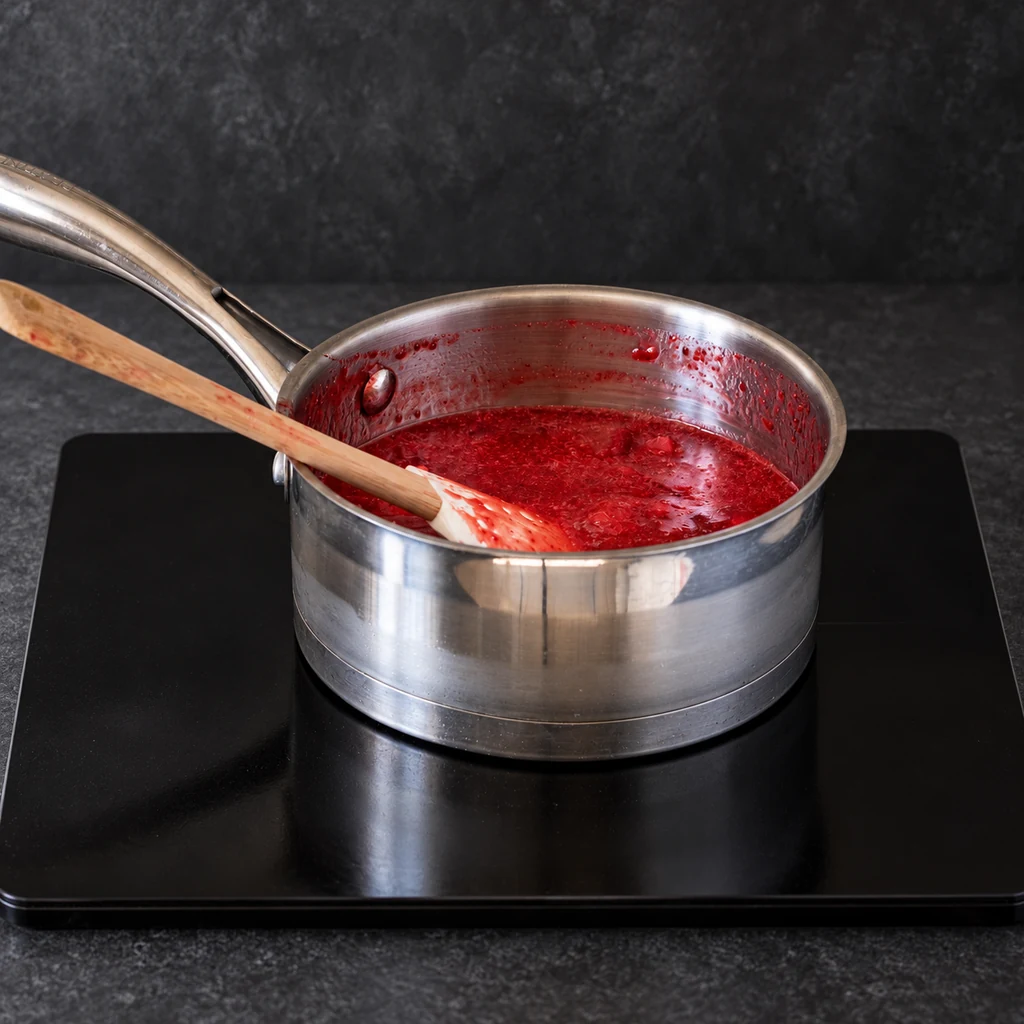
3. A firmer filling with agar
Agar sets as it cools and gives a different bite from gelatin or starch. It can suit small fruit pieces or a firmer filling, but an agar layer that is too thick or firm may separate awkwardly from a soft cake when cut.
Work with the product specified as agar powder and check its strength and cooking instructions. Do not substitute flakes, gelatin or an unspecified gelling blend at the same weight.
Strawberry filling with agar
Ingredients
- 300 g prepared strawberries
- 150 g sugar
- 3 g agar powder, with suitability checked against its instructions
Method
- Thaw frozen berries enough to blend them, keeping their juice. Blend the fruit to a smooth purée.
- Combine the agar with the sugar, then disperse it evenly into the purée.
- Transfer to a saucepan and bring to a boil while stirring. Simmer for about 3 minutes, or as directed by your agar manufacturer, and avoid prolonged unnecessary cooking.
- Remove surface foam if needed, then transfer to the intended container or mould while the mixture is still fluid.
- Allow the first heat to escape briefly, then refrigerate promptly. Once set, evaluate the texture cold before layering it in a cake.
Agar is not a promise that a complete dairy-filled dessert can stand warm.
Freezing and thawing can change the texture and release water. Test the actual filling rather than relying on a general claim about agar.
4. A chilled filling with gelatin
Gelatin produces a chilled set rather than the same hot-thickened texture as starch. That makes the cooling stage part of the recipe: a warm liquid is not evidence that it has failed.
Gelatin strength varies. This formula specifies 10 g powder but does not identify its Bloom strength, so it should not be treated as an exact conversion for every brand or for sheets. Follow the product's hydration guidance and make a small texture test before using it in an important layered cake.
Strawberry filling with gelatin
Ingredients
- 400 g prepared strawberries
- 250 g sugar
- 10 g powdered gelatin
- 60 g cold water for hydrating the gelatin
Method
- Sprinkle the gelatin over the 60 g cold water and leave it to hydrate according to the packet.
- Blend the prepared strawberries. Combine the purée and sugar in a saucepan.
- Bring to a boil and simmer briefly while stirring. Remove any unwanted foam.
- Take the saucepan off the heat and let the mixture stop boiling. Add the hydrated gelatin while the fruit is still hot enough to dissolve it; stir thoroughly.
- Transfer to a clean, shallow container or the intended mould. Cool promptly and refrigerate until the whole filling has set.
- Check the chilled texture before assembly. A gelatin filling becomes softer when warmed, so keep the completed dessert appropriately chilled.
The 60 g hydration water is part of this formula. It is not an optional extra poured in after the filling has set.
Do not boil the mixture for a long time after adding gelatin, especially in an acidic fruit preparation.
Put the cooled filling to work
Warm fruit can soften cream, so chill the filling and cool the cake before assembly. Spread a measured layer inside a border of a firmer cream when the cake needs support. The border cannot compensate for a fruit layer that is still fluid.
Strawberries pair naturally with a plain sponge and cream cheese frosting. Chocolate sponge gives a stronger contrast. If you also add soaking syrup, account for the fruit's moisture instead of treating the syrup and filling as independent additions.
In dessert cups, a softer filling can be an advantage. Use small portions between sponge and cream so the fruit remains present in each spoonful. For cupcake centres, cut pieces small enough for the opening or spoon them in rather than forcing a narrow nozzle.
If a cold filling is wrong for the planned dessert, diagnose its formula and cooking before adding another thickener. A starch filling that needs more cooking and a gelatin filling that has not chilled long enough need different responses.
Make the classic sponge for a strawberry layer cake.
Choose a cream cheese frosting for the fruit layer.
Cool promptly and treat it as a dessert filling
Use clean utensils and covered containers. Transfer a hot batch into a shallow container so it can cool efficiently, then refrigerate within two hours, or within one hour if the room is hotter than 32°C (90°F). Keep the filling chilled until needed and take out only the quantity you are using.
A cooked strawberry filling is not automatically a preserve for storage at room temperature. Sugar, a sterilised jar or a firm gel does not by itself make these formulas a tested canning process.
For a completed cake, follow the needs of its most perishable component. Freezer suitability also belongs to the whole formula: check the cooled and thawed result, including any released water, before you depend on a neat slice.
Common questions
Can I use frozen strawberries?
Yes. Use plain fruit and keep its own juice with it. Thaw enough for blending when a smooth purée is required.
Can I swap pectin, agar, gelatin and starch gram for gram?
No. They work differently and have different concentrations and methods. Choose a complete formula for the thickener you intend to use.
Which filling is the easiest for a cake made today?
The cornstarch version is a practical starting point for a chilled, spoonable filling. It still needs cooking and cooling before assembly.
Is every pectin NH filling safe to freeze?
Check the actual pectin and formula. A suitable product can perform well through freezing, but the fruit-and-sugar balance and thawed texture still matter.
Can I keep these jars in the cupboard?
No. These are refrigerated dessert fillings, not tested shelf-stable canning recipes.