
Cakes & pastry
Cream Cheese Frosting: Five Recipes for Cakes and Rolls
Choose cream cheese frosting by the job it needs to do. A cream-based version is lighter; a butter-based version is richer and firms more when chilled. A softer roll filling uses more cream. Keep cream-based ingredients cold, use pliable ingredients for the butter version and stop mixing once the frosting is smooth.
9 min read

Choose the version for your dessert
Cream cheese frosting is a family of mixtures, not one texture. A frosting that makes a soft layer inside a roll may be too loose for a tall cupcake swirl. A richer covering can feel heavy when used in a thick layer inside a delicate cake.
The five recipes below share a cream cheese base but use different proportions and methods. Choose one complete recipe before you begin. Substituting cream for butter, or adding an unmeasured amount of fruit juice, changes the formula.
These versions are relatively low in added icing sugar compared with some very sweet cream cheese frostings. The cheese itself provides much of the body, so its firmness matters. Use a plain, full-fat cream cheese intended for baking or frosting, rather than a whipped, reduced-fat or very loose spread.
| Version | Texture and useful role | Starting temperature |
|---|---|---|
| With whipping cream | Smooth filling, cupcake topping or cake finish, depending on cheese firmness | Cold cheese and cream |
| With butter | Richer finish that firms in the refrigerator | Pliable butter and cheese, similar temperature |
| Soft roll filling | Gentle, spreadable filling for a roll | Cold cheese and cream |
| With caramelised condensed milk | Sweet caramel-flavoured frosting | Pliable ingredients, similar temperature |
| With thick fruit purée | Fruit-flavoured filling or finish, subject to purée consistency | All ingredients cold |
Temperature and mixing make the difference
For a cream-based frosting, chill the cheese and whipping cream well. Use whipping cream containing 33–35% fat. A low-fat pouring cream does not behave in the same way.
For the butter-based recipes, the butter needs to be pliable rather than hard or melted. Bring the cheese to a similar workable temperature. In a warm room, do not simply leave both ingredients out until they become very soft; this method is intended for temperatures no higher than about 23°C (73°F).
Once the cream cheese is added, mix only until the mixture is smooth and uniform. Extended whipping can make the frosting looser or cause it to separate. Use a moderate or low speed and watch the actual texture.
A paddle attachment is useful when you want fewer air bubbles. If using a hand mixer, finish with a flexible spatula to smooth the frosting and remove larger pockets of air. Sift lumpy icing sugar before adding it.
1. Cream cheese frosting with whipping cream
This is the most straightforward starting point for a lighter dairy frosting. The recipe combines cold cheese and cream, then mixes briefly. It can be used for a filling or finish when the chosen cheese gives enough body.
The batch is a starting quantity for finishing a 16–18 cm cake. The actual amount required depends on cake height, covering thickness and whether you also use the frosting between layers.
Cream-based cream cheese frosting
Approximately 640–680 g; coverage depends on the dessert
Ingredients
- 500 g plain full-fat cream cheese, cold
- 100 g 33–35% whipping cream, cold
- 40–80 g icing sugar / powdered sugar, sifted if lumpy
Method
- Combine. Mix the cold cheese with the icing sugar, then add the cold cream.
- Mix briefly. Use a paddle or hand mixer at a controlled speed until smooth and combined. The method gives about 2–3 minutes as an upper guide; stop earlier if the texture is ready.
- Smooth and use. Finish with a spatula if needed to reduce air bubbles. Use for filling, piping or smoothing once it has the body required for your dessert.
Start at the lower sugar quantity if you prefer less sweetness. Do not add extra cream simply to make the mixer work faster.
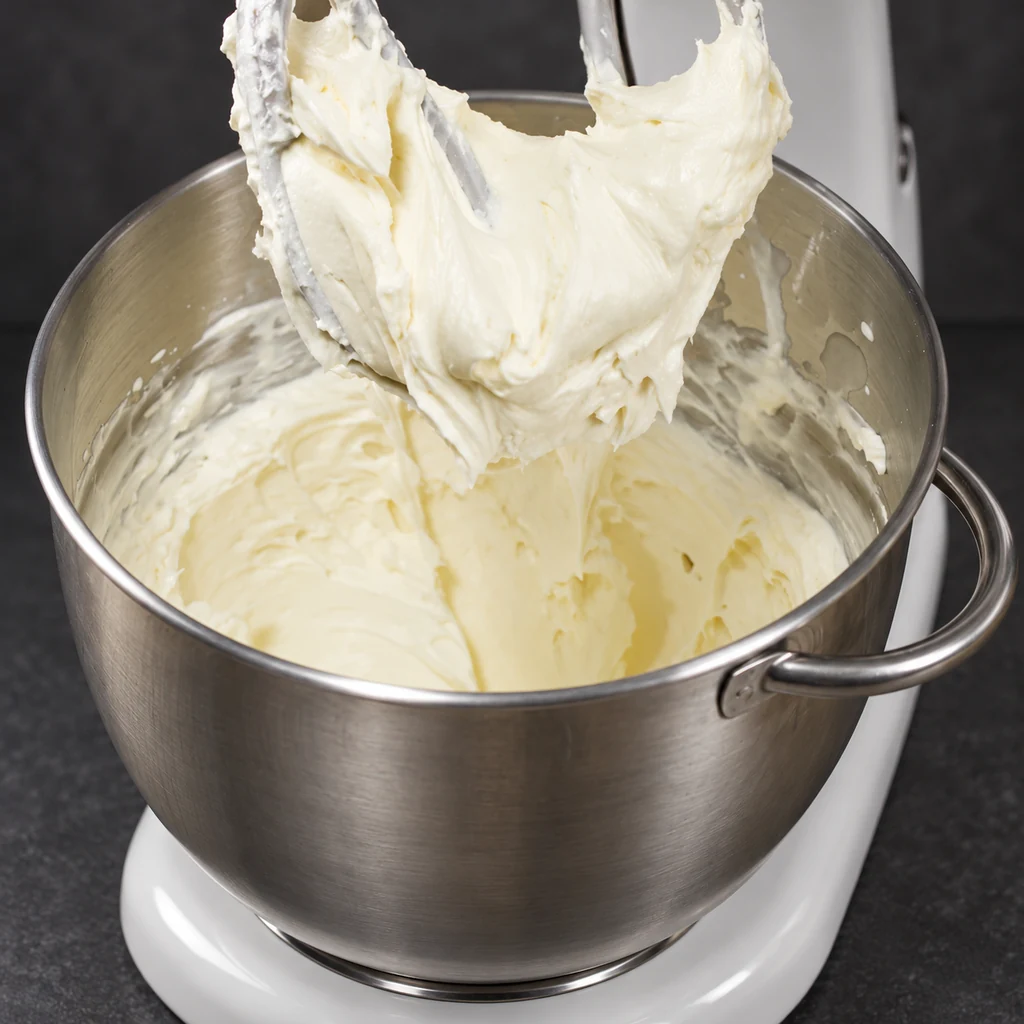
2. Cream cheese frosting with butter
Butter makes this version richer and gives it a firmer texture after chilling. It is useful for a cake finish or defined cupcake decoration. Consider a thinner layer if the rest of the dessert is already rich.
The butter can give the frosting a natural ivory colour. Do not judge a successful batch only by whether it is bright white; smoothness, flavour and the right consistency for the job matter more.
Butter-based cream cheese frosting
Approximately 650–690 g; a starting batch for finishing a 16–18 cm cake
Ingredients
- 400 g plain full-fat cream cheese, at a cool room temperature
- 200 g 82.5% butter, pliable but not melted
- 50–90 g icing sugar / powdered sugar
Method
- Aerate the butter. Beat the pliable butter and icing sugar at medium speed until lighter and fluffy.
- Add the cheese. Add the cheese, which should be at a similar workable temperature. Mix at low to medium speed only until smooth.
- Adjust handling temperature. If the frosting is too soft to work with, refrigerate briefly and reassess. If it is too firm to pipe because it is cold, let it soften slightly rather than adding liquid by eye.
A warm kitchen can soften butter-based frosting quickly. Chilling changes its handling texture; it does not repair every mixing or ingredient problem.

3. Soft cream cheese filling for rolls
This recipe contains equal amounts of cheese and cream, giving a softer, lighter filling. It is designed to spread inside a roll. It is not the version to choose for supporting heavy cake layers or sharply defined decorations.
Whip the cream with the sugar first, then incorporate the cheese gently. The target is a smooth filling that can be spread without tearing the rolled base.
Soft cream cheese roll filling
Approximately 270–290 g; enough for a small roll depending on its size
Ingredients
- 120 g plain full-fat cream cheese, cold
- 120 g 33–35% whipping cream, cold
- 30–50 g icing sugar / powdered sugar
Method
- Whip the cream. Whip the cold cream and icing sugar to soft peaks.
- Add the cheese. Add the cold cheese and combine on low speed until smooth.
- Fill the cooled base. Spread onto a completely cooled roll base and assemble. Keep the finished dessert refrigerated.
This softer formula is not intended for cake covering or tall cupcake swirls.
See how a soft cream filling works inside a meringue roulade.
4. Cream cheese frosting with caramelised condensed milk
Caramelised condensed milk gives a caramel flavour without adding a separate syrup or loose sauce. Use the thick, spoonable product, often sold as dulce de leche, rather than ordinary sweetened condensed milk.
The ingredient ranges let you choose the flavour balance, but they also change the final texture. For a repeatable batch, record the exact cheese and condensed milk amounts you used.
Caramel cream cheese frosting
Approximately 450–550 g; about 10–12 cupcake toppings depending on piping size
Ingredients
- 200–250 g plain full-fat cream cheese
- 100 g 82.5% butter, pliable
- 150–200 g thick caramelised condensed milk / dulce de leche
Method
- Match the temperatures. Have the butter, cheese and caramelised condensed milk at a similar cool room temperature.
- Beat the butter. Beat the butter at medium speed until lighter and increased in volume.
- Combine. Mix in the cheese on low speed. Add the caramelised condensed milk in two or three additions, keeping the speed low and mixing only until even.
- Assess before piping. Check that the frosting holds the shape required for your dessert. Adjust its handling temperature if needed, then fill or decorate.
A fluid caramel sauce is not a direct replacement for the thick caramelised condensed milk in this formula.
Explore a separate soft caramel recipe for another dessert component.
5. Berry or fruit cream cheese frosting
Fruit brings both flavour and water. This recipe needs a thick, cooled purée, not a freshly blended bowl of watery fruit. If preparing it yourself, reduce it to the intended thick consistency and cool it thoroughly before weighing out the 100 g.
Different fruits and reductions give different results. Check the finished frosting before using it to cover a cake or pipe a tall shape. A fruit layer between plain cream cheese frosting can be a more predictable option when your purée is very fluid.
Fruit cream cheese frosting
Approximately 630–680 g, depending on added sugar
Ingredients
- 450 g plain full-fat cream cheese, cold
- 80 g 33–35% whipping cream, cold
- 100 g thick berry or fruit purée, cold
- 25–50 g, optional icing sugar / powdered sugar, according to fruit sweetness
Method
- Prepare the purée. Use a thick, smooth fruit purée that has cooled completely. Weigh 100 g after any reduction, not before.
- Combine the dairy. Mix the cold cheese and cream at low to medium speed. Add the icing sugar if using.
- Add the fruit. Incorporate the cold purée in two additions and stop when the mixture is smooth.
- Check its role. Assess the thickness before filling or decorating. Keep the frosting and the assembled dessert refrigerated.
The quantity of liquid in the purée is the key variable. Do not add an unmeasured amount of juice to strengthen the fruit flavour.
Make a separate strawberry layer if you prefer fruit and frosting to stay distinct.
Try a tart cherry filling alongside plain cream cheese frosting.
If the frosting is soft, lumpy or full of bubbles
Check ingredient temperature before changing the formula. Butter that is too warm can make a butter-based frosting soft; cheese that is much colder than the butter can make it harder to combine evenly. For a cream-based recipe, starting with warm dairy removes the intended cold setup.
Lumps can come from stiff cheese, cold butter or unsifted icing sugar. Prolonged high-speed whipping is not a universal solution. Identify which ingredient is causing the problem, then use a suitable temperature and gentle mixing.
For visible bubbles, finish with a spatula and press the frosting against the bowl to smooth it. If the mixture is genuinely too loose, check the type of cheese, the amount of cream or purée and how long it was mixed.
Keep the frosting covered and refrigerated when it is not in use. Adding icing sugar does not turn these dairy mixtures into shelf-stable fillings. A cake needs storage conditions that suit all of its components.
Work through the causes of a filling that is too loose before adding a thickener.
Common questions
Is cream cheese itself already a frosting?
No. In these recipes, plain cream cheese is an ingredient combined with cream or butter and sweetener. A product sold as ready-made frosting is a different prepared mixture.
Can I use low-fat cheese or pouring cream?
The recipes are built around full-fat cheese and 33–35% whipping cream. Lower-fat or very loose products change the texture and may not hold the same shape.
Which version is best inside a roll?
Choose the soft roll filling with 120 g cheese and 120 g cream. It spreads gently but is not intended for heavy layer cakes or firm decorations.
Can I use a blender instead of a mixer?
A mixer gives more control for the butter and whipped-cream stages. A blender works differently and is not the tool these methods are designed around.
Can I add more fruit juice for stronger flavour?
Extra liquid can loosen the frosting. Use a suitably concentrated fruit component or keep the fruit as a separate filling layer.
Why does it taste slightly salty?
The flavour depends on the cheese. Choose a plain cheese you like and balance sweetness within the recipe range. More sugar cannot remove every unwanted flavour.