
Cakes & pastry
Classic Sponge Cake: A Three-Ingredient Recipe
A classic sponge cake can be made with just eggs, sugar and flour. This recipe uses 5 eggs, 150 g sugar and 150 g flour in an 18 cm ring. There is no baking powder: the whipped egg foam provides the lift, so beat the eggs well, fold carefully and bake without delay.
8 min read
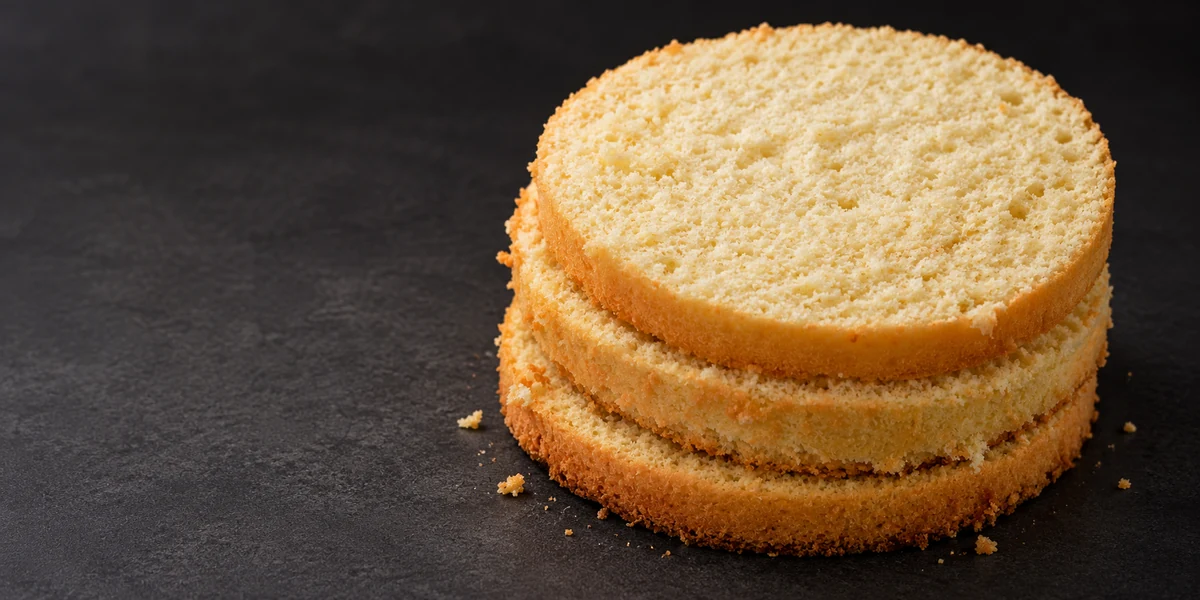
What makes this sponge cake rise?
This is a lean, whole-egg sponge for layer cakes and other assembled desserts. It contains no added butter or oil and no chemical raising agent. Its lightness comes from the air beaten into the eggs and sugar, which expands in the oven as the cake structure sets.
The short ingredient list makes the method especially important. More mixing is helpful while you are building the egg foam, but it can be harmful after the flour has gone in. Think of the recipe in two stages: create the air, then protect it.
The finished sponge has a fairly neutral flavour. It can take a cream cheese filling, chocolate ganache, fruit or a small amount of syrup. It is not the same texture as a buttery Victoria sponge or an oil-based cake, so choose it for the light cake layers you want to assemble.
Prefer a chocolate base? Try the four-ingredient chocolate sponge.
Ingredients and the right pan
Weigh the sugar and flour before you start. Have the mixer, sieve, flexible spatula and baking ring ready, and preheat the oven. The prepared egg foam should not wait while you organise the rest of the kitchen.
Use an 18 cm diameter ring that is 10 cm high. The height describes the ring, not a guaranteed height for the baked cake. For an open-bottom ring, wrap the base securely in foil and place it on a flat baking tray. If using a closed pan, line the base appropriately and make sure it has enough capacity.
Use room-temperature eggs and keep the egg size consistent when repeating the recipe. The formula gives a count rather than an exact weight of egg, so an unusually small or large set of eggs will change the balance.
Three-ingredient classic sponge
One cake baked in an 18 cm diameter, 10 cm high ring
Ingredients
- 5 eggs, at room temperature, consistent in size
- 150 g caster sugar / fine granulated sugar
- 150 g plain flour / all-purpose flour
Method
- Prepare the oven and ring. Preheat to about 170°C (340°F), conventional top-and-bottom heat. Prepare the 18 cm ring on its tray before mixing the batter.
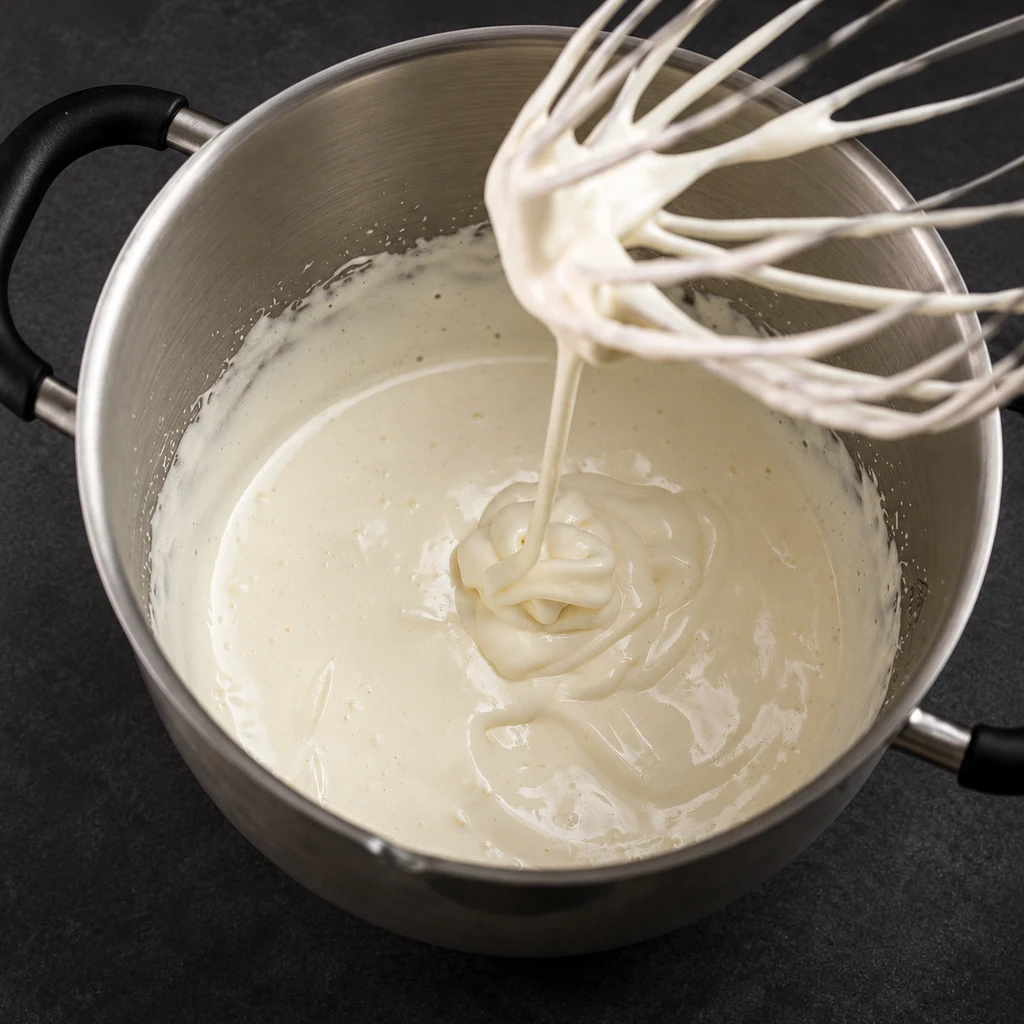
- Whip the eggs and sugar. Put the whole eggs and all the sugar into a mixing bowl. Start the mixer gradually, then whisk until the mixture is pale, very fluffy and thick enough for the whisk to leave a visible trail. Lift the whisk to check that the falling mixture briefly leaves a ribbon on the surface.
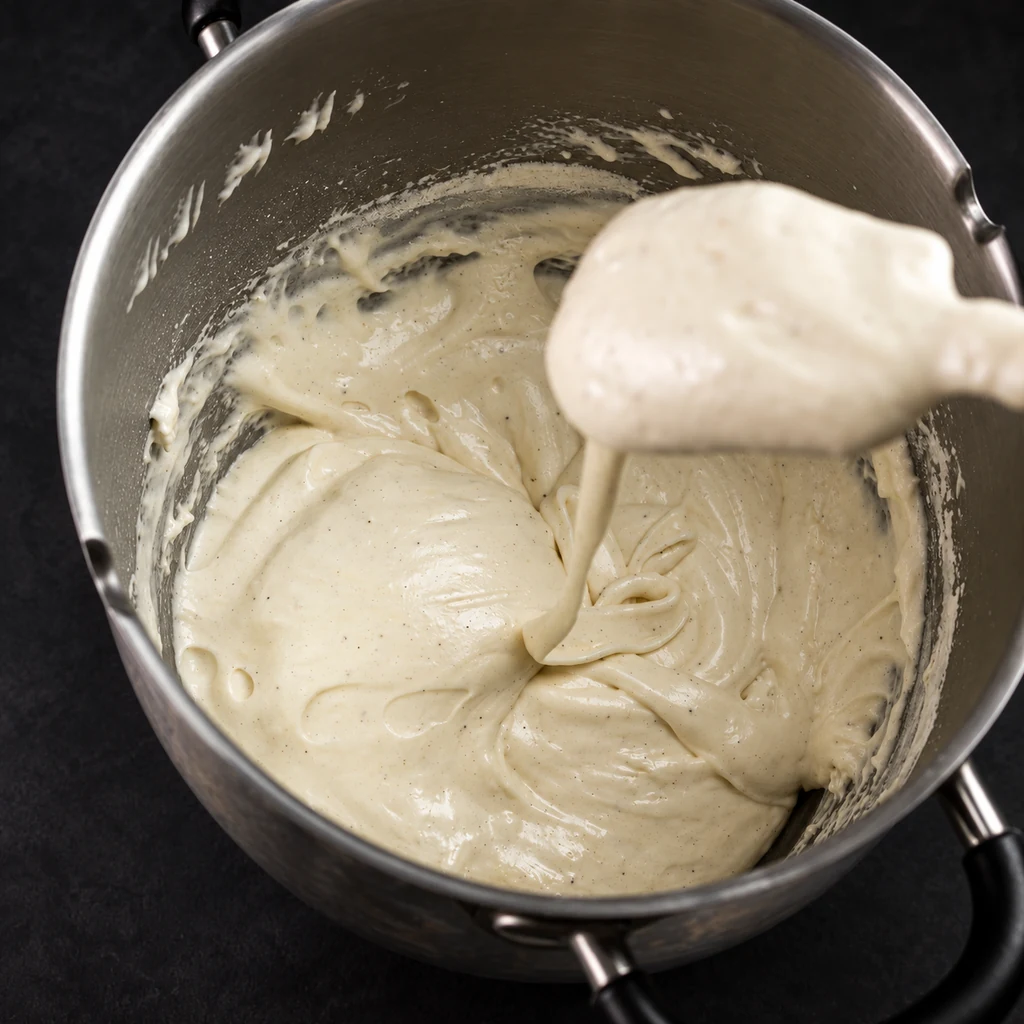
- Fold in the flour. Sift the flour and add it in two batches. Fold from the bottom of the bowl upwards with a flexible spatula, turning the bowl as you go. Stop when no dry flour remains and the batter is evenly combined.
- Fill and bake. Transfer the batter to the prepared ring and put it into the heated oven promptly. Bake for approximately 50 minutes, judging the actual cake rather than using the timer as the only test.
- Check and cool. Test the centre with a skewer: it should come out clean, without wet batter. Let the cake cool fully before removing the ring and cutting it into layers.
Do not add baking powder simply because the batter looks low. This formula relies on a correctly made egg foam.
Ovens, pans and egg sizes vary. Use the stated time as a guide and check the centre for doneness.
Vanilla extract may be used for flavour, or a little of the sugar can be replaced with vanilla sugar. Keep the main ingredient quantities the same.
Calculate the ingredient factor before changing the pan diameter.
Recognise the ribbon stage
At the start, the eggs and sugar are loose and run straight off the whisk. As the mixture takes in air, it becomes paler, increases in volume and thickens. The useful cue is a visible trail from the whisk that stays briefly on top before blending back in.
Do not stop at a bowl of large, loose bubbles. The mixture needs enough body to support the flour. Equally, a fixed number of minutes is unreliable because a hand mixer and a stand mixer may develop the foam at different speeds.
This recipe whips whole eggs. You do not need to separate them or make a separate meringue. If you want to practise a separated-egg method, use a complete recipe built for it rather than combining half of one method with half of another.
For recipes using separated whites, troubleshoot a foam that will not whip.
Fold the flour without losing the foam
Sifting breaks up flour lumps and helps you distribute the flour with less mixing. It does not create the egg foam or replace proper whipping. Keep the two flour additions light and work methodically through the bowl.
Bring the spatula down through the mixture, along the bottom and back up over the top. Rotate the bowl between folds. This reaches flour that can otherwise sit unseen underneath the foam.
Stop when the batter is uniform. Vigorous beating, prolonged circular stirring or repeatedly checking an already combined batter can drive out air. On the other hand, leaving dry pockets can create floury or dense streaks. The target is complete mixing with as little deflation as practical.
Bake the batter as soon as it is ready. Refrigerating it or leaving it on the counter for later does not preserve the same aeration. The ring and oven should already be ready for it.
Bake, check the centre and cool completely
Use a preheated oven with conventional top-and-bottom heat as the starting setup. Avoid opening the door early, while the centre is still fragile. The surface may colour before the middle has finished setting, so colour alone is not a reliable doneness test.
Near the expected end of baking, test the centre rather than only the edge. A skewer should emerge clean. If wet batter clings to it, the cake needs more time. Record your actual baking time and oven setting if you plan to repeat the cake.
Let the sponge cool fully before slicing. Hot crumb is more fragile and can compress or tear under the knife. Once cool, use a long serrated knife and gentle sawing movements to make even layers. A cooled, protected sponge is also easier to organise around the filling and assembly stages.
Keep the baked sponge protected if you are assembling the cake later.
Choose a filling and decide whether to soak
Cream cheese frosting gives a mild dairy flavour and works well with vanilla sponge. A ganache gives a richer chocolate contrast. Fruit filling can add acidity and moisture, while caramel or nuts change the balance again. Choose components that complement each other rather than adding every flavour at once.
Think about firmness as well as taste. A soft sauce can leak between cake layers even if it tastes good. Cool cooked fillings before assembly and use a cream or frosting suited to holding the layers in place.
If the crumb needs extra moisture, apply a modest amount of cool syrup evenly over the cut face. Stop before the sponge becomes saturated. The filling will also contribute moisture, so a very wet fruit layer and heavy soaking can be too much together.
Clean, properly handled trimmings can be cut into pieces for individual dessert cups. They should still taste good and have a usable texture: assembling them in a glass will not repair a seriously underbaked or badly dried cake.
Choose a cream cheese frosting for filling or finishing.
Add a strawberry filling with a controlled texture.
If the sponge is low, dense or uneven
Start with the method before changing the recipe. A low sponge can follow from insufficiently whipped eggs, deflation during folding or a delay before baking. Check those stages separately so you know what to improve on the next attempt.
A dense band or flour pocket points towards uneven folding. A wet centre is a baking problem, not a reason to add extra flour next time. A different pan size changes batter depth and therefore the way the cake bakes.
Keep a short record of the egg size, pan dimensions, oven setting and actual bake time. Change one relevant variable at a time. That gives you a clearer answer than changing the pan, formula and mixing method together.
| What you see | What to check first |
|---|---|
| Little volume before baking | Egg-and-sugar mixture reached a clear ribbon stage |
| Batter became much thinner after flour | Folding technique and time spent mixing |
| Dense or floury streaks | Flour trapped at the base of the bowl |
| Wet centre | Actual baking endpoint and batter depth |
| Crumb tears during slicing | Cake fully cooled before cutting |
Common questions
Does this sponge need baking powder?
No. The recipe is designed around air beaten into the eggs. Adding baking powder by eye changes the formula and will not correct careless whipping or folding.
Can I replace some flour with cornflour?
A starch variation is possible, but first make the flour-only recipe as written. Replacing flour changes the crumb, so record the quantity and do not treat different starches as automatically interchangeable.
Can I use a 20 cm pan instead of 18 cm?
Yes, after calculating the ingredient factor for the intended batter depth and checking pan capacity. Baking time may change. The pan-size guide explains the calculation.
Why do I need to cool the cake before slicing?
The hot crumb is fragile. Letting it cool makes it easier to cut without crushing or tearing the layers.