
Cakes & pastry
How to Thicken Cake Filling: Match the Fix to the Cream
The right fix depends on the filling. Warm buttercream may need cooling, undercooked starch custard may need more cooking, and a cold whipped-cream filling needs enough fat and controlled whipping. Gelatin changes the dessert into a set cream or mousse; raw cornstarch and sugar syrup are not universal fixes.
10 min read

Identify the filling before adding anything
A loose cream is a description, not a diagnosis. Buttercream, pastry cream, whipped cream and sour-cream filling gain their structure in different ways. The same addition can improve one and make another thinner or grainier.
First decide what the filling must do. A cream for soaking thin honey-cake layers can be deliberately softer than a frosting for sharp edges. A spoonable dessert cup does not need the same firmness as a tall cake. Do not keep adding powders simply because the cream does not resemble a different recipe.
Check the amounts, ingredient types and temperatures against the recipe. A warm room, low-fat dairy, extra liquid flavouring, insufficient cooking or the wrong mixing stage can all produce a loose result. Then choose one correction and evaluate it before making another.
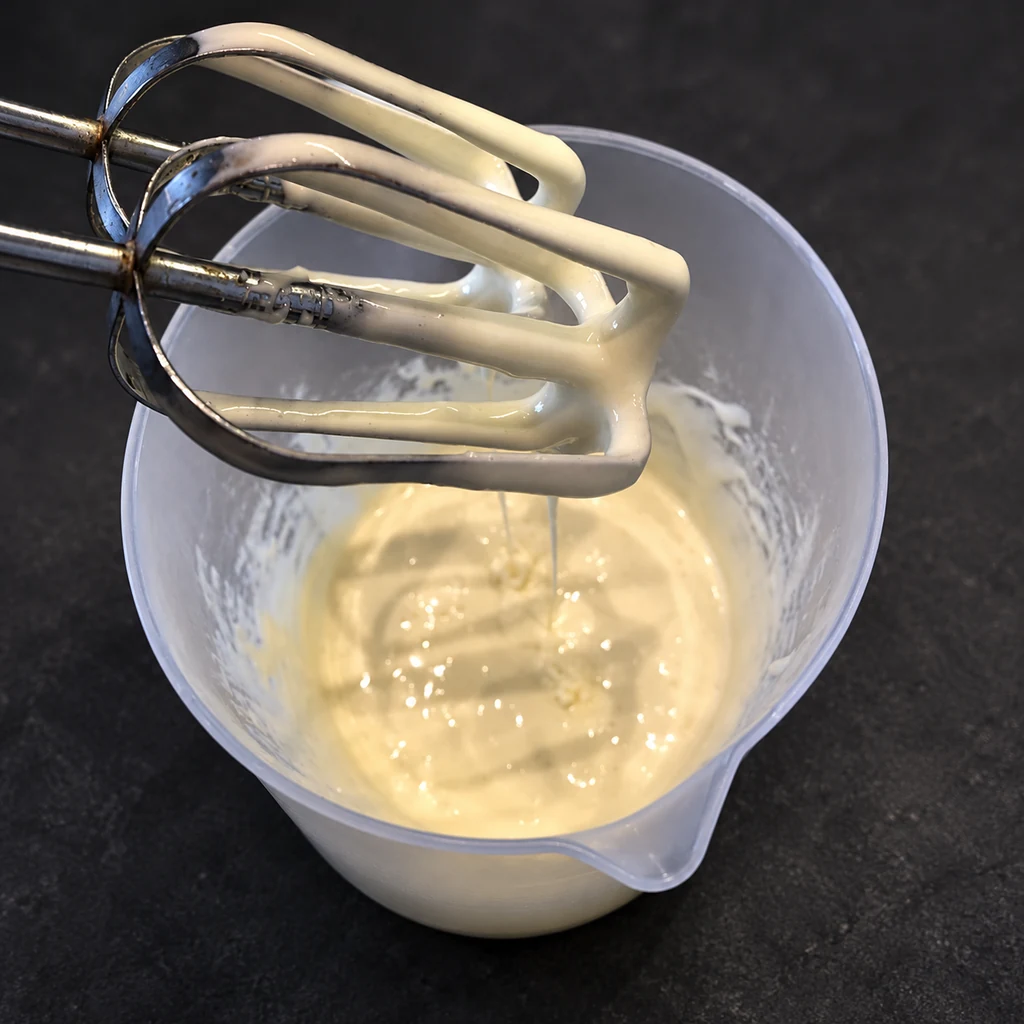
Choose the first check
| Filling | Start here | Avoid |
|---|---|---|
| Buttercream | Check whether the butter is too warm and the mixture needs gentle cooling | Pouring in sugar syrup to thicken it |
| Starch-thickened pastry cream | Check cooking, weighed starch and the fully cooled texture | Whisking raw flour or cornstarch into cold finished cream |
| Whipped cream | Check cream fat content, temperature and whipping stage | Continuing to whip after it turns grainy and separates |
| Cream cheese or mascarpone cream | Check the dairy style, moisture and mixing time | Treating all soft cheeses as interchangeable |
| Sour-cream filling | Check whether a soft consistency is intentional | Adding water-based syrup to make it stiffer |
| Meringue-based cream | Check foam formation, grease contamination and recipe method | Assuming gelatin restores the original meringue texture |
Make the equipment and ingredients work for you
Use a bowl that allows the whisk to reach the mixture. A very small quantity in a wide stand-mixer bowl may barely touch the whisk. A narrower bowl or a suitable hand mixer can help the equipment engage the ingredients properly.
For egg-white foam, the bowl and whisk must be clean and free of grease. Separate eggs carefully. More mixer power does not remove fat contamination or make the wrong formula work.
For cooked creams, a heavy-bottomed saucepan gives more even heating. Stir over the entire base and around the corners. The pan must be suitable for the utensil you use; the important issue is even cooking and effective stirring, not a blanket ban on a particular coating.
Meringue-based filling: protect the foam
Identify the meringue method first. Swiss meringue heats whites and sugar together; Italian meringue uses hot syrup; French meringue is whipped with sugar without that heating stage. They are not interchangeable processes.
If a filling has not formed a proper foam, check contamination, the amount in the bowl and whether the sugar was added at the right stage. A warm meringue that still needs whipping and cooling is different from whites that never whipped in the first place.
Gelatin can turn a cream into a set, mousse-like filling, but it does not recreate the original airy foam. Do not use a universal quantity per 500 g without knowing the gelatin strength, liquid content and intended texture. If the meringue method has failed badly, starting again can be more predictable than adding several thickeners.
Sour-cream filling: soft may be correct
Some sour-cream fillings are designed to moisten thin cake layers. They can remain soft even when made correctly. If the recipe calls for that texture, turning it into a firm mousse changes the finished cake.
Check the fat content and moisture of the sour cream. A watery product cannot be made identical to a thick cultured cream just by whipping longer. For a future batch, use the style specified by the recipe; draining may be an option only when the formula allows for the resulting change in weight and moisture.
If the intended dessert needs a set layer, use a suitable gelatin-based recipe or a stabilizer designed for cold dairy mixtures. Follow its directions. Adding a 1:1 water-and-sugar syrup introduces more liquid and is not a dependable thickening method.
Pastry cream: check cooking before adding more starch
A starch-thickened custard must be cooked sufficiently for the starch to work. A mixture removed from the heat at the first sign of slight thickening may still be undercooked. Judge it again after proper cooling; hot pastry cream is naturally softer.
If you know the quantities were correct and the cream was undercooked, return it to a suitable saucepan and complete the cooking stage with continuous whisking, following the original recipe. This advice applies to a starch-thickened pastry cream, not every egg custard: a starch-free pouring custard has a different method.
If the original recipe is short of thickener or contains too much liquid, calculate a correction against the full formula. Do not guess at one or two extra eggs and a spoonful of starch without knowing the batch weight. A large correction can create a dense, eggy or pasty filling.
Ordinary cornstarch or flour must be dispersed and cooked; stirring it into cold finished custard does not reproduce that process. After any correction, cool the cream promptly in a shallow container and recheck its final texture before filling the cake.
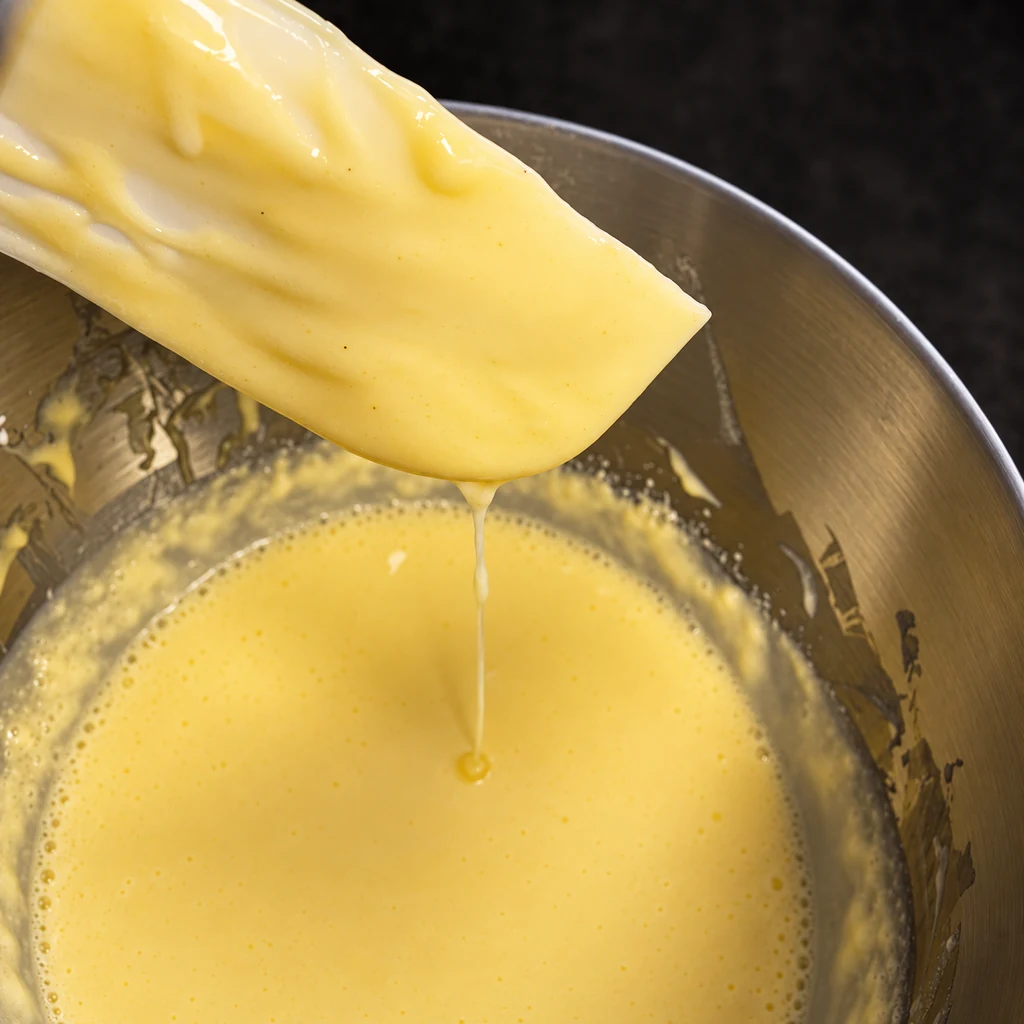
Cream cheese, curd cheese and whipped cream
These fillings often contain whipped cream, but their behaviour also depends on the cheese. A firm cream cheese, a spread from a tub and a moist curd cheese can carry very different amounts of water. Start with the product type specified by the recipe.
For a whipped-cream-based filling, use cold whipping cream with the appropriate fat content and stop at the intended peak. If the mixture is still smooth but insufficiently whipped, controlled further whisking may help. If it becomes grainy and releases liquid, continuing to beat can make it worse.
If the filling has warmed while you worked, a short chill may help you assess it accurately. Cooling cannot correct a large measuring error or transform low-fat pouring cream into whipping cream.
A cold-use stabilizer can be appropriate when it is designed for that cream. Read the package: an instant modified starch is not the same ingredient as ordinary kitchen cornstarch. Do not add raw cornstarch slurry to a cream that will never be cooked.
Gelatin is another option when you deliberately want a set filling. It changes the mouthfeel and working time, so make that choice before the cake is assembled rather than hoping it will preserve every feature of the original cream.
Buttercream: correct temperature before the formula
A buttercream that is smooth but flowing may simply be too warm. Cool it gently, then mix again and evaluate it. Avoid chilling it into a hard lump, which creates a different mixing problem.
Meringue buttercreams can also look curdled when the butter or meringue is too cold. That does not mean they need more dry ingredients. Gentle warming of a small portion, followed by gradual mixing back in, is a different correction from cooling an overheated bowl.
For American-style buttercream, powdered sugar is part of the intended structure, but adding more also makes the frosting sweeter. For a meringue or custard buttercream, do not borrow that fix automatically. Follow the specific formula and check the balance of its components.
A water-and-sugar syrup is not a general rescue for loose buttercream. It adds liquid and can upset the emulsion. First identify temperature, proportion or mixing as the problem.
Custard buttercream and plombir-style creams
Creams described as plombir have several versions. Many combine a cooked custard base with butter; others include whipped cream. The base must be properly thickened and the components must be at suitable temperatures before they are combined.
If the custard alone is loose, correct its cooking before adding the butter or whipped cream. Once everything is mixed, treating the whole bowl like plain pastry cream can melt the fat and destroy its aeration.
For a custard-and-butter version, aim for compatible working textures: a fluid-hot custard melts butter, while a very cold base can make the fat clump. A single temperature number does not replace checking how your butter and cream behave.
If you choose to turn the finished mixture into a gelatin-set filling, it becomes a different dessert component. Use an appropriate formula and assemble while it is workable, then give it time to set.
Mascarpone cream: stop before it splits
Mascarpone can make a rich, stable filling, but it is sensitive to excessive mixing. Follow the recipe order and stop when the mixture is thick enough. More time on the mixer is not always more stability.
A smooth, soft mixture and a visibly separated mixture are different problems. If it has released liquid and become grainy, do not keep whipping in the hope that it will simply become thicker. Severe separation may not return to the texture required for neat piping.
Use the full recipe and measured ingredients to decide whether a correction is realistic. For a decorative or load-bearing filling, making a fresh batch may give a better result than accepting a compromised texture.
What each thickener actually changes
| Ingredient or method | Suitable role | Limit |
|---|---|---|
| Cooling | Restores workable firmness when a fat-based filling is too warm | Does not repair a wrong formula |
| Cooking ordinary starch or flour | Thickens an appropriate cooked cream | Not a raw addition for cold cream |
| Gelatin | Creates a refrigerated set in a suitable formula | Changes texture, strength and assembly timing |
| A formulated cold-use stabilizer | Supports the dairy mixture named on the packet | Products differ; use the maker’s directions |
| More sugar or syrup | Changes sweetness and composition | Not a universal thickener; syrup adds water |
If you deliberately choose a set filling
Use gelatin only with a defined target. Hydrate it as directed for the particular product, dissolve it without leaving particles, and blend it first with a small portion of the compatible cream. Then combine with the rest before it starts to set.
The temperatures must allow the gelatin to disperse without melting an aerated cream or turning instantly into strands. Its strength, hydration water and the amount of liquid in the filling all matter. This is why a blanket dose for every cream is unreliable.
Plan the assembly before adding it: have the cake ring, layers or serving cups ready. A filling that has already set in the mixing bowl cannot be piped as though nothing has changed.
Choose a dessert that suits the result
Test a little filling at the intended serving temperature. Does it spread cleanly, hold a piped ridge, or run immediately? Use that observation to decide whether it is ready for a tall cake, a thin layer or a spoon dessert.
A safe, well-flavoured filling that remains softer than intended may still suit dessert cups. That is a planned change of format, not evidence that the original cake filling has been fixed. Do not use a soft layer under weight just because a cream border hides it.
For chocolate ganache, use the specific checks for chocolate type, liquid ratio, temperature and resting time. That is a separate formula from the dairy and egg creams covered here.
Common questions
Can I add cornstarch directly to cold cream?
Ordinary cornstarch needs cooking to work properly. Do not confuse it with an instant stabilizer specifically designed for cold dairy mixtures.
Will gelatin make the cream exactly as it should have been?
No. It can provide a set, but it changes the texture and timing. Use it as part of a deliberate set-filling formula rather than a universal rescue.
Why is the filling thick in the fridge but loose on the cake?
The working temperature may be too warm, or the formula may not suit the required structure. Evaluate a sample at its intended serving temperature before stacking the cake.
Can I keep adding icing sugar until it becomes firm?
Only consider that within a frosting formula where powdered sugar provides structure. It also increases sweetness and is not the right correction for every custard, meringue or cheese cream.