
Cakes & pastry
Why Egg Whites Won't Whip: Check the Bowl, Sugar and Method
If egg whites stay liquid, first check for yolk or grease and whether the whisk reaches the mixture. If they are foamy but slow, check sugar timing, temperature and batch size. If the foam is dry, rough or leaking liquid, stop: more whipping can make an overworked foam worse. Aim for the peak required by the recipe, not the longest possible mixing time.
9 min read
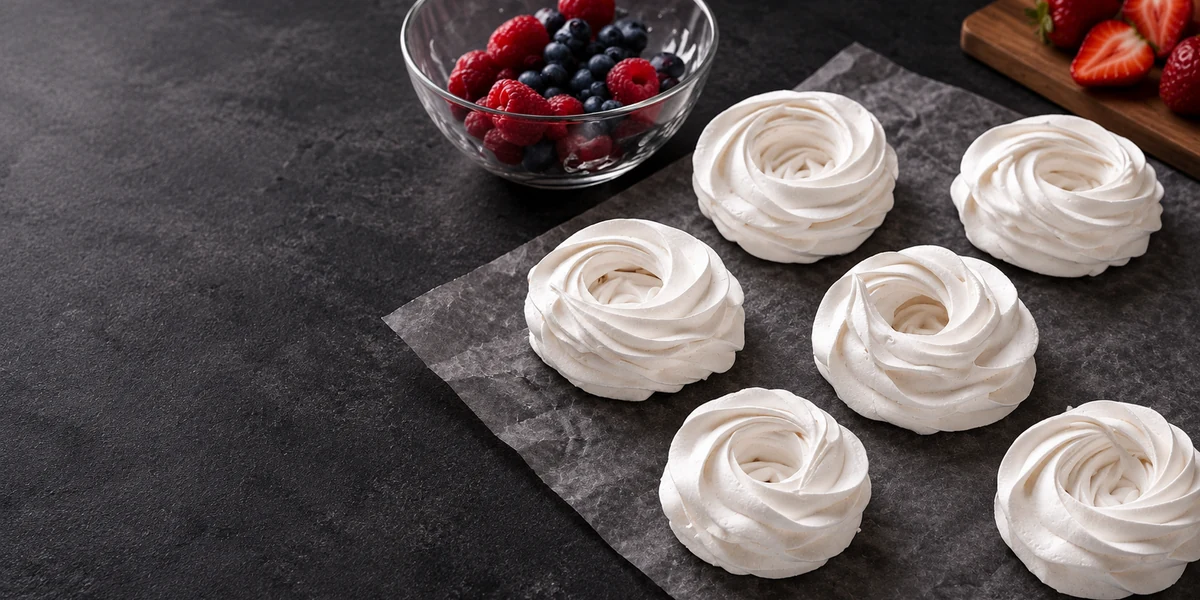
What does 'not whipping' look like?
Egg whites do not jump straight from liquid to a finished meringue. They first become foamy, then form increasingly fine bubbles and peaks. Sugar changes the texture and stability, so plain whipped whites will not necessarily look identical to a sugar-rich meringue.
Start by naming the symptom. A bowl that remains almost liquid after several minutes needs a different check from one that is fluffy but still bends at the tip. A grainy, clumpy foam may already be past its useful stage.
The correct endpoint depends on the recipe. Soft peaks may be intentional for folding into a mixture, while a piped meringue may need a firmer peak. Whipping every batch until it is maximally stiff can make it harder to fold and can reduce the quality of the final dessert.
- Liquid with little foam: check contamination and whisk contact first.
- Large bubbles and a loose foam: check method, temperature and mixing progress.
- Smooth foam with a bending tip: you may be at the soft-peak stage rather than failing.
- Dry, lumpy foam with liquid underneath: stop and assess overwhipping.
- Gritty sugar-rich foam: check sugar size, addition timing and dissolution.
1. Check the bowl, whisk and egg separation
Fat is a common reason an egg-white foam develops poorly. Inspect the bowl and whisk for traces of butter, cream or oil from the previous recipe. A plastic bowl can be harder to clean thoroughly if it has retained a greasy film; stainless steel or glass is a useful choice.
Wash the equipment properly, rinse it and dry it. Wiping a visibly greasy bowl with a paper towel is not the same as cleaning it. There is no need to introduce alcohol or a special cleaner into the recipe.
Separate each egg into a small clean bowl before adding the white to the main batch. If a yolk breaks, you can deal with that egg without contaminating all the whites already measured. Cold eggs are usually easier to separate cleanly.
If a batch is clearly contaminated with yolk or grease and refuses to develop a useful foam, start again for a precision meringue. Continuing at higher speed does not remove the fat, and a large addition of acid is not a dependable repair.
2. Make sure the whisk actually reaches the whites
A small quantity of whites can sit below the working area of a large stand-mixer whisk. The motor may be running while very little of the liquid is being aerated. Check the contact before blaming the eggs.
Use a rounded bowl appropriate for the batch size. Corners and awkward shapes make it easier to leave part of the mixture unmixed. With a hand mixer, move through the mixture steadily so it is worked evenly.
For a small batch, a hand mixer may be more convenient than a large stand mixer. A balloon whisk can also make a foam by hand, although it needs time and effort. The tool needs to introduce air effectively; an ordinary chopping blade is not the same tool as a whisk.
Follow the appliance's instructions for attachment position and operating time. There is no universal minimum wattage that determines whether a mixer can whip a particular quantity of egg whites.
3. Give cold whites enough time
Room-temperature whites usually whip more readily and can reach good volume. That makes temperature a useful preparation step, but cold whites are not automatically ruined and do not need to be discarded.
Separate eggs while cold if that helps you avoid yolk contamination, then allow the measured whites to lose their refrigerator chill as part of the recipe's preparation. Do not leave raw eggs sitting out for hours while waiting for a perfect number on a thermometer.
Temperature is only one variable. If the whisk barely reaches the whites or the bowl is greasy, warming the eggs will not fix that problem. Check the higher-impact causes before trying to warm a failing bowl.
Do not switch from French to Swiss meringue halfway through simply to warm the whites. A different meringue method means a different mixing and heating sequence and should be followed as a complete recipe.
4. Add the right sugar at the right stage
For a typical French meringue, the whites begin developing foam before the sugar is added gradually. Pouring the whole amount into the liquid whites at once can slow the process and make it harder to build the volume you expected.
Fine caster or superfine sugar dissolves more readily than very coarse granules. If the recipe calls for icing sugar, check what the recipe is designed to use: some versions deliberately include it, while others are based on granulated sugar. Do not treat those sugars as an automatic interchangeable choice.
Let each addition incorporate before adding the next. Pause to assess the texture rather than increasing speed simply because the bowl is taking longer than a video recipe. Mixer size, quantity and sugar grain size all affect the time.
If the meringue still feels gritty, the sugar may not be fully dissolved. More whipping can help only while the foam remains in a useful state. Once it is dry and breaking down, continued mixing is not a good way to solve the sugar problem.
5. Increase speed gradually and stop at the peak you need
Begin at a controlled speed to turn the liquid into an even foam, then increase as the recipe directs. Starting at full power makes it harder to see what is happening and easier to pass the intended endpoint.
To inspect the peak, stop the mixer and lift the whisk. A soft peak bends over. A firmer peak holds more of its shape. In a well-made meringue the mixture should be cohesive; the exact gloss and stiffness depend on its sugar and method.
Overworked whites can look dry, curdled or lumpy and may release liquid. They are harder to fold evenly into a batter because you need more mixing to break up the clumps. That extra mixing can then knock air out of the mixture.
Stop when the recipe's endpoint is reached and use the foam promptly. If it has become badly grainy or separated, a fresh small batch is usually easier to control than an improvised repair for a precision bake.
6. Check the heating step for Swiss or Italian meringue
In Italian meringue, the sugar syrup and the egg-white foam need to be ready at compatible stages. Many formulas use a syrup around 118–121°C, but follow the temperature and proportions of your chosen recipe rather than transferring a single number to every mixture.
Place the thermometer so it measures the syrup, not the hot base of the saucepan. Under- or over-concentrating the syrup changes the liquid balance. Pour it in the controlled stream described in the recipe, avoiding the spinning whisk where it may splash.
Swiss meringue heats whites and sugar together before whipping. The sugar affects how the eggs behave, so a universal rule that the mixture must never go above 60°C is not a useful guide. Follow a complete recipe with its own heating endpoint and keep the mixture moving over the water bath.
Do not assume that any warm bowl or a hot-syrup addition proves the finished egg mixture has been pasteurised. For a topping that will not receive further baking, use the egg product and cooking method specified for that use.
7. Check what is in the carton
If you use packaged whites, read the label. Some are intended for cooking and do not perform in a foam exactly like fresh separated whites; some products are specifically suitable for whipping. Use the manufacturer's directions and the recipe's recommendation.
Keep the carton within its storage instructions and measure the amount accurately. A liquid substitute with added ingredients is not automatically equivalent to the same weight of plain egg white.
If fresh whites work in your setup and a particular carton consistently does not, that is useful evidence. Repeat a small controlled test before changing the sugar, bowl and temperature all at once.
Put a successful foam into the right recipe
Once the foam is ready, the next mixing stage can still remove its air. Fold other ingredients as the recipe directs and have the tin, tray or piping bag prepared. A good foam does not become more stable just by waiting in the bowl.
Pavlova needs a meringue that can hold the shaped base before baking. A roulade has a different thickness and baking goal. Macaron batter introduces another important stage after the meringue, so it needs its own endpoint rather than the same visual test as a plain foam.
Keep a short note of the egg product, quantity, bowl, sugar and peak used. This makes your next attempt repeatable and helps separate a foam problem from a later baking or folding problem.
Make a Pavlova with a crisp shell and soft centre.
Common questions
Can I whip egg whites by hand?
Yes, a suitable whisk can aerate whites by hand, although it takes effort. A hand or stand mixer is more convenient for larger or sugar-rich batches.
Do cold whites have to be thrown away?
No. They may take longer to whip. Check grease, yolk contamination and whisk contact before treating temperature as the cause.
Can I rescue greasy whites by adding lemon juice?
Acid can help stabilise a suitable foam, but it does not remove grease or yolk. Start a clean batch when contamination prevents the required texture.
Why are my whites stiff but lumpy?
They may be overwhipped. A useful foam is cohesive, not dry and curdled. Stop and assess it before adding it to a delicate batter.
Does every recipe need stiff peaks?
No. Follow the intended endpoint. Some batters need a softer, easier-to-fold foam, while a piped meringue needs more structure.