
Cakes & pastry
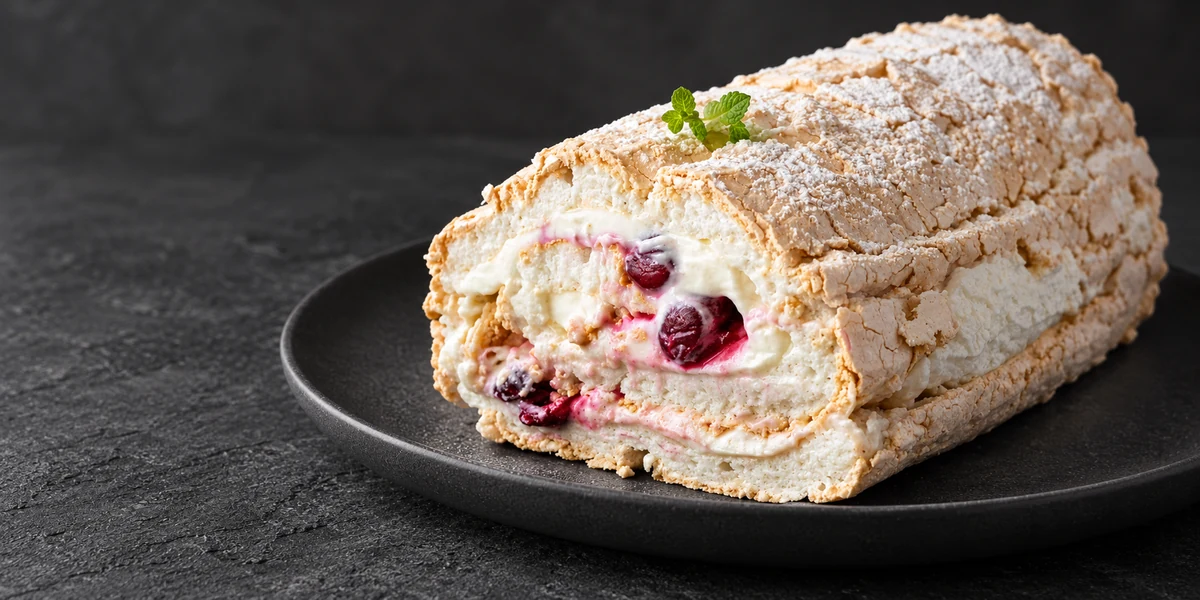
Meringue Roulade with Cream Cheese and Cherries
A meringue roulade needs a thin crust and a soft, flexible centre. Whip the whites with fine sugar until glossy, fold in cornflour, then bake in a 30 × 40 cm tray. Cool the sheet completely before filling it, drain the cherries well and use baking paper to support the roll. The finished roulade chills before slicing.
7 min read
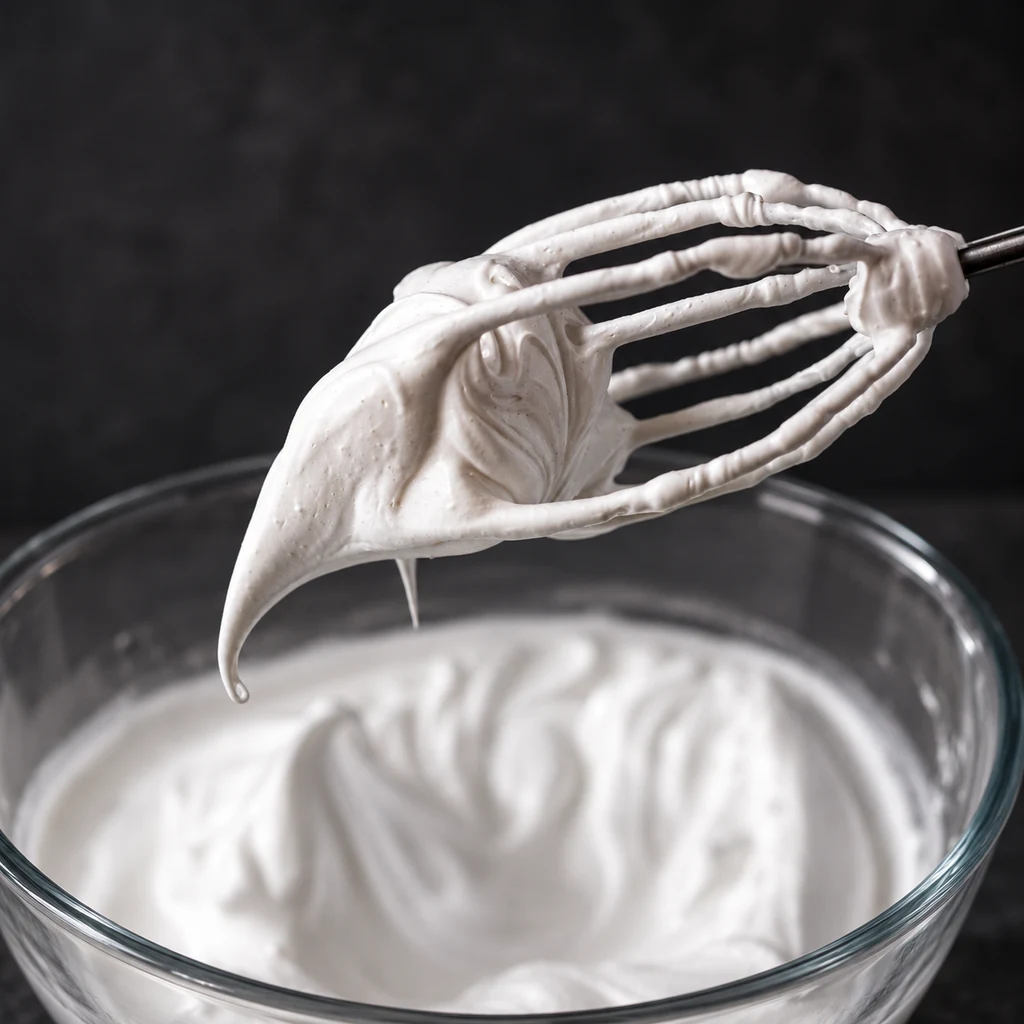
What makes meringue soft enough to roll?
This dessert uses a sheet of baked meringue rather than sponge cake. Its surface is lightly crisp, while the inside stays soft and marshmallow-like. The contrast comes from the mixture and the baking endpoint: the sheet should not be dried all the way through like small crisp meringues.
The cream cheese filling brings a little tang, and the cherries balance the sweetness of the meringue. Keep the filling layer modest. Too much cream or wet fruit makes the delicate sheet harder to roll and encourages it to become soggy.
Prepare the tray and ingredients first
Use a 30 × 40 cm baking tray, a mixer, a flexible spatula, a cooling rack and good non-stick baking paper. Line the tray before you start whipping. You will also need a second sheet of paper for turning out and rolling the meringue.
Weigh 190 g of egg whites rather than relying on an egg count. Separate each egg into a small bowl before adding its white to the mixing bowl, so an accidentally broken yolk does not contaminate the whole batch. The bowl and whisk should be clean, dry and free from grease.
Use fine caster sugar and cornflour, also called cornstarch. This recipe uses a small pinch of citric acid. Keep the cream cheese and whipping cream refrigerated until needed; thaw frozen cherries and drain away their loose juice.
Cherry meringue roulade recipe
Read the full method before starting. The bake takes approximately 28–30 minutes in the oven sequence below; cooling and chilling are additional. Colour and texture matter more than following the clock blindly.
Cream cheese and cherry meringue roulade
One roulade, baked as a 30 × 40 cm sheet
Ingredients
- 190 g egg whites meringue
- 260 g fine caster sugar meringue
- 25 g cornflour / cornstarch meringue
- 1 small pinch citric acid meringue
- Optional vanilla extract meringue, to taste
- 150 g cream cheese, cold filling
- 100 g 33% whipping cream, cold filling
- 30 g icing sugar filling
- 100 g pitted cherries fresh, or thawed and well drained
Method
- Prepare the oven and tray. Preheat the oven to 150°C with conventional top and bottom heat. Line the 30 × 40 cm tray with non-stick baking paper. Have a second sheet of paper and a rack ready.
- Start the foam. Put the whites and citric acid in the clean mixer bowl. Whisk at medium speed until the whites are foamy throughout, with no loose liquid left at the bottom.
- Add the sugar gradually. Add the caster sugar a little at a time, continuing to whisk at medium speed. Let each addition disperse before adding the next. Add the optional vanilla. Continue until the meringue is glossy and holds firm peaks. Rub a small amount between clean fingers: it should not feel gritty.
- Fold in the cornflour. Add all the cornflour and fold with a spatula until evenly combined. Scrape around the base of the bowl so no dry pockets remain. Spread the meringue evenly over the lined tray; keep the thickness consistent at the edges and in the centre.
- Bake the sheet. Bake for about 20 minutes at 150°C with conventional heat, then switch to fan at the same set temperature for another 8–10 minutes. Watch closely during this final stage. The surface should be lightly golden and crisp, with a soft centre; avoid drying the sheet until brittle.
- Make the filling. Mix the cold cream cheese with the icing sugar until smooth. Add the cold cream and whisk until the mixture is thick and airy enough to spread. Scrape the bowl as needed and stop before the cream becomes grainy. Refrigerate while the meringue cools.
- Turn out and cool. Cover the baked sheet with fresh baking paper and place a rack on top. Holding the tray and rack securely, turn them over together. Lift off the tray and carefully peel away the paper used for baking. Leave the meringue to cool completely.
- Fill the cool sheet. Trim any particularly uneven edges if necessary. Spread the cream evenly over the sheet, then distribute the well-drained cherries. Leave a little space at the far edge so the filling is not squeezed out as you roll.
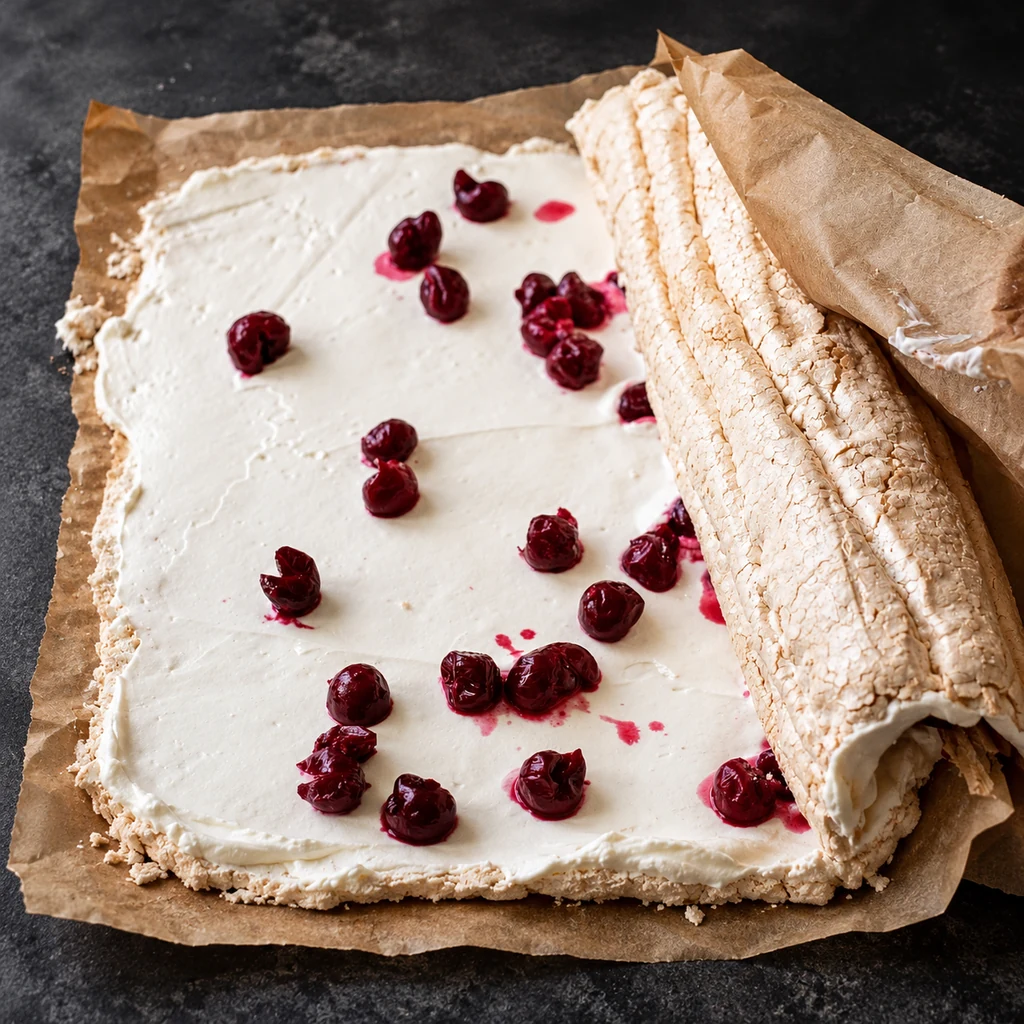
- Roll with the paper. Lift the paper along one edge and use it to guide the meringue over the filling. Continue rolling gently, keeping the shape close without crushing the soft centre. Finish with the seam underneath.
- Chill and serve. Wrap the roulade snugly in its paper and refrigerate for about 1½–2 hours, until the filling is firm enough for neat slices. Unwrap and decorate with a few berries, a small amount of cream or a light dusting of icing sugar.
The two-stage oven setting is for this recipe. Ovens vary; do not transfer these timings automatically to a different tray size or a thicker sheet.
If using frozen cherries, thaw and drain them before measuring the filling portion. Do not pour their loose juice onto the meringue.
Keep the filled roulade refrigerated. Add delicate decoration close to serving.
How to roll it without crushing the filling
The paper supports the whole edge of the sheet. Lift it gradually so the meringue curls over itself; pulling on a small part of the sheet with your fingers can tear it. Guide the roll rather than pressing it flat. Keep the seam underneath when you transfer it to the refrigerator.
Fine cracks in the crisp outside can appear as it bends. The more important question is whether the soft centre holds together. Large dry pieces breaking away suggest the sheet has become too brittle, while a wet, compressed layer often points to excess filling moisture or filling before the meringue was cool.
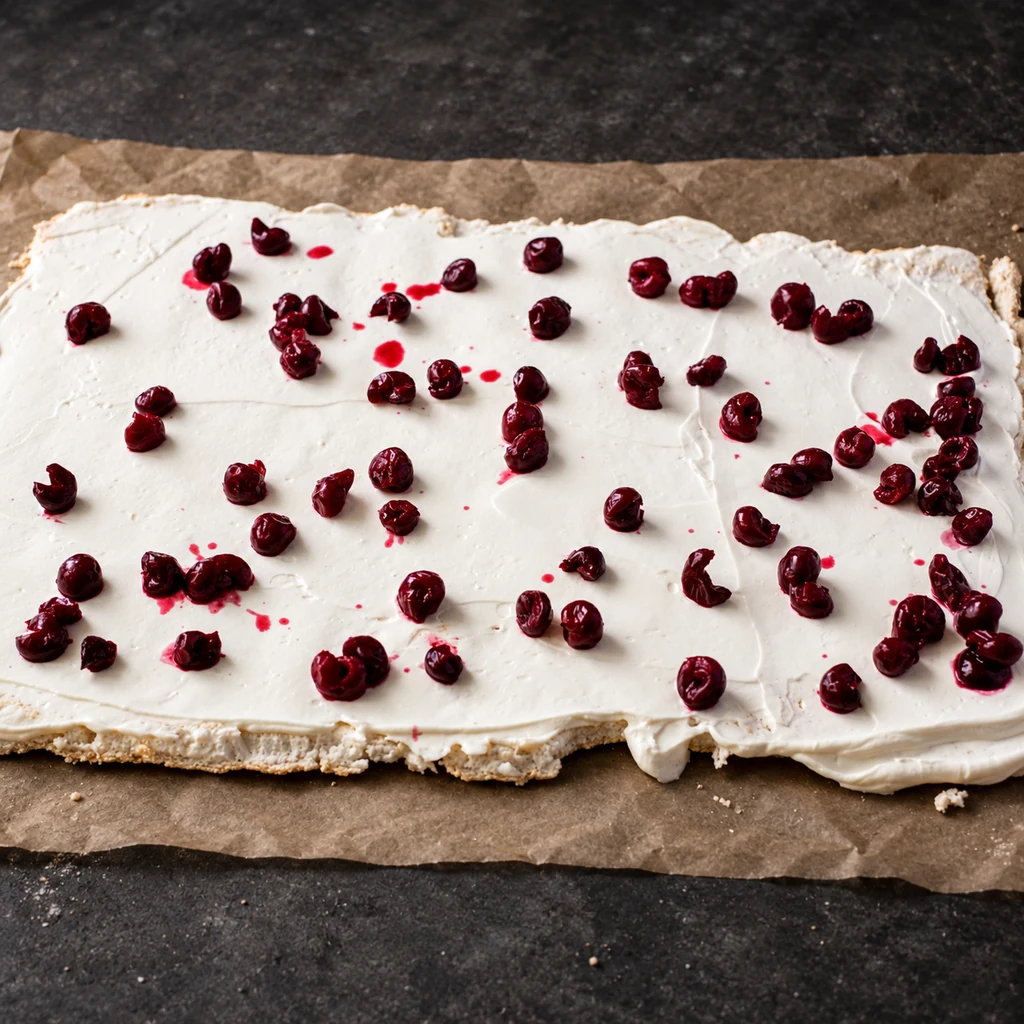
Choose fruit that balances the sweet meringue
Cherries bring a useful tart contrast. Raspberries or strawberries can also be used, provided the fruit is prepared so loose juice does not flood the cream. A small amount of a thick, cool fruit filling is another option; remember that a sweet jam adds sweetness to an already sweet base.
For a simple finish, use a few berries, flaked almonds or chopped nuts. Add a small amount of caramel or chocolate decoration if you like, but keep the meringue, cream and fruit as the main flavours. Chill the roll before cutting and wipe the knife between slices.
Make a cooked cherry filling for another dessert.
Recognise the difference between supple whipped cream and overwhipped cream.
What to check if the first roll is difficult
| What you notice | Check before the next batch |
|---|---|
| Gritty meringue before baking | Use fine sugar, add it gradually and allow it to dissolve while whisking. |
| Sheet breaks into dry pieces | Review the actual oven heat, bake length and sheet thickness. |
| Filling slides or runs | Cool the meringue fully, whip the filling to a spreadable consistency and drain the fruit. |
| Meringue sticks to the liner | Use good non-stick baking paper and peel it away carefully after turning out. |
| Slices collapse | Allow the filled roll to chill and support it with a clean, sharp knife. |
Common questions
Is meringue roulade the same as a sponge Swiss roll?
No. A meringue roulade uses an egg-white and sugar sheet with a soft centre and crisp surface. A sponge Swiss roll contains a cake batter and has a different structure and baking method.
Can I use frozen cherries?
Yes. Thaw them, remove any stones and drain them thoroughly before adding them to the cream. Loose juice can soak into the meringue and make the filling slide.
Should I roll the meringue while it is hot?
In this recipe, turn out the baked sheet and let it cool completely before spreading the cold cream filling. Hot meringue can soften the filling.
Can I simply leave out the cornflour?
This formula includes cornflour as part of the intended texture. Leaving it out or changing the starch gives a different formula; use a recipe designed for that change rather than assuming the result will be identical.