
Cakes & pastry
Soft Milk Caramel Sauce: Sugar, Milk and Butter
This soft milk caramel uses 300 g sugar, 150 g milk and 100 g butter. Melt the sugar in stages, cook it to amber, then carefully incorporate the butter and hot milk. The result is a spoonable sauce that thickens as it cools, not a cut-and-wrap caramel sweet.
7 min read
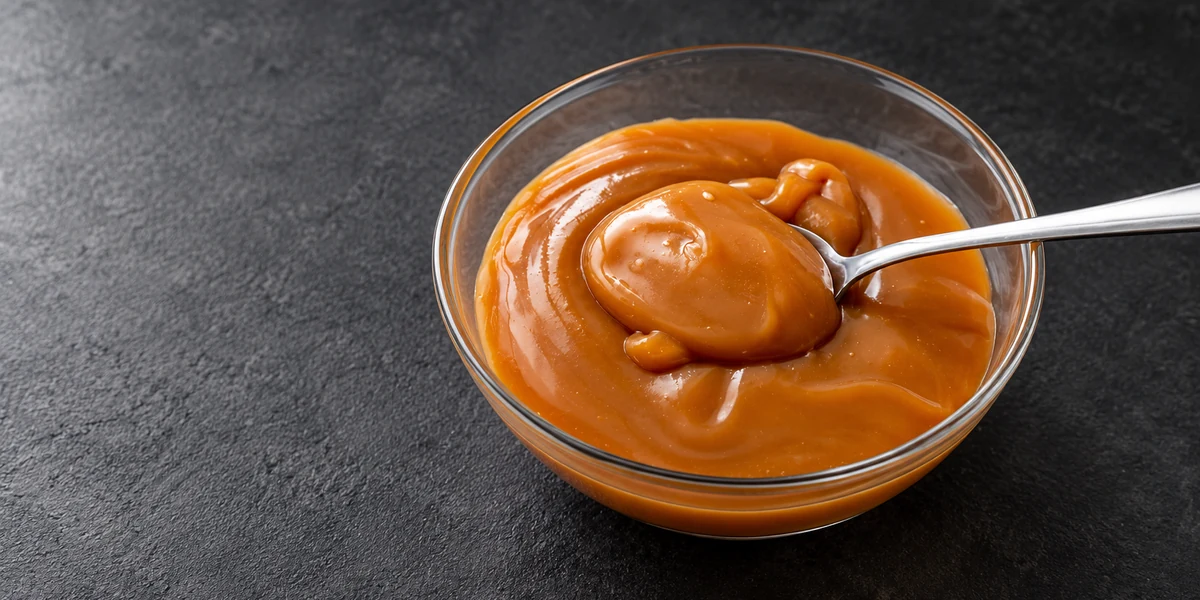
A sauce made with milk
Caramel can mean a crisp sugar decoration, a chewy sweet or a sauce. This recipe belongs to the sauce family. Sugar is caramelised first, then milk and butter are incorporated to create a soft, rich texture.
Milk makes this version useful when you do not have cream available. It is still a complete formula: replacing the milk with another liquid changes the balance. Likewise, boiling it until it resembles a firm sweet is a different process with a different endpoint.
Use it as a small accent with cake, a topping for dessert cups or a sauce for serving. Judge its consistency at the temperature where you will use it, because warm caramel flows much more readily than chilled caramel.
Prepare the pan and ingredients first
Choose a heavy-bottomed saucepan with enough depth for vigorous bubbling when the dairy goes in. A wide base helps a shallow layer of sugar melt evenly; sufficient headroom keeps the bubbling mixture in the pan.
Weigh all three ingredients before starting. Cut the butter into manageable pieces and let it soften. Warm the milk separately so it is hot when you need it. Have a long-handled heatproof spatula ready.
Keep your attention on the pan once the sugar starts melting. Do not taste caramel from the spatula or touch a drop to check its texture: hot sugar sticks to the skin and can cause serious burns.
The milk caramel recipe
Soft milk caramel sauce
Ingredients
- 300 g granulated sugar
- 150 g milk, heated
- 100 g butter, softened and cut into pieces
Method
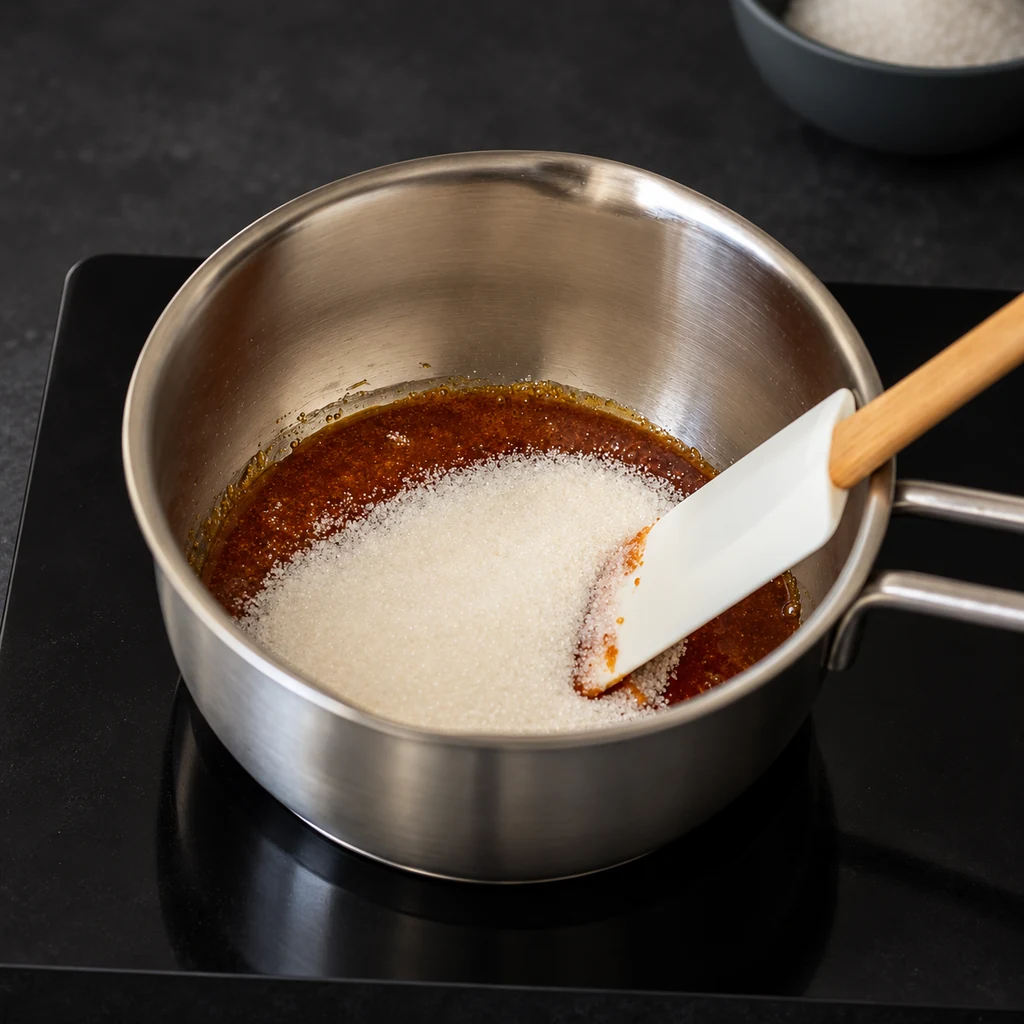
- Put about one-third of the sugar into the heavy-bottomed saucepan and set it over moderate heat. Let the sugar begin to melt. Gently tilt or swirl the pan if one area colours more quickly.
- When most of that sugar has melted, use the heatproof spatula gently to help the remaining crystals melt. Add the next portion of sugar towards the centre of the liquid caramel.
- Continue adding and melting the sugar in portions until all 300 g has been incorporated. Keep the heat controlled so the liquid sugar does not burn while you wait for the fresh portion to melt.
- When the caramel is evenly amber, reduce the heat or move the pan off the burner. Carefully add the softened butter in pieces, stirring as each addition combines. Expect vigorous bubbling.
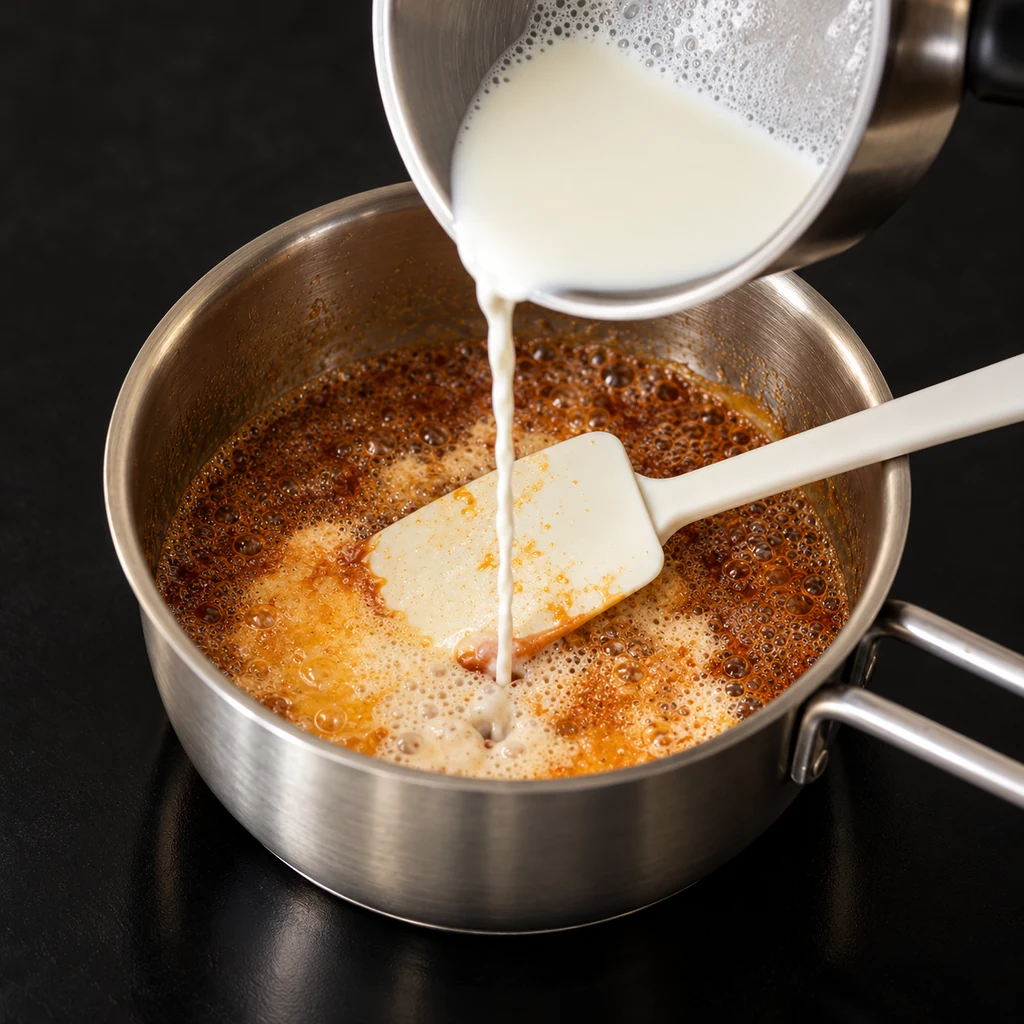
- Add the hot milk gradually, stirring carefully with a long-handled spatula. Keep hands and face away from the steam. Let the bubbling settle between additions rather than pouring it all in at once.
- Stir until the sauce is even, then remove it from the heat. If small hard caramel pieces remain, use gentle heat and patient stirring to help them dissolve; stop before the sauce scorches.
- Let the sauce lose its intense heat. If needed, blend it briefly in a tall, heatproof container with the head of an immersion blender fully submerged. Avoid splashing or trapping large air bubbles.
- Transfer to a clean container, cool promptly and refrigerate. Evaluate the final thickness after cooling, then warm only the portion you need for serving.
The ingredient total is 550 g before cooking; evaporation means this is not a guaranteed finished yield.
The recipe has no specified final confectionery temperature and is intended as a sauce, not a firm caramel candy.
Use one consistent milk type when repeating and comparing batches; changing its fat content can change the result.
Melt the sugar in stages
Adding all the sugar to a small pan at once can leave a deep layer that melts unevenly. Working in portions allows you to build a pool of melted sugar and then incorporate the next addition into it.
Avoid vigorous stirring at the start. Let heat do the initial work, and use gentle movement of the pan to even out the melt. Once there is liquid caramel, controlled stirring can help the fresh sugar dissolve.
The useful distinction is gentle handling versus repeated scraping and agitation, not a rule that a spatula can never touch dry caramel. Watch both the colour and the remaining crystals. Lower the heat if the liquid darkens before the new sugar has melted.
Add the butter and hot milk carefully
Have the dairy ready when the sugar reaches amber. Caramel continues to darken from the heat in the pan, so this is not the moment to search for a measuring jug or cut cold butter.
Warm milk reduces the sudden temperature change, but it does not prevent bubbling. The difference between molten sugar and a water-containing ingredient is still large. Add it gradually and leave room for the mixture to rise.
The sauce may look thin or briefly uneven during incorporation. Mix carefully before judging it. A few firm sugar pieces are not automatically the same as a whole pan of sandy crystallised caramel, and an immersion blender is not a substitute for properly dissolving hard sugar.
What went wrong?
| What you notice | What to check | What to do next |
|---|---|---|
| Very dark colour and an acrid, burnt smell | The sugar was cooked too far or caught on a hot spot | Start again. Extra dairy cannot remove burnt flavour. |
| Hard lumps after adding milk | The caramel cooled suddenly or some sugar was not fully melted | Try gentle heat and careful stirring to dissolve the pieces, without prolonged hard boiling. |
| A greasy or uneven sauce | Butter and liquid have not combined evenly | Let intense heat subside and blend briefly with a submerged immersion-blender head, then recheck after cooling. |
| A sauce that seems too runny | It may still be warm; amounts or evaporation may differ | Cool a sample before altering the batch. Do not mistake warm pouring consistency for a failed formula. |
| A sauce that is too firm from the fridge | The serving temperature is lower than the mixing temperature | Warm a small portion gently before deciding whether the formula needs changing. |
Use it as a controlled layer or finishing sauce
A little caramel can provide contrast without taking over a dessert. Spoon a thin layer into dessert cups or add a small amount alongside a firmer cream in a cake. Do not expect a warm, flowing sauce to support the weight of stacked sponge layers.
Cool it before bringing it into contact with whipped cream or a butter-based filling. For a plated dessert, warm only enough to make it pour comfortably. For cake assembly, check a small cold sample with the cream you plan to use.
Chocolate sponge is a natural flavour partner, but keep sweetness and moisture in balance. Adding more caramel also adds more sugar; it is not simply a way to make a dry cake moist.
Use caramel as one layer in dessert cups.
Cool, refrigerate and warm only what you need
Keep the milk caramel covered in the refrigerator. Use a clean spoon and take out only the quantity needed. A high sugar content is not enough to establish that a homemade dairy sauce is shelf-stable.
Allow excess heat to escape briefly, then refrigerate promptly in a suitable small container. Avoid leaving the sauce at room temperature for more than two hours. Use it promptly; storage depends on your ingredients, handling and cooling process.
Rewarm a small portion gently, stirring to distribute the heat. Do not repeatedly heat and cool the whole jar for each serving. If it smells wrong, shows mould or has been stored improperly, do not try to rescue it by boiling.
Common questions
Can I use milk instead of cream for caramel?
Yes, when you use a formula designed for milk, such as this one. Do not assume that milk can replace cream gram for gram in every caramel recipe.
Will this set into chewy caramel squares?
No. This method is for a soft sauce and does not specify the final cooking temperature needed for a cut caramel confection.
Why does the caramel become thicker in the refrigerator?
Its consistency changes as it cools. Judge the sauce at its intended serving temperature and warm a portion gently if needed.
Can extra milk fix burnt caramel?
No. It can dilute the mixture, but it cannot remove the acrid flavour of burnt sugar. Start again before spending more ingredients on that batch.