
Cakes & pastry
Cherry Cake Filling with Cornstarch
For a quick cherry cake filling, cook 300 g pitted cherries with 80 g sugar and 15 g cornstarch until the fruit juices thicken. Cool the filling before assembly. This is a fresh dessert filling for cakes and cupcakes, not a shelf-stable preserve or a guaranteed freezer-stable insert.
6 min read
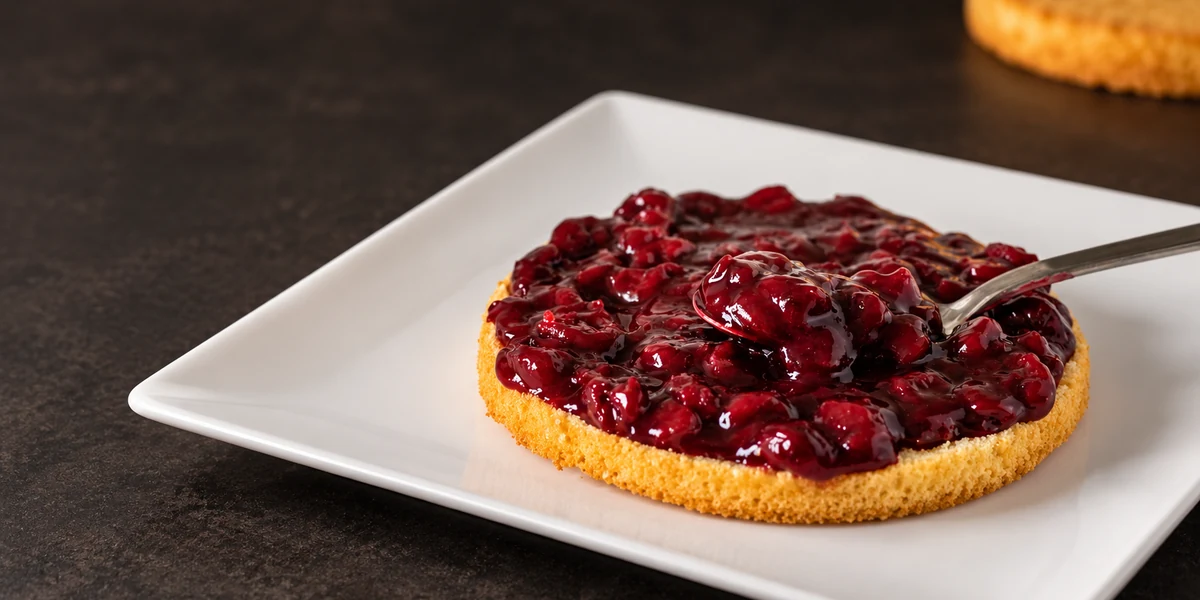
A fruit layer that stays where you put it
Cherries bring acidity, colour and a juicy bite to a sweet cake. The aim here is to keep the fruit surrounded by thickened juice so you can spread a controlled layer instead of pouring loose liquid into the sponge.
This is a small-batch, cornstarch-thickened filling. You can keep the cherries whole for distinct pieces or blend the fruit before cooking for a smoother layer. It also works in cupcake centres and dessert cups, where a firm slice is less important than an even spoonful.
The word confit or confiture is sometimes used for fruit cake fillings, but the name does not determine the thickener. This version relies on cornstarch. A pectin insert, a high-sugar jam and this filling each have a different formula and purpose.
The three-ingredient recipe
Weigh the cherries after removing the stones and stems. For frozen fruit, use plain, unsweetened pitted cherries. Keep the juice released by those cherries with the fruit; syrup from canned cherries is not an equivalent ingredient.
Use cornstarch, also sold as cornflour in some countries. It is the fine white thickener, not yellow cornmeal. Blend it thoroughly with the sugar before it touches the fruit so it disperses more evenly.
Cherry filling for cakes and cupcakes
Ingredients
- 300 g pitted cherries, fresh or frozen
- 80 g sugar
- 15 g cornstarch
Method
- Prepare and weigh the cherries. Mix the sugar and cornstarch together in a small bowl.
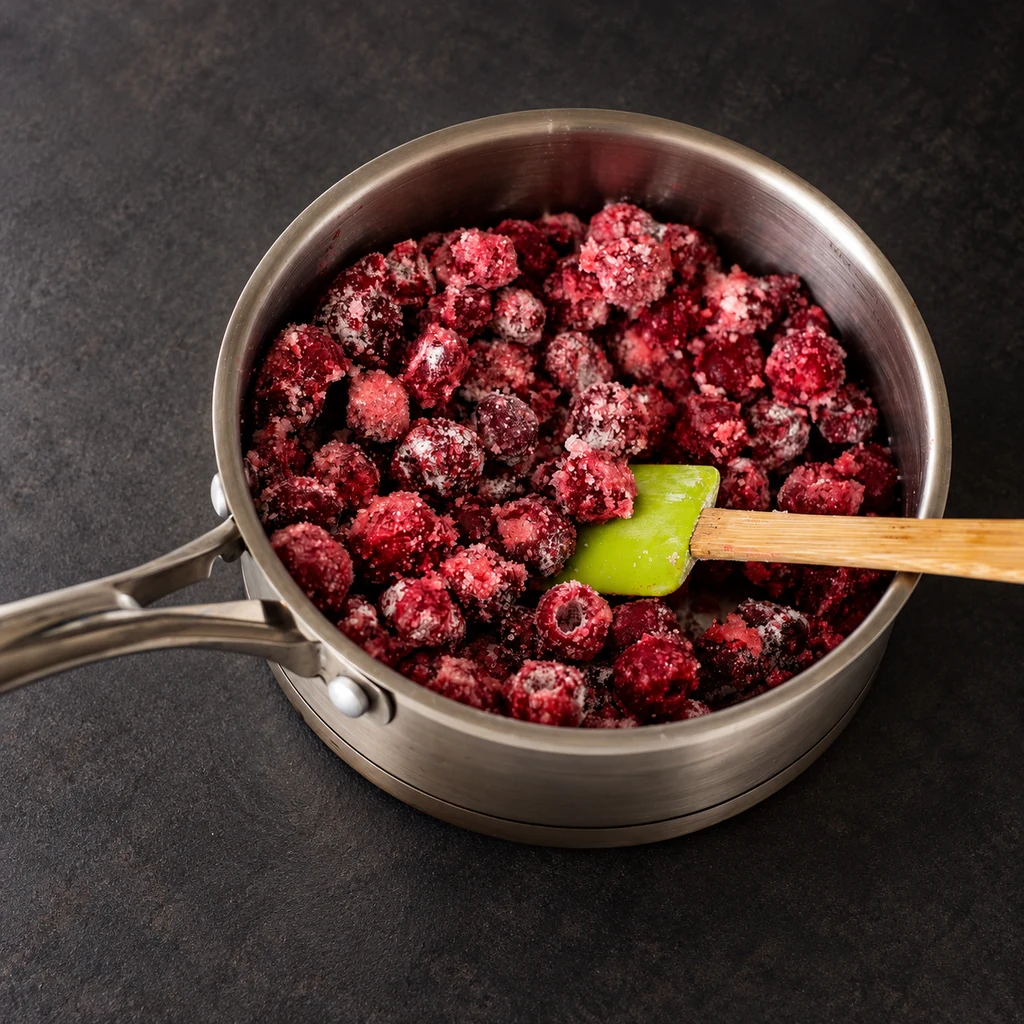
- Put the cherries in a heavy-bottomed saucepan. Add the sugar-and-starch mixture and stir to coat the fruit evenly.
- Heat gently at first, stirring, while the cherries release juice. With frozen fruit, allow enough juice to melt to keep the mixture from catching on the base.
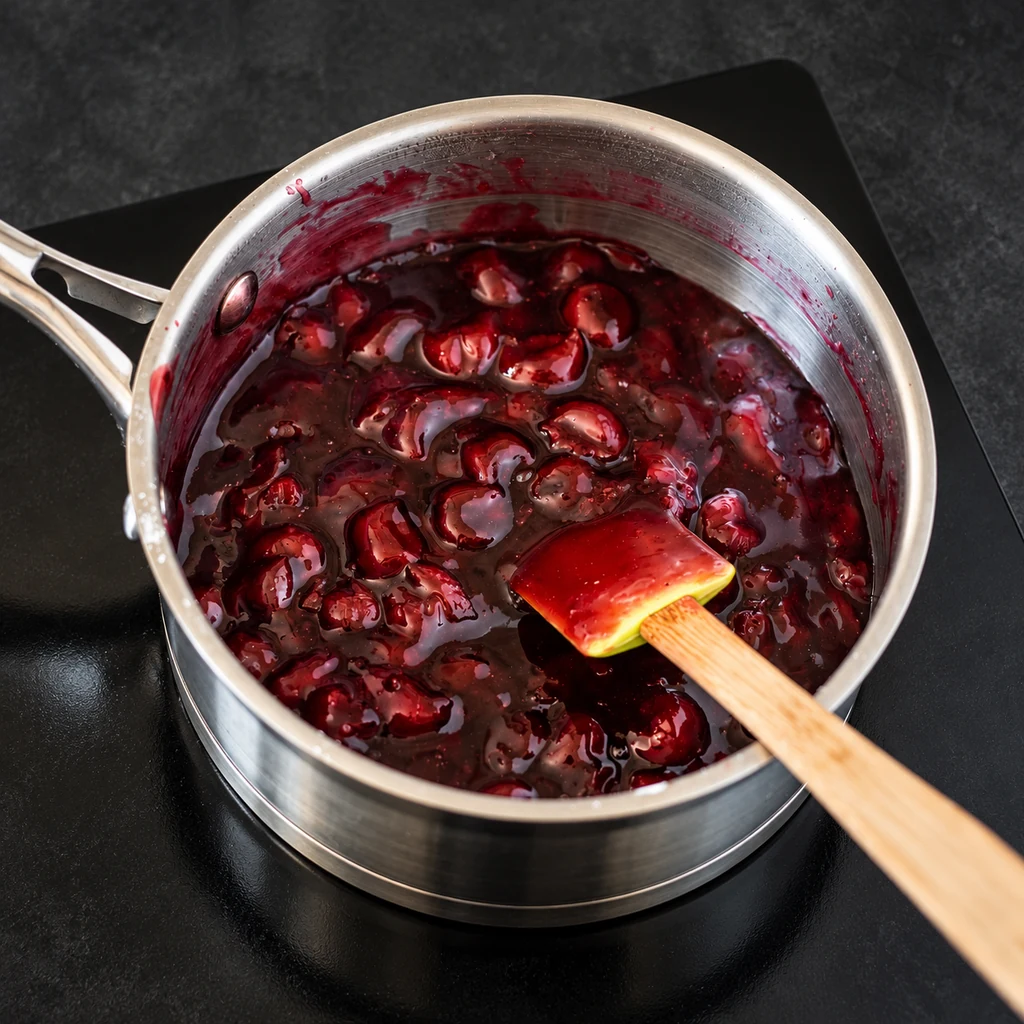
- Continue cooking over moderate heat, stirring across the base and into the corners of the pan. Let the mixture reach a bubbling simmer and cook until the juice is visibly thickened and evenly coats the fruit.
- Remove from the heat and transfer to a clean, shallow heatproof container. Let excess heat escape briefly, then refrigerate promptly. Do not leave a large hot batch standing until it becomes completely cold.
- Use the filling only after it is cool. Stir gently before spreading it in the cake or transferring it to a piping bag.
The ingredient total is 395 g before cooking; the finished weight depends on evaporation.
The cooking time varies with frozen versus fresh fruit, pan size and heat. Judge the thickened juices, not a fixed 15-minute timer.
Judge the texture after cooling
In the pan, you want thickened juice rather than cherries swimming in a watery syrup. Stirring should move the fruit and the surrounding sauce together. Keep the heat controlled: a scorched patch on the base can spoil the whole batch.
The filling will become thicker as it cools. A hot spoonful does not tell you how it will behave between cake layers. Check a cooled sample before deciding it needs more starch or a longer cook.
If a cold filling still releases a lot of thin juice, first check whether it was heated enough and whether the correct amounts were weighed. Extra water, very juicy fruit or a different starch can change the result. Do not sprinkle dry starch into the finished filling; it is likely to form lumps and remain uncooked.
Whole cherries or a smooth filling?
Whole cherries give a noticeable fruit layer. Chop them if the cake layer is thin or the cupcake opening is small. The pieces should fit the dessert instead of forcing you to use a thicker filling layer than intended.
For a smoother filling, blend the pitted cherries before cooking, then follow the same weighing and mixing method. This distributes the fruit more evenly and makes a neat, thin layer easier to spread. You are changing the texture of the fruit, not replacing its weight with extra juice.
A fine piping tip will not pass whole cherries. Choose an opening wide enough for the fruit pieces, or spoon the filling into place.
Layer it with sponge and cream
Cool both the cake and the cherry filling before assembling. Warm fruit can soften a butter- or dairy-based cream and make an otherwise stable cake slide.
Spread a controlled layer and leave space at the edge. When the filling is softer than the surrounding cream, pipe a firm cream border first and keep the cherries inside it. The border supports the layer, but it cannot compensate for a filling that is still hot or watery.
Chocolate sponge is a useful pairing: the fruit brings a tart contrast to cocoa and a sweet cream. Consider the moisture from both fruit and syrup before soaking the cake. A generously soaked layer plus wet fruit can become difficult to stack.
For dessert cups, alternate small amounts of sponge, cream and cherry filling. This allows the fruit to remain juicy without asking it to support the weight of a whole cake.
Bake a chocolate sponge for the cherry layer.
Can you use other berries?
You can use the same approach with other berries, but the exact cherry formula is a starting point for testing, not a universal ratio. Fruit differs in water content, acidity, seeds and how much juice it releases during cooking.
Cranberries and currants bring a sharper taste that can balance a very sweet cream. Lingonberries add a slightly bitter edge. Strawberries, raspberries and blackberries offer other flavour combinations, but may need different preparation and texture control.
Test a small batch, cool it and evaluate it in the intended dessert. Do not assume that exchanging one fruit for another gram for gram will give precisely the same set.
Refrigeration, freezing and making ahead
Keep this filling covered in the refrigerator and plan to use it soon. Use a clean spoon when taking out a portion. A low-sugar cake filling is not made shelf-stable merely by putting it in a jar.
Cool it promptly in a shallow container and refrigerate within two hours of cooking. Do not leave it on the counter overnight. For a finished cake, follow the storage needs of the most perishable component, including its cream.
Ordinary cornstarch fillings can lose their texture after freezing and thawing. If the cake requires a frozen insert, choose a formula specifically developed for that use, with a suitable pectin or freezer-stable thickener. Changing the powder alone without adjusting the formula is not a reliable conversion.
Common questions
Can I cook the cherries straight from frozen?
Yes. Use unsweetened, pitted cherries and begin over gentle heat so their juice can release before the mixture catches on the pan. Keep stirring as the filling heats.
Can I make the filling without cornstarch?
Leaving it out changes this recipe into a much looser fruit preparation. For a starch-free filling, use a complete recipe designed around another thickener rather than simply omitting the 15 g cornstarch.
Can I use potato starch instead?
Different starches give different textures and cooking behaviour. Cornstarch is specified for this formula; treat a substitute as a separate test rather than expecting an identical result.
Is this cherry jam for canning?
No. It is a refrigerated dessert filling. The formula and method are not a tested home-canning process.