
Why Did My Ganache Split?
Oil separating from rough chocolate clumps usually points to a broken emulsion. Too much heat or the balance of chocolate and liquid may be involved. First check the texture and temperature: unmelted pieces, a firm cooled filling and a smooth runny ganache need different fixes.
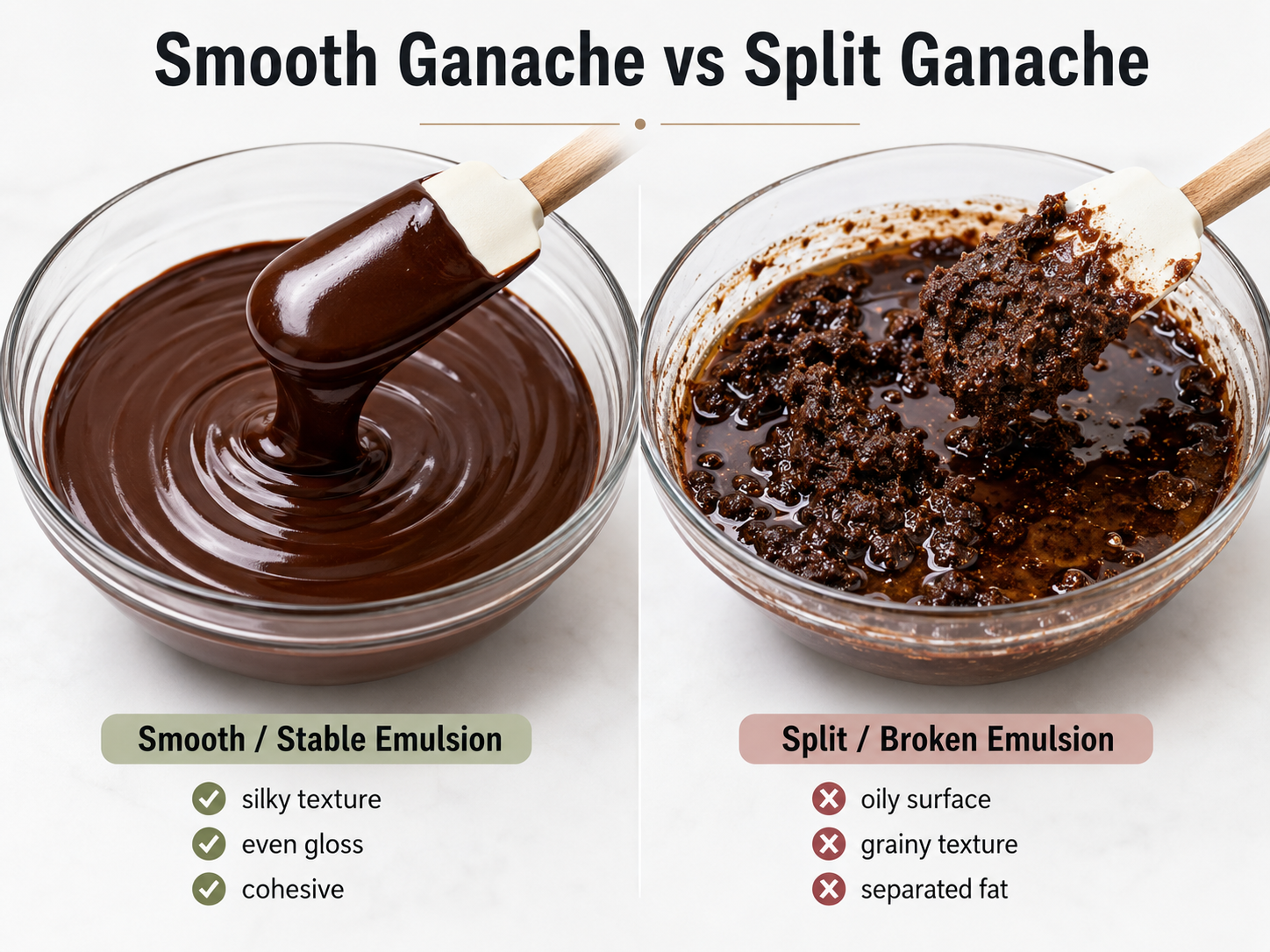
Look at the bowl before reaching for more cream. Is oil pooling around the chocolate? Can you see individual pieces? Was the mixture smooth until you reheated or whipped it? Each detail helps you choose the next step.
Start with the checks below for chocolate-and-cream ganache. If your recipe contains fruit purée, alcohol or alternative cream, keep its specific ingredients and method in mind before changing anything.
First, identify the texture
A split ganache may show oily patches around rough clumps. Distinct hard pieces in an otherwise even mixture can be chocolate that has not fully melted. Look at both the particles and the mixture around them.
Smoothness matters as much as thickness. A firm filling may have cooled and set; a fluid glaze may still be warm. Note when the change appeared: during mixing, while cooling, after reheating or during whipping.
- Oil and rough clumps: check the emulsion and recent heating.
- Distinct chocolate pieces: check whether they have melted.
- Smooth but firm or fluid: check the recipe, temperature and intended use.
- Grainy after whipping: stop the mixer and check the whipping method.
| What you see | First check |
|---|---|
| Oil and rough clumps | Check the emulsion and recent heating |
| Distinct hard pieces | Check whether the chocolate has fully melted |
| Smooth, but firm or fluid | Check the recipe, intended use and setting stage |
| Changed while whipping | Use the whipped-ganache branch |
What does your
ganache look like?
Start with the closest symptom. Then add a little context to make your next step more useful.
Five questions. See a short result, then request your personal PDF by email.
Keep the next steps beside your recipe
Get your personal PDF with what to check, what to avoid and when to stop.
Why ganache splits
Ganache combines fat-rich chocolate with a water-containing ingredient such as cream. Emulsifying brings those components into a cohesive mixture. When they separate, you see oil, roughness or uneven clumps instead of a smooth texture.
The repair depends on the condition of the batch. Chocolate needs to be fluid enough to emulsify, but excessive heat can damage the mixture. Measure the temperature and compare it with your recipe. Use the method for your chocolate: dark, milk and white chocolate do not share one universal formula.
How to approach oily, separated ganache
Pause direct heating and check the temperature. If you have just heated the mixture aggressively, do not keep applying heat. If it is cold and stiff, follow your recipe’s gentle warming method so the chocolate becomes workable.
For a plain, unwhipped chocolate-and-dairy-cream ganache, gradually whisking in warm water can sometimes bring the mixture together. It adds liquid without more fat. Check the recipe and intended use first: the extra liquid changes the formula. Do not use this as a general repair for bonbon fillings, fruit-based or alcoholic ganaches.
A suitable immersion blender can also help form a smooth emulsion. Use a container deep enough to keep the blending head submerged, avoid drawing in air and follow the appliance instructions. Stop and reassess once the mixture becomes cohesive.
If it is grainy without visible oil
Check whether you are seeing recognisable chocolate pieces or a sandy texture throughout the bowl. For a cooled, unwhipped batch with unmelted pieces, use brief, gentle warming and stir between heating stages. You want the pieces to melt without making the whole batch excessively hot.
If the pieces disappear but the mixture stays rough and oily, return to the emulsion checks. If you cannot identify the particles, check the recipe and ingredient labels before adding anything. Graininess alone does not identify the cause.
If it is smooth but too thick or too runny
Compare the texture with the job you need it to do. A glaze should flow; a truffle filling needs enough structure to shape. The proportion of chocolate and liquid affects that texture, as does the temperature at which you use it.
If a smooth ganache has set too firmly to work with, use the recipe’s gentle warming method. If it is runny, complete the cooling or setting stage before deciding to change the formula. Still too soft? Check your quantities and substitutions. Avoid alternating extra chocolate and cream until you lose track of the recipe.
Using white chocolate? Learn how to melt it gently and recognise when extra heat will not help.
If it changed after whipping or reheating
Whipped ganache needs a properly prepared, chilled base. Whipping too fast or too long can make it grainy or separated. Stop when the texture starts to deteriorate and check the original method. Blending or remelting does not automatically restore its whipped texture.
For reheated ganache, look at what changed. Oil appearing after heating calls for the emulsion checks. Distinct chocolate pieces without oil call for the melting checks. Use a thermometer; the appearance of the bowl cannot tell you its temperature.
When to stop trying
Stop further heating and additions if the ganache smells burnt, stays separated after a controlled attempt, or you no longer know what has been added. Keep the recipe and a note of your changes so you can identify the problem before the next batch.
A smoother texture does not reset storage life. For bonbons or products you sell, follow the established recipe and storage procedure; appearance alone cannot confirm that a changed batch is suitable.
- Avoid repeated heating without checking the temperature.
- Do not add cold cream as an automatic repair for warm ganache.
- Stop guessing when the recipe or previous additions are unclear.
Prevent the same problem next time
Keep the chocolate label, recipe quantities and mixing temperatures together. Record when the texture changes. When testing a correction, change one thing at a time so you know what helped.
Follow the recipe’s sequence. Some ganaches begin with boiled cream; that alone does not prove it was too hot. What matters is how you combine the ingredients and control the mixture. Purposeful stirring helps emulsification, while later whipping introduces air and needs a different approach.
Making a ganache filling for macarons? Choose a filling that works with the shells.
Get a rescue plan for your batch
Answer five questions about your symptom, ingredients, intended use and previous attempts. See a short diagnosis, then enter your email to get the full Rescue Plan with checks and next steps for your batch.
To take the next step, explore The Chocolatier’s Path. Learn how to read a chocolate label, work with temperature and tempering, then practise with truffles, bonbons, bars and chocolate decorations.
Before you change the batch
Observe
Note the texture and when it changed.
Check
Look at the recipe, ingredients and intended use.
Test a little
Choose a suitable step before changing the whole batch.
Common questions
Does grainy ganache always mean it has split?
No. Check for unmelted pieces and visible oil. Distinct pieces in a smooth mixture need different handling from rough clumps surrounded by oil.
Can I fix ganache with water?
Warm water can help some plain, unwhipped chocolate-and-cream mixtures. It changes the formula, so first check the recipe and intended use. Avoid a general water repair for bonbon fillings or specialised recipes.
Should I cool it or warm it?
Measure first. A recently overheated mixture and a cold batch with unmelted pieces need different handling. Follow the working temperatures for your recipe and chocolate.
Can I use it once it looks smooth?
Check that the texture still suits your filling or glaze. For storage or sale, a smooth appearance is not enough: follow the established recipe and handling instructions.
Keep exploring
All pastry guides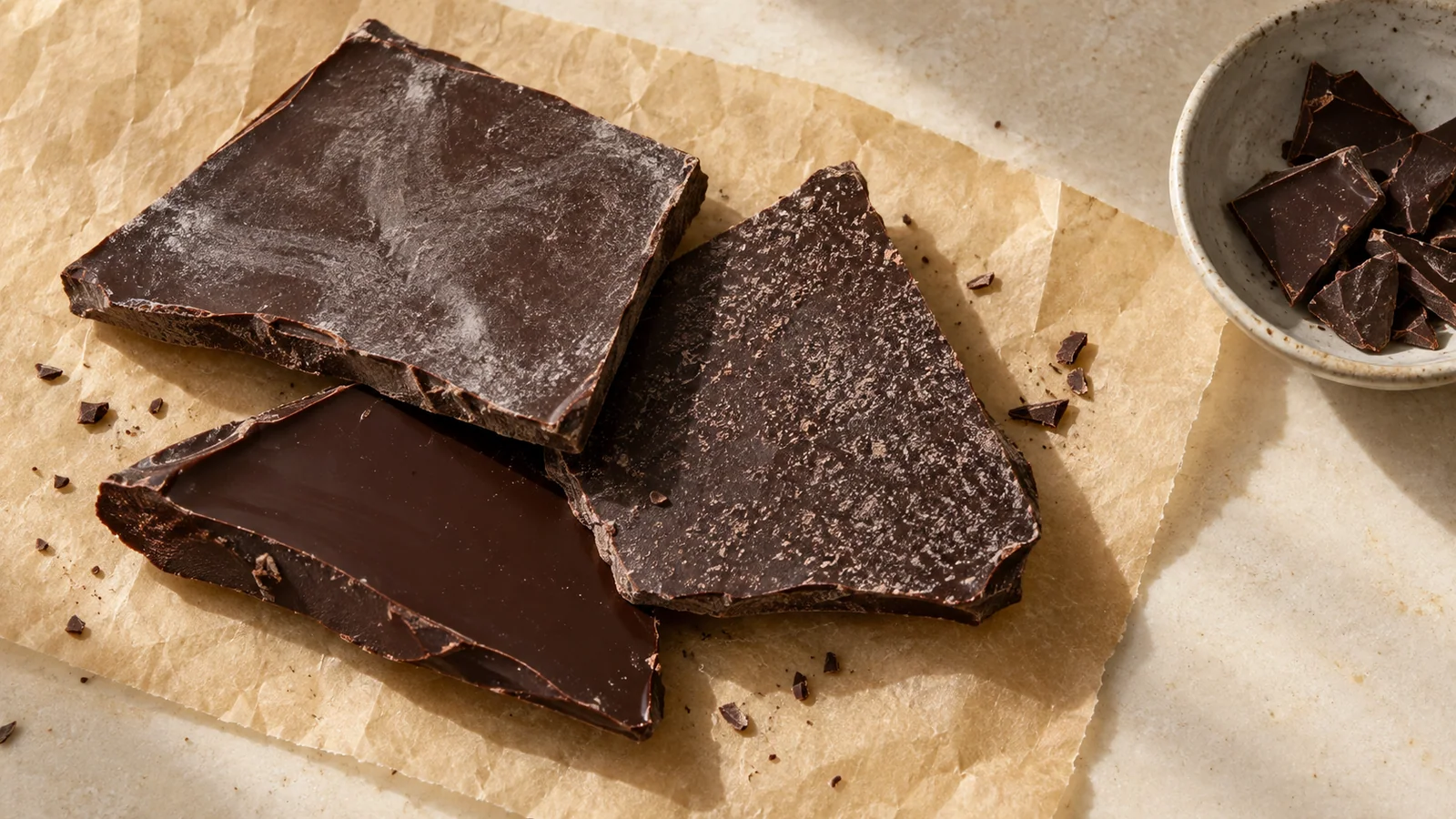
White Film on Chocolate: Fat Bloom or Sugar Bloom?
A white film on chocolate can be fat bloom or sugar bloom. Learn the clues, what storage history can tell you, and when appearance is not enough.
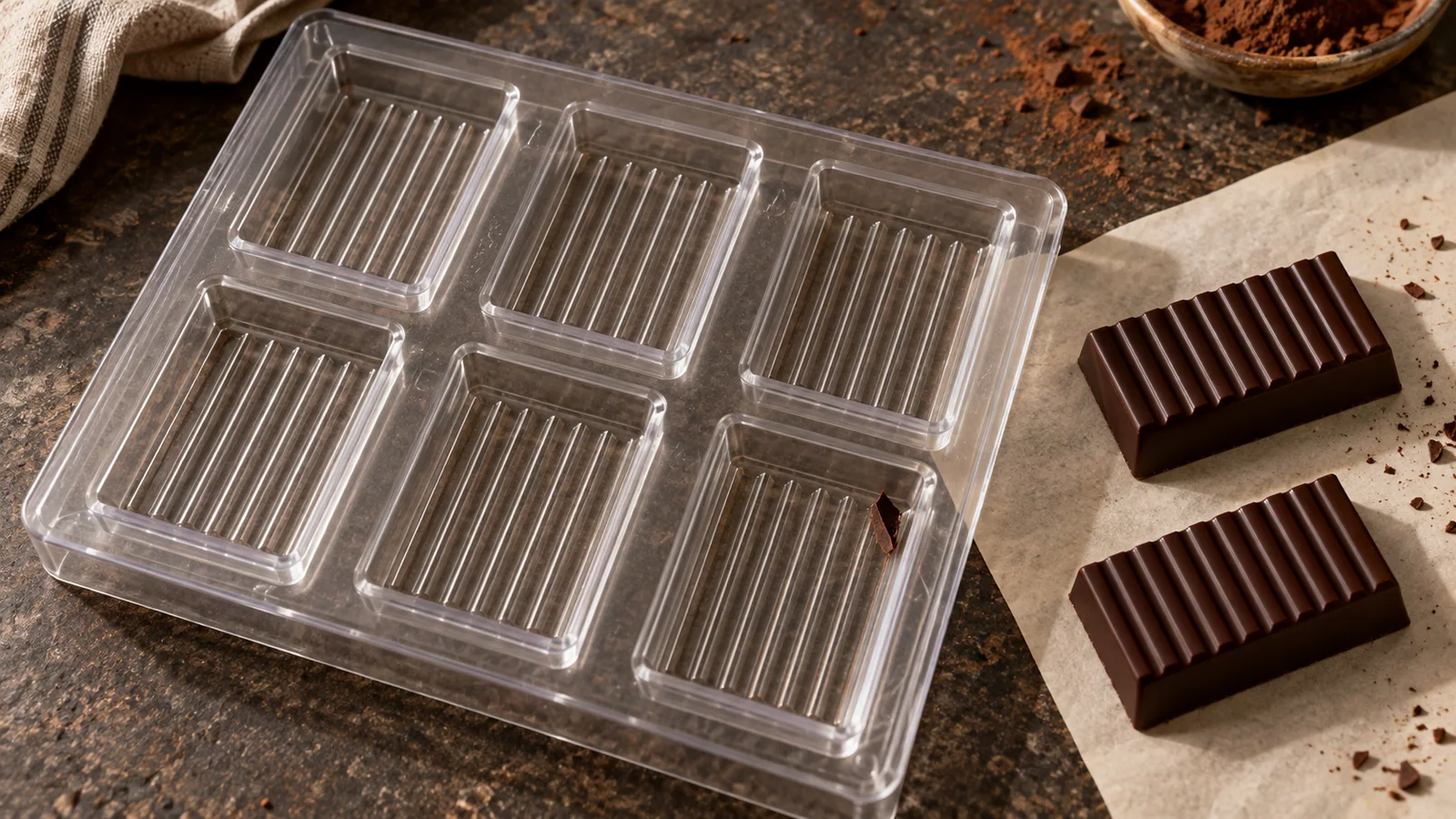
Chocolate Stuck in the Mould: What to Check
Chocolate will not leave the mould? Check whether it has set, whether temper was established and whether the cavity or filling is preventing release.
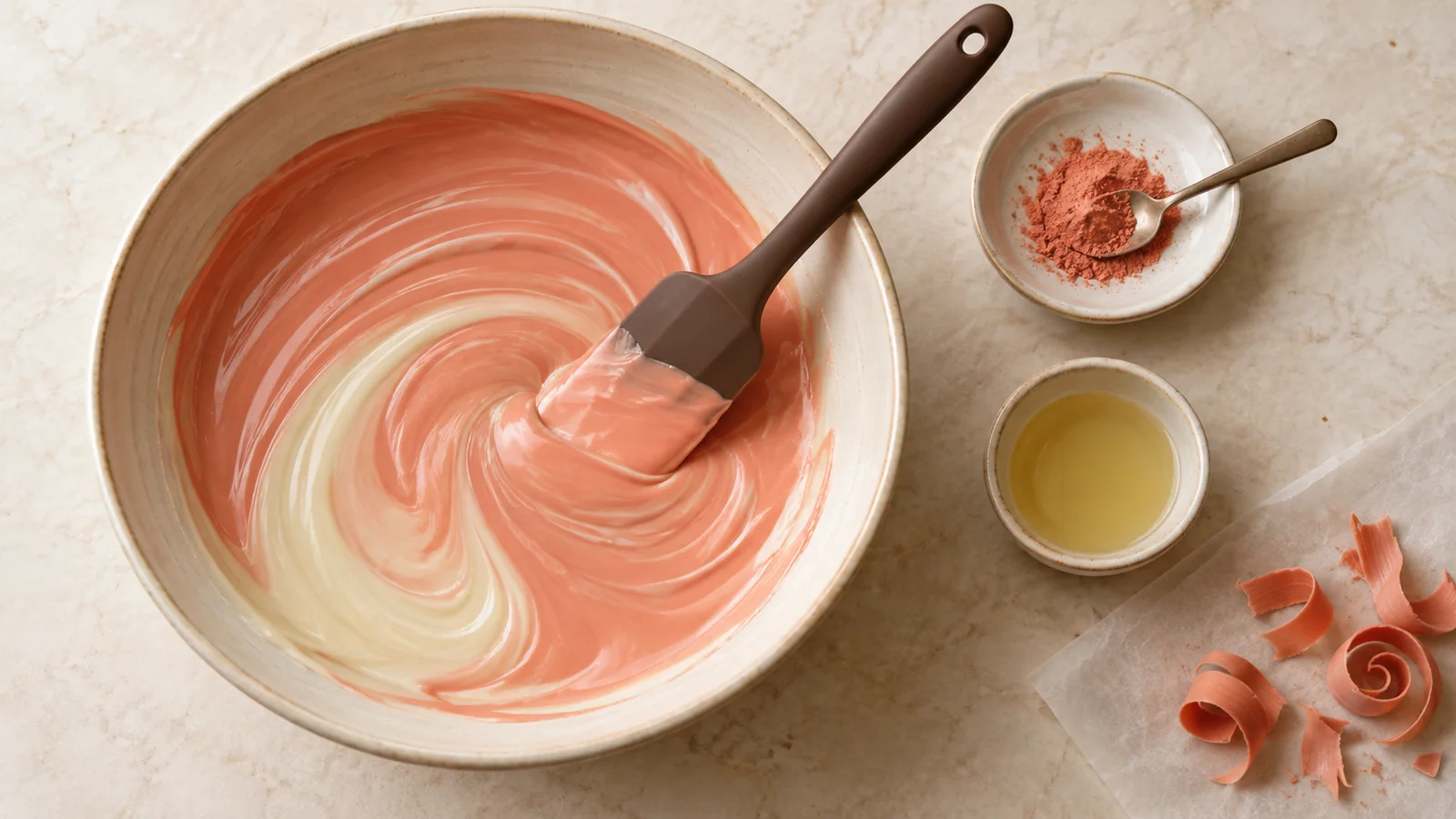
How to Colour Chocolate Without Making It Seize
Choose colour made for chocolate, plan whether you are colouring the mass or the mould, and avoid the moisture mistakes that cause a thick seized paste.
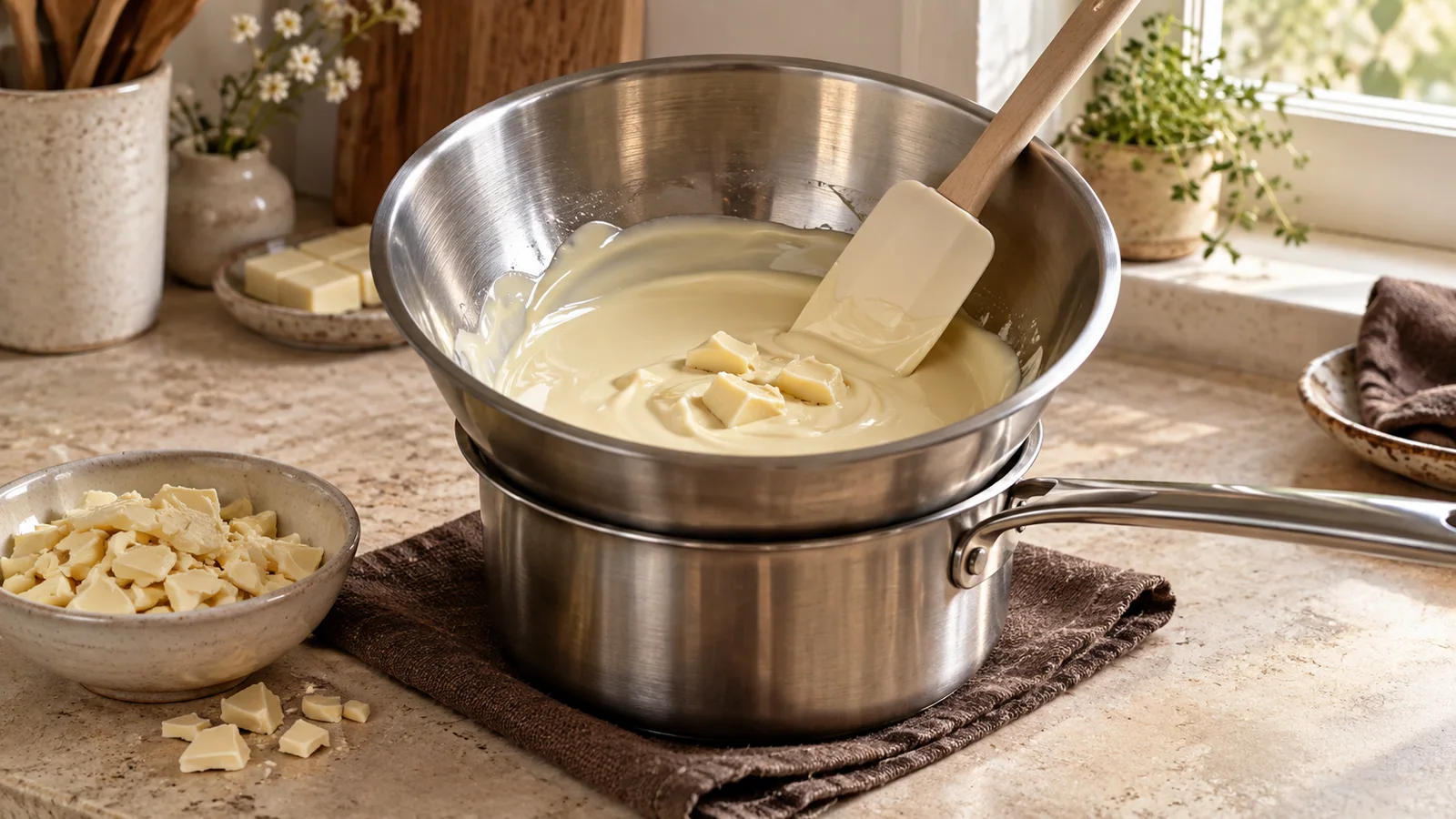
How to Melt White Chocolate Without Scorching It
Melt white chocolate gently in a microwave or over warm water. Learn when to stop heating, how to avoid moisture and why melting is not tempering.