
White Film on Chocolate: Fat Bloom or Sugar Bloom?
Fat bloom is associated with changes or movement in the fat of chocolate; sugar bloom follows moisture dissolving surface sugar and leaving crystals behind. Both can look pale. Check texture and storage history together, and never use the colour of a coating alone to decide whether a filled chocolate is safe to eat.
Explore The Chocolatier’s Path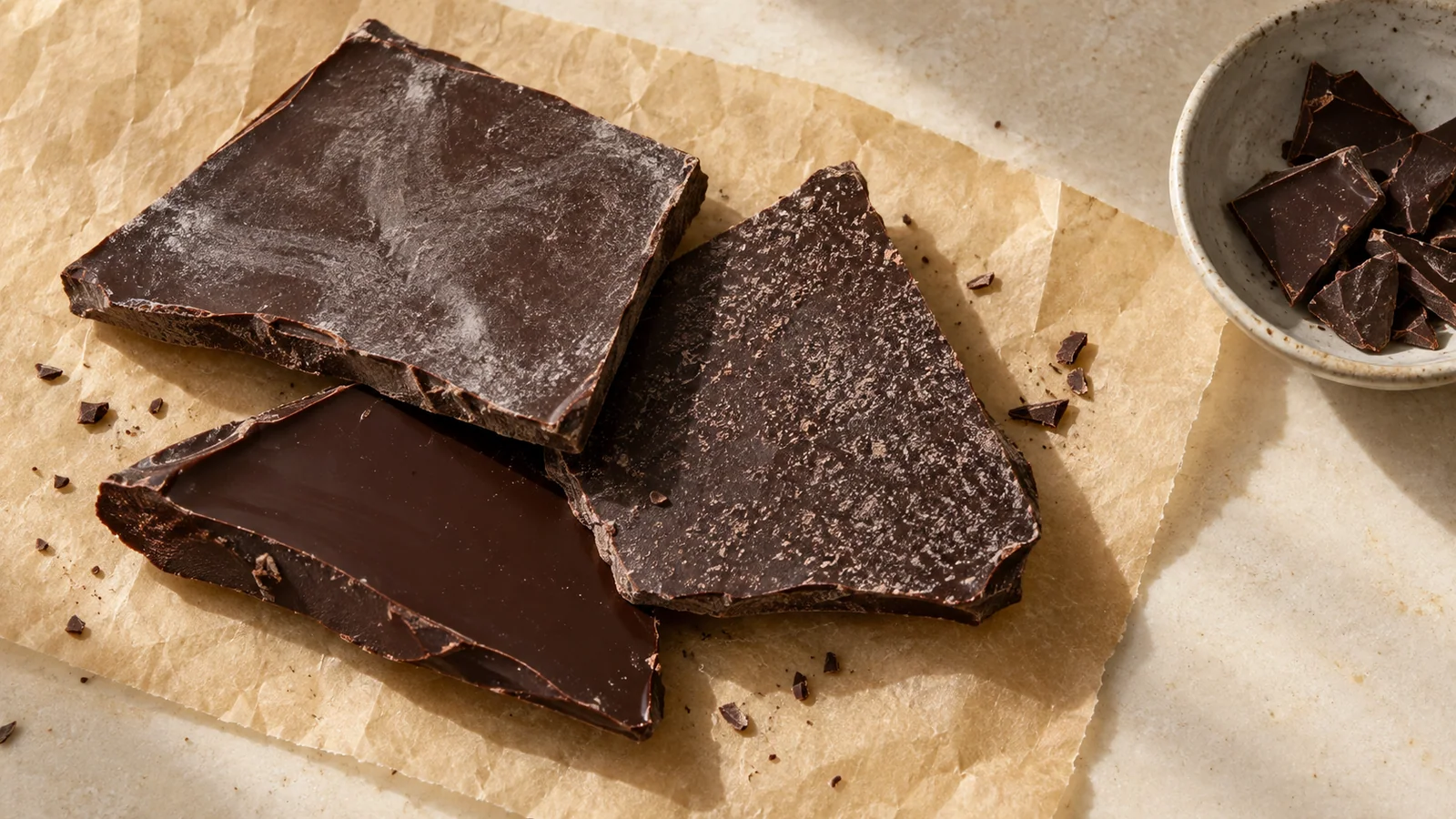
Describe the coating before deciding what it is
Look at the chocolate without rubbing the surface. Is the pale area a smooth haze, irregular streaking or a rough, dusty layer? Did it appear after a warm journey, after refrigeration, or immediately after the chocolate was made? A clear description helps you investigate a defect without turning a guess into a diagnosis.
Bloom is a quality defect rather than a label for every white mark. Fuzzy growth, unexpected odours, damaged packaging or an uncertain handling history need a different response. Do not taste a questionable product to identify it. A photograph can document the appearance, but it cannot establish what happened inside a filled bonbon.
Fat bloom: examine heat and crystallisation
Fat bloom can give chocolate a pale, streaked or cloudy appearance. It is associated with the behaviour of fats in the chocolate and, in filled products, movement of fat from the centre towards the shell. Poorly controlled crystallisation and temperature changes are useful places to investigate.
Ask whether the chocolate softened during delivery, sat near a heat source or experienced repeated warming and cooling. If you made it yourself, review the tempering and cooling records too. Do not assume that dark chocolate is the only kind affected, or that bloom proves a product is premium or natural. Those conclusions do not follow from the appearance.
Check tempering and cooling when chocolate is dull from the start.
Sugar bloom: look for a moisture event
Sugar bloom is associated with moisture reaching the chocolate surface. Some surface sugar dissolves, then remains as crystals as that moisture dries. The finish may feel rougher than a smooth fat haze, but texture alone is not a dependable home test for every product.
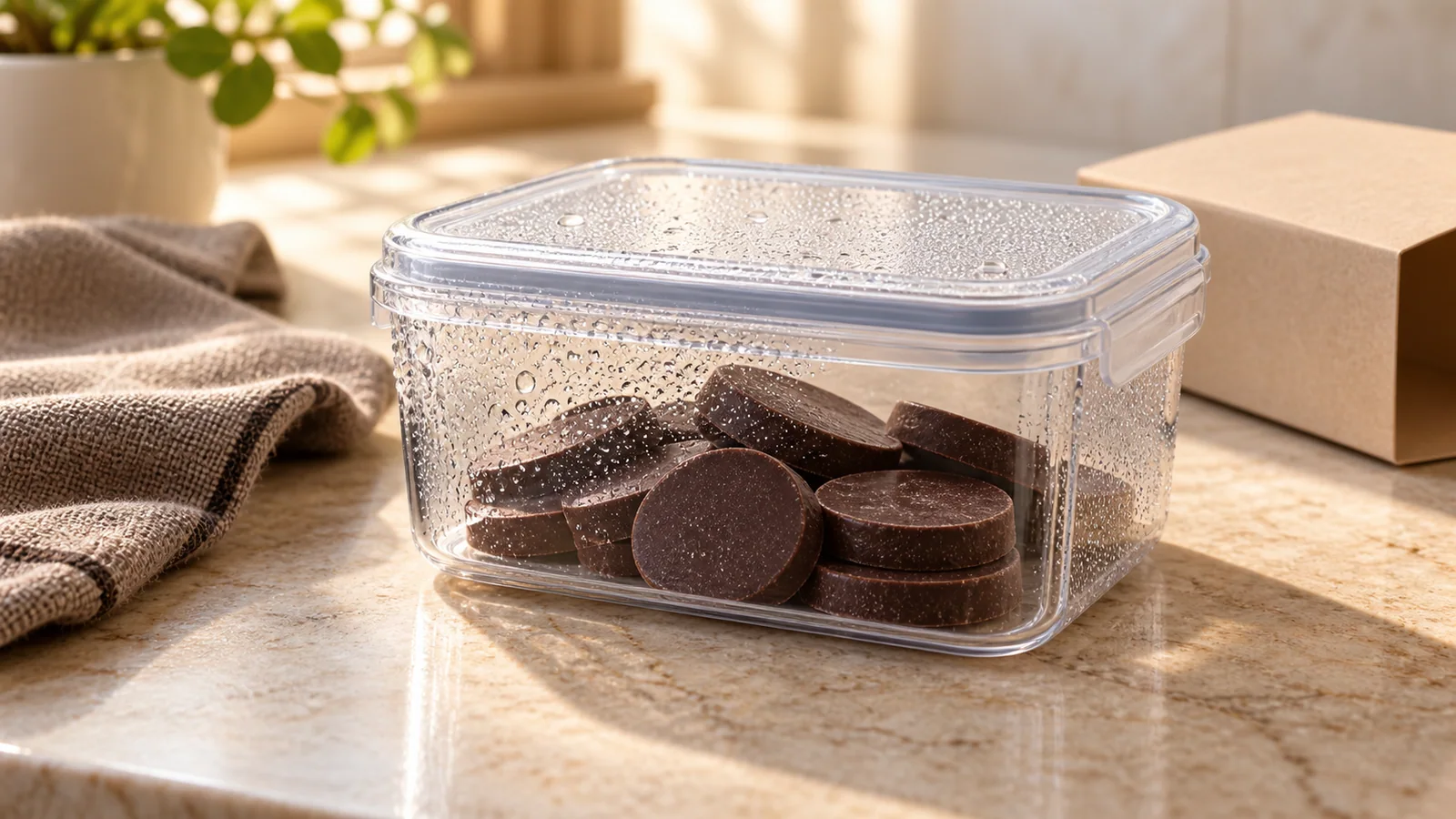
Think about condensation. Cold chocolate unwrapped in warm, humid air can collect droplets even when nobody spilled water on it. Damp moulds and poorly protected storage are other things to examine. The important question is not simply whether the chocolate entered a refrigerator, but whether moisture reached it during storage or temperature changes. Check packaging and the sequence of handling as well as the room itself.
Separate a quality decision from a safety decision
With plain chocolate of known origin that has been stored correctly and remains within its stated use conditions, confirmed bloom may mainly affect appearance and texture. That does not create permission to use chocolate with an unknown history. Filled chocolates contain additional ingredients whose storage requirements remain important even when the shell looks normal.
For a known batch with fat bloom, remelting and tempering may be an option when making a new plain chocolate piece. Sugar bloom can leave texture problems that are less straightforward to remove. Consider an appropriate cooked recipe only when the chocolate is otherwise suitable to use. Heating does not turn spoiled or badly handled confectionery into acceptable ingredients.
Use controlled heat when melting white chocolate for a new application.
Prevent the next exposure
Store chocolate in its recommended conditions, protected from heat, moisture, strong odours and direct light. Keep the environment as consistent as practical. A cupboard beside an oven or a parcel left in sunshine can behave very differently from the room temperature you measured elsewhere.
When moving cold packaged chocolate into a warmer environment, manage acclimatisation so condensation does not form directly on the product. Keep packaging closed during that transition when appropriate for the product. For filled bonbons, follow their refrigeration requirements; a blanket rule to keep all chocolate out of the fridge would ignore the needs of the filling. Plan storage for the complete product, not only its shell.
Use the pattern to improve the next batch
Set aside an unhandled piece and record the chocolate, filling, production date, cooling method, packaging and movement between environments. Compare affected pieces with any unaffected ones from the same batch. A pattern confined to one filling can suggest a different investigation from marks across several unrelated products after transport.
Avoid repeatedly wiping, warming or decorating the same piece while trying to identify the cause. Each intervention changes the evidence. For production, establish the cause on a small comparison batch before changing the entire recipe. If the defect returns despite controlled storage, review the formulation and crystallisation process rather than assuming the packaging is always responsible.
Common questions
Can I scrape white bloom off chocolate?
Scraping may change the surface appearance but does not address the process that caused the bloom. It can also leave scratches. First establish whether you are dealing with a known quality defect and whether the chocolate is suitable for reuse.
Can bloom appear on white or milk chocolate?
Yes. Pale marks may be less obvious against a light background, but the same questions about moisture, temperature changes and the fat system still matter. Do not identify the type of bloom from chocolate colour alone.
Keep exploring
All pastry guides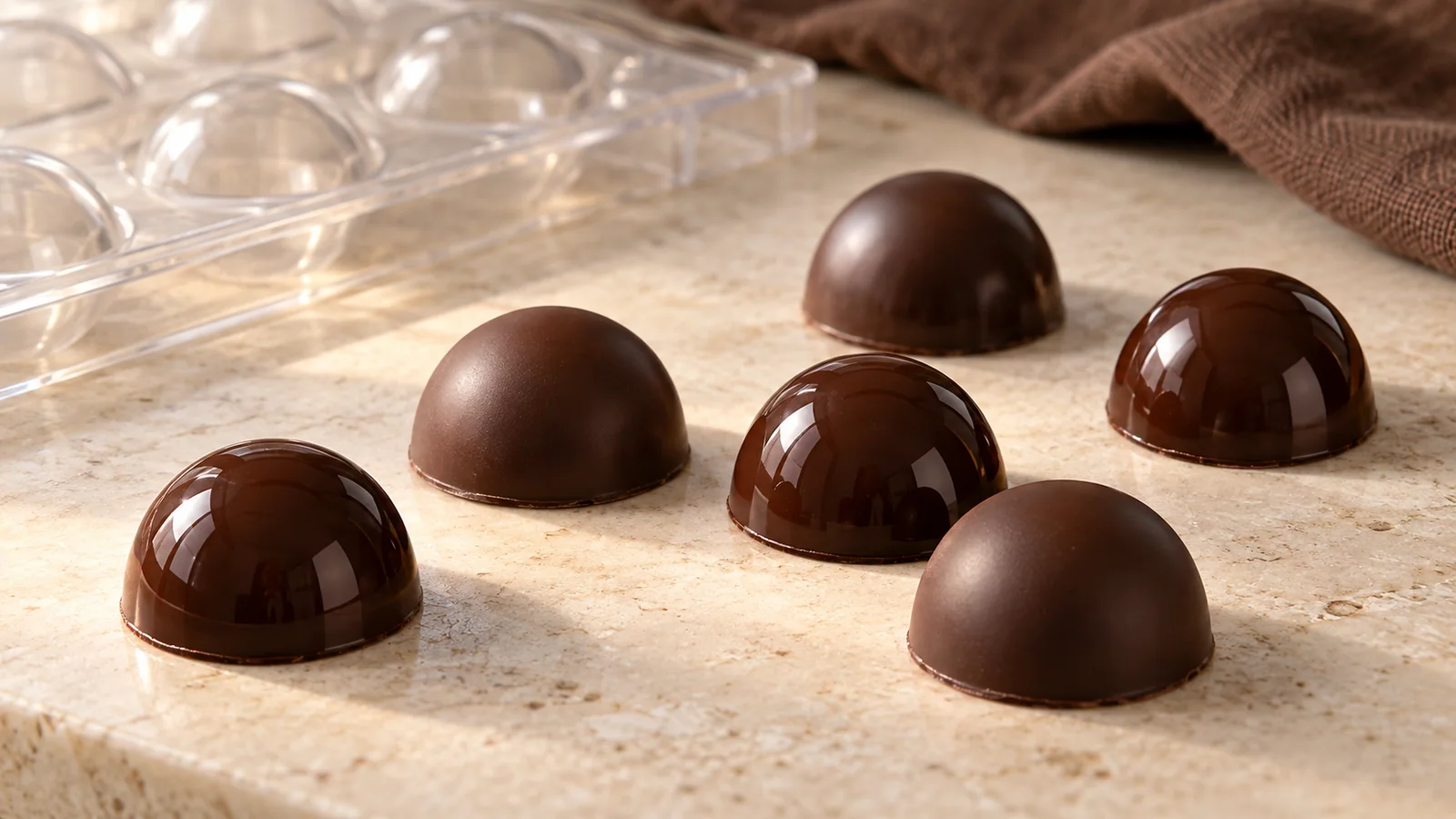
Why Is My Chocolate Not Shiny?
Dull moulded chocolate? Check temper, mould condition, flow and cooling, then use a small test to find the cause of a disappointing finish.
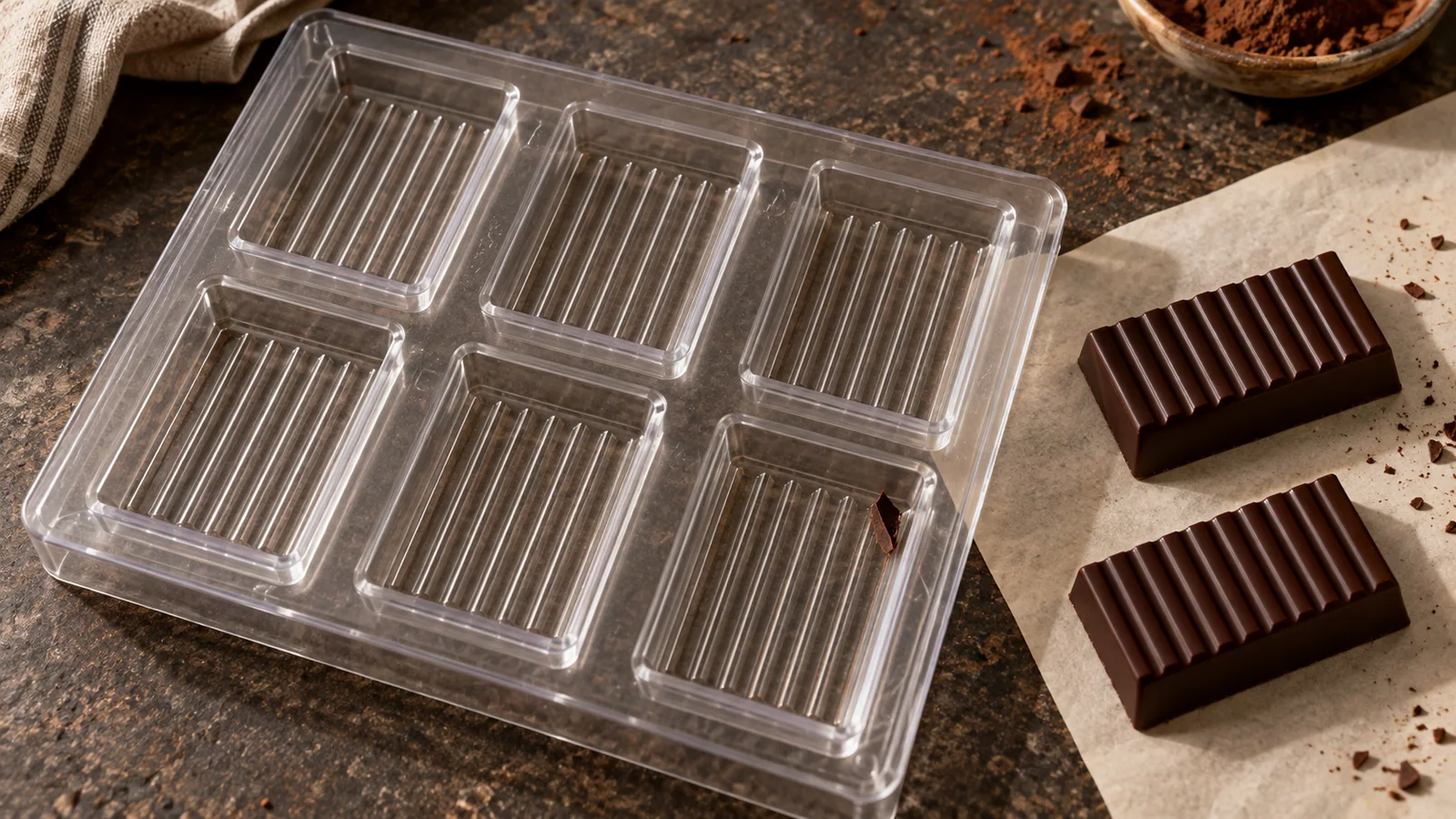
Chocolate Stuck in the Mould: What to Check
Chocolate will not leave the mould? Check whether it has set, whether temper was established and whether the cavity or filling is preventing release.
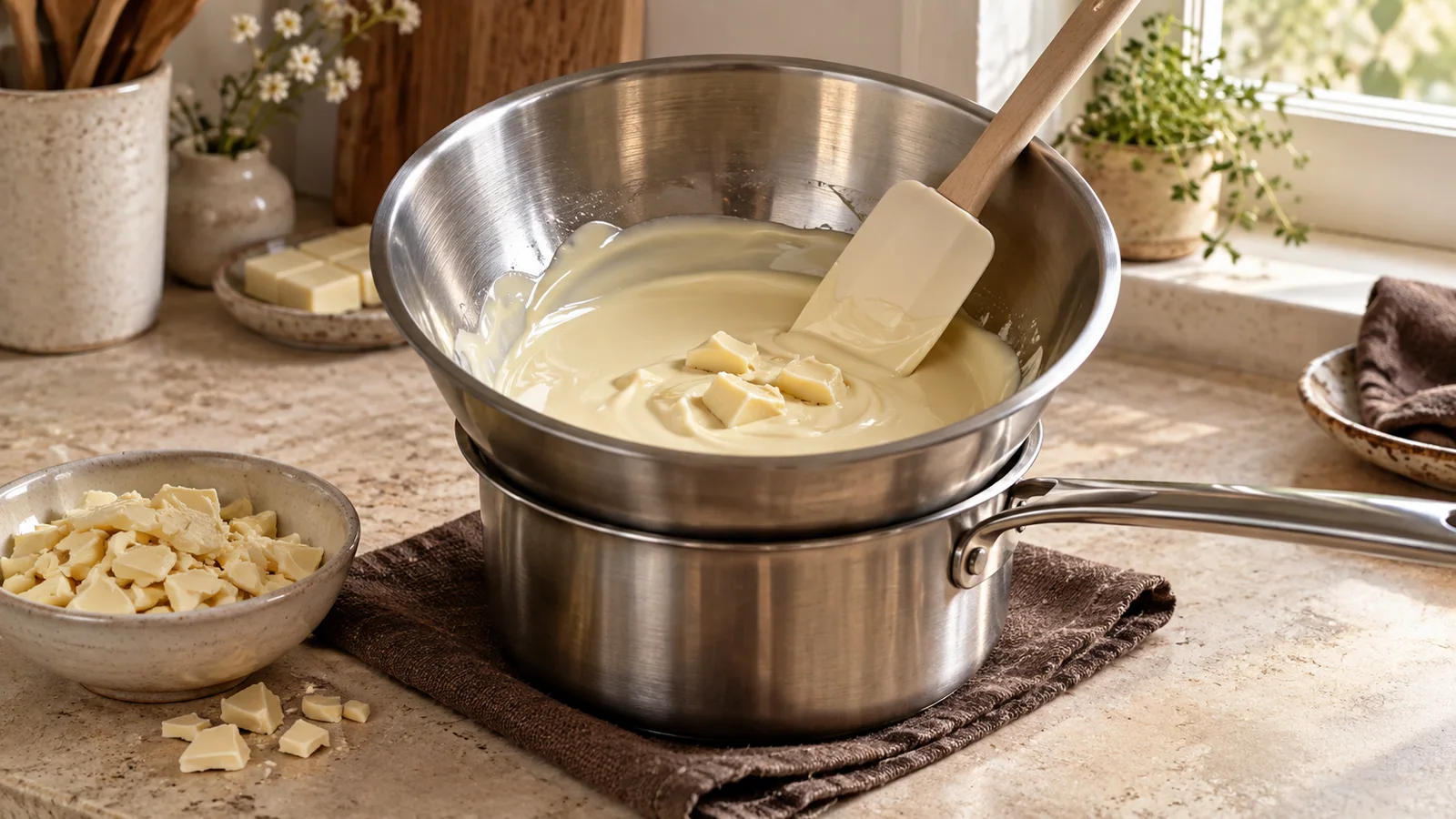
How to Melt White Chocolate Without Scorching It
Melt white chocolate gently in a microwave or over warm water. Learn when to stop heating, how to avoid moisture and why melting is not tempering.
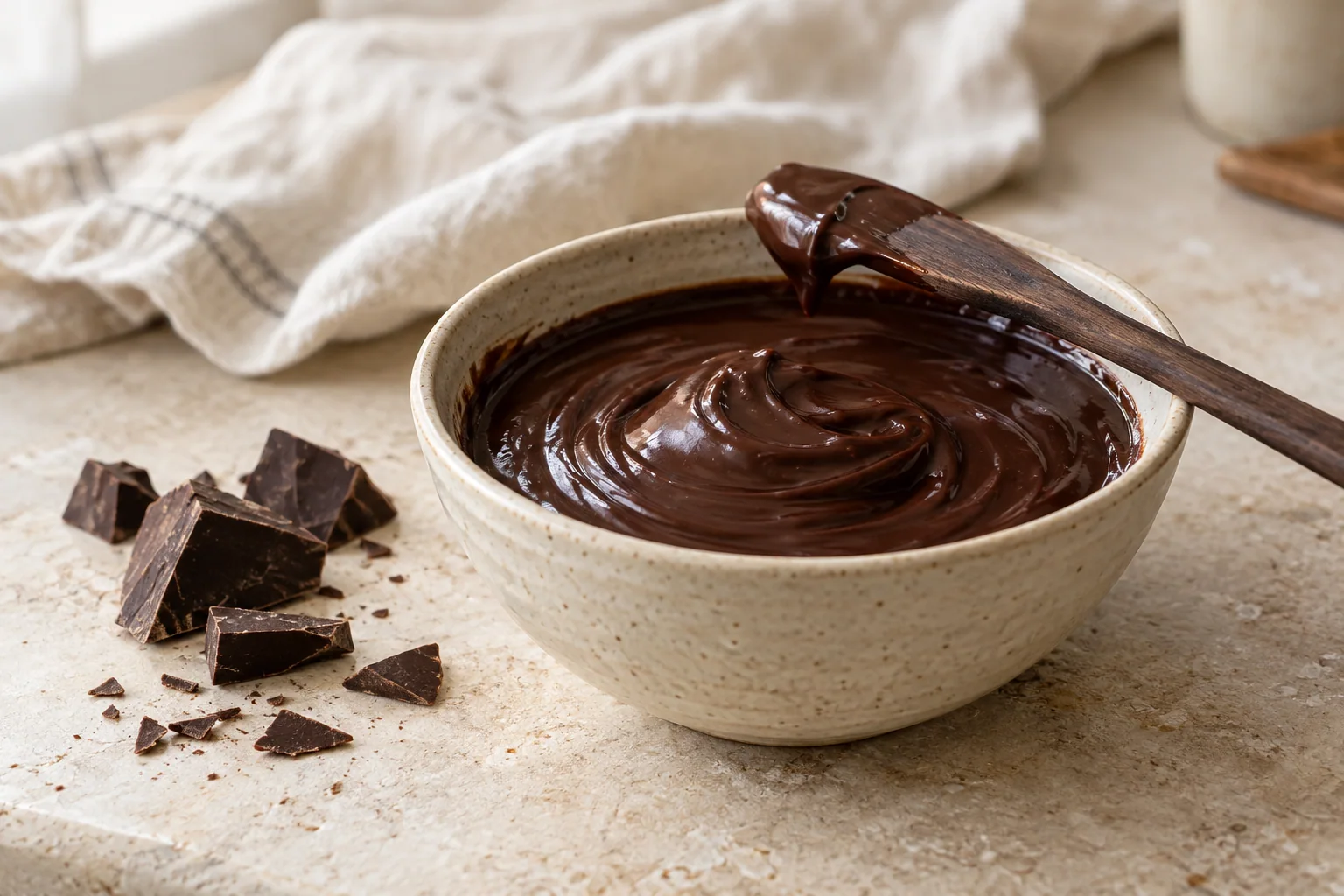
Why Did My Ganache Split?
Recognise a broken emulsion, check your batch and get a personal next-step plan.