
Cakes & pastry
Chocolate Sponge Cake: A Four-Ingredient Recipe
This chocolate sponge cake rises from beaten eggs, without baking powder or added fat. For a 16 cm cake ring, use 4 eggs, 120 g sugar, 100 g flour and 20 g cocoa. Preserve the foam while folding, bake the batter promptly, and let the cake cool before slicing.
5 min read
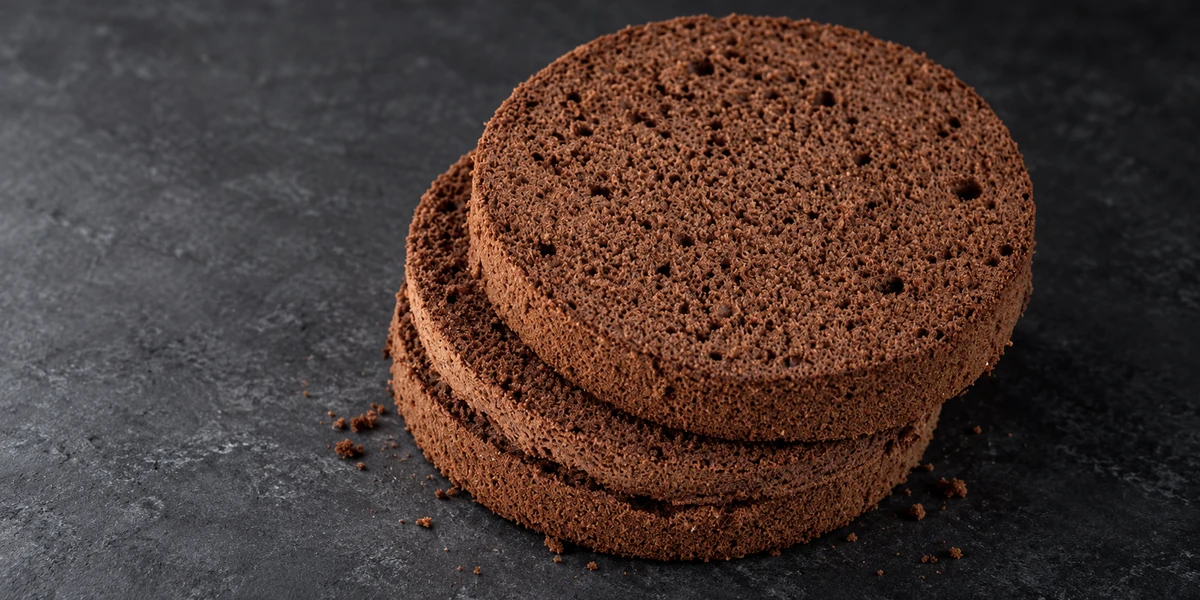
What kind of chocolate sponge is this?
This is a light, egg-foam sponge for layered desserts. It has a different texture from an oil-rich chocolate cake or a dense brownie. The whipped whites provide the aeration; flour and eggs help the crumb set around those air bubbles in the oven.
Choose it when you want a relatively lean cake layer that can be paired with cream, fruit or caramel. It can also be cut into cubes for dessert cups. A modest amount of soaking syrup can soften the layers, but the amount should suit the crumb and the filling rather than follow a fixed rule.
Ingredients and equipment
Bring the eggs to room temperature before whipping. Weigh everything and have the ring, lined tray, sieve and flexible spatula ready so the finished batter does not have to wait.
The recipe uses a 16 cm diameter ring, 10 cm high. If your ring is open at the bottom, wrap the base securely in foil and stand it on a flat baking tray. A closed pan needs its own suitable lining. The pan height is a container specification, not a promise that the baked cake will be exactly 10 cm tall.
Four-ingredient chocolate sponge
One cake in a 16 cm diameter, 10 cm high ring
Ingredients
- 4 medium eggs, whites and yolks separated
- 120 g sugar
- 100 g plain flour
- 20 g cocoa powder
Method
- Preheat the oven to 165–170°C (330–340°F), conventional top-and-bottom heat. Prepare the 16 cm ring and baking tray.
- Separate the eggs carefully. Keep yolk and grease out of the bowl of whites. Put the yolks aside.
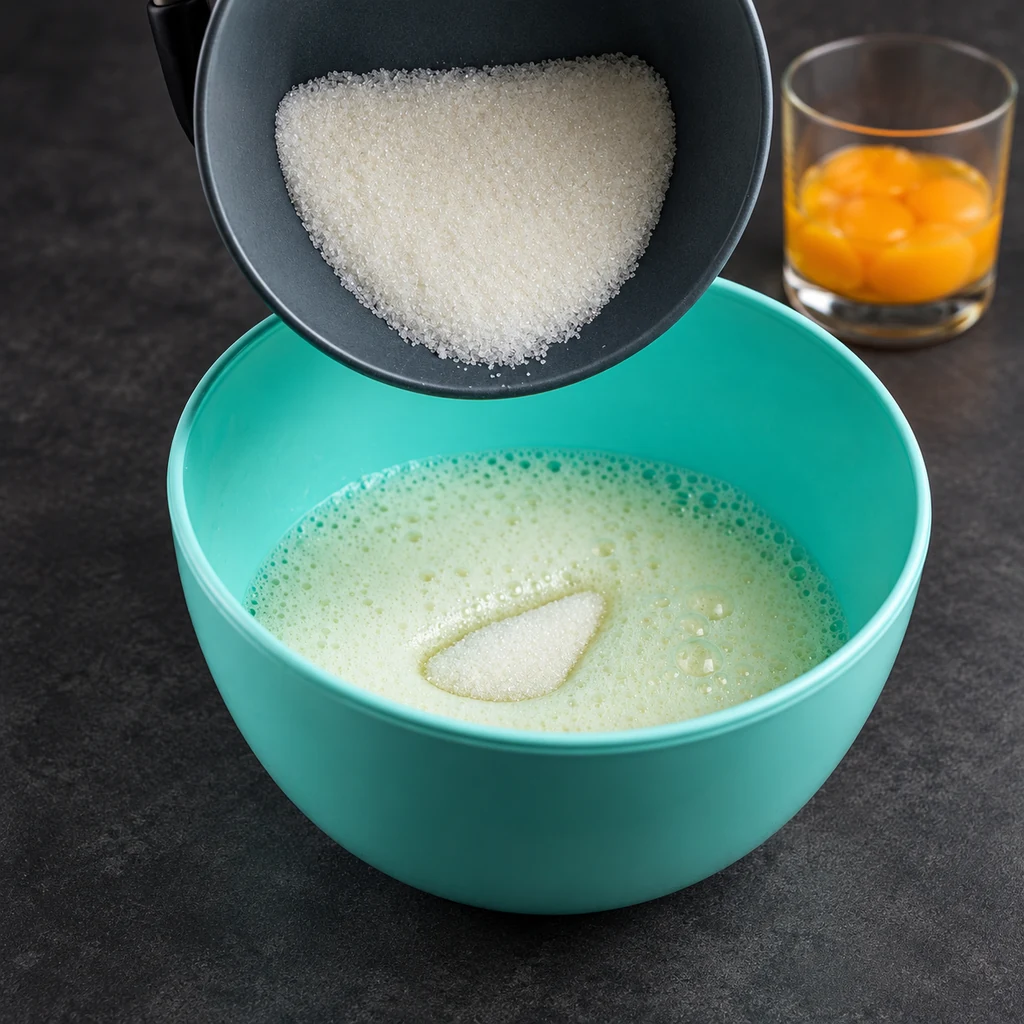
- Whip the whites, adding the sugar gradually in three additions. Continue until you have a firm, glossy meringue that holds its shape.
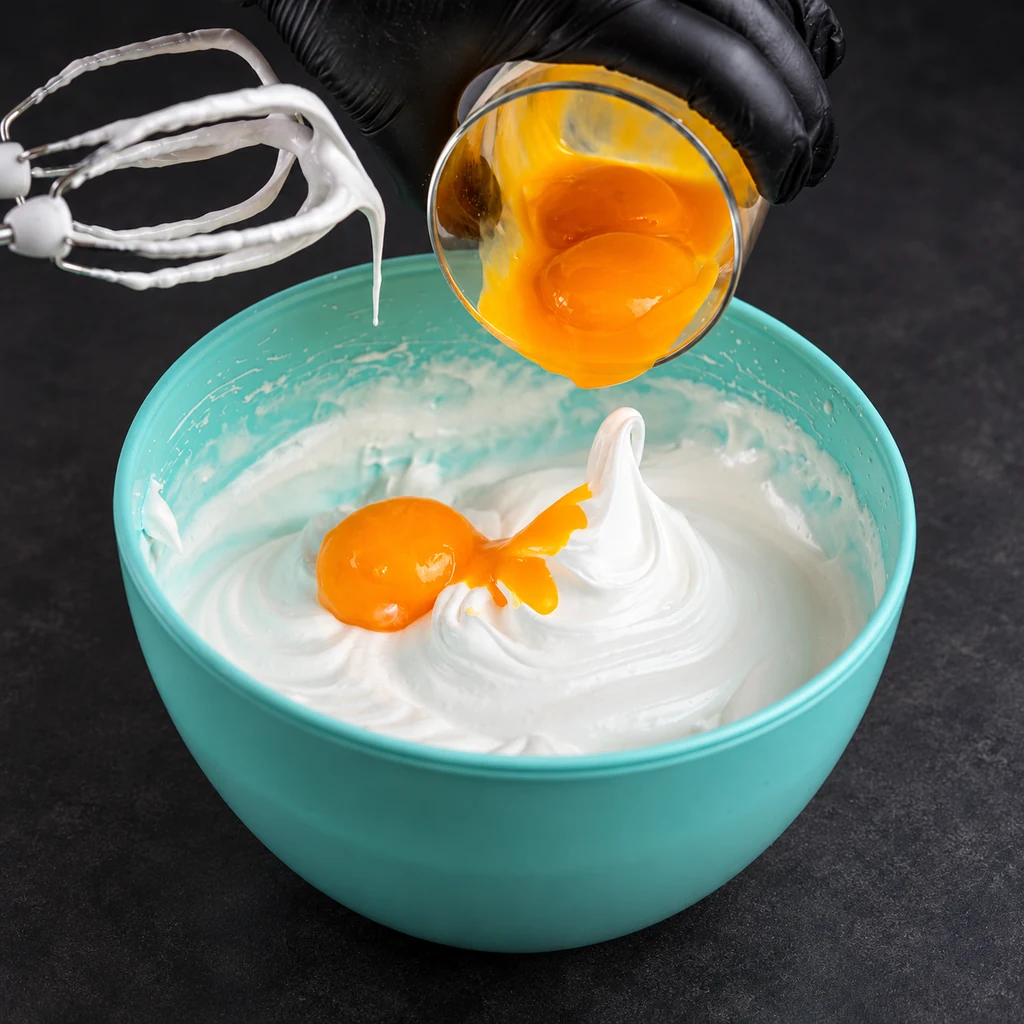
- Add the yolks one at a time on low speed, mixing gently after each addition. The mixture should remain pale and aerated.
- Mix the flour and cocoa, then sift them together. Fold them into the egg mixture in two additions with a flexible spatula. Reach the bottom of the bowl and turn the mixture over itself without beating it.
- Transfer the batter to the prepared ring and bake promptly. The recipe gives approximately 50 minutes, but begin judging the actual cake as it approaches doneness rather than relying on time alone.
- Check the centre with a skewer: it should emerge clean, without wet batter. Cool the cake before removing the ring and slicing it into layers.
Optional flavouring in the recipe: 1 teaspoon each of cinnamon and nutmeg. These spices change the flavour considerably; omit them for a plain chocolate sponge.
Egg sizes vary between markets. Keep the egg size consistent when repeating this recipe; the original uses medium-size eggs.
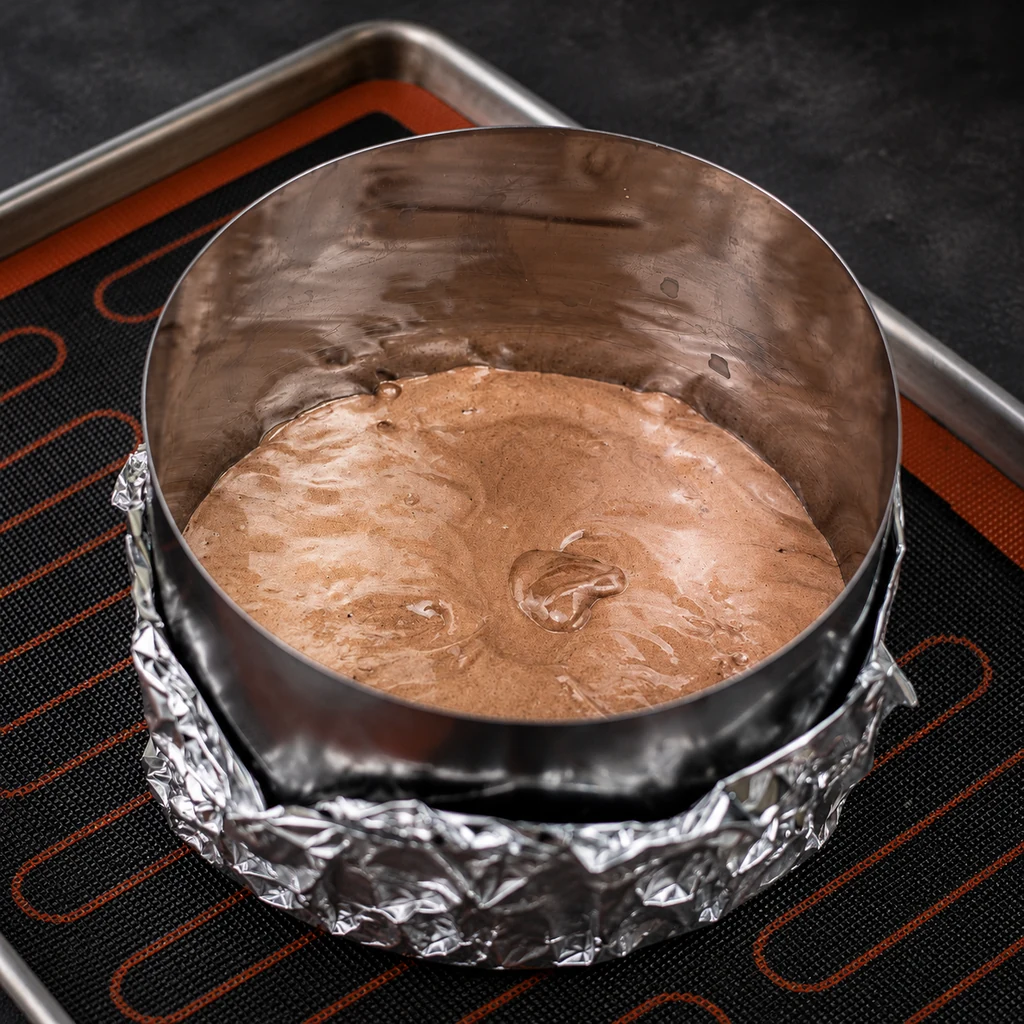
Protect the egg foam
Build a stable foam before adding the yolks. Adding the sugar in stages helps it disperse rather than weighing down the whites in one addition. Judge the texture in the bowl, not only the number on the mixer dial.
Once the yolks and dry ingredients go in, the priority changes to preserving that air. Use low speed only for the yolks, then a spatula for the flour and cocoa. Sifting breaks up clumps and makes the powders easier to distribute without extended mixing; it does not replace properly whipped eggs.
Check the base of the bowl for hidden flour pockets. Stop when the mixture is even. Repeated stirring after that point can deflate it, while stopping too soon can leave dense streaks in the baked cake.
Bake promptly and cool before cutting
An egg-foam batter is not designed to sit while you find a pan or heat the oven. Prepare those first, then move the folded batter into the oven. The baking time changes with batter depth, pan material and the way your oven heats.
The cake needs time for its centre to set. A browned surface alone does not confirm this. Check the centre for wet batter and avoid treating the 50-minute estimate as a guarantee.
Leave the cake to cool before cutting. A hot, fragile crumb is more likely to tear or compress under the knife. Slice only when it is firm enough to handle cleanly.
Choose the filling and decide whether to soak
Chocolate sponge works well with a tart cherry layer, a dairy cream or a caramel accent. Think about the whole slice: sweetness, moisture and the firmness of the filling matter as much as the flavour of the sponge.
Start with a small amount of cool syrup on a cut layer if the crumb needs it. Distribute it evenly instead of pouring into one spot. A layer that becomes waterlogged is harder to stack and does not become a better cake simply because it contains more syrup.
For dessert cups, cut the fully cooled sponge into pieces and layer it with the filling. This gives you another use for a baked sponge without requiring perfectly even cake layers.
Choose and apply a soaking syrup without making the cake soggy.
When you want a different texture
A moist oil-based chocolate cake, a kefir cake and a chocolate chiffon are different formulas, not small adjustments to this four-ingredient sponge. Added fat, liquid and chemical leavening change both the method and the finished crumb.
If you want one of those textures, use a complete recipe designed for it. Adding oil or baking powder to this batter by eye makes the result harder to predict. For this version, concentrate on a well-made foam, careful folding and appropriate baking.
Common questions
Does this chocolate sponge need baking powder?
No. This recipe is aerated by beaten eggs. It depends on the whipping and folding method; adding baking powder is not a substitute for preserving the foam.
Can I use a larger pan with the same quantity?
The batter will be shallower and the baking behaviour will change. For a similar batter depth, scale all ingredients by the ratio of the pan areas and check the cake itself for doneness.
Can I fill the sponge while it is warm?
Cool it first. Warm sponge is fragile and can soften a dairy filling. Cut the cooled cake, apply syrup if needed, then assemble it.