
Why Do Macarons Crack in the Oven?
Macarons crack when their delicate shell cannot accommodate what happens as the batter heats and expands. Check the meringue, batter handling, visible air pockets and baking conditions together. The position and timing of cracks are useful clues; there is no single adjustment that fixes every cracked batch.
Explore Macarons 2.0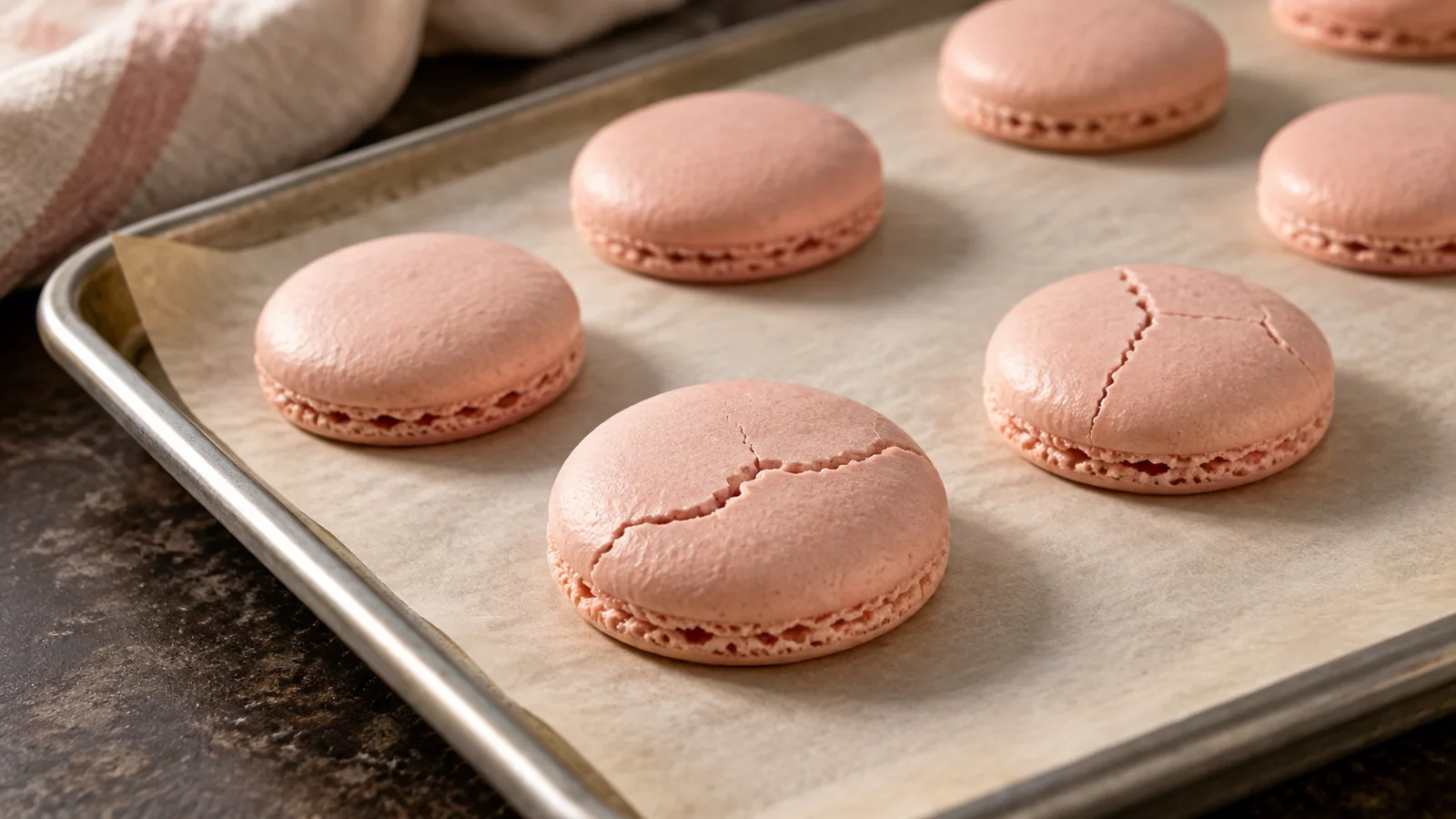
Map the cracks on the tray
Let the shells cool before assessing them and keep a note of where they sat in the oven. Are nearly all cracked, or only those along one edge? Are the cracks small openings over visible bubbles, or broad splits across the tops? A tray pattern helps you decide whether to begin with mixing or the oven.
Compare like with like. Shells piped much larger than the others may behave differently, and a second tray may have rested longer than the first. Record those differences instead of calling both trays the same test. Photograph the tray before moving the shells if you want a useful record for your next batch.
Check the meringue you actually used
A stable meringue gives the batter a workable starting structure. Use clean equipment without greasy residue or egg yolk contamination, and follow the method in your recipe. Look at the foam rather than relying on a fixed mixing time. A weak, loose meringue and a dry, clumpy one are different problems.
For an Italian method, the syrup stage is part of that process. Measure it as the recipe requires and coordinate it with the egg whites. Do not import a syrup temperature or peak description from a different formula halfway through. French, Italian and Swiss methods do not necessarily look identical at every stage, even though all can make macaron shells.
Compare the three meringue methods before changing your macaron process.
Look at batter flow and visible air pockets
Macaronage changes the texture of the meringue and almond mixture so it can be piped into smooth rounds. Batter that remains very stiff may retain ridges and air pockets; batter folded too far can spread excessively. Use the consistency described for your recipe, checking more frequently as the batter approaches it.
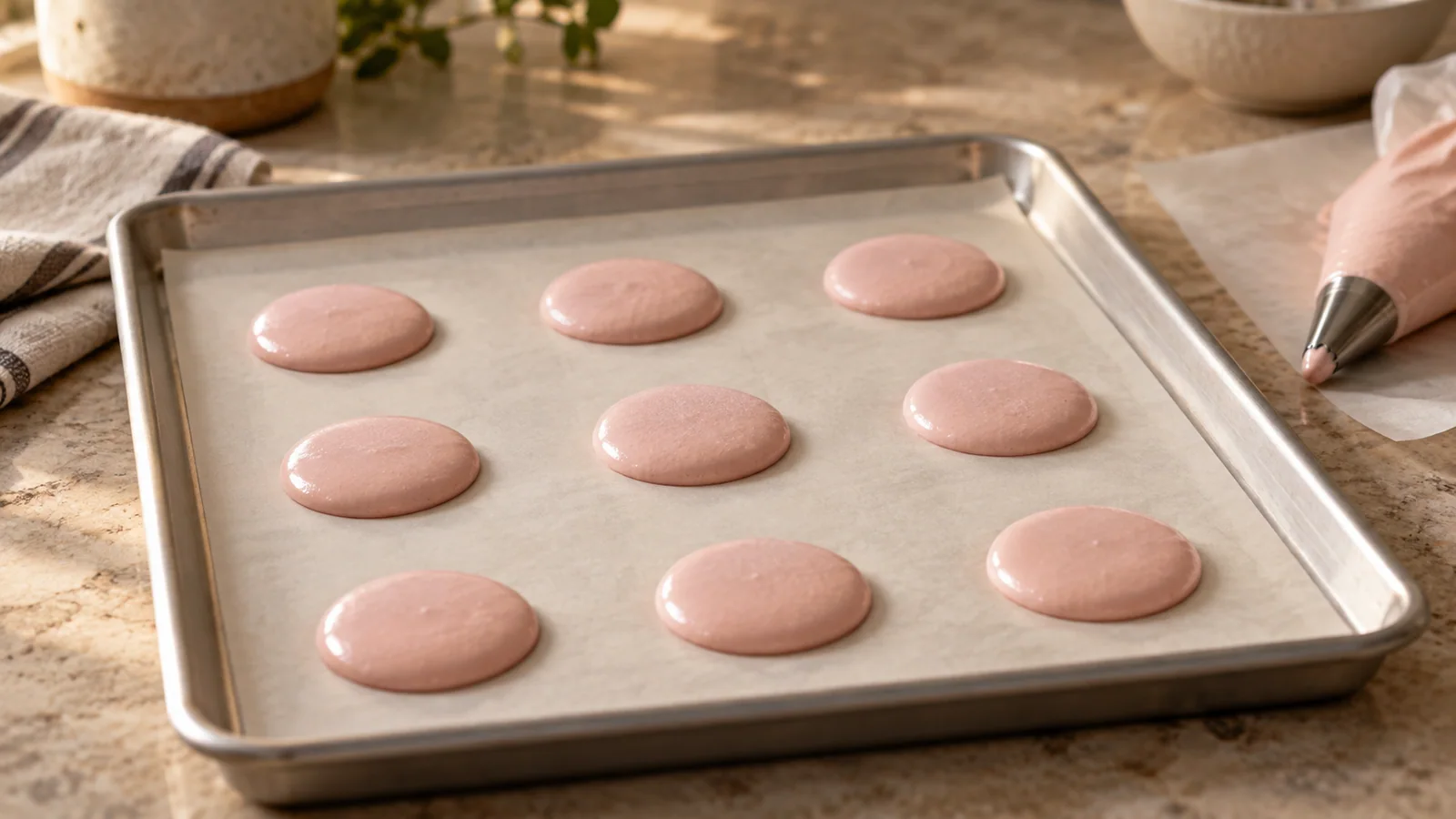
Pipe evenly with the bag held upright over the tray. If your method calls for tapping the tray, use controlled taps to settle the rounds and bring larger bubbles towards the surface. Remove obvious surface bubbles carefully before baking. Tapping is not a cure for a badly mixed batter, and aggressive handling can distort the rounds you have just piped.
Learn what to observe before you stop folding macaron batter.
Follow your recipe’s surface preparation
Many macaron methods include a rest after piping so a thin skin develops. When your recipe uses this step, check the surface rather than trusting a timer alone. Temperature, humidity and the batter itself affect how quickly it becomes ready. A surface that still transfers batter to a light touch has not reached the same stage as a dry one.
Do not try to solve every crack by leaving shells out longer. If the batter is unusually wet or the meringue was weak, resting is not a replacement for correcting that earlier stage. Some complete methods use a different drying or baking approach; follow one coherent method instead of combining unrelated instructions.
Check heat with a controlled comparison
Excessive or uneven heat is one possible contributor to cracked shells. Check that the oven was properly preheated and that the tray position, fan setting and baking surface match the method you are testing. An oven thermometer can help you compare the dial setting with the environment near the tray.
Avoid changing temperature, tray material and rack position in the same trial. Keep shell size and batter consistent, then make a small adjustment to one factor. Write down the result, including colour, feet and interior texture. A cooler setting that removes cracks but leaves underbaked centres is not a complete improvement. The aim is a sound shell throughout, not only an unbroken top.
Use this batch to choose one next step
If cracks follow one side of the tray, investigate heat distribution first. If they occur across the tray and the piped rounds already looked uneven, review the meringue and batter. If the surface preparation was clearly incomplete for your chosen method, correct that step while keeping the other variables stable.
Cracked but properly baked shells may still be useful for personal tasting or another suitable dessert when they have been handled correctly. Do not use filling to hide an underbaked centre or mistake a covered crack for a corrected process. Keep at least one cooled shell from your trial to inspect the interior as well as the top.
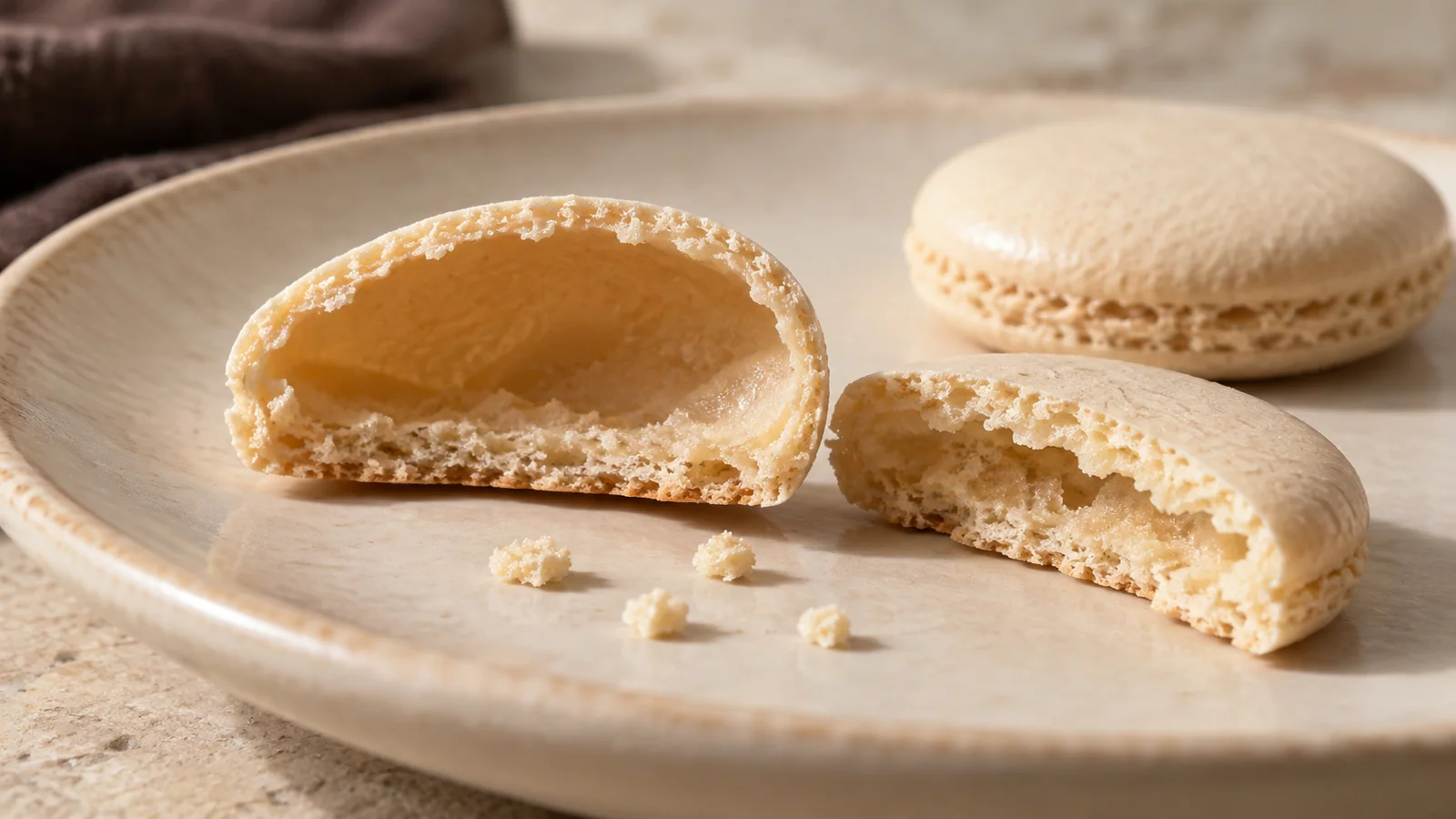
Inspect the interior too if an unbroken shell still has a large empty space.
Common questions
Does every cracked macaron mean the oven is too hot?
No. Meringue condition, batter handling and surface preparation can also contribute. Look for a pattern across the tray and review what the batter looked like before baking before you choose which variable to change.
Should I rest macarons for a fixed amount of time?
Use the resting instructions and surface cue in your complete recipe. The same time can give different results in a dry kitchen and a humid one. Longer resting cannot reliably compensate for a faulty batter.
Keep exploring
All pastry guides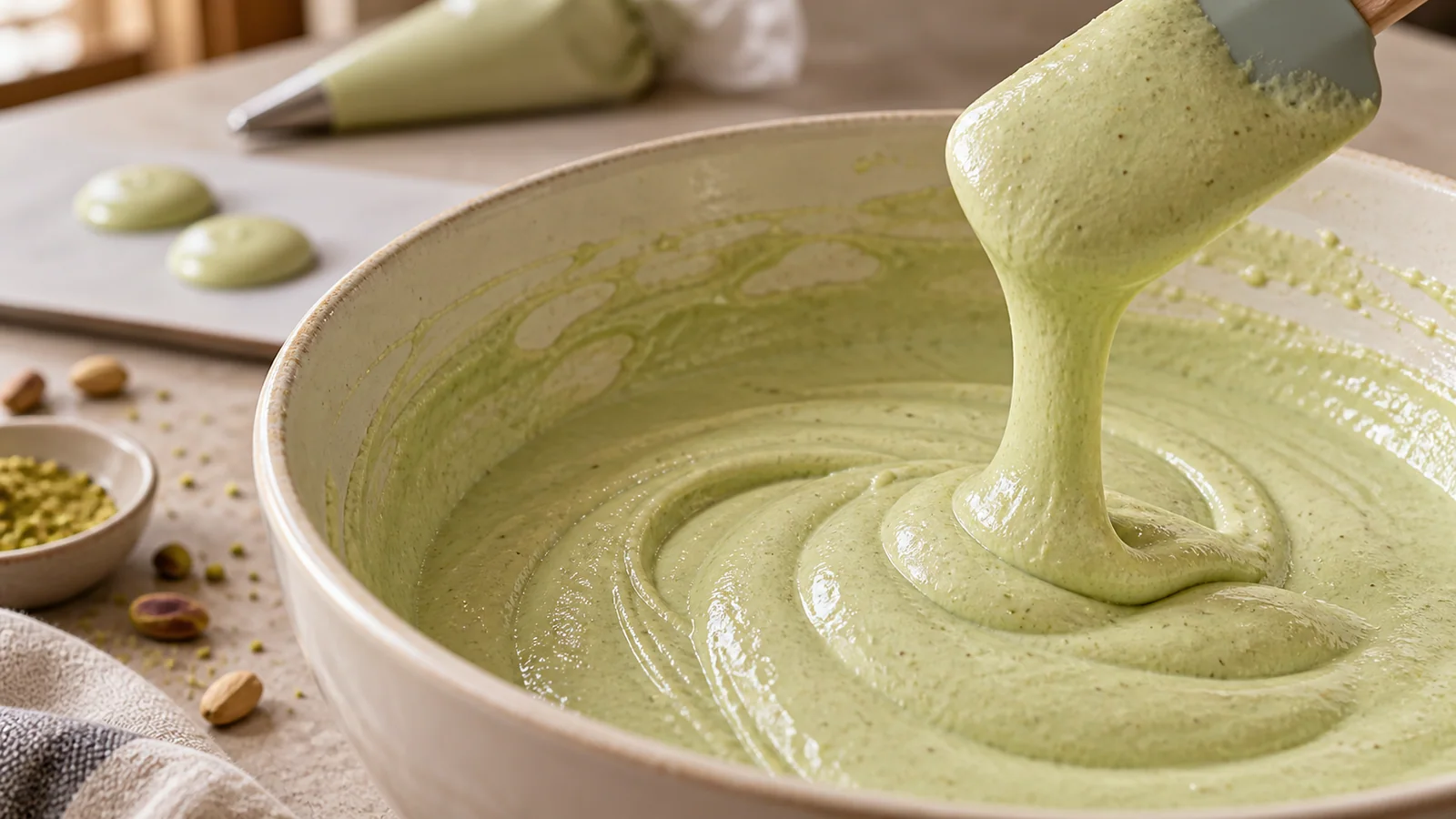
Macaron Batter Consistency: When to Stop Folding
Learn how macaron batter should flow and settle, how to recognise underfolding or overfolding, and why counting strokes cannot replace observation.
Why Are My Macarons Hollow?
A good-looking macaron can hide a large gap inside. Check cooled shells, meringue, macaronage and baking before trying to fix hollows with filling.
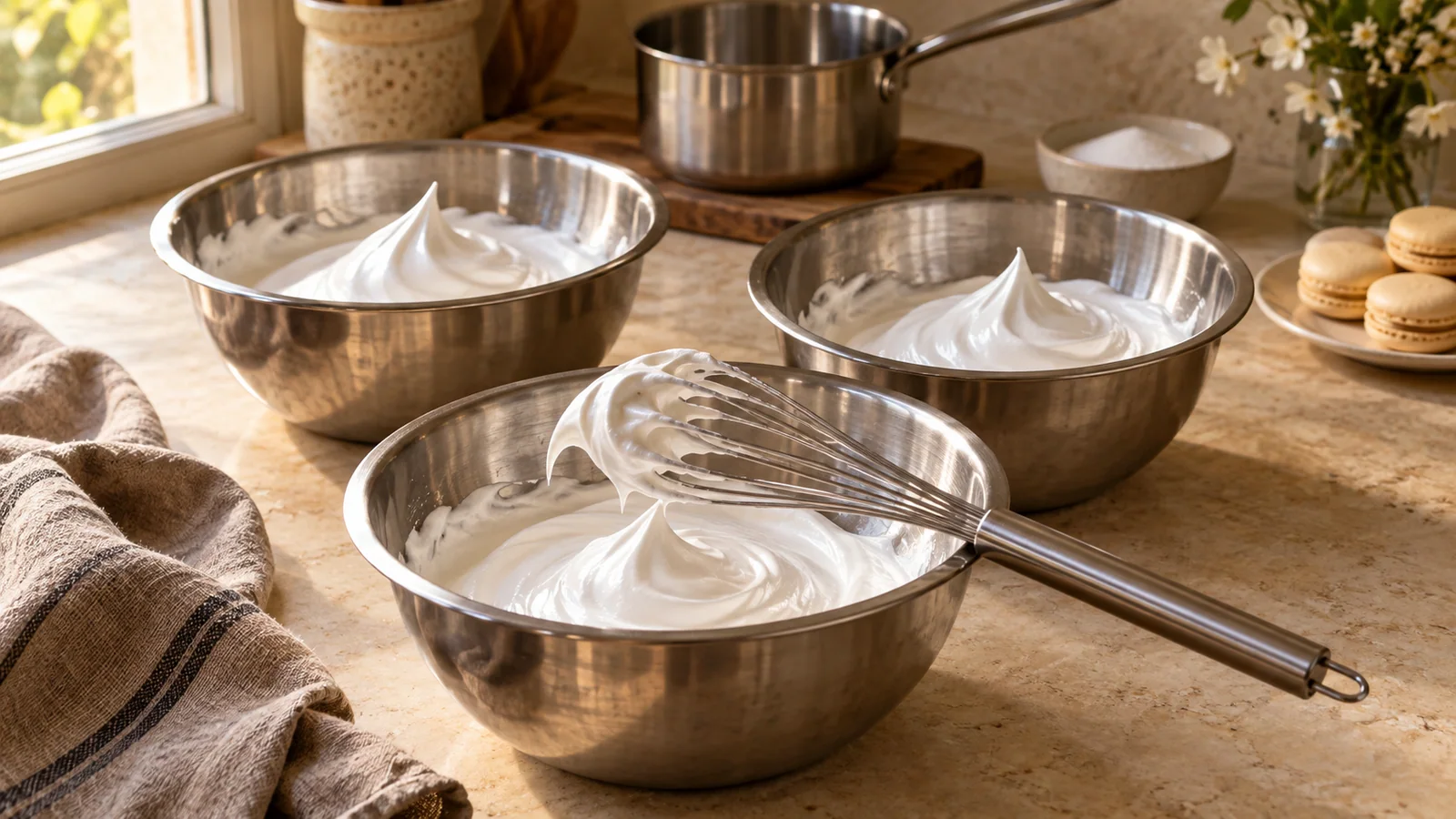
French, Italian or Swiss Meringue for Macarons?
Compare French, Italian and Swiss macaron methods by mixing sequence, equipment and practical checkpoints, then choose one complete recipe to learn.

How to Choose a Macaron Filling That Holds Its Shape
Choose a macaron filling for texture as well as flavour. Compare ganache, fruit centres and creams, then test piping, moisture and the finished bite.