
French, Italian or Swiss Meringue for Macarons?
French meringue is made by whipping egg whites with sugar; Italian meringue uses a cooked sugar syrup; Swiss meringue starts by warming egg whites and sugar together before whipping. All can be used in macaron recipes. Choose a complete method that suits your equipment, and keep its proportions and sequence together.
Explore Macarons 2.0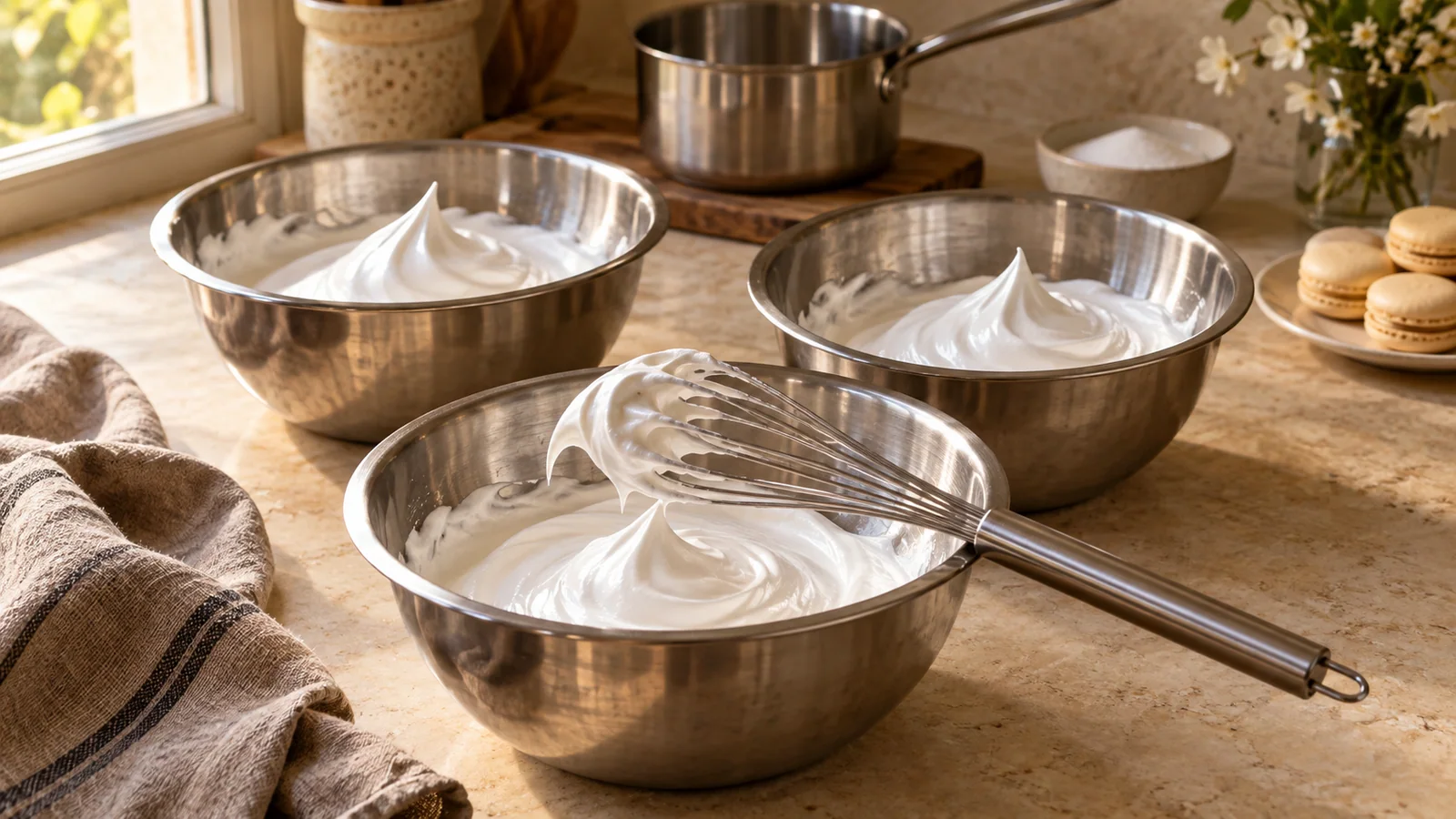
What actually changes between the methods
Each method builds a sweet egg-white foam, but it gets there through a different route. That changes the tasks you need to coordinate, the equipment you use and the cues you watch. The finished foam still has to be combined with the almond mixture, piped and baked well. A different meringue cannot remove the need for those skills.
Think of the method as a complete process rather than a single trick. Recipes may distribute egg whites and sugar differently between the foam, syrup and almond paste. Replacing one step while keeping the rest of another recipe can change more than you intended. Start from a formula written for the method you want to practise.
French: a direct whipping method
French meringue avoids the separate hot-syrup stage. The egg whites are whipped with sugar as the recipe directs until the required foam develops. That makes the equipment list relatively simple and lets you focus on how the meringue changes in the bowl. It is a useful choice when you want fewer tasks happening at once.
Simple equipment does not make the endpoint unimportant. Use a clean bowl and whisk, add sugar as directed and observe the finished texture. Stop when the recipe’s cues are met instead of continuing to whip for reassurance. Your next challenge is folding the almond mixture into a batter that settles correctly without spreading uncontrollably.
Practise the flow cues that connect meringue to pipeable macaron batter.
Italian: coordinate syrup and egg whites
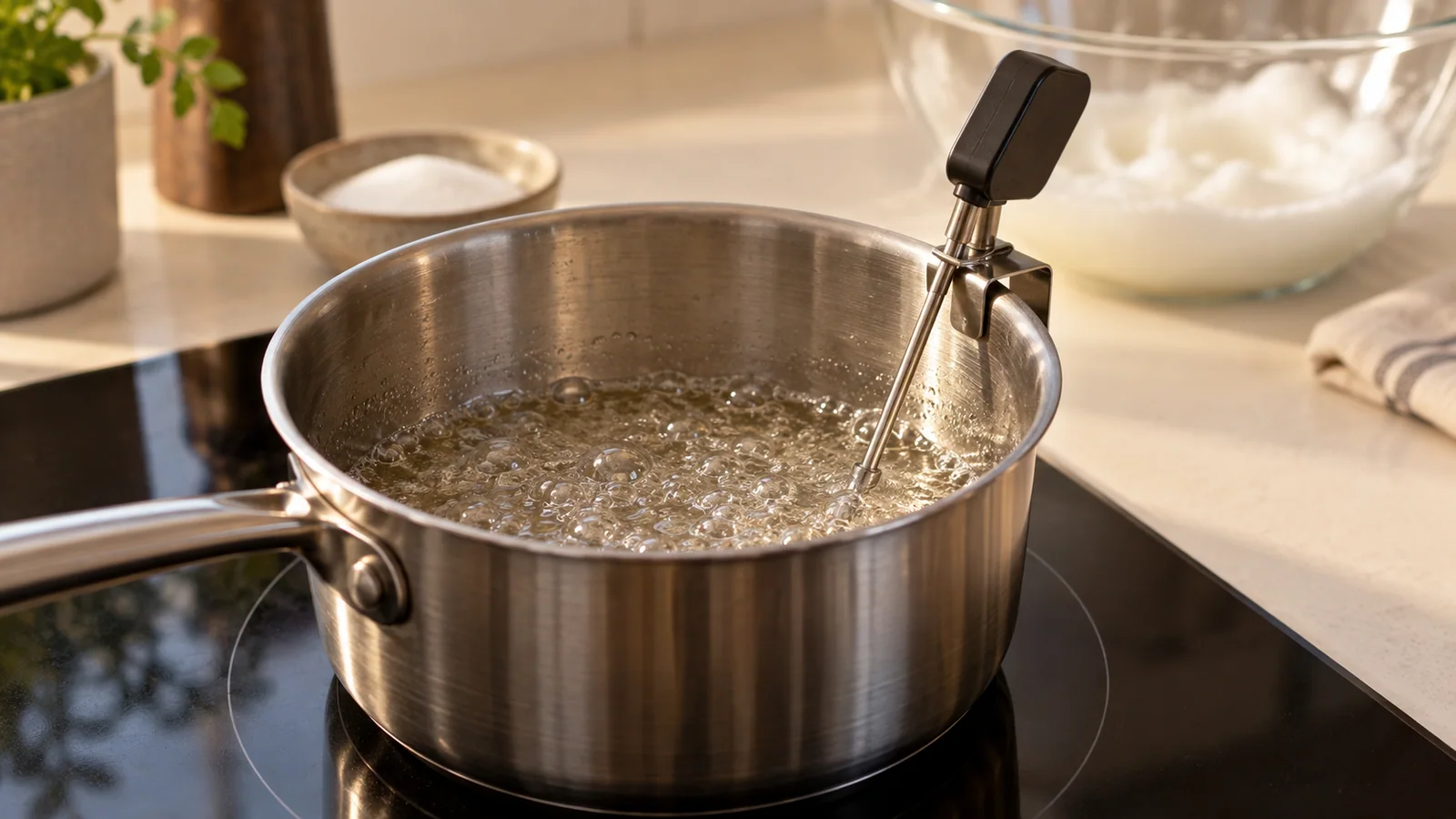
Italian meringue introduces a cooked sugar syrup into whipping egg whites. The syrup and foam must arrive at compatible stages, so preparation matters. Have the equipment, ingredients and thermometer ready before heating the syrup. Read the whole sequence first, including how the syrup is added and when the meringue is ready for the next step.
Hot syrup deserves careful handling. Use a stable saucepan and mixing setup, and follow the recipe’s pouring method so the syrup does not splash or collect where it should not. Do not guess the syrup stage by the appearance of boiling bubbles. This method can suit a baker comfortable with measured stages and coordinated tasks, but it is not an automatic cure for cracked or hollow shells.
Swiss: warm the whites and sugar together
Swiss meringue begins by gently warming egg whites with sugar using the method specified in the recipe, then whipping the mixture to the required texture. It avoids pouring a separate syrup, but it introduces a warming stage that must be controlled. The bowl, heat source and stirring method should be prepared before you begin.
Follow the recipe’s measured heating instructions rather than treating a smooth feel as proof of every requirement being met. Avoid hot spots that can cook bits of egg white. Once whipped, judge the meringue by that method’s own endpoint. Warming a mixture is not a reason to assume it is ready to eat unbaked; finish the macaron recipe as directed.
Choose by the work you can repeat
For your first focused practice, select a method that fits your equipment and attention. A direct whipping process may be easier to organise with limited workspace. A syrup method asks for confident timing and temperature measurement. A warmed-white method asks for controlled heating and then whipping. None earns the title of best simply by having more steps.
Stay with the chosen method long enough to learn its meringue and batter cues. Use the same flour, shell size and baking setup while you establish a baseline. If you keep changing methods after every imperfect tray, you lose the chance to see which part of the process actually needs attention.
Use the pattern of cracked shells to choose a focused test instead of changing methods at random.
Compare the finished shells fairly
A useful comparison looks at more than smooth tops. Check the feet, base, interior and bite after the shells have cooled. Then compare them with the same filling under the same storage conditions. Otherwise, a difference caused by the filling or maturation may be mistaken for a difference between meringues.
Keep short notes about how manageable each method felt: where you rushed, what was difficult to measure and which visual cues were clear. The method you can repeat carefully is more useful than one that looks impressive but regularly puts you out of sequence. Once you have that baseline, changing method becomes a deliberate experiment rather than a rescue attempt.
Include a cooled cross-section when evaluating hollow macaron shells.
Common questions
Can I keep the same ingredient quantities and change only the meringue method?
Do not assume that this will work. Complete macaron recipes can divide sugar and egg whites differently between stages. Choose a recipe designed for the new method so its proportions and sequence remain coherent.
Is Italian meringue always better for beginners?
It depends on the equipment and tasks you can manage comfortably. It adds syrup cooking and coordination, while other methods have their own checkpoints. A well-explained complete recipe and controlled practice matter more than the name.
Keep exploring
All pastry guides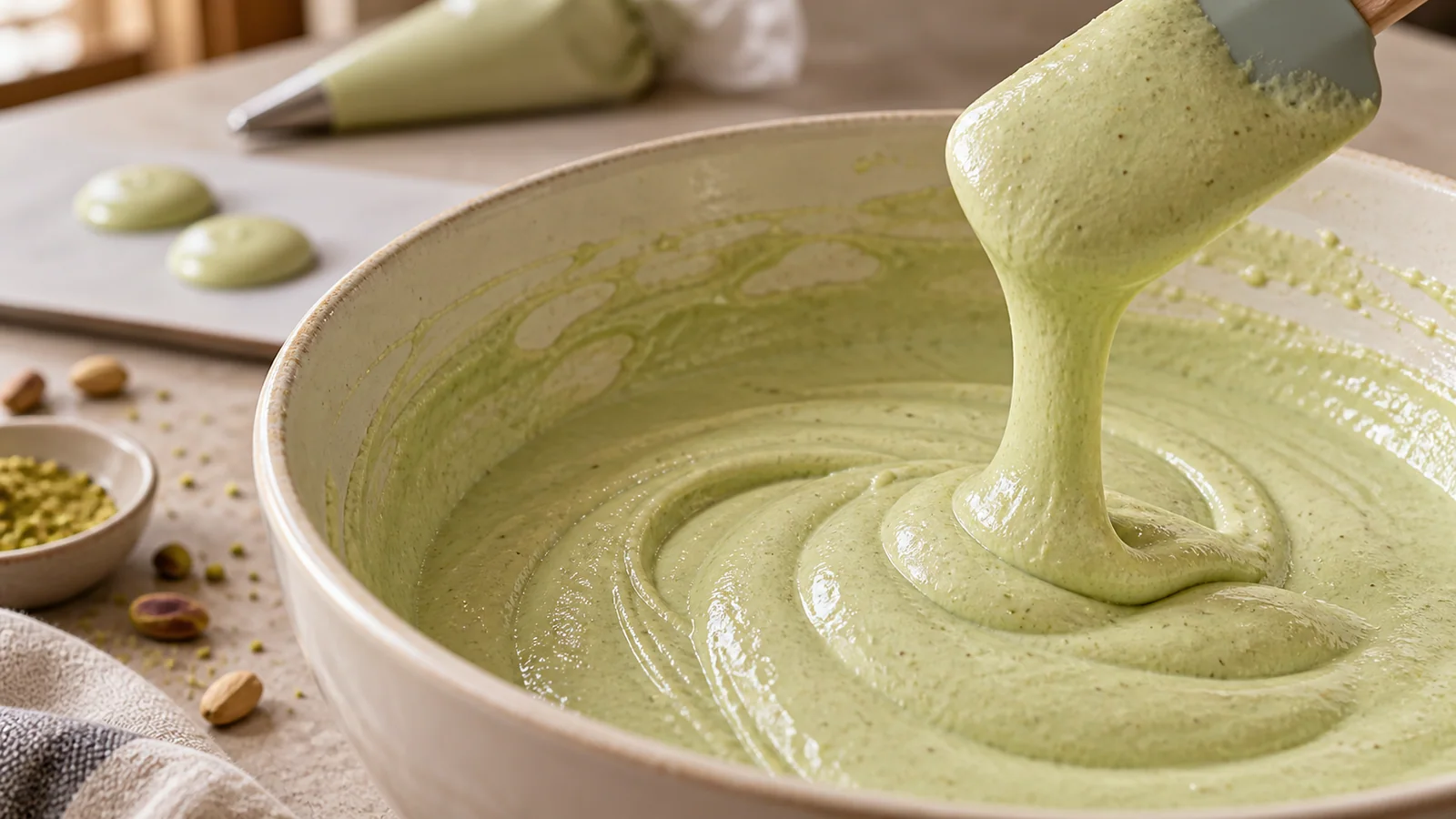
Macaron Batter Consistency: When to Stop Folding
Learn how macaron batter should flow and settle, how to recognise underfolding or overfolding, and why counting strokes cannot replace observation.
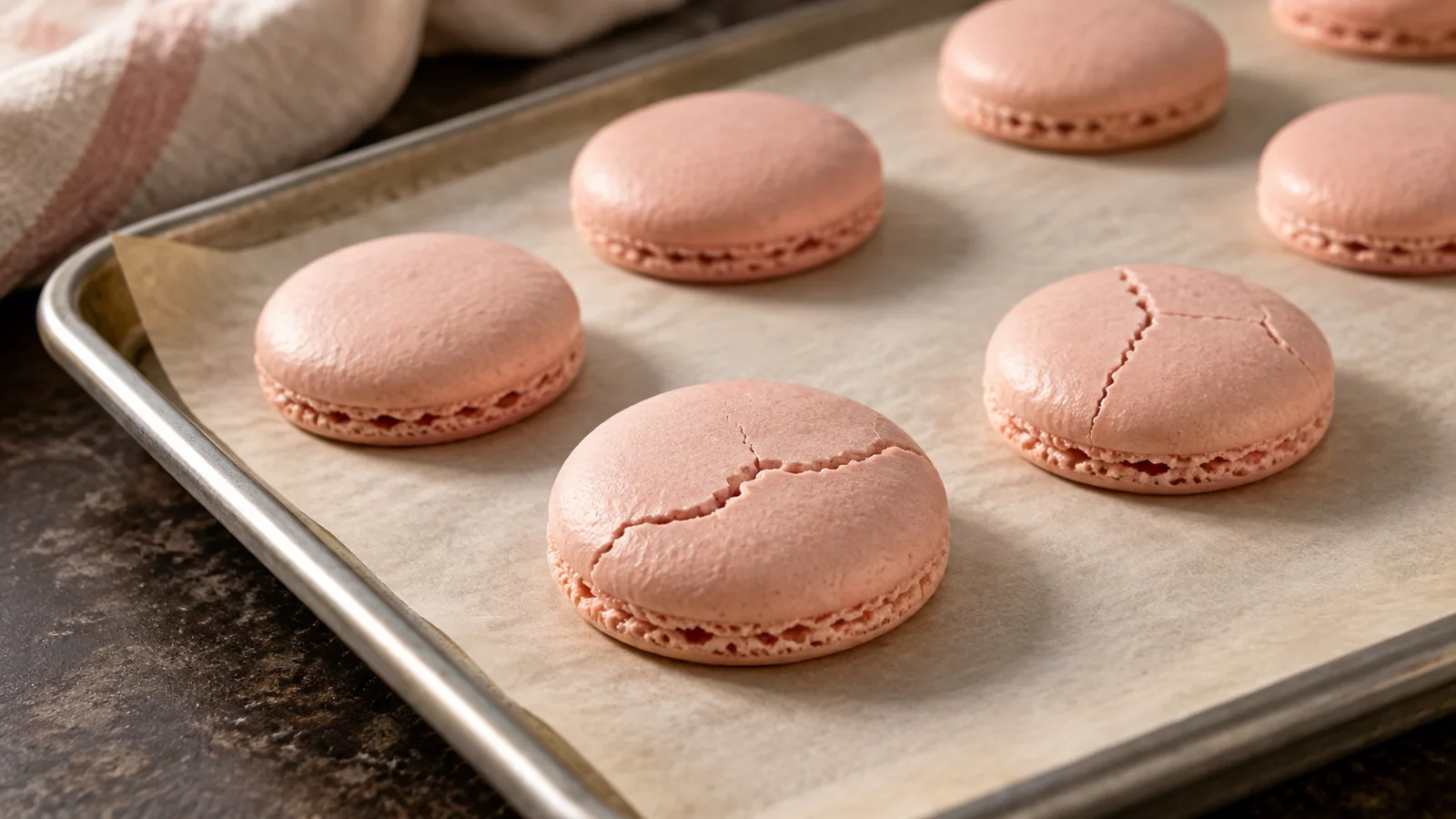
Why Do Macarons Crack in the Oven?
Cracked macaron shells can point to meringue, trapped air, surface preparation or oven conditions. Use the pattern on your tray to choose the next test.
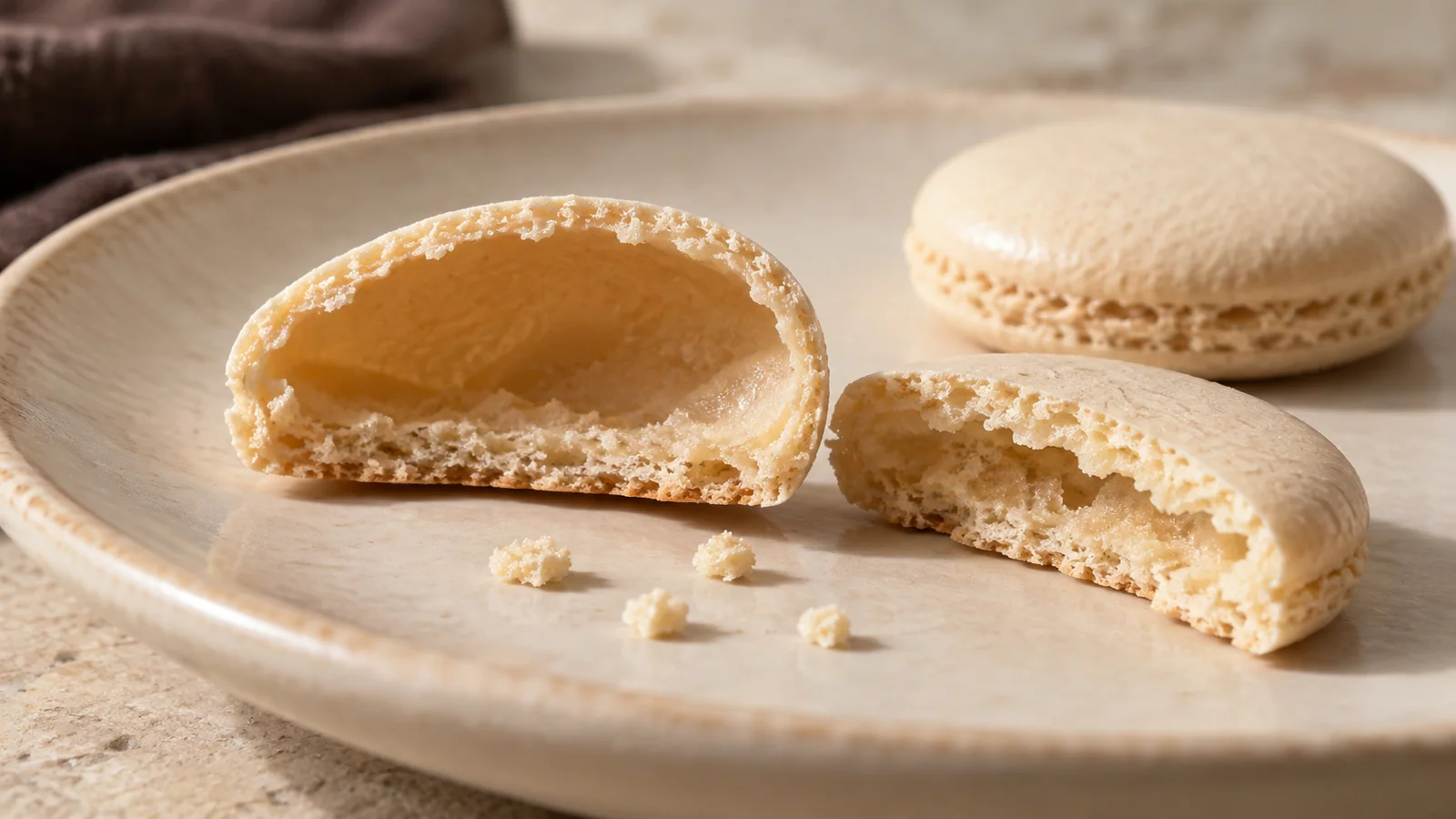
Why Are My Macarons Hollow?
A good-looking macaron can hide a large gap inside. Check cooled shells, meringue, macaronage and baking before trying to fix hollows with filling.
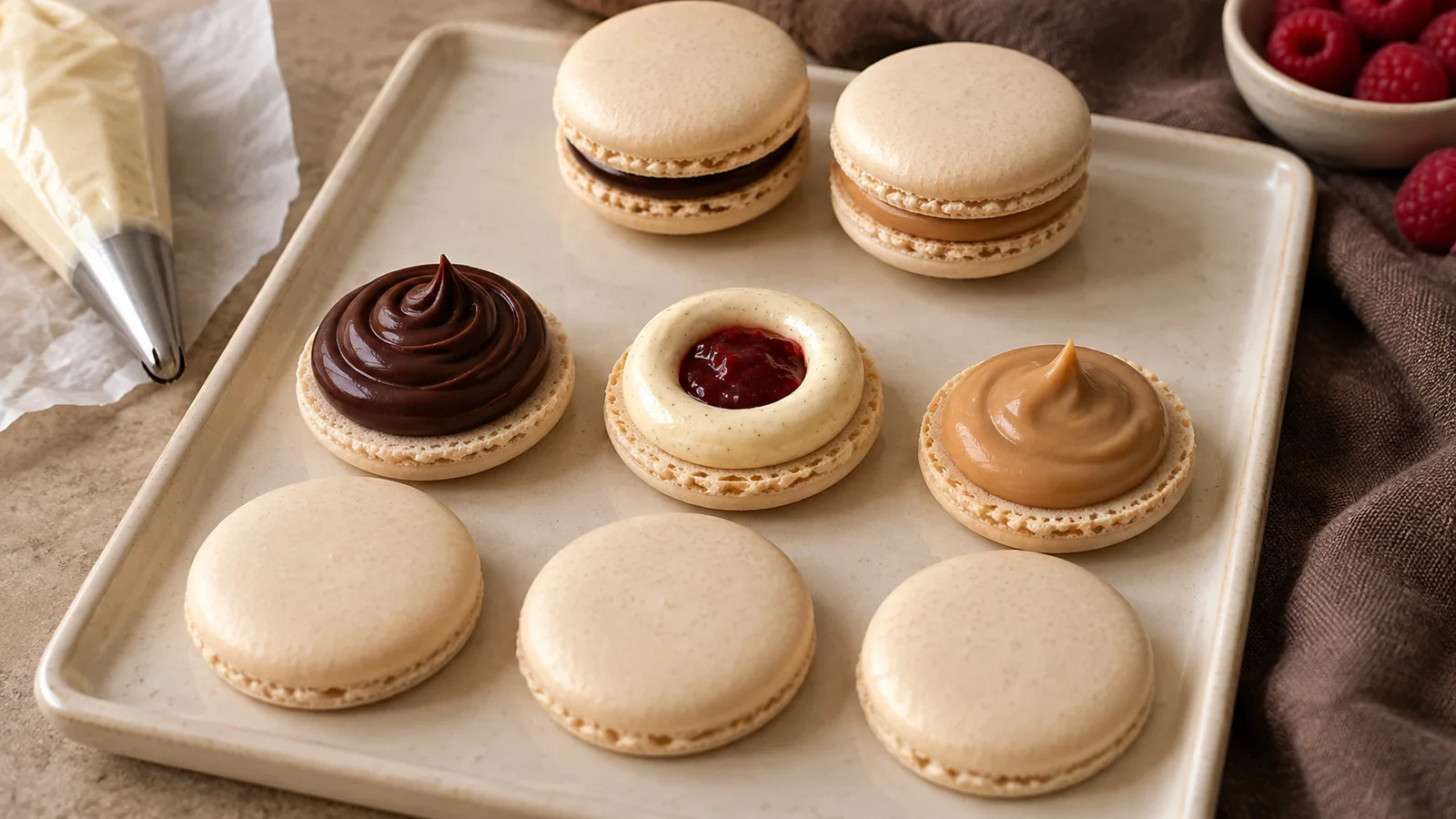
How to Choose a Macaron Filling That Holds Its Shape
Choose a macaron filling for texture as well as flavour. Compare ganache, fruit centres and creams, then test piping, moisture and the finished bite.