
Why Are My Macarons Hollow?
Hollow macarons have a noticeable gap between the top and the interior. Inspect fully cooled shells from different parts of the tray, then review meringue texture, macaronage and baking together. A tall foot or smooth top does not prove the inside is sound, and filling cannot reliably repair a major structural gap.
Explore Macarons 2.0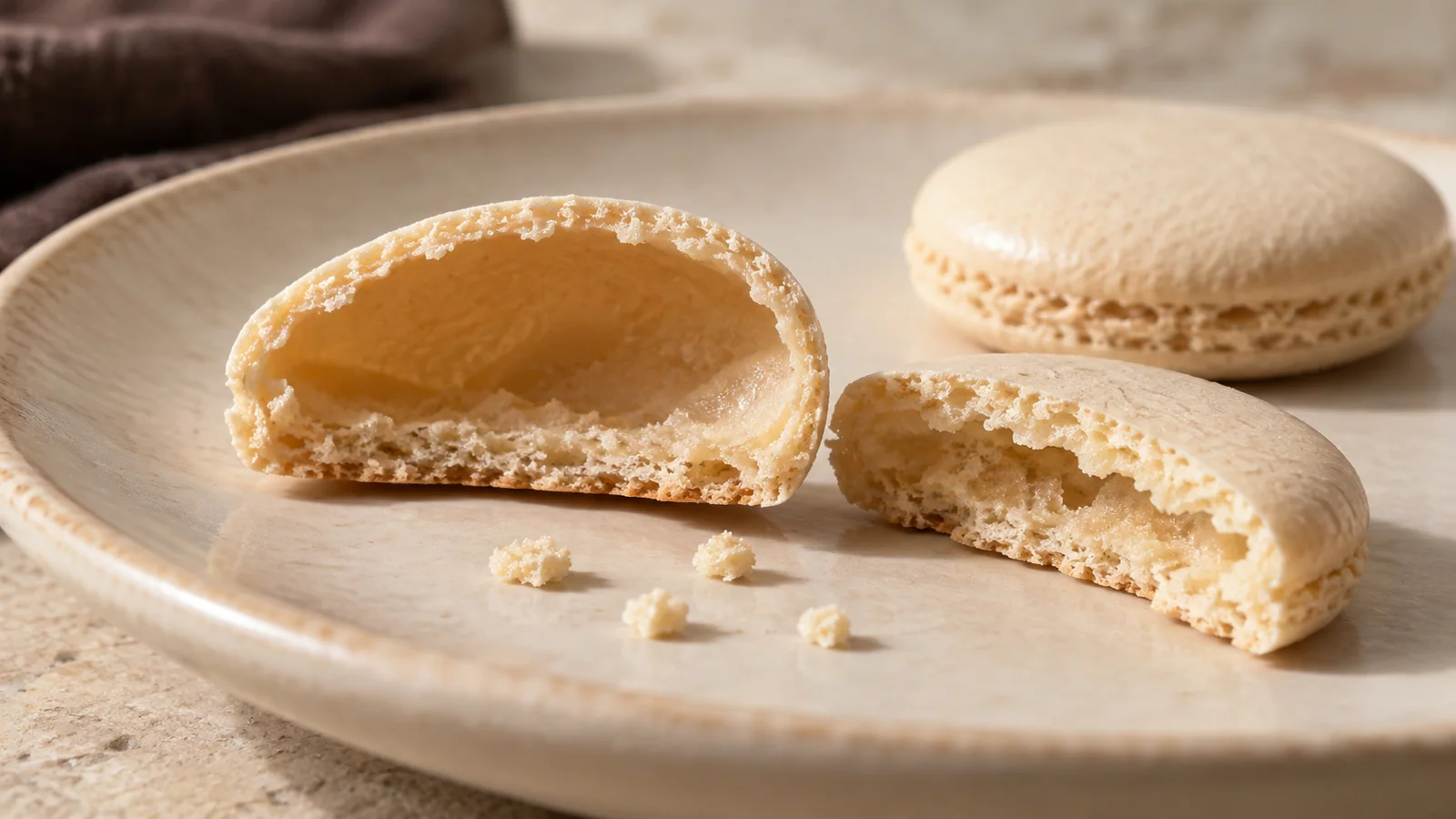
Inspect a cooled cross-section
Choose a few shells from different areas of the tray and let them cool before breaking or cutting them. A hot shell is fragile and can give a misleading impression of its finished structure. Look at the size and position of the gap, the thickness of the top and whether the interior appears properly baked.
Separate a broad empty space from the small air cells expected in a light shell. Also distinguish a large hollow from damage created while pulling a still-warm shell off its baking surface. Keep the samples identified by tray position. If the same defect follows the back row, that clue deserves attention before you replace your entire recipe.
Review the meringue endpoint
The meringue needs to reach the texture intended by your recipe, then move into the next stage without being whipped indefinitely. A smooth, cohesive foam behaves differently during folding from a dry or clumpy mass. More volume in the mixing bowl does not automatically mean a better interior after baking.
Compare your actual meringue with the cues for its method. An Italian meringue can have a different peak appearance from a French one, so do not chase the stiffest possible point using instructions borrowed from another recipe. Record how the foam looked and behaved when you stopped. That observation is more useful than a mixing time without the batch size or mixer speed.
Check which meringue cues belong to your chosen macaron method.
Look at how the batter was folded
Macaronage must combine the almond mixture evenly while adjusting the aeration enough for controlled piping. Incompletely combined batter can contain inconsistent patches; excessively worked batter can lose the structure needed to hold its shape. Either makes the next stage harder to judge. Scrape the bowl and check that no dry pockets remain.
Watch the flow from the spatula and the way a small piped round settles. Do not make a diagnosis from the number of folds alone. Batch size, bowl shape, flour and the way you move the spatula all change what one fold accomplishes. When you repeat a trial, keep those conditions reasonably consistent so a change in folding can actually be compared.
Use flow and settling cues to judge macaron batter consistency.
Assess the bake beyond the surface
The top can look finished before the internal structure has set as intended. Review the baking time and oven conditions in your recipe, along with the size of your shells. Check a cooled sample for the whole result: top, feet, base and interior. Do not increase the heat simply because a gap is present.
Use small, controlled trials to investigate the bake. Keep the same batter and shell size, then adjust one variable such as the duration or the chosen oven setting within a sensible test of your recipe. Record whether the interior improved and whether the top became too dark or the shell too dry. A smaller hollow achieved by overbaking is a tradeoff, not an automatic success.
Understand what filling and maturation can change
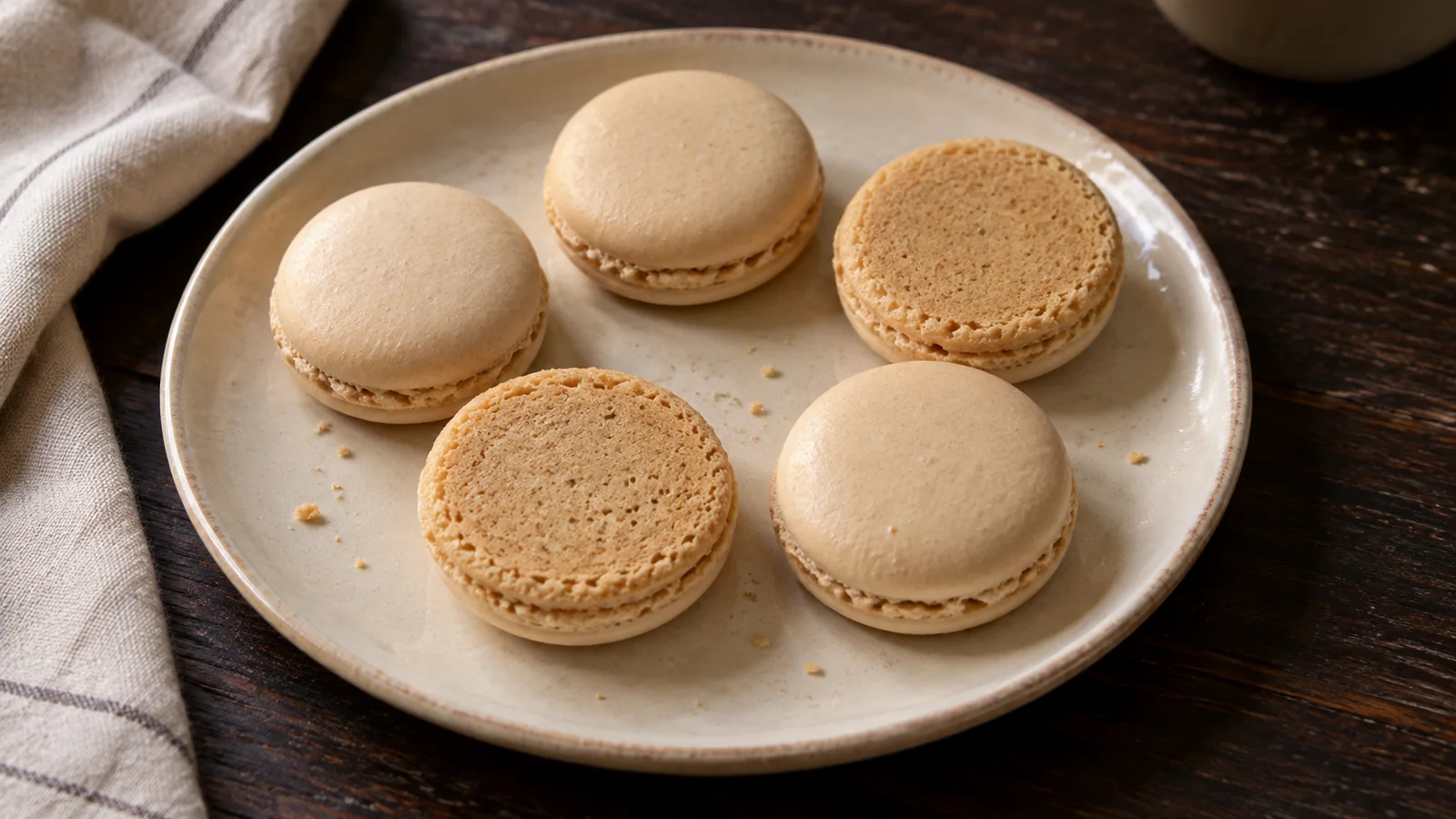
Once filled, macarons change as moisture moves between the filling and shells. This can soften the bite and make the dessert feel more cohesive. It does not mean that any empty shell will become structurally complete, or that an underbaked interior should be ignored. Evaluate the unfilled shell first so you know what the filling is being asked to do.
Then test the finished macaron using the filling and storage conditions you actually intend. A very wet filling may soften the shell excessively, while a very firm one can squeeze out or break a delicate top when bitten. Good shell structure and a suitable filling need to work together; neither should be used to conceal the other’s faults.
Choose a filling that complements the shell without making it soggy.
Make the next trial informative
Choose the strongest clue from this batch. If the foam was dry and difficult to combine, focus on the meringue endpoint. If the batter had uneven patches or persistent peaks, focus on mixing. If hollows follow a tray position or appear alongside a weak base, begin by examining the baking conditions.
Record the chocolate or flavour additions, colour, flour, shell size, baking surface and oven setup so you can identify unintended changes. Keep the number of experiments manageable. Repeating a clearly documented small batch teaches more than making several large batches while changing every factor. Compare cooled cross-sections each time, then confirm the result again with your chosen filling.
Common questions
Can macarons with attractive feet still be hollow?
Yes. Feet describe an external feature, while hollows are an interior defect. Inspect a cooled cross-section rather than using the height of the feet as your only measure of success.
Will maturing macarons overnight remove the hollow?
Maturation can improve the eating texture, but it is not a reliable repair for a substantial gap or an underbaked shell. Assess the baked shell and the filled dessert separately, using the storage plan for your recipe.
Keep exploring
All pastry guides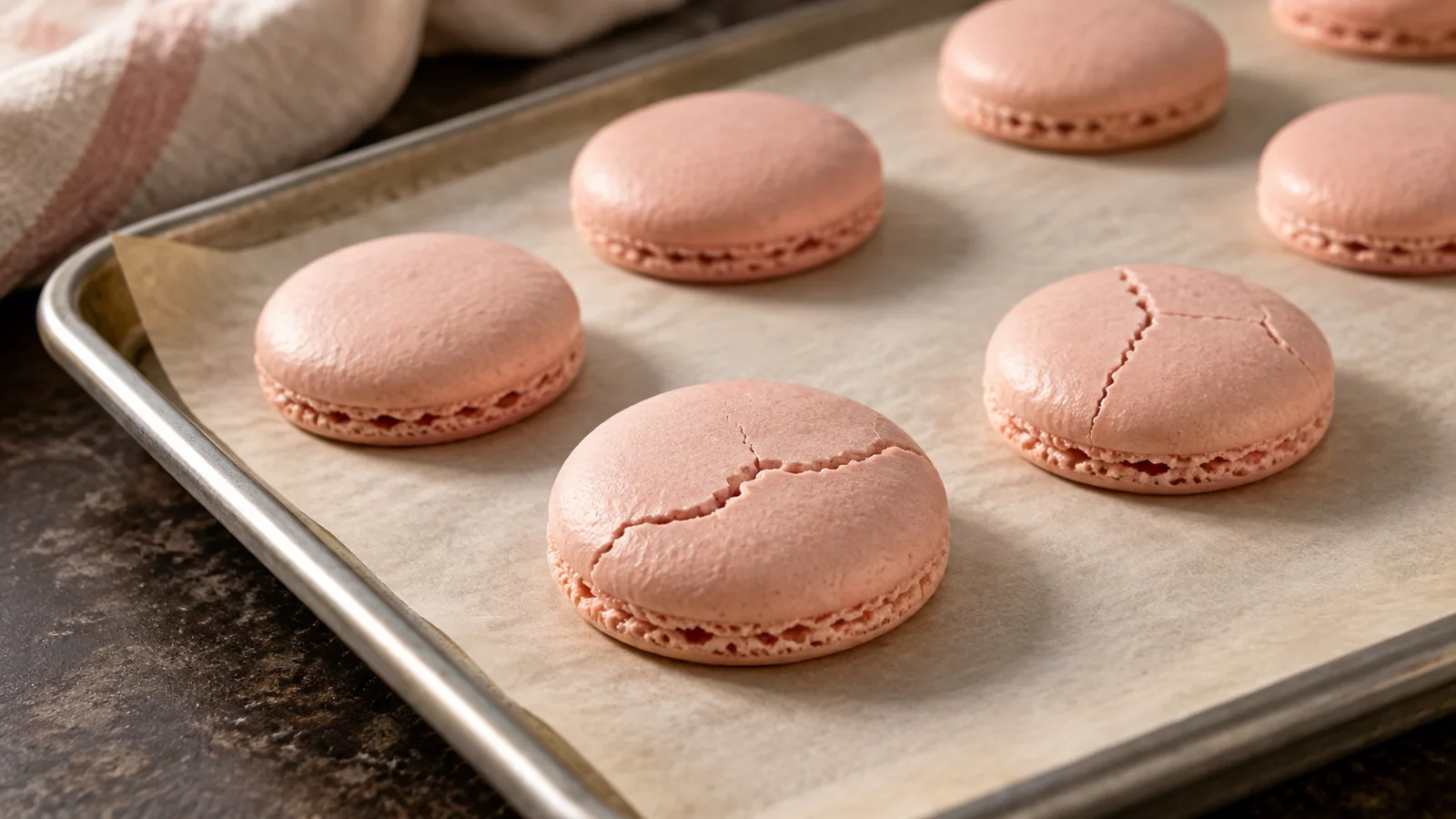
Why Do Macarons Crack in the Oven?
Cracked macaron shells can point to meringue, trapped air, surface preparation or oven conditions. Use the pattern on your tray to choose the next test.
Macaron Batter Consistency: When to Stop Folding
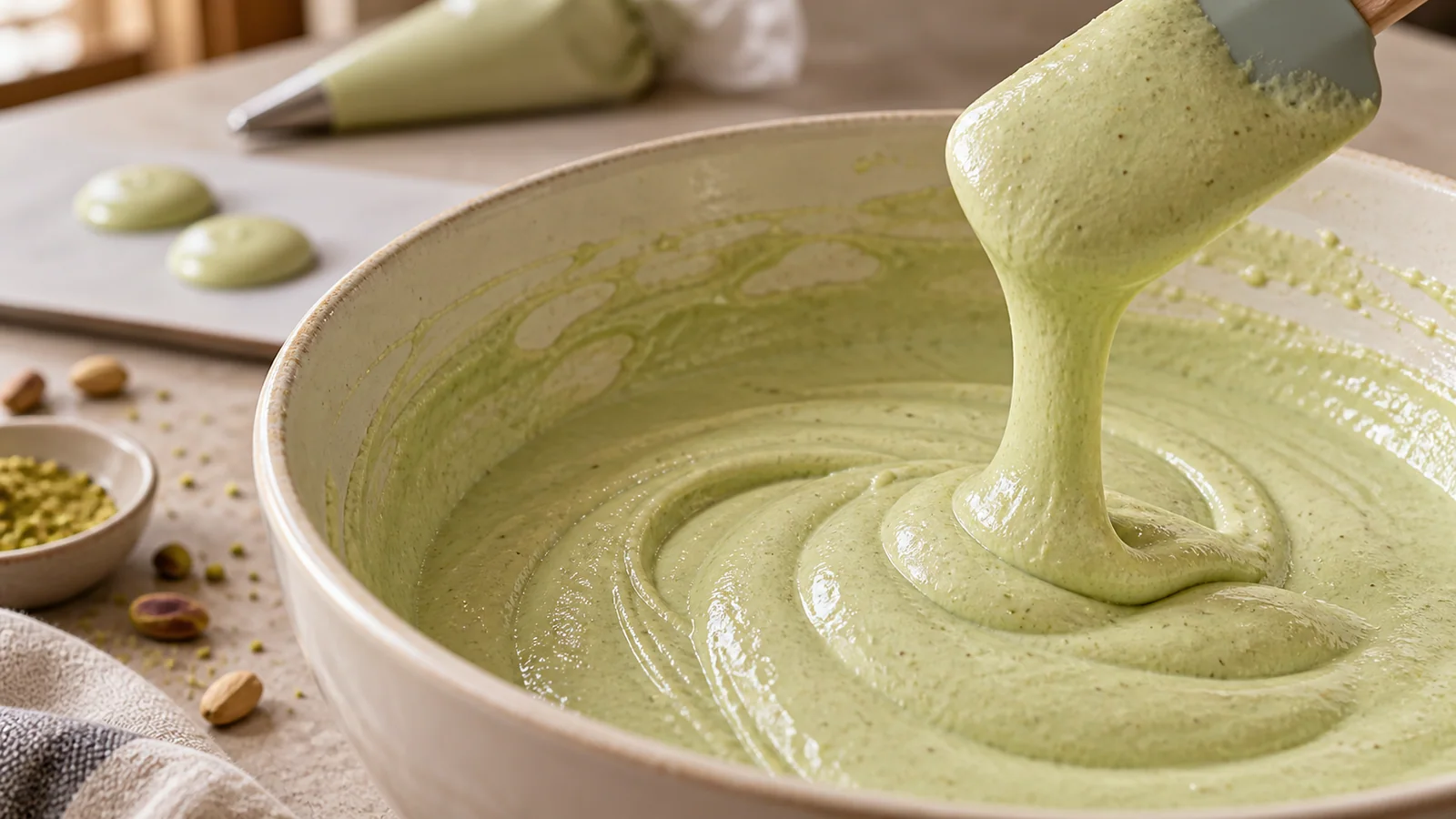
Learn how macaron batter should flow and settle, how to recognise underfolding or overfolding, and why counting strokes cannot replace observation.
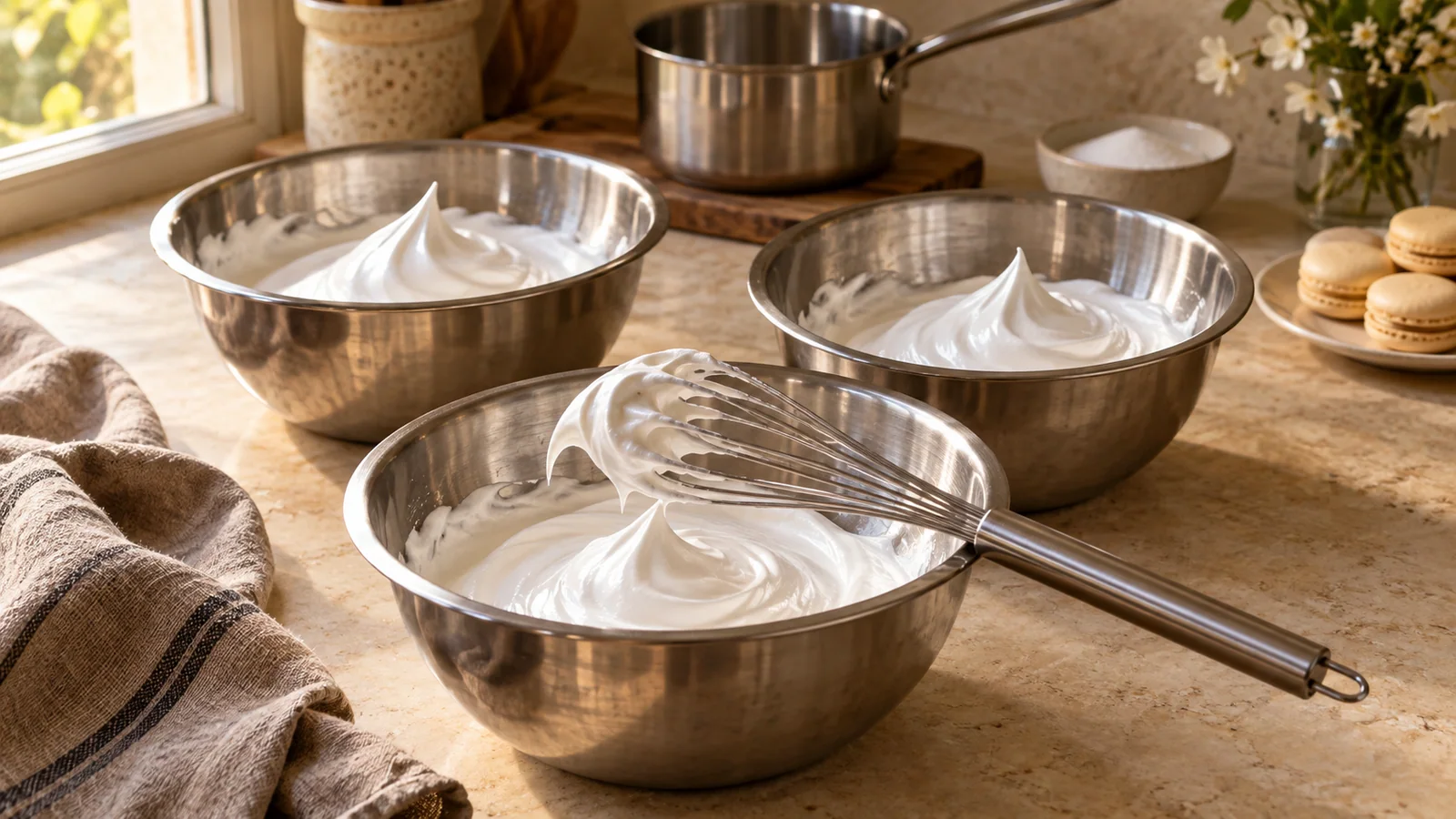
French, Italian or Swiss Meringue for Macarons?
Compare French, Italian and Swiss macaron methods by mixing sequence, equipment and practical checkpoints, then choose one complete recipe to learn.
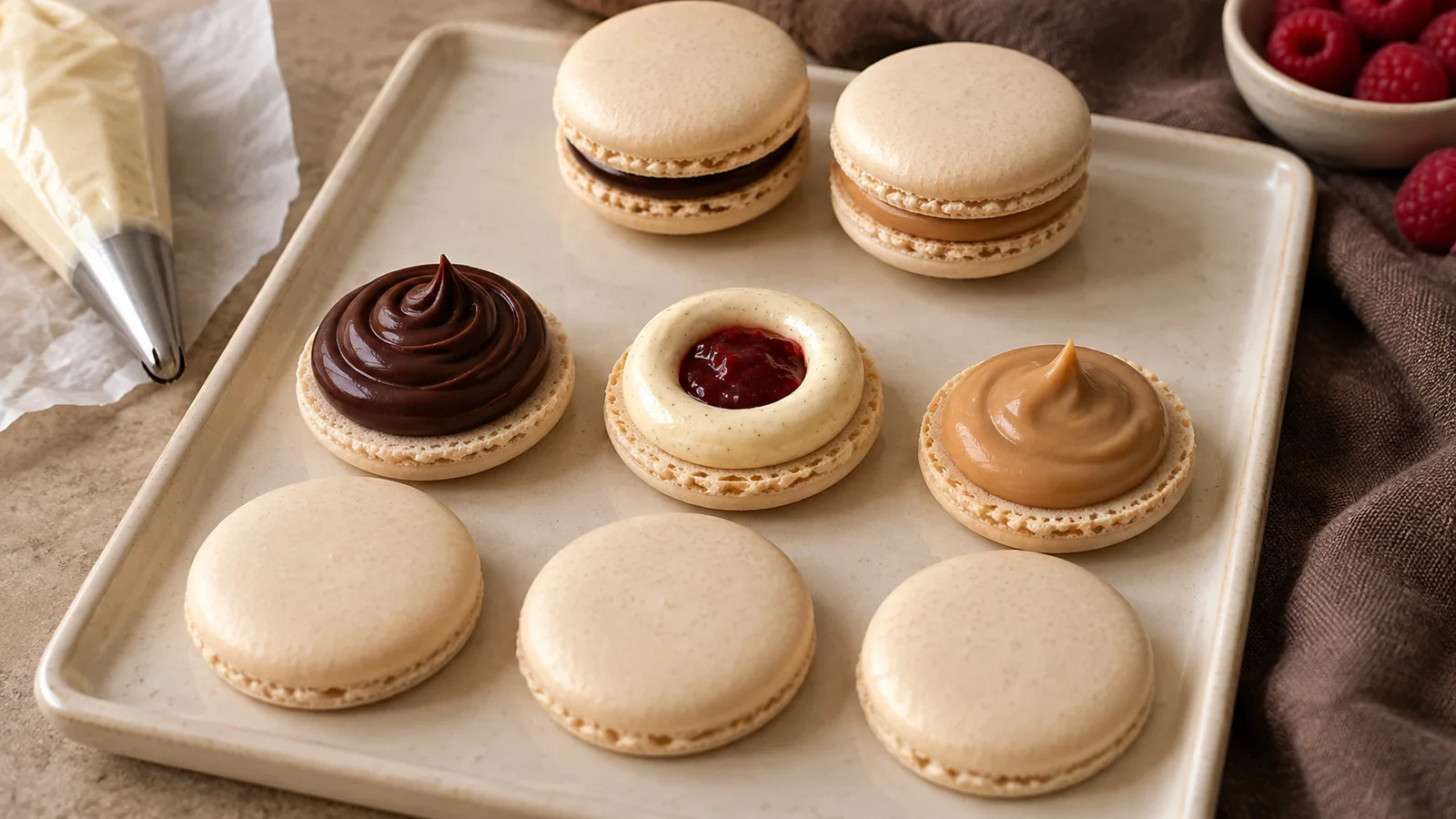
How to Choose a Macaron Filling That Holds Its Shape
Choose a macaron filling for texture as well as flavour. Compare ganache, fruit centres and creams, then test piping, moisture and the finished bite.