
Mousse & pastry
How to Bake a Sponge Cake Evenly
For an even sponge, follow a temperature and oven mode suited to the recipe, preheat thoroughly and keep the pan and batter depth consistent. Many layer-cake sponges bake in the 160–180°C range, but that is a starting range, not a universal setting. Check the centre as well as the colour, and change one variable when a batch bakes unevenly.
6 min read
Why the outside and centre behave differently
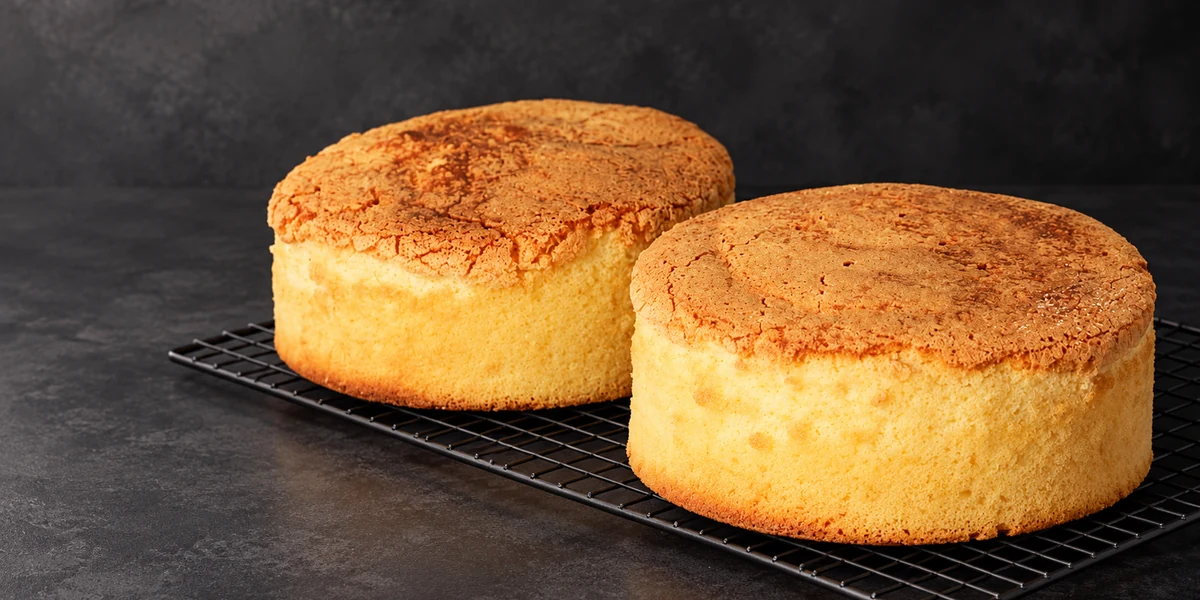
The surface of the cake heats and dries before the centre. As the batter warms, gases expand and the structure gradually sets. If the outside sets much sooner than the inside, the centre may continue rising into a dome or crack through the top.
A lower oven temperature can give the centre more time to catch up, but it also changes the baking time and may not suit every formula. A higher temperature can colour the crust before a deep layer is cooked. Neither direction is a universal repair.
Mixing matters too. An unevenly folded foam or pockets of leavener can create an irregular cake even in a well-controlled oven. Check the batter and the oven as separate parts of the process.
Start with the recipe, pan and actual temperature
Use the specified pan diameter, depth and material for the first attempt. A deeper amount of batter takes longer to heat through than a thin sheet, even when the total ingredient weight is similar. Do not pour a double batch into the same pan and expect the original baking time.
Preheat before the batter is ready. An oven thermometer helps you compare the actual temperature near the baking position with the dial setting. Let the oven stabilise, since the first signal from the oven does not always mean the entire cavity has reached a steady condition.
Many conventional layer-cake sponge methods use approximately 160–180°C (320–356°F). Use the recipe’s exact starting instruction within or outside that range when appropriate. A deliberately low-temperature cotton cake is a different formula and should not be forced into a general sponge setting.
Conventional and fan-assisted electric ovens
For a conventional electric oven, top-and-bottom heat with the pan near the middle is a useful starting arrangement when the recipe specifies it. Leave room for air to circulate around the pan and avoid crowding the shelf with unnecessary trays.
A fan changes heat transfer and can colour or dry the surface more quickly. It does not simply add a fixed number of degrees to the oven. If the recipe gives both conventional and fan settings, use the matching one. Otherwise consult your oven’s guidance and test a suitable adjustment.
Keep the same mode during the trial. Switching between fan, grill and conventional heat while the cake is rising makes it difficult to understand which setting caused the result. Grill or broil is not the normal mode for baking a sponge through.
Working with a gas oven
A gas oven may deliver stronger heat from below and may have larger temperature variation across the cavity. Use a thermometer, choose a shelf position that suits the oven and watch the base as well as the top during your assessment.
A dark base with an underdone centre can suggest strong bottom heat, but pan colour, thickness and batter depth also matter. Follow the oven manufacturer’s advice for using extra trays or a baking stone as a heat buffer. Do not cover vents or line the oven floor with foil as an improvised fix.
If the top colours too quickly, a loose foil shield may help later in the bake once the structure has set. Put it in place carefully without resting it on the batter, and avoid opening the door repeatedly during the early rise.
When to check the cake
Avoid opening the oven during the fragile early rise. Begin checking near the end of the recipe’s expected baking window, rather than at a fixed minute that ignores the cake size. A brief check late in the bake is more useful than repeatedly releasing heat.
Use several cues: the centre should no longer wobble like raw batter, the surface should respond appropriately to a light touch and a skewer should match the recipe’s doneness description. Cocoa, melted chocolate or fruit can affect what remains on a skewer, so interpret it in context.
If the centre is underdone, continue baking with appropriate heat control. Do not assume that ten minutes in a switched-off oven will finish every cake. Cooling instructions also vary: angel food and cotton-style cakes do not necessarily follow a classic sponge’s routine.
Read the pattern before changing the next bake
Write down where the problem appears. A whole cake that is low and dense suggests a different investigation from one with a dark base, pale sides or a wedge-shaped rise. Keep a photograph and a cut section when comparing trials.
| Pattern | Checks for the next batch |
|---|---|
| Dark top, wet centre | Temperature, depth, shelf position and pan size |
| Dark base, lighter top | Bottom heat, pan colour/material and shelf position |
| Strong dome or central crack | Heat profile, batter depth, formula and mixing |
| One side higher or darker | Shelf level, pan position and heat distribution |
| Cake sinks after removal | Centre doneness, foam stability and recipe-specific cooling |
Record the bake you can repeat
Keep the recipe, pan and batter weight fixed, then test one change such as shelf position or a modest temperature adjustment. Record the mode, measured temperature, baking time and centre texture after cooling.
Once the result is even and properly baked, save those settings with the recipe. They are a useful working profile for your oven, not a promise that every oven will use the same time.
Common questions
Is 180°C the best temperature for every sponge?
No. Recipe, pan depth and oven mode change the appropriate setting. Use the recipe’s starting instruction and assess the centre, not only the crust.
Should I always turn the fan off?
Use the mode the recipe specifies. Conventional heat is a common starting point, but a recipe can be developed successfully for fan-assisted baking.
Why is the top brown but the centre wet?
The surface may be heating faster than the centre because of temperature, depth or pan position. Review the complete setup instead of using colour alone as a doneness test.
Can I put foil on the oven floor to stop a burnt base?
Do not improvise a lining that blocks heat paths or vents. Follow the oven manufacturer’s guidance for trays, stones and shelf positions.