
Cakes & pastry
Baking Soda vs Baking Powder: How They Work
Baking soda is sodium bicarbonate; baking powder combines bicarbonate with acid ingredients and usually a starch carrier. Baking soda reacts with acids in a batter, while baking powder brings its own acid system. They are not interchangeable spoon for spoon, and some recipes need both.
6 min read
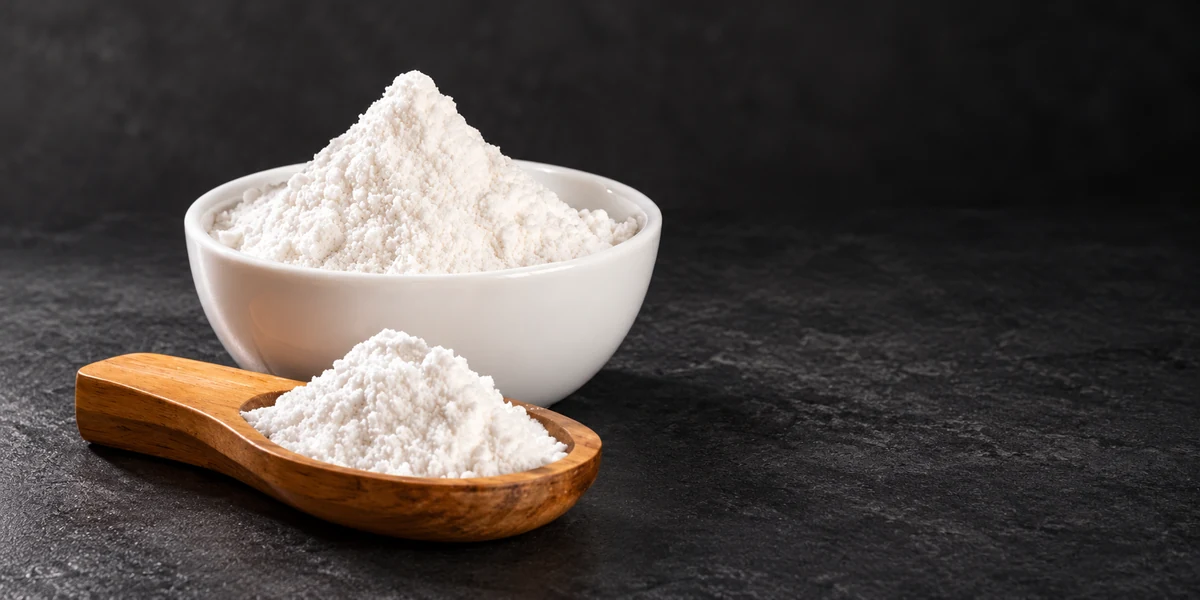
The main difference
Both ingredients can produce carbon dioxide that helps a batter expand. They look similar, but they bring different chemistry to the bowl. The amount, the other ingredients and the mixing method determine how that gas contributes to the finished crumb.
Baking soda is sodium bicarbonate, also called bicarbonate of soda. In an acid-containing mixture it reacts and releases carbon dioxide. Baking powder already contains bicarbonate and acidic ingredients, usually separated and kept dry by a starch carrier.
The bubbles need a batter capable of holding them, and the structure must set during baking. Adding more raising agent cannot compensate for every mixing or baking problem. Too much can also change flavour, colour and the way the cake rises.
| Question | Baking soda | Baking powder |
|---|---|---|
| What is in it? | Sodium bicarbonate | Bicarbonate, acidic ingredients and usually starch |
| Where does the acid come from? | Normally from other recipe ingredients | Included in the powder |
| When does it act? | Reaction begins when suitable ingredients meet; heat also affects it | Depends on the product; double-acting types react during mixing and baking |
| Can equal spoonfuls be swapped? | No reliable universal swap | No reliable universal swap |
Acidity in the recipe matters
Yogurt, buttermilk, sour cream, citrus juice and some other ingredients contribute acid. Their presence is useful information, but it does not tell you exactly how much bicarbonate a particular recipe needs. Acid content and the rest of the formulation vary.
Cocoa is a useful example. Natural cocoa and alkalised cocoa are not interchangeable sources of acidity. Do not assume that every chocolate cake has the same acid balance simply because cocoa appears in the ingredients.
Honey also varies. A recipe containing honey does not establish a universal rule that only baking soda can work. Follow a complete formula designed for the ingredients you actually use.
What double-acting baking powder means
A double-acting powder releases gas in stages: some when it is moistened and more as the batter heats. The exact acids and release pattern depend on the product. Read the package rather than assuming every powder is identical.
Having a second stage of action does not make every mixed batter suitable for a long wait. Prepare the pan and oven before mixing and follow the recipe’s timing. Keep the powder dry during storage so it does not react prematurely.
Why a recipe may use both
A batter can need bicarbonate to react with some of its acid while still needing additional leavening from baking powder. The balance also affects flavour and browning. Using both is therefore a deliberate formulation choice, not necessarily a duplicate instruction.
Keep both at their stated amounts unless you are deliberately reformulating and testing the recipe. Deleting the soda because powder is already present, or doubling one to replace the other, changes more than a single number.
Not every cake uses either ingredient. A whipped-egg sponge can rely on mechanical aeration instead. Identify the type of recipe before trying to correct a low rise by adding a chemical raising agent.
See an egg-foam chocolate sponge that uses no baking powder.
Can you substitute one for the other?
There is no reliable conversion that works for every recipe. Replacing soda with powder adds the powder’s acids and carrier as well as bicarbonate. Replacing powder with soda removes that balanced acid system and can leave too much alkalinity unless the recipe is reformulated.
The safest practical choice when you have the wrong ingredient is a complete recipe designed for the ingredient you have. If you are testing a substitution, make a small batch and record the exact product, quantities, mixing method and result.
Do not add an arbitrary splash of vinegar or lemon juice and assume the mixture is now balanced. That also changes the liquid and flavour. A correction based only on teaspoons ignores differences between products, measurement and recipe acidity.
- Read the exact ingredient name: baking soda and baking powder are different products.
- Check whether the recipe contains one or both and preserve that distinction.
- Use the stated weight where one is supplied, rather than a heaped household spoon.
- When scaling a recipe, multiply every ingredient by the same recipe factor; scaling does not make one raising agent a replacement for the other.
Should you fizz soda with vinegar first?
Letting soda and vinegar finish fizzing in a spoon or cup before adding them to the batter releases much of that gas outside the mixture you want to aerate. It is not a dependable way to increase lift.
In recipes designed for it, the raising agent is distributed with dry ingredients and the acidic ingredients are included with the liquids. When the two mixtures combine, work according to the recipe and bake promptly. Follow any specific mixing sequence in a tested formula rather than adding an extra fizzing step.
Check activity and store the products dry
A simple activity check can identify an obviously inactive product. Mix ½ teaspoon of baking powder with 2 tablespoons of warm water: it should bubble. In a separate clean container, mix ½ teaspoon of baking soda with 1 tablespoon of vinegar: it should fizz. Use correctly labelled ingredients and clean utensils, and discard these test mixtures.
A reaction is an indication of activity, not a measurement of exact leavening strength or proof that a substitution will work. If the product is old, damp, contaminated or not responding as expected, replace it.
Keep both products tightly closed in a cool, dry place and follow the manufacturer’s storage and use-by information. Do not place a wet measuring spoon in the container.
What about homemade baking powder?
A homemade mixture of bicarbonate, a dry acid and starch is not automatically equivalent to a commercial double-acting powder. The acid’s identity and amount matter, and the gas-release timing can change.
Use a reliable recipe that specifies the exact acid and measurements if you choose to make your own. Do not combine approximate spoonfuls or expect a homemade mixture to reproduce every commercial product. For a cake you need to repeat reliably, the specified fresh baking powder is the simpler starting point.
Common questions
Is bicarbonate of soda the same as baking soda?
Yes. Both names refer to sodium bicarbonate. Baking powder is a mixture that includes bicarbonate and acid ingredients.
Why does my cake recipe list both soda and baking powder?
They can serve complementary roles in the recipe’s acid balance and leavening. Keep both at their stated amounts rather than treating one as redundant.
Can I use a universal two-to-one replacement chart?
No single chart accounts for every product and recipe. Powder composition, acid balance and the remaining ingredients affect the result.
Does a stronger fizz mean the cake will rise more?
Not necessarily. The batter needs to retain the gas and set correctly. A simple fizz test does not measure performance in a particular recipe.