
Why Is My Gelatin Not Setting?
When a gelatin dessert fails to set, check the full sequence: the correct gelatin and weight, complete hydration, proper dissolution, even mixing and enough chilling for the recipe. Extra liquid, ingredient changes or certain raw fruits can also matter. Adding more dry gelatin to the finished mixture is not a dependable repair.
Explore Mousse Cakes Made Simple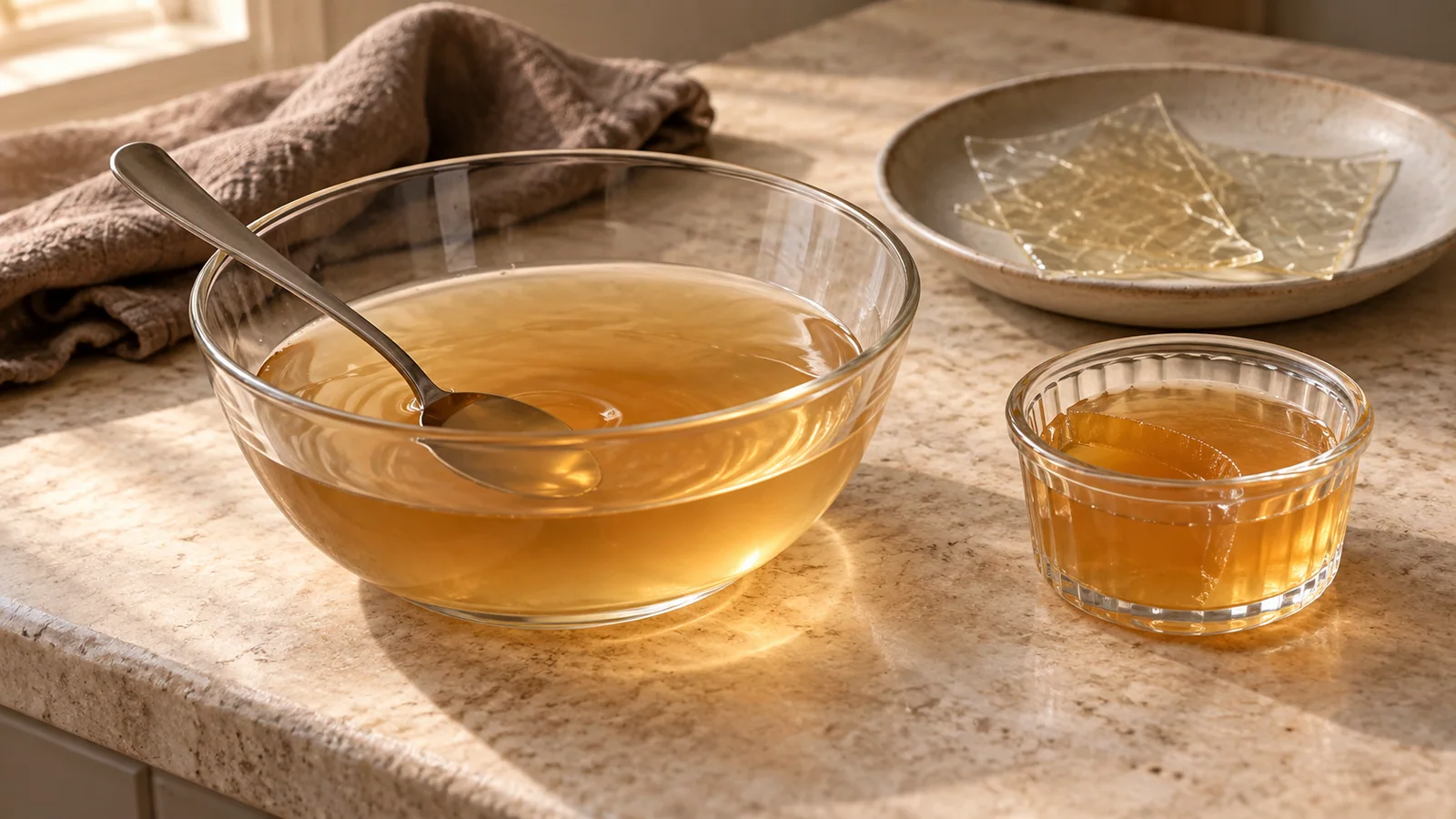
Identify what has actually failed
A bowl of swollen gelatin that contains dry granules is a different problem from a smooth dessert that remains loose after chilling. Strings in a mousse suggest another issue again: the gelatin may have begun setting before it was evenly dispersed. Describe the symptom before choosing a correction.
Check how far the dessert has progressed. A simple unwhipped base may still allow a controlled adjustment, while reheating an assembled mousse can destroy its aeration and layers. Keep the original recipe and your ingredient weights beside you. The useful question is which step differed from the method, not simply how much extra gelatin might make the bowl firmer.
Check weight, form and strength
Confirm the amount of gelatin you actually used and whether the recipe specifies a particular strength. Gelatin strength is commonly expressed in Bloom. Powder and sheets are different forms, and sheet count alone is not a reliable way to compare every product. Check the packaging and the recipe’s substitution guidance before assuming an exchange is equivalent.
Also check the total liquid. Extra puree, juice, alcohol or water added during preparation changes the mixture the gelatin has to support. Include hydration water where the formula requires it. Do not compensate for an unknown substitution by adding an arbitrary spoonful: that can produce an unpleasantly rubbery result without addressing uneven dissolution.
Compare gelatin, agar and pectin before substituting the setting agent.
Hydrate before dissolving
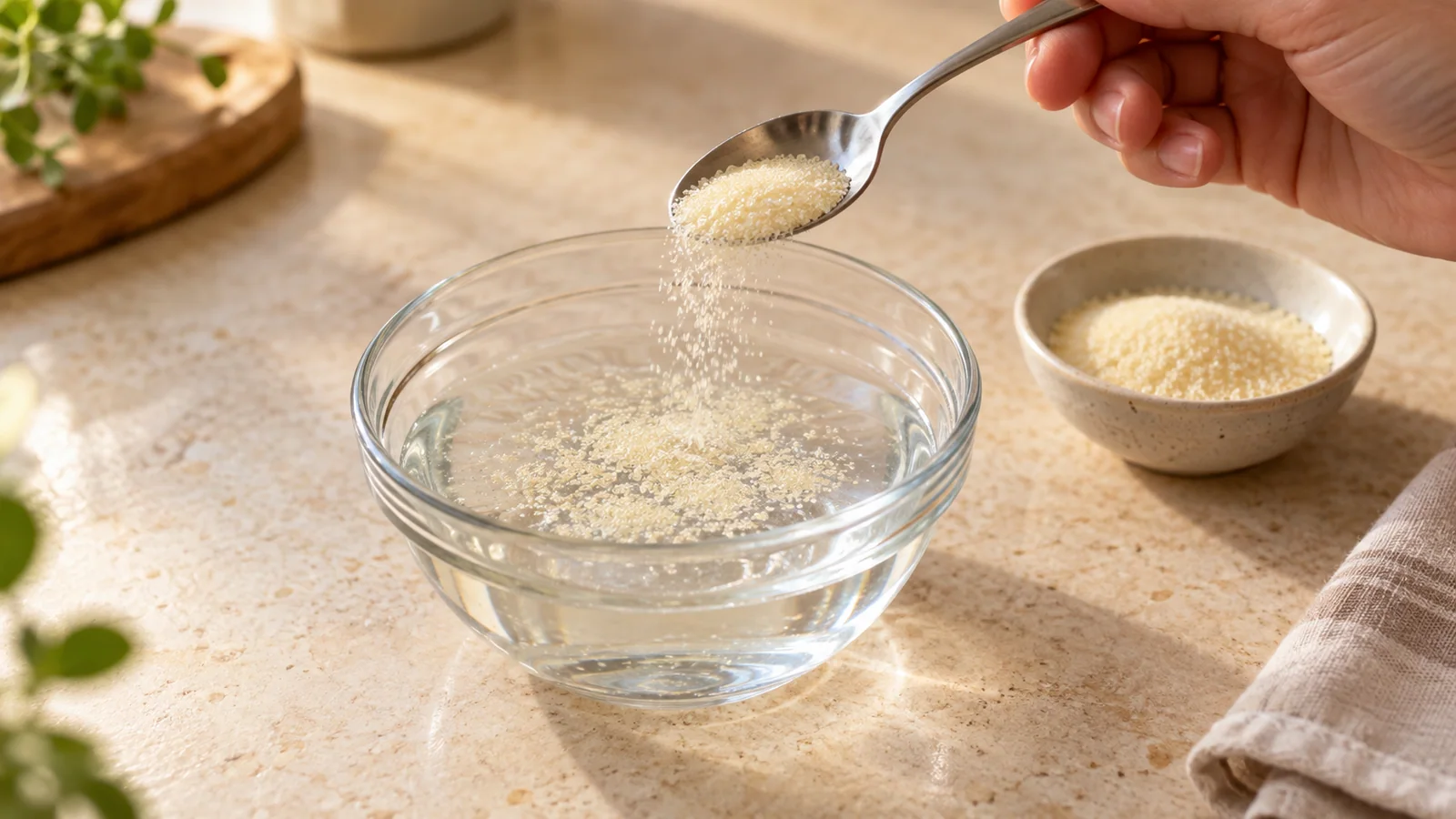
For standard gelatin that requires hydration, follow the product’s soaking method. Powder is usually distributed into the specified cold liquid rather than left in one compact mound. Sheets need to soften as directed before they are used. Instant or specially formulated products may have different instructions, so identify what is in your packet first.
Inspect the hydrated gelatin rather than relying only on elapsed time. Dry centres or hard granules mean the process is incomplete. Too little liquid or uneven wetting can leave particles that are difficult to dissolve consistently. Prepare this stage before the rest of the dessert reaches its next critical step, so you are not rushing between a hot base and unfinished gelatin.
Dissolve fully and mix before it starts setting
Hydrated gelatin needs to be dissolved using the method in the recipe. Gentle controlled warming, or incorporation into an appropriately warm base, helps it disperse. Look for a smooth result without remaining granules. Avoid unnecessary prolonged heating, and do not assume that more heat is the answer to every lump.
Temperature differences during mixing also matter. Pouring a small amount of gelatin mixture straight into a very cold, thick base can create uneven setting before it has spread through the dessert. Follow any staged mixing or temperature-balancing step in the recipe. Once cream has been folded into a mousse, stirring aggressively or reheating the whole bowl can sacrifice the texture you were trying to preserve.
Prepare whipped cream so it folds smoothly into the mousse base.
Review fruit and other changes
Certain fresh fruits, including pineapple, kiwi and papaya, contain enzymes that can interfere with gelatin’s ability to form a gel. A recipe using a cooked or otherwise processed fruit preparation may therefore behave differently from one where you substitute raw fruit. Use a formula designed for the ingredient and processing method you actually have.
Acidity and other ingredients can also affect the result, so avoid treating every fruit puree as interchangeable. Record changes in puree, sugar and added liquid when a familiar recipe suddenly behaves differently. Do not rely on a broad list of ingredients labelled helpers or enemies: the complete formulation and process determine how the mixture sets.
Allow the intended chilling, then choose the next step
A gelatin mixture develops its set during cooling; a warm or only briefly chilled sample is not a fair final test. Follow the recipe’s chilling stage and account for the size and depth of the dessert. A deep mould and a small tasting cup do not reach the same condition at the same moment.
If the dessert still fails, decide whether it can be adjusted without damaging its other components. A smooth, simple base may allow a recipe-led correction; an aerated or assembled dessert often needs a fresh attempt. Freezing can make a mixture temporarily firm without proving that it will hold after thawing. Keep any use or storage decision tied to the actual ingredients and handling history.
Separate a mousse cake’s frozen handling stage from its final chilled set.
Common questions
Can I sprinkle more gelatin into a finished mousse?
Dry gelatin will not disperse reliably that way, and stirring can damage the mousse. First identify the gelatin product and the failed stage. A correction needs a suitable method for that specific base; otherwise, remake the component.
Will the freezer fix a dessert that will not set?
Freezing changes firmness while the dessert is frozen. It does not prove that the gelatin structure will support the dessert once thawed. Evaluate it at the stage where it is meant to be served.
Keep exploring
All pastry guides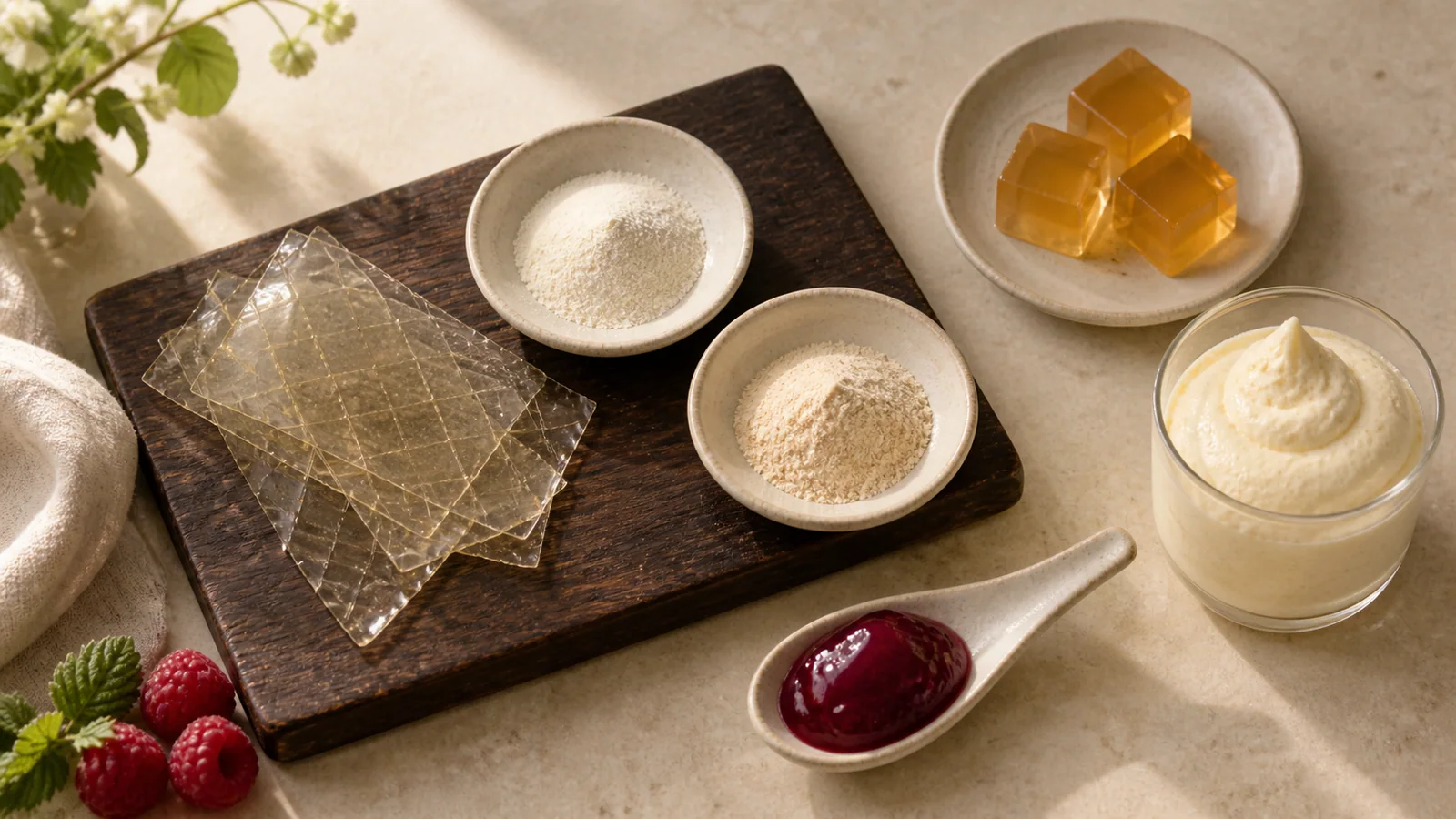
Gelatin, Agar and Pectin: Which One Does Your Dessert Need?
Gelatin, agar and pectin create different dessert textures. Compare their roles, preparation and substitution limits before changing a mousse or fruit filling.
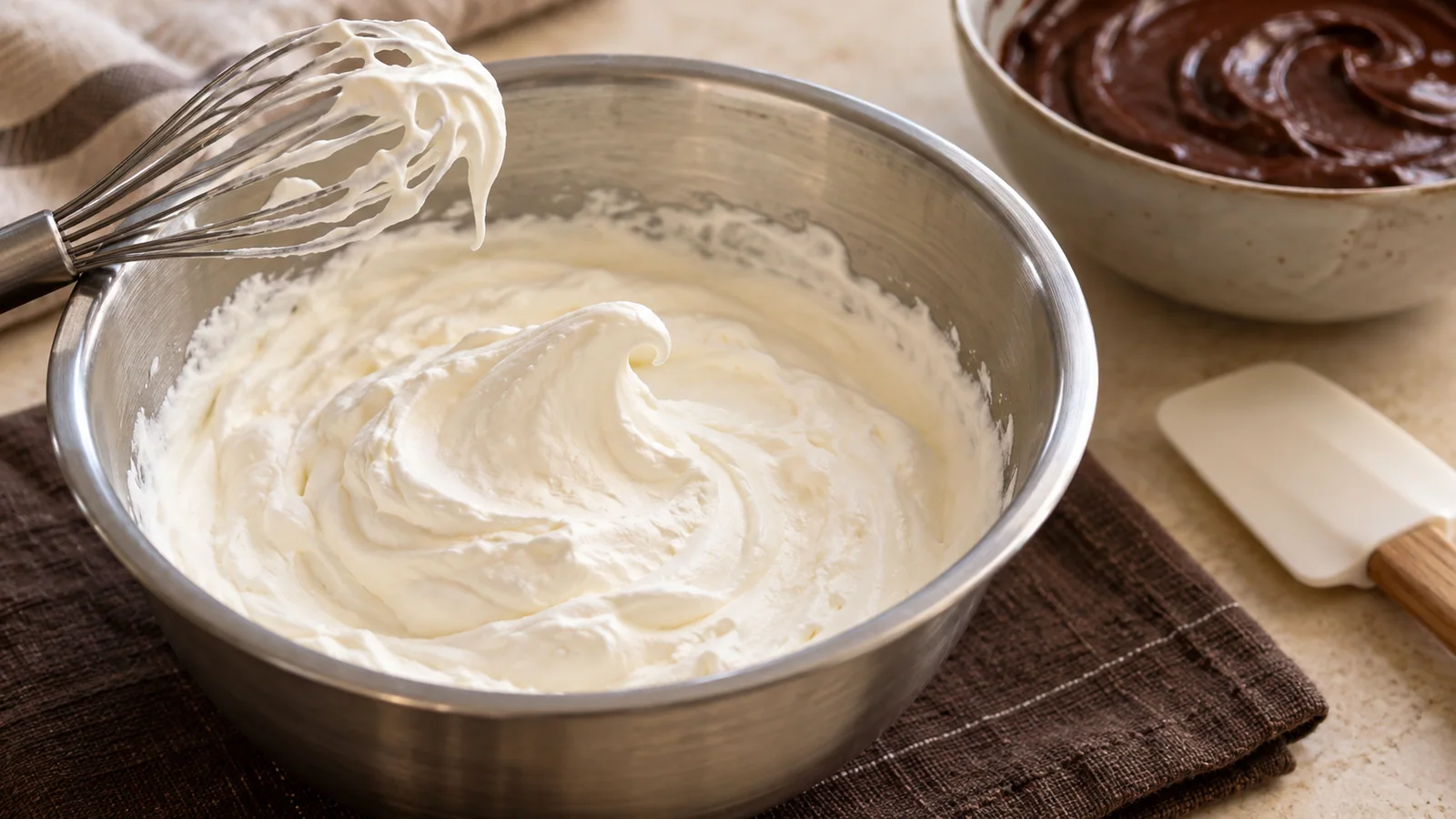
How to Whip Cream for Mousse: Soft Peaks and Smooth Folding
Whip cream to the stage your mousse needs: smooth, aerated and easy to fold. Learn peak cues, temperature control and the signs to stop mixing.
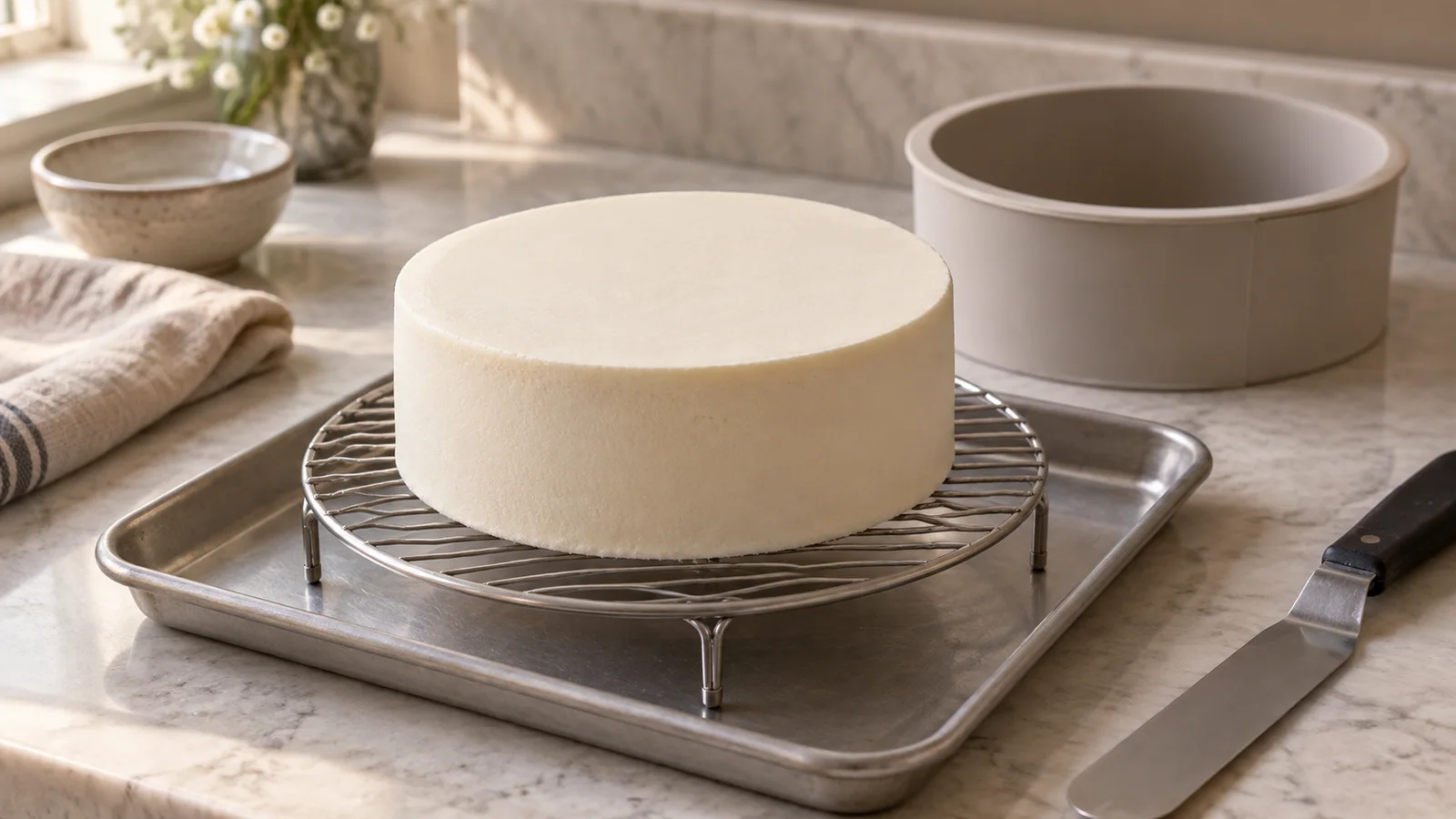
Freezing a Mousse Cake Before Glazing: What to Check
Plan the freezing stage for a moulded mousse cake, check release and surface condition, and coordinate glazing with a controlled refrigerator thaw.
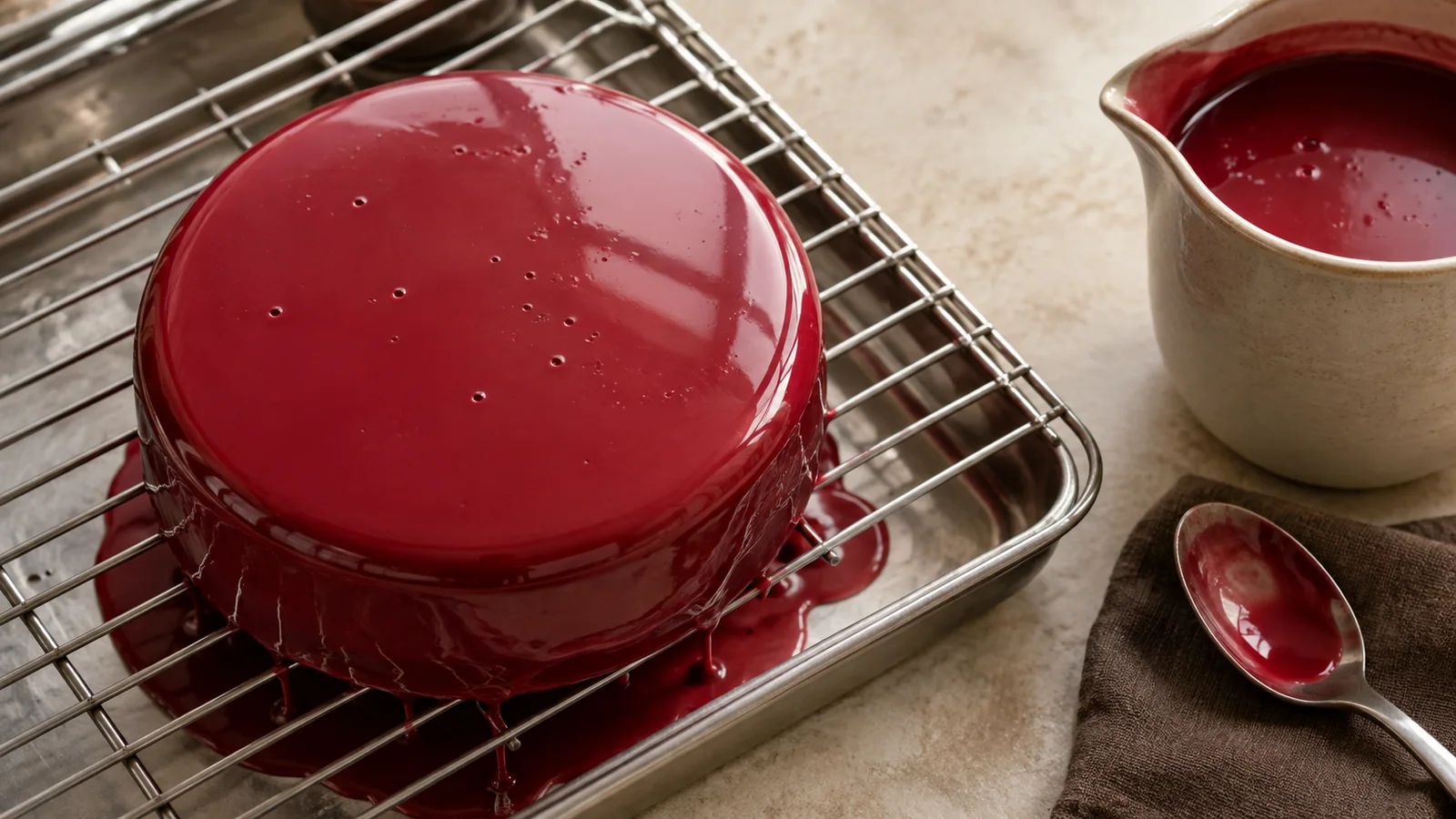
Mirror Glaze Bubbles and Thickness: A Practical Troubleshooting Guide
Mirror glaze full of bubbles, too thick or sliding off? Check blending, recipe-specific working conditions and the frozen cake before pouring.