
Cakes & pastry
Lemon and Almond Madeleines
Madeleines are small shell-shaped cakes with a buttery crumb and a raised hump. This version combines wheat and almond flour with lemon zest. Rest the batter cold for 20–30 minutes, chill the filled mould briefly, then bake at 200°C until golden.
4 min read
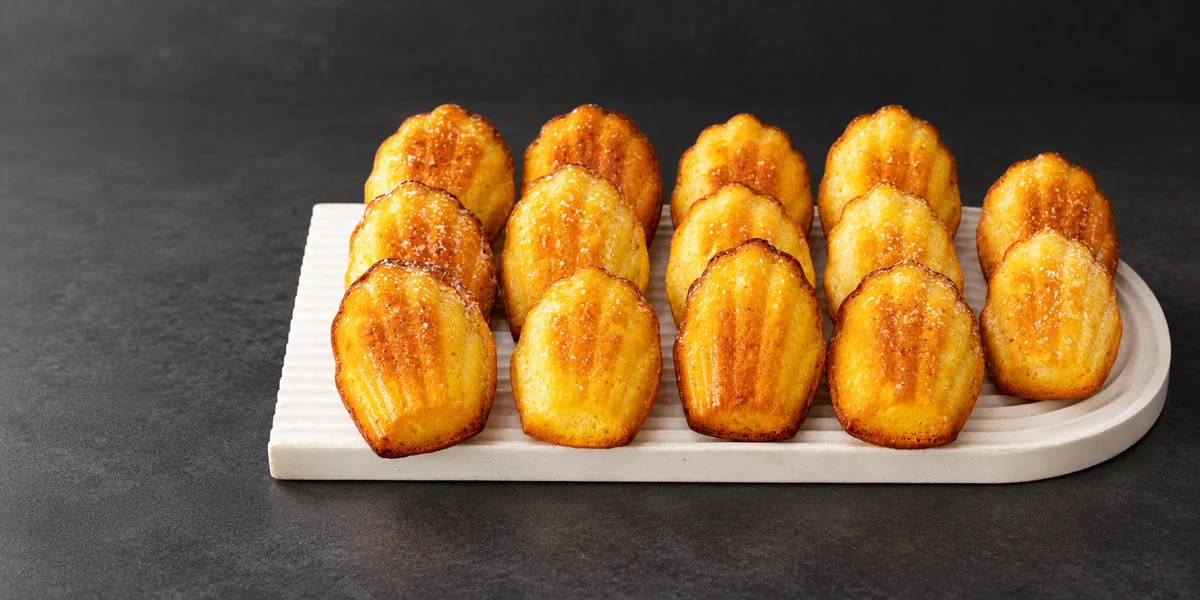
A small cake with a distinctive shape
A madeleine mould gives one side its shell pattern while the other side rises into a hump. The hump is expected, not a defect that needs pressing flat. The cakes are airy while hot and become a little firmer as they cool.
Choose a mould that releases well and prepare it according to its material and manufacturer’s instructions. Metal moulds usually need greasing; silicone performance varies, so do not assume every new mould is non-stick. Have the mould ready before taking the chilled batter from the refrigerator.
Choose French sablé when you want a crisp, sandy butter cookie instead.
Mix the lemon and almond batter
Lemon and almond madeleines
Ingredients
- 80 g wheat flour
- 20 g almond flour
- 80 g unsalted butter, about 82% fat
- 4 g baking powder
- 80 g sugar
- 2 eggs
- ½ lemon finely grated zest only; have one lemon available
Method
- Melt the butter. Melt the butter gently and allow excess heat to dissipate while preparing the other ingredients.
- Mix the eggs. Whisk the eggs and sugar, then add the wheat flour, almond flour and baking powder. Mix until uniform.
- Add the zest. Finely grate the coloured zest from half a washed lemon, avoiding the bitter white pith. Stir it evenly into the batter.
- Add butter. Pour in the melted butter and mix until fully incorporated. Cover the batter at the surface and refrigerate for 20–30 minutes.
- Fill and chill. Transfer to a piping bag or use two spoons to fill the prepared madeleine cavities. Leave room for expansion. Put the filled mould in the freezer for approximately five minutes to chill the batter further.
- Bake. Bake in a preheated 200°C (392°F) oven for approximately 10–12 minutes, until golden. Release the cakes carefully and cool on a rack.
Only zest goes into this formula; adding lemon juice changes the liquid balance.
Mould cavity size changes yield and baking time. Check colour and release rather than waiting for every mould to behave identically.
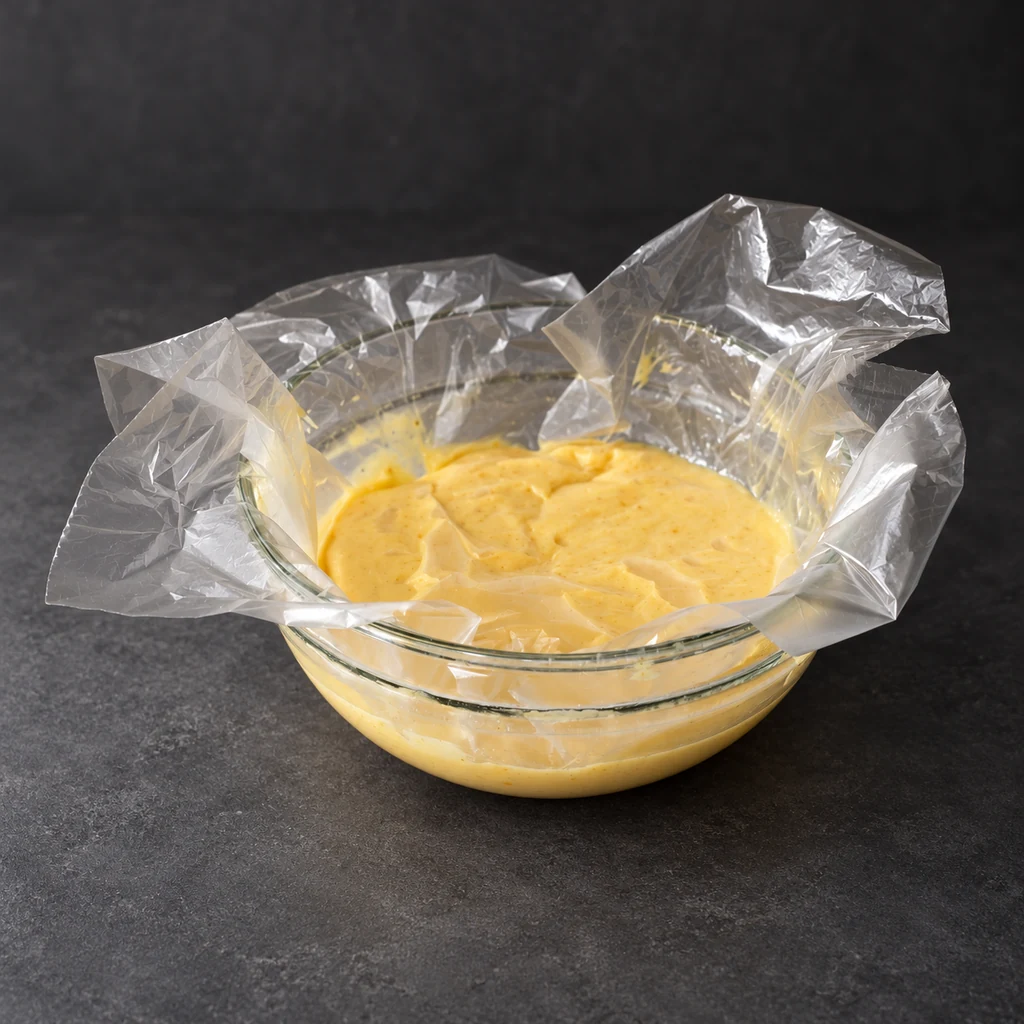
Let chilling do its job
Chilling thickens the batter and makes it easier to portion. It also creates a useful temperature contrast with the hot oven. Do not replace the chilled rest with extra flour simply because the freshly mixed batter looks softer.
A longer covered refrigerator rest can fit your schedule; the short 20–30-minute rest is the starting method here. Keep the filled mould cold only long enough for the brief final chill, rather than freezing it solid without adjusting the bake.
Fill the cavities evenly and avoid pockets of air. Overfilled cavities can overflow and lose the clean shell outline. If using spoons, place the batter carefully in the centre and let it settle into the mould instead of spreading it up the rim.
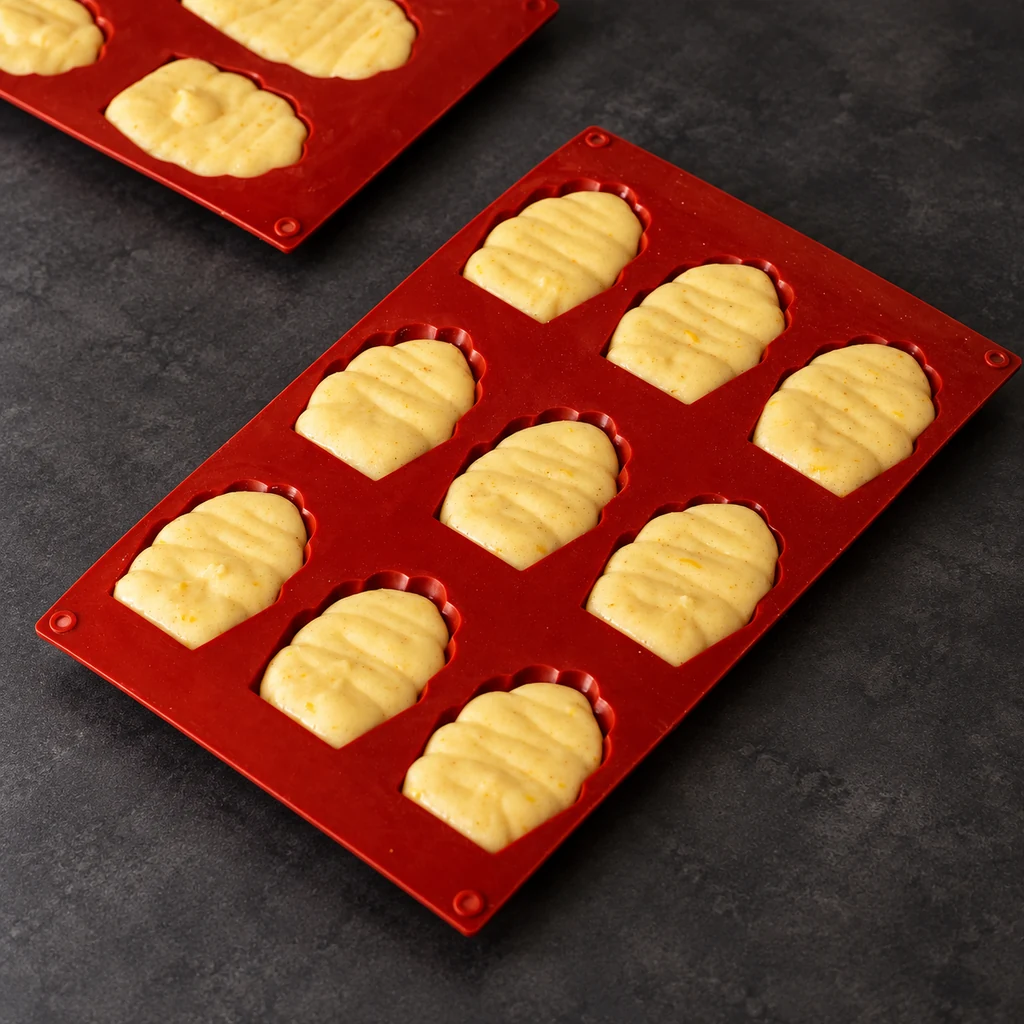
Release while the surface is still crisp
Let the cakes settle briefly if they are too delicate to handle, then remove them from the mould so trapped steam does not soften the surface. A flexible tool is safer for a coated mould than scratching it with a sharp knife.
If the first batch sticks, review mould preparation, baking endpoint and cooling time before changing the batter. Follow the mould’s cleaning instructions so a useful coating is not damaged.
Use fine lemon zest and only the coloured layer. Rubbing zest into the sugar before mixing is an optional way to disperse its oils; it does not change the amount of zest or sugar. Do not scrape into the white pith in an attempt to get more flavour.
Serve simply and change the formula deliberately
Madeleines are well suited to serving soon after baking, when the surface is lightly crisp and the inside remains tender. Let them cool before packing, otherwise steam collects in the container. Keep them protected from drying after cooling.
Chocolate coatings or a light dusting of icing sugar are simple finishes. A cocoa batter is a different formula: adding cocoa on top of the flour without adjusting anything can dry the cakes. Likewise, replacing almond flour with wheat flour changes the fat and structure rather than giving an identical result.
For a less sweet or savoury version, use a recipe designed for that purpose. Sugar affects colour, moisture and texture here, so removing it completely is not a small flavour adjustment.
Temper chocolate if you want a coating that sets with a clean finish.
Common questions
Is the raised hump normal?
Yes. It is a characteristic feature of madeleines.
Do I add the whole lemon?
No. Use the finely grated coloured zest from half a lemon. Juice is not included in this batter.
Can I skip chilling?
Chilling is part of this method. It thickens the batter and helps control the bake.
Why did the shells become soft in the mould?
Leaving the hot cakes in the mould traps steam. Release them carefully and cool on a rack.