
Cakes & pastry
French Sable Cookies
Sablé cookies have a delicate, crumbly texture. In this formula, two yolks and one white go into the dough, while the second white is reserved for glazing. Chill the dough, roll it 3–4 mm thick, cut rounds and bake at 180°C until lightly golden.
4 min read

Separate the eggs before mixing
The ingredient list contains two eggs, but they are not both added whole. Separate them first: combine two yolks with one white for the dough and keep the remaining white for brushing the tops. This small detail controls the dough’s moisture.
Use softened butter and fine sugar for easier mixing. The goal is a smooth dough that can be rolled, not a heavily kneaded bread-like dough. Chilling gives the butter time to firm so you can cut neat shapes without continually adding dusting flour.
Make the dough and cut the cookies
French sablé cookies
Ingredients
- 250 g wheat flour
- 2 eggs, separated: two yolks and one white for dough, one white for glaze
- 125 g unsalted butter, softened
- 5 g baking powder
- 90 g fine sugar
- to taste vanilla sugar
- 1 pinch salt
Method
- Mix the butter and sugar. Combine the soft butter, fine sugar and vanilla sugar until smooth.
- Add the egg portion. Mix the two yolks and one white together, then incorporate into the butter mixture. Keep the other white aside.
- Form the dough. Add the flour, baking powder and salt. Mix only until the dough comes together evenly.
- Chill. Cover the dough at the surface and refrigerate for about 30 minutes, until it is firm enough to roll without sticking excessively.
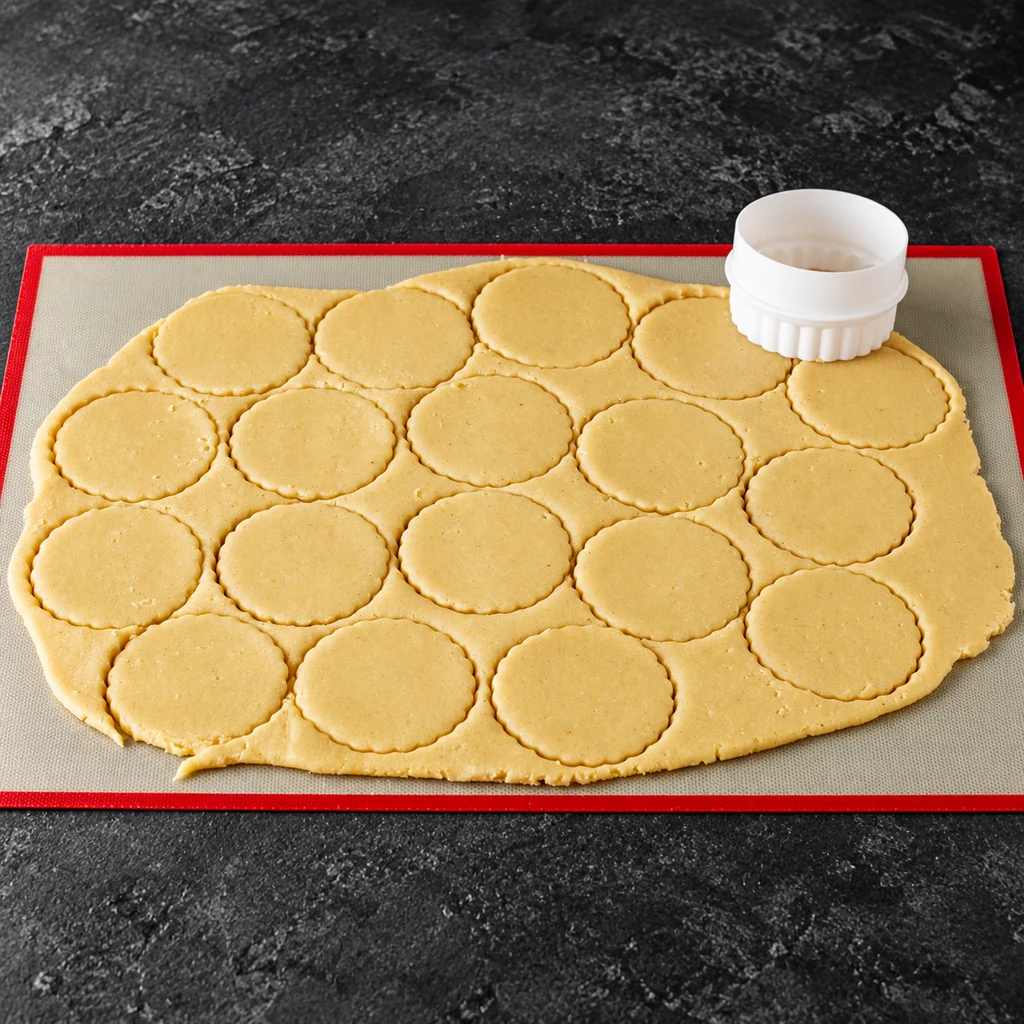
- Roll and cut. Roll to 3–4 mm thick and cut rounds. Make a light pattern on the tops with a fork.
- Glaze and bake. Brush the tops lightly with the reserved egg white. Place on parchment and bake in a preheated 180°C (356°F) oven until lightly golden and baked through. Cool before packing.
Size, thickness and your tray affect the bake. Watch the first tray closely and look for a light golden colour.

Keep the dough cool but flexible
The 30-minute rest is a guide to texture. A warm kitchen or a thick block of dough may need more time. If the dough becomes so cold that it cracks, allow it to become pliable again before rolling rather than forcing it flat.
Roll with even pressure and use only enough dusting flour to prevent sticking. Repeatedly adding flour during rolling can make the scraps much drier than the first cut. Gather scraps gently and avoid kneading them for a long time.
Fine sugar disperses more readily than coarse crystals. This matters in a short mixing process where the sugar is not cooked into a syrup. Large crystals can remain obvious in the finished crumb.
Use the glaze for colour, then vary the finish
A thin egg-white glaze gives the top a little shine and helps small toppings adhere. It does not waterproof the cookie or make a wet topping harmless. If you add jam or a moist decoration, expect the texture to change over time.
A small amount of citrus zest or chopped chocolate can change the flavour without changing the basic shape. Seeds, poppy seeds or finely chopped candied fruit can be pressed into the glaze before baking. Keep heavy toppings modest so they do not obscure the cookie’s own bake.
Replacing wheat flour with almond flour or adding a large quantity of coconut changes fat, absorbency and structure. Treat those as formula variations that need testing rather than interchangeable spoonfuls.
Let the crumb set before handling
Freshly baked sablé is delicate. Let the cookies settle on the tray briefly, then move them carefully to a rack to finish cooling. They should be fully cool before closing them in a container.
Serve them plain alongside tea or coffee, or pair with a small portion of lemon curd at the table rather than storing a wet topping on every cookie. Keep dry cookies separate from filled desserts so moisture does not migrate between them.
For a shell-shaped, soft butter cake instead of a crisp cookie, madeleines are a different method and a useful next technique to practise.
Serve a little lemon curd alongside the cookies.
Bake lemon and almond madeleines for a softer French teatime cake.
Common questions
Do both eggs go into the dough?
No. Use two yolks and one white in the dough. Reserve the second white for brushing the tops.
How thick should I roll the dough?
Aim for an even 3–4 mm layer.
Can I skip the chilled rest?
The rest firms the butter and makes neat cutting easier. Judge whether the dough is cool and workable before rolling.
Does egg-white glaze keep cookies waterproof?
No. It helps with colour and shine, but a moist filling can still soften the cookie.