
Cakes & pastry
Chocolate Chip Cookies with Soft Centres
Use soft butter, not melted butter, and chill the portioned dough before baking. This recipe makes large 80–90 g chocolate chip cookies baked at 180°C for about 12–15 minutes. Let them finish setting on the tray; a soft centre is different from a wet, uncooked centre.
4 min read

Choose the texture before mixing
The recipe combines white and brown sugar within a 120 g total. Their proportion changes the result: more white sugar generally favours a crisper texture, while brown sugar brings moisture and a deeper flavour. Keep the total measured amount unchanged when choosing the mix.
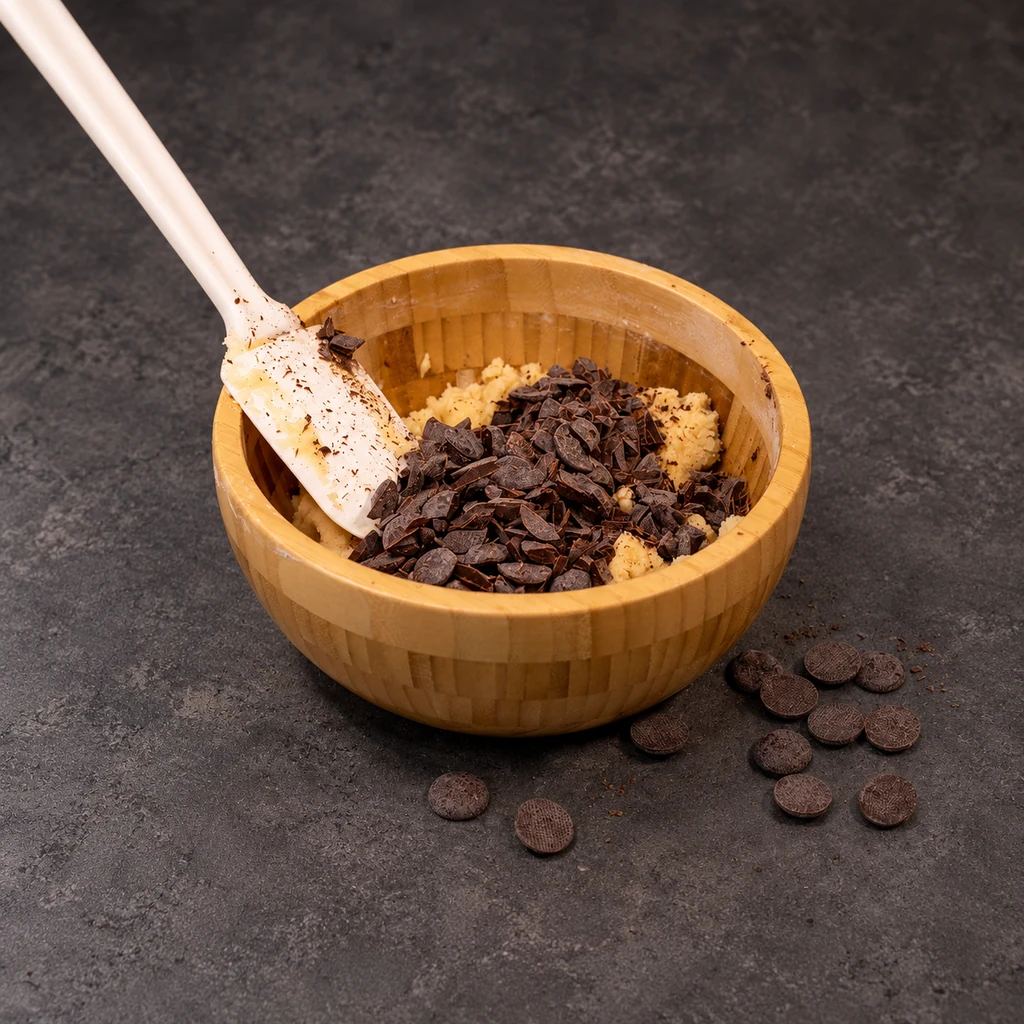
Chopped dark chocolate gives pieces of different sizes and pockets that melt through the dough. Use a clean knife and aim for pieces that can distribute evenly rather than one or two very large blocks. Some small fragments are useful too, because they carry chocolate through more of the cookie.
Mix, chill and bake the cookies
Large chocolate chip cookies
Ingredients
- 200 g wheat flour
- 120 g total white and brown sugar, in your preferred combination
- 100 g unsalted butter, softened
- 100 g dark chocolate, chopped
- 1 egg
- 5 g baking powder
- 1 pinch salt
- to taste vanilla
Method
- Mix butter and sugar. Combine the softened butter with the sugar and vanilla until even. The sugar does not need to dissolve completely.
- Add the egg. Mix in the egg until the mixture is uniform.
- Add dry ingredients. Combine the flour, baking powder and salt, then mix them into the butter mixture to make a dough.
- Fold in chocolate. Mix the chopped chocolate through the dough so each portion receives a similar amount.
- Portion and chill. Divide into approximately 80–90 g portions. Cover and refrigerate for about 15 minutes; extend the chill if the dough is still very soft.
- Bake. Place the portions on baking parchment or a suitable baking mat with generous space between them. Bake in a preheated 180°C (356°F) oven for approximately 12–15 minutes, until the edges are set and the centre is no longer wet.
- Cool on the tray. Leave the cookies on the tray as they begin to firm. Move them only once they can be lifted without breaking.
Extra chocolate pieces may be added on top during baking if desired; these are optional decoration beyond the measured 100 g in the dough.
The dough makes a small batch of large cookies. Changing portion size changes baking time.
Use temperature before changing the flour
Soft butter should be pliable, not oily or liquid. If the dough warms during handling, a refrigerator rest is the first useful correction. Chill it until it can hold a portioned shape rather than adding flour immediately.
A warm baking tray can start melting the butter before the cookies reach the oven. Use a cool prepared tray for each batch. Space portions generously because the dough spreads as it bakes.
If one test cookie spreads too far, check the flour measurement, butter temperature, sugar choice and chilling. A large unmeasured flour addition may stop spreading but can also make the whole batch dry. Change one variable at a time and record the result.

Aim for a soft but baked centre
The cookies continue to firm on the hot tray after leaving the oven. Removing them when the edges are set preserves a softer centre than baking until every part feels rigid. However, the middle should not remain visibly wet batter.
Use a test cookie to learn your oven, especially with large 80–90 g portions. A smaller cookie needs less time; a thicker, colder portion may need more. The timer is a starting point, not a substitute for checking the actual batch.
If you choose to press extra chocolate onto the tops midway through baking, work quickly and carefully around the hot tray. This optional decoration is not needed for the cookie structure.
Understand the baking powder used in the dough before substituting it.
Cool before packing
Serve the cookies slightly warm if you want melted chocolate pockets, or let them cool fully for cleaner packing. For a gift, wrap only cooled cookies so moisture does not condense inside the wrapping.
Store cooled cookies in a closed container and make them close to serving. Covered dough can be refrigerated for later baking or portioned for freezing; label the batch and follow safe handling for raw egg dough. Do not taste the unbaked dough.
Candy-coated chocolate can replace some chocolate pieces as a flavour choice, but it changes sweetness and melting behaviour. A cocoa cookie dough needs its own balanced formula; simply adding cocoa to this dough is not an exact chocolate-cookie conversion.
Common questions
Can I melt the butter instead?
Melted butter changes the dough and its spread. This method is written for softened butter.
What is the white-to-brown sugar ratio?
The formula gives 120 g total without a fixed split. Choose the combination, keep the total unchanged and expect texture to vary.
Why leave them on the tray?
They are fragile while hot and continue firming as they cool.
Can I make smaller cookies?
Yes, but reduce the portion size consistently and check earlier because they will bake faster.