
Mousse & pastry
How to Estimate the Weight of a Cake
Estimate a finished cake by adding the components that actually go into it: baked sponge, filling, absorbed syrup, outer frosting and edible decoration. The same diameter can produce very different weights. For a repeat order, your recorded finished yield is a better starting point than a generic kilograms-per-pan chart.
6 min read
Why diameter does not tell you the weight
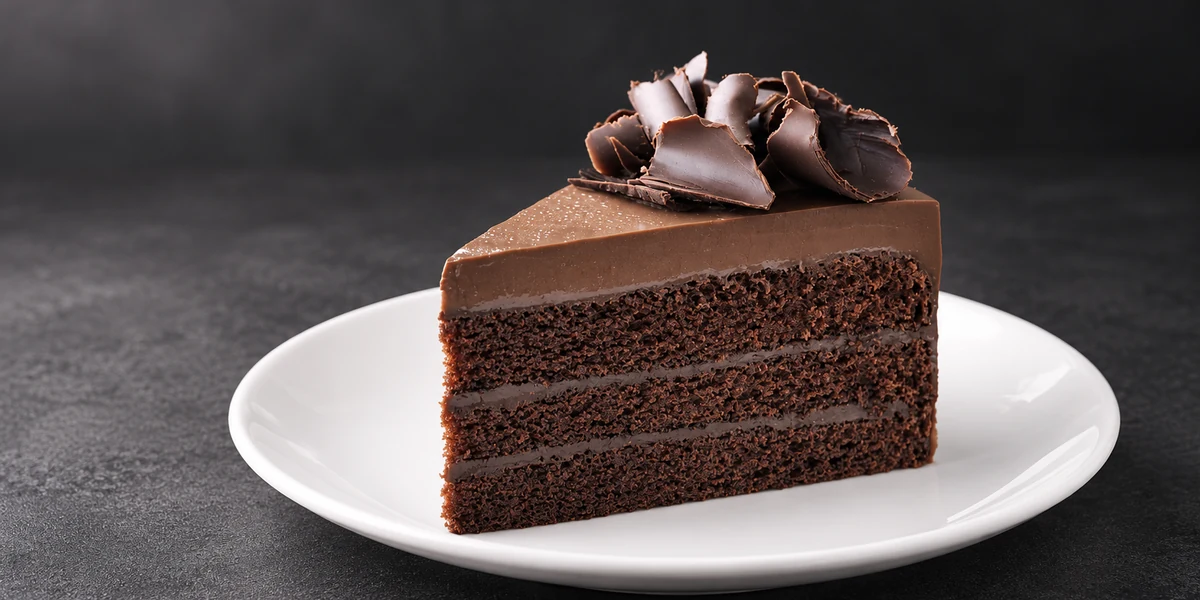
An 18 cm cake with a light sponge and softly whipped cream can weigh much less than an 18 cm cake with dense chocolate layers, fruit filling and a thick ganache finish. Height, layer count and filling depth matter just as much as the width.
Start by deciding what you are measuring. Edible cake weight excludes the board, box, supports and non-edible decoration. If you put a complete cake on the scale, subtract those items. Otherwise a heavier board can appear to be extra cake.
For planning, keep a separate estimate for portions. A serving of 150–200 g is a useful generous starting range for a celebration layer cake, not a rule for every event. A rich dessert after a large meal may be cut smaller; a cake that is the main dessert may need more.
Build a component worksheet
Record the usable amount of each component rather than the size of the batch you made. A bowl containing 800 g of frosting does not contribute 800 g to the cake if 150 g remains in the bowl and piping bag.
The cleanest measurement is to weigh the bowl before and after use, or weigh the cake as you add a component. Note any trimmings that are removed later. Keep the same convention each time so that your records remain comparable.
| Component | What to record | What to exclude |
|---|---|---|
| Sponge | Cooled layers after levelling and trimming | Baking loss and unused trimmings |
| Filling | Amount between the layers | Filling left in the bowl |
| Syrup | Amount actually applied and retained | Unused syrup |
| Outer frosting | Crumb coat and final coat retained on the cake | Frosting scraped off and not reused |
| Decoration | Edible decoration that will be served | Board, supports and non-edible pieces |
Estimate the baked sponge without inventing a fixed loss
Add the ingredient weights to find the batter weight. Weigh eggs without shells, and weigh ingredients that the recipe gives in spoons or cups. Regional egg-size names are less useful than the actual weight of the egg that enters the bowl.
Baked sponge weighs less because moisture evaporates. The loss changes with the formula, pan, layer depth and bake, so do not subtract the same percentage from every cake. A long-baked thin layer and a moist oil-based cake will not necessarily have the same yield.
For a recipe you already bake, weigh the batter, the cooled cake and the usable trimmed layers once. If 700 g of batter repeatedly gives 600 g of usable sponge in your setup, use that recorded 600 g when estimating the next identical batch. Changing the recipe or pan depth means checking the yield again.
Account for creams, syrup and cooked fillings
Whipping adds air and changes volume, but it does not add meaningful ingredient mass. A whipped cream can therefore fill more space than the same weight of a dense ganache. This is why the cake dimensions cannot replace component weighing.
Custard, caramel and fruit fillings can lose water during cooking. Weigh the finished cooled batch; do not count all the raw ingredient weight and then add the finished cream again. For a first estimate, label any assumed cooking loss clearly and replace it with a measured yield after preparation.
Syrup is especially easy to overcount. If you prepare 250 g but apply 100 g, the cake gains approximately the amount applied, not the full recipe yield. Avoid a universal absorption percentage. Some sponge layers need little syrup, and a wet filling may already provide enough moisture.
A worked component example
The following is an arithmetic example, not a recipe or a promised yield. It shows how to total an assembled cake after the component amounts have been measured.
At 200 g per serving, this cake gives about 10 portions; at 150 g, it gives about 13. The practical cut still depends on the cake shape and height. Plan a portioning pattern rather than promising a fraction of a slice.
If the board weighs 180 g and the boxed cake weighs 2,300 g, that does not automatically mean there is 2,300 g of edible cake. Record the packaging weight separately and use the edible total when discussing portions.
| Component used | Weight |
|---|---|
| Trimmed sponge layers | 600 g |
| Filling between layers | 540 g |
| Fruit filling | 200 g |
| Syrup retained | 100 g |
| Outer frosting | 500 g |
| Edible decoration | 60 g |
| Total edible cake | 2,000 g |
Scale a cake you have already made
If a repeatable formula produces a 2.5 kg cake and you want roughly 2 kg, the overall ingredient factor is 2 ÷ 2.5 = 0.8. Multiply the component recipes by 0.8 as a starting point. Do not divide by 0.8, which would make the batch larger.
This weight factor does not choose a pan automatically. To preserve the same sponge depth, scale the pan area as well. If you change the height, number of filling layers or decoration, calculate those parts separately. A fixed-size topper will not shrink just because the batter does.
Write down the final result after assembly. Two or three measured repeats are far more useful than a theoretical weight chart because they capture your actual trimming, coating thickness and working losses.
Finish the estimate with the serving plan
Confirm the guest count, other desserts, preferred slice size and whether the cake needs to travel. A small cake can still require nearly the same mixing, chilling and decorating work as a larger one; weight alone does not describe the labour involved.
Keep the estimate and the finished weight as separate numbers in your notes. An estimate helps you shop and plan. The scale tells you what was actually made. If the difference is large, find the missing or unused component before changing the recipe.
Common questions
How many people does a 1 kg cake serve?
At 150–200 g per serving, approximately five to six generous portions. The actual cut depends on height, richness and what else is served. Use the edible weight, without the board.
Does a 20 cm cake always weigh 2 kg?
No. Sponge density, height, filling and decoration can change the weight substantially. Use a component estimate or the measured yield of the same cake.
Can I add the weights of all the raw ingredients?
That gives a starting total, but cooking loss, trimming and unused components must be allowed for. Weighing finished components is more accurate.
Does whipping cream make it heavier?
It increases volume by incorporating air, while the ingredient weight remains essentially the same. The frosting fills more space without a matching increase in weight.