
Cakes & pastry
Chocolate Muffins with Cocoa: A Simple Butter Recipe
These chocolate muffins use cocoa rather than melted chocolate. Mix the dry ingredients separately, combine eggs, sugar, melted butter and milk, then bring the two mixtures together briefly. Fill the cases about two-thirds full and bake at 170°C (340°F) for approximately 20–25 minutes.
6 min read
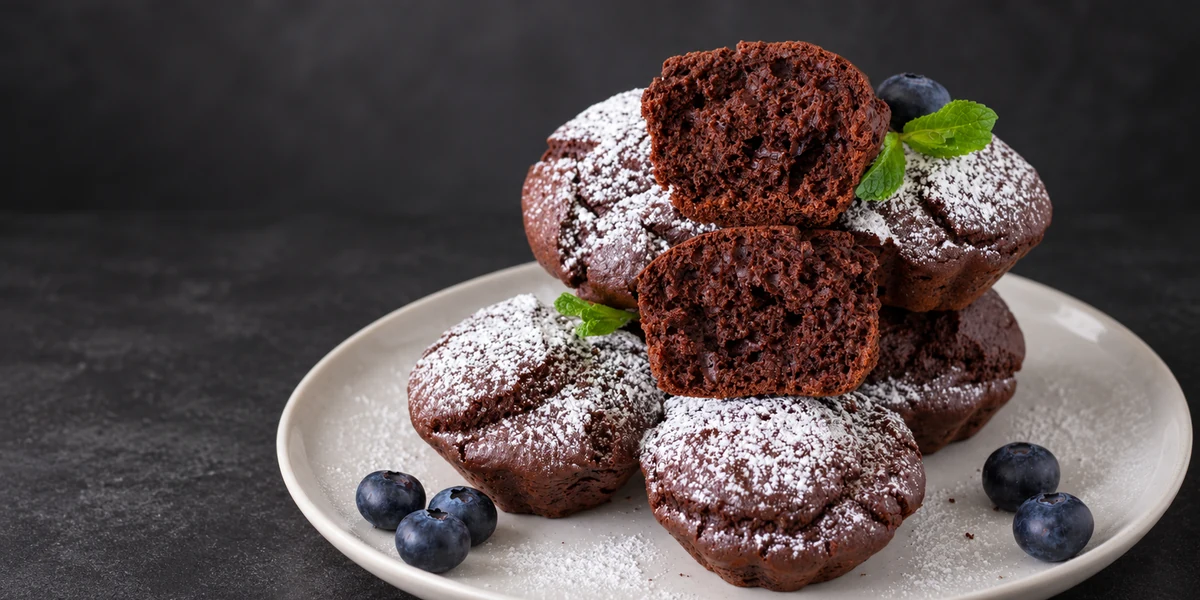
A chocolate muffin with a straightforward method
This recipe makes a cocoa-flavoured muffin with butter and milk. There is no creaming stage and no separate egg foam: the butter is melted, the wet ingredients are combined, and the flour mixture is folded in at the end. Baking powder supplies the chemical lift.
The result is a baked muffin throughout, rather than a molten-centred chocolate dessert. Check the centre for doneness even if the top looks ready. If you want a liquid centre, use a recipe designed for that effect instead of deliberately underbaking this batter.
Have the cases, tray and oven ready before combining the mixtures. Once the flour and baking powder are wet, finishing efficiently gives you a more consistent batch than leaving the batter on the counter while you organise the kitchen.
Chocolate muffins: ingredients and step-by-step recipe
Use unsweetened cocoa powder. Dutch-process cocoa is a suitable choice for a darker colour and a rounded cocoa flavour. Drinking-chocolate powder is a different product because it commonly contains sugar and other ingredients.
Bring the eggs and milk out of the refrigerator early enough to take off their chill. The milk can be gently warmed, but it should not be hot. Let the melted butter cool slightly so that it remains liquid without heating the eggs sharply.
Cocoa muffins with melted butter
One batch; the number depends on the size of your muffin cases
Ingredients
- 2 eggs
- 170 g plain flour / all-purpose flour
- 120 g caster sugar / fine granulated sugar
- 120 g butter
- 50 g unsweetened cocoa powder
- 100 g milk
- 10 g baking powder
- 1 pinch salt
Method
- Prepare the oven and cases. Preheat the oven to 170°C (340°F). Arrange muffin cases in a suitable tray so they are supported during baking. Weigh all the ingredients.
- Melt the butter. Melt the butter gently and set it aside to cool a little. Keep it fluid, without using it while very hot.
- Mix the dry ingredients. Sift the flour and cocoa into a bowl. Mix in the baking powder until the powders are evenly distributed.
- Combine the wet ingredients. In a separate bowl, whisk the eggs with the sugar and salt. Stir in the cooled melted butter, then add the slightly warm milk and mix until uniform.
- Add the flour mixture. Add the dry ingredients in two additions. Mix just until combined, checking the bottom and sides of the bowl for dry pockets. Do not keep beating once the batter is evenly mixed.
- Portion and bake. Fill the cases approximately two-thirds full. Bake for about 20–25 minutes. Test a muffin near the centre of the tray with a skewer: it should show no wet batter.
- Cool. Let the muffins settle briefly so they can be handled, then transfer them carefully to a rack. Cool before packing in a closed container or adding a frosting.
The stated bake is a starting range, not a promise that every case size will finish at the same minute.
The milk quantity is 100 g, measured by weight.
This formula uses baking powder. Do not add vinegar or extra baking soda by guesswork.
Why the ingredient temperatures matter
Very cold milk can make melted butter set into small flecks before the batter is evenly combined. This is why it helps to use ingredients that are not refrigerator-cold. The aim is a smooth mixture, not a hot one.
If you notice small butter flecks before adding flour, check whether the milk or eggs were too cold. For the next batch, coordinate the temperatures rather than heating the finished batter. Once the flour has been added, repeated warming and mixing are unlikely to improve the structure.
Melted butter is not interchangeable with softened butter in every muffin recipe. Here it is part of the method. If you switch to creaming butter and sugar, you are changing how the batter is aerated and should not assume the same result.
Mix completely, then stop
Sifting the cocoa and flour removes lumps that would otherwise need extra mixing to break up. Distributing the baking powder in the dry ingredients also helps avoid concentrated pockets in the finished muffins.
When the dry mixture meets the wet ingredients, scrape through the bottom of the bowl and fold until no flour remains. It is possible to undermix and leave dry streaks, but prolonged beating after the batter is uniform is not useful.
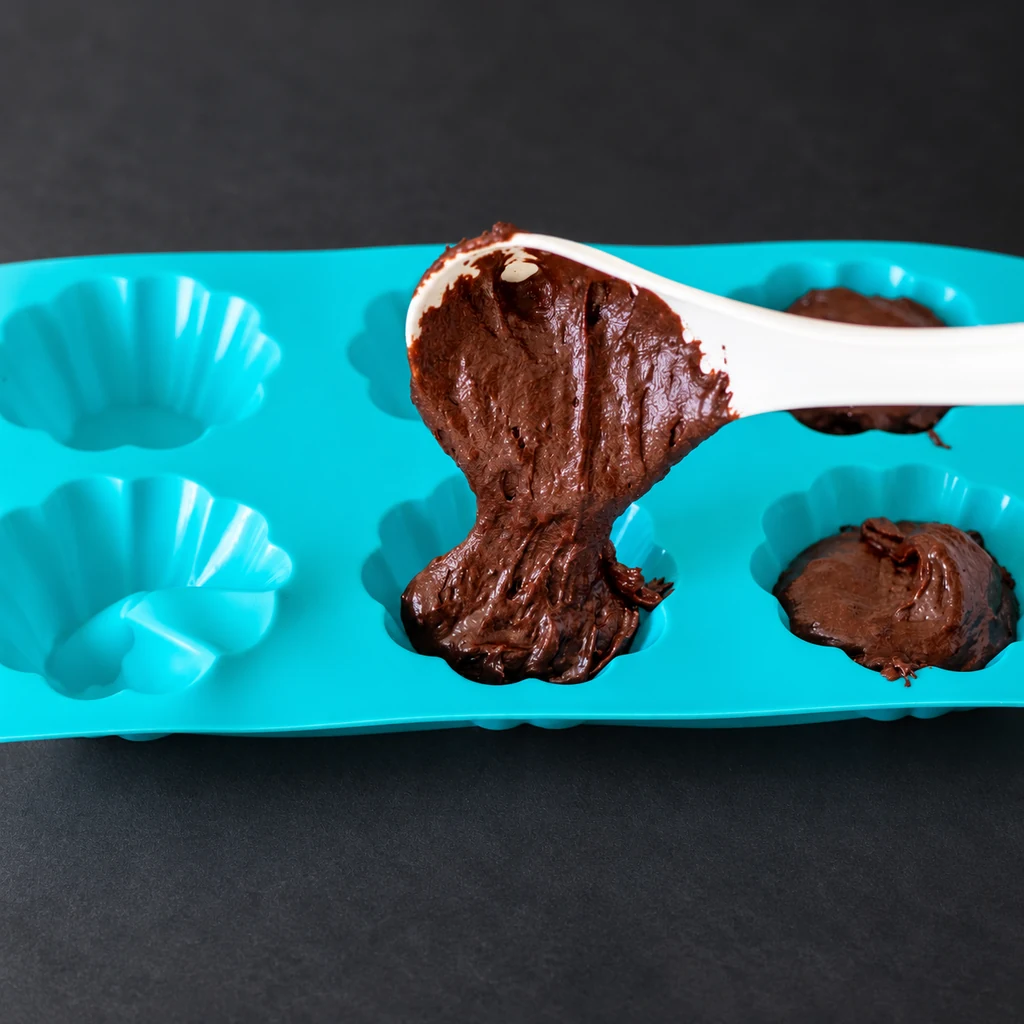
Keep the portions similar in size. A much fuller case may still be wet when a smaller neighbour is already drying out. A scoop or a scale can help you divide the batter evenly without repeatedly working it.
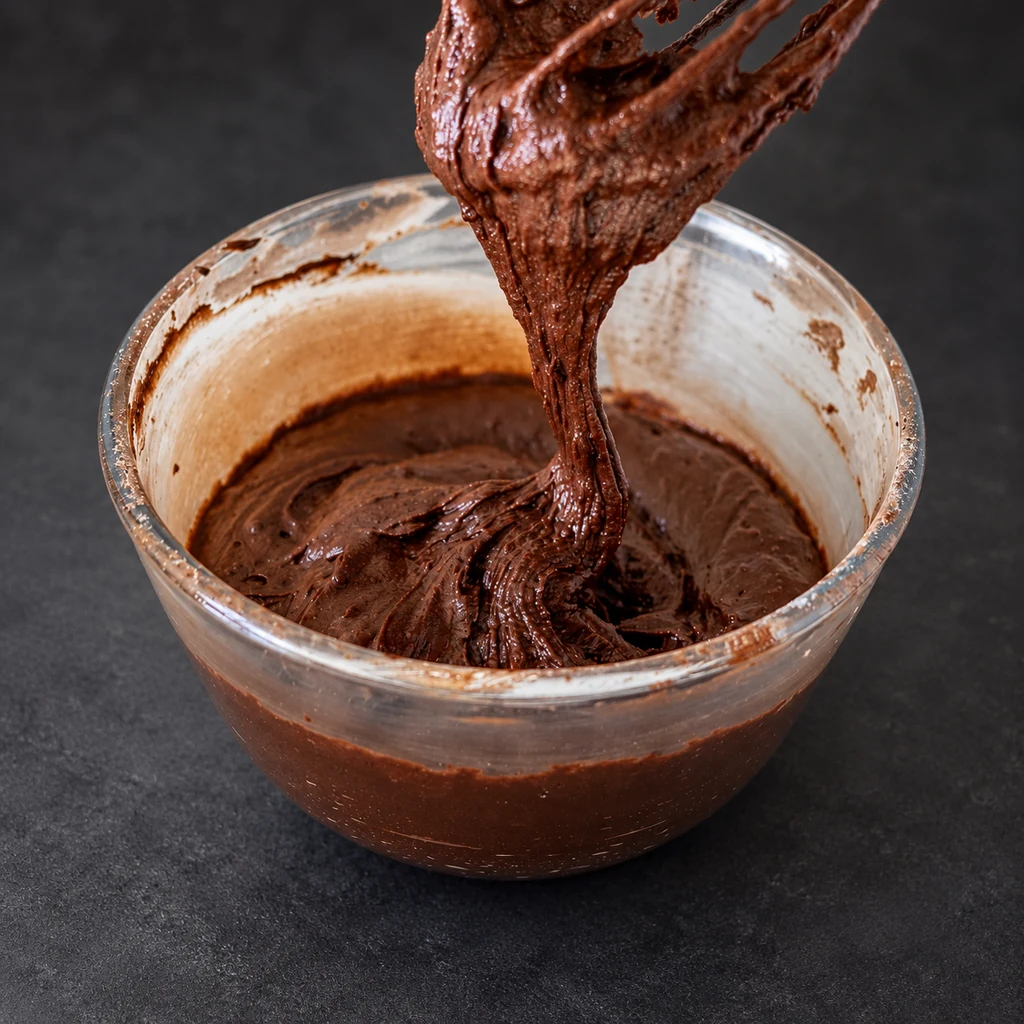
Understand why baking powder and baking soda are not direct substitutes.
Check the centre, not only the colour
Chocolate batter can look dark before it is fully baked, so surface colour is a poor stand-alone test. Near the end of the suggested baking range, insert a skewer into the centre of a muffin. Wet batter means it needs longer.
Do not open the oven repeatedly at the beginning. Give the muffins time to rise and set before checking. Use your own tray and case size consistently when refining the bake time.
If the muffins are dry, first check whether the portions were small or the baking time ran too long. If they are dense, review mixing, ingredient measurements and the condition of the baking powder. Change one factor on the next attempt so that the result tells you something useful.
| Result | Check first |
|---|---|
| Dry crumb | Actual bake time and the size of each portion |
| Dense or tough crumb | Flour measurement and prolonged mixing after flour was added |
| Dry cocoa pockets | Sifting and scraping the bottom of the mixing bowl |
| Uneven batch | Different fill levels or uneven oven heat |
| Wet middle | Doneness test and case depth rather than colour alone |
Serve plain or add a small finishing touch
A cocoa muffin already has plenty of chocolate flavour, so it does not need a large decoration to make sense. Serve it plain, or let it cool fully before adding a modest amount of a suitable topping.
A cream cheese frosting adds a dairy contrast, while a chocolate ganache makes the result richer. Choose the texture for the way you want to serve the muffin. A flowing sauce and a pipeable topping have different jobs.
Cool completely before closing the muffins in a container to avoid trapping steam around the surface. Once a dairy-based topping is added, follow the storage requirements of that topping and keep the finished product chilled as appropriate. A topping does not repair an overbaked muffin.
Choose a cream cheese frosting for a cool, dairy contrast.
Match a ganache to the chocolate and texture you want.
For a full layer cake, use a chocolate sponge recipe built for that format.
Common questions
Do these muffins contain melted chocolate?
No. The chocolate flavour comes from 50 g of unsweetened cocoa powder. The butter is melted, but no chocolate is required in the base recipe.
Can I use drinking-chocolate powder instead of cocoa?
It is not a direct substitute. Drinking chocolate often contains sugar and other ingredients, so it changes both the cocoa intensity and the balance of the formula.
Do I need to whip the eggs until fluffy?
No. Whisk the eggs, sugar and salt to combine them. This method does not depend on a separately whipped egg foam.
Why should the cases be only two-thirds full?
The batter needs room to expand. The exact yield depends on case size, so keep the portions even instead of forcing the whole batch into too few cases.
Should I add vinegar to activate the baking powder?
No extra vinegar is included in this recipe. Use the 10 g of baking powder as written rather than adding acid or baking soda by guesswork.