
Macarons
Why Do Macarons Have No Feet?
Macarons may have no feet because the batter has lost too much structure, the meringue was not suitable, or the oven conditions did not produce the expected rise. Start with how the piped rounds behaved before baking. A round that spread into a thin puddle needs a different investigation from one that kept its shape but baked without a ruffled base.
5 min read
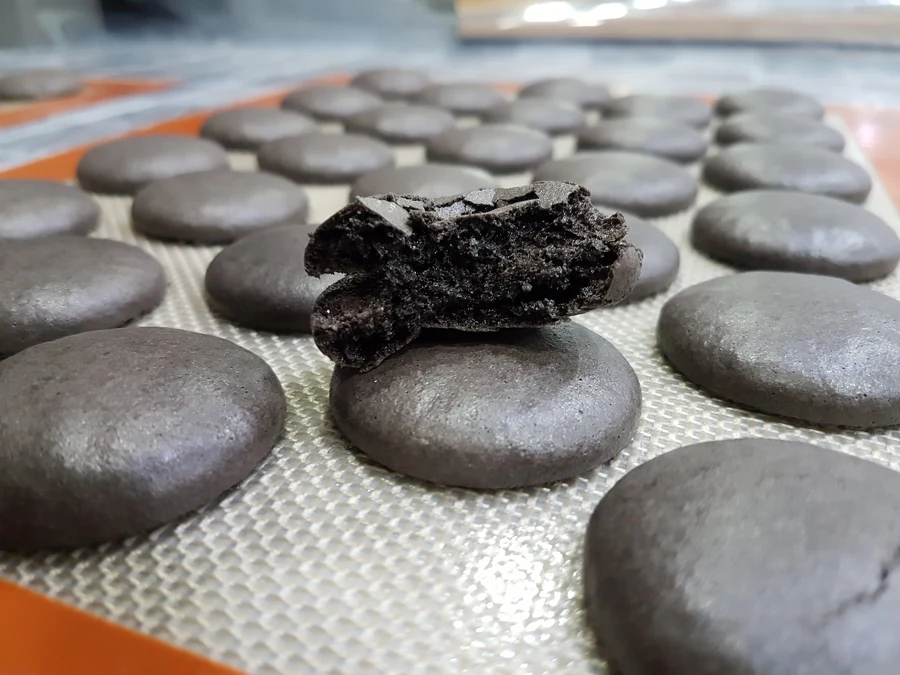
First confirm what failed
The feet are the small ruffled band around the bottom of a macaron shell. Short feet are not automatically a failed batch. Compare the base, the interior and the way the shell holds together after cooling. A neat, filled shell with a modest foot is a different result from a flat disc with no supporting edge.
Also distinguish feet that never appeared from feet that rose and then collapsed or spread outwards. If you saw a rise through the oven door, record that. Increasing the heat because the finished shell looks flat can be the wrong response when the original rise was already too fast.
Use the shape before baking to choose a starting point
Look at a photograph of the tray just after piping, or recall how quickly the rounds spread. The finished shells show the result; the earlier shape tells you whether useful structure was already missing. Use these observations to choose one investigation, rather than changing every stage.
| What you observed | Start by checking | Do not assume |
|---|---|---|
| Rounds spread rapidly and joined | Batter consistency and whether macaronage went too far | That extra resting will rebuild the batter |
| Rounds held their shape but baked very flat | Meringue condition, actual oven heat and preheating | That the oven dial equals the tray temperature |
| Feet rose, then collapsed or spread | Rise speed, bake completion and heat distribution | That this is the same problem as no rise |
| Only one area of the tray failed | Position, spacing and uneven heat or airflow | That the entire recipe is wrong |
Check the meringue before blaming the oven
Meringue provides the foam structure that is carried into the batter. A loose foam and a dry, clumpy foam are different warning signs. For your next batch, stop to inspect it before adding the almond mixture. Check whether it is uniform, whether liquid remains, and whether its texture matches the method you are following.
In an Italian method, the egg whites and syrup must be ready at the appropriate stages together. In a French method there is no cooked syrup stage to adjust. Keep to one complete method. Adding a new whipping time from a different recipe can obscure the original problem, especially when mixer speed and bowl size differ.
Understand the differences between French, Italian and Swiss macaron methods.
Stop macaronage at a useful consistency
Folding changes both the mixture’s uniformity and the amount of air it retains. When batter is worked too far, it can spread excessively and fail to support the shape you want. More folds cannot rebuild that lost structure. Nor does adding a handful of almond flour restore the original formula.
On the next batch, check flow as you approach the expected endpoint and pipe one test round before filling the whole tray. Watch whether the peak relaxes while the round keeps a defined outline. This is an observation to compare with your recipe, not a universal countdown in seconds. Note the result before deciding whether more folding is needed.
Check batter flow and a test round before piping the full tray.
Test the oven without chasing the dial
If the rounds held their shape, investigate whether the oven was fully preheated and whether the baking conditions matched the recipe. Use an oven thermometer near the baking level to compare actual conditions with the dial. Record the rack, fan mode, tray and mat, as well as the displayed temperature.
For the next test, keep the batter method, shell size and baking surface consistent. Change one oven variable, then assess feet, colour, release and the cooled interior together. A taller foot with a brown top or wet centre is not a complete improvement. If the second tray behaves differently, include its longer waiting time and the oven’s recovery after opening the door in your notes.
What can you do with this batch?
Fully baked shells that are sound but have little or no foot can still be paired and filled if their texture suits the result you want. Check a cooled shell from the centre of the tray and one from the edge. Do not use a decorative filling to hide an underbaked, collapsing base.
The practical goal for the next attempt is a stronger observation, not a dramatic new recipe. Save one tray photograph, a cross-section and your notes about batter spread. Choose either a meringue and mixing correction or a controlled oven comparison according to what happened before baking.
Common questions
Does a longer rest create feet?
A rest can be part of a complete macaron method, but it cannot reverse overmixed batter or rebuild a poor meringue. Follow your method’s surface preparation and investigate the earliest stage that looked wrong.
Should I raise the oven temperature straight away?
Only after checking the actual oven conditions and the shape of the piped rounds. If feet rose and then collapsed, more heat may move the batch further in the wrong direction.