
Macarons
Why Are My Macarons Lopsided?
Lopsided macarons can come from uneven airflow or heat, a rise that is too fast, incomplete baking, or uneven piping. The direction of the lean is a useful clue. If most shells lean the same way, start with the oven and tray arrangement. If individual shells lean in different directions, look more closely at how they rose and whether their structure set.
4 min read
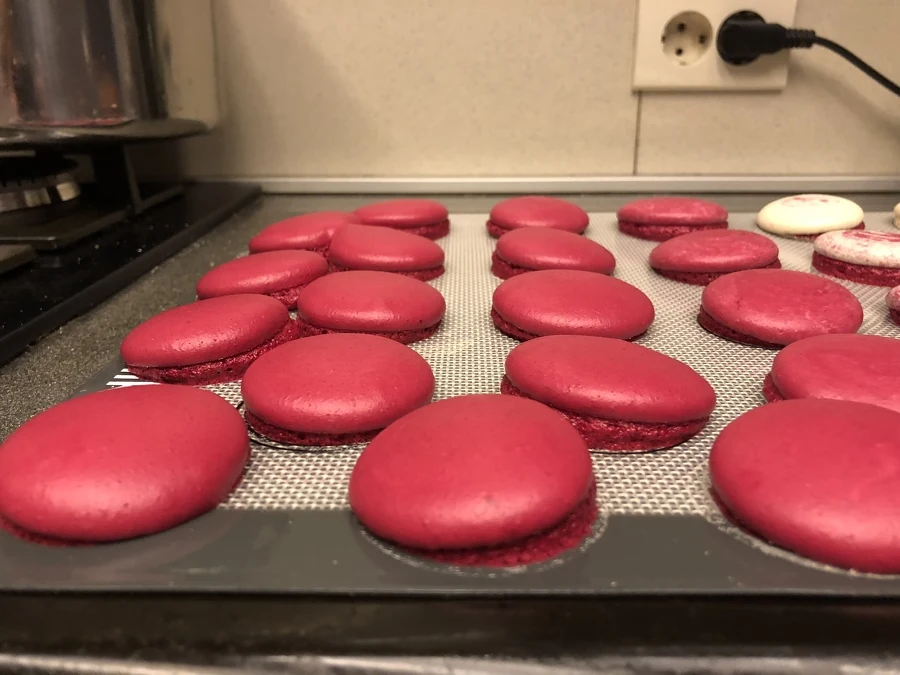
Photograph the tray before moving anything
A single leaning macaron tells you less than a full tray. Before pairing or turning the shells, photograph them in position and note which side faced the oven door. Look for a shared direction, a strip along one edge, or apparently random leaning. Then compare shell size and spacing in those areas.
Do not call a round with an oval outline lopsided unless its top actually leans over its base. An uneven piped shape begins before baking; a shell that rises higher on one side develops a different problem. Keeping these observations separate prevents you from adjusting the oven to solve a piping issue.
Use direction as a clue, not a verdict
These patterns help you choose a first test. They do not prove a cause from the photograph alone. In particular, a fan can contribute to a directional pattern, but turning it off also changes the baking conditions. Evaluate the whole result after any change.
| Tray pattern | First investigation | Keep constant |
|---|---|---|
| Most shells lean in one direction | Airflow, fan setting and tray placement | Batter, size, mat and spacing |
| Only one edge or corner is affected | Uneven heat or airflow near that location | Rack and recipe while comparing positions |
| Leaning varies from shell to shell | Rise speed, meringue and bake completion | Piping size and oven setup |
| Rounds were oval before baking | Piping angle, tip and flatness of the surface | Batter formula before adjusting heat |
Give the air a consistent path
Pipe in evenly spaced, staggered rows. Avoid filling every spare gap with extra batter at the end of the tray. Crowded edges and irregular gaps change the arrangement around neighbouring shells, making comparison harder. Use the same layout when testing the next bake.
Check how many trays the method is designed to bake at once and how they sit in your oven. A single tray and several closely stacked trays do not create the same conditions. If your oven has selectable fan settings, record the one used. Do not add an improvised object to block a fan or heating element.
Check whether the rise outran the shell
Watch the rise through the door when possible. A very rapid, tall rise followed by a tilted or collapsed top should prompt a review of heat and structure, not simply a search for more foot height. Compare this with a shell that remained low throughout the bake.
After cooling, inspect a sample rather than judging only the ruffled edge. If the top and base do not form a sound shell, review bake completion along with the meringue and mixing stage. Several factors may contribute; select one change based on the earliest abnormal sign you observed.
Distinguish feet that never formed from feet that rose and collapsed.
Check a cooled cross-section when the outside hides a structural problem.
Make the piping easy to compare
Use a round tip and hold the bag upright over the tray. Keep the tip centred while squeezing, then stop pressure before moving away. Aim for similar volumes; a larger shell can need different baking time from its neighbour. If the tip catches a particle or the opening becomes obstructed, stop and resolve it rather than compensating by piping sideways.
A flat mat and tray help you see whether the round is forming evenly. Photograph a few freshly piped rounds before they settle. If they already favour one side, improve the setup and technique before treating every tilted baked shell as a convection problem.
Practise a consistent position, squeeze and release for even rounds.
Choose one next-tray experiment
For a shared-direction lean, begin with a controlled oven or layout comparison using the same shell size and surface. For an uneven rise across individual shells, begin by improving consistency in meringue, batter and piping. Write down the factor you intend to change before starting; otherwise a better result may still leave you unsure why it improved.
Judge the test on level tops, intact bases, colour and interior texture together. Do not keep opening the door to move shells individually. Frequent interruptions introduce another variable. A useful result is a tray that works as a whole, even if the feet are less dramatic than the batch before.
Common questions
Should I always bake macarons without the fan?
No. Some complete macaron methods use convection successfully. A directional lean is a reason to investigate airflow and settings, not proof that every fan oven is unsuitable.
Will rotating the tray fix lopsided macarons?
It can change exposure to uneven conditions, but the timing and door opening also affect the bake. First record the pattern and follow your method; do not treat rotation as a guaranteed repair for an unstable batter.