
Macarons
Why Do Macarons Turn Brown in the Oven?
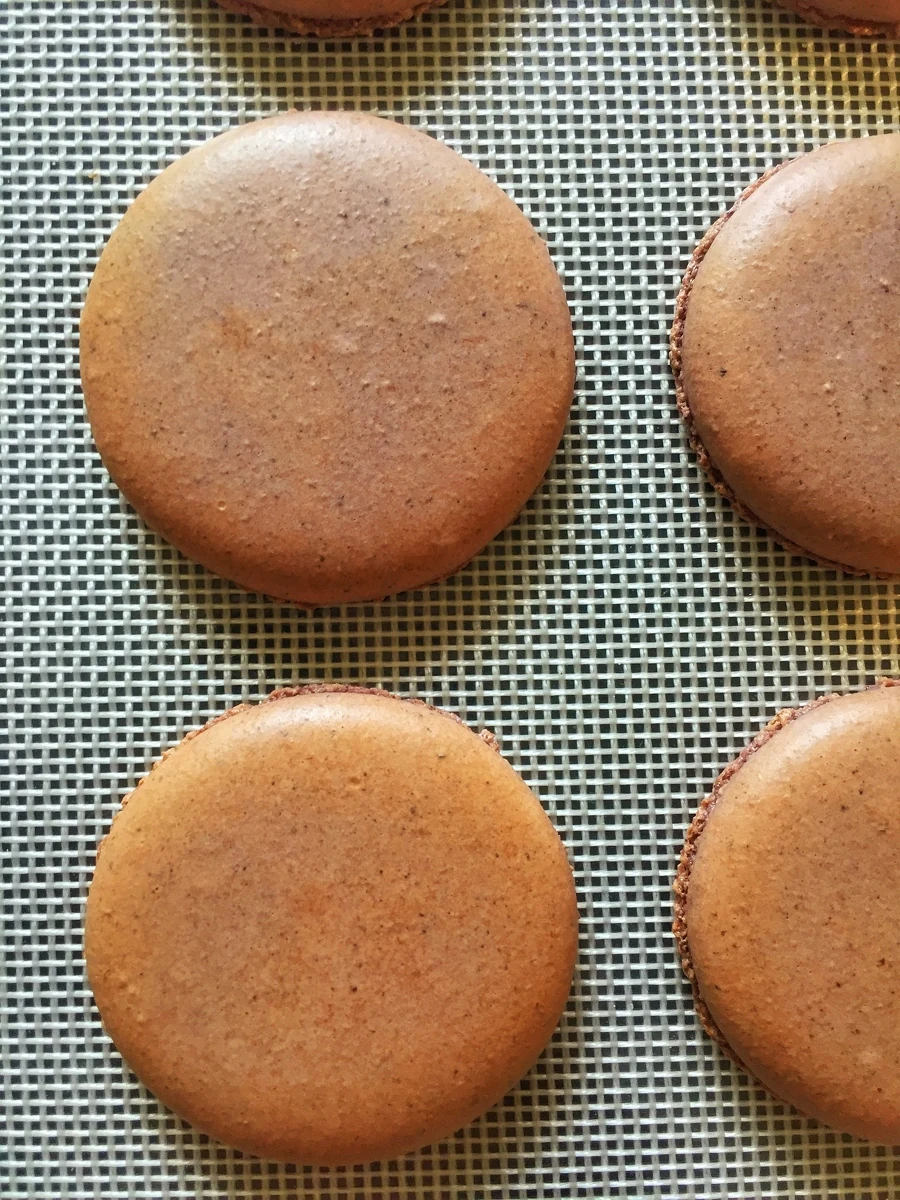
Macarons can brown when the heat reaching the shell is too strong or the bake continues too long for those conditions. Where the colour appears matters: dark tops, dark bases and one dark corner point to different checks. Also separate true browning from a food colouring that fades or changes in the oven.
4 min read
Find the first place the colour changed
Check an unfilled shell in natural light, including its underside. Is the entire shell more beige than intended, is only the top dark, or is there a brown ring underneath? Photograph several shells in their original tray positions. A colour problem across one edge provides a different clue from a uniform change in every shell.
Write down when you first noticed the change during baking, if you could see it through the door. Do not keep opening the oven to inspect each round. The timing is useful when you compare it with the development of the feet and the final condition of the base.
| Colour pattern | Start with | Check at the same time |
|---|---|---|
| Top darkens first | Rack height and heat from above | Whether the base has finished baking |
| Base darkens first | Heat from below, tray and baking surface | Whether the centre is still wet |
| One corner or edge darkens | Uneven heat and tray position | Other symptoms in that location |
| Colour fades without a brown area | Colouring type and its behaviour during baking | A plain, uncoloured comparison batch |
When the tops brown first
A tray too close to strong upper heat can colour the top before the rest of the shell is ready. Check the rack position specified by your method and the actual temperature at the baking level. A dial setting alone does not tell you how much heat reaches the upper surface.
For the next batch, test one change to position or heat while keeping the shell size and surface the same. Compare the cooled bases as well as the tops. Lowering heat may require a different baking time; removing the tray earlier merely to preserve colour can leave the shells structurally unfinished.
When the bases brown first
Turn over the shells from different parts of the tray. A dark base with a pale top suggests you should examine the lower heat exposure and the tray-and-mat combination. Note whether you recently switched from silicone to paper, used a different tray, or moved to a lower rack.
Treat a new baking surface as a new setup to test, not an interchangeable accessory. Keep the formula constant and record the surface and tray you used. If you change both the temperature and the mat, you will not know which change helped. Avoid stacking extra trays as an unrecorded last-minute fix; if your established method uses them, document that setup consistently.
Colouring can change without the shell being burnt
A pale pink shell that becomes beige is not automatically evidence of a hotter oven than a bright pink shell. Some colourings lose intensity or shift during baking. Compare the colour with a plain batch and read the colouring’s intended use. Do not keep adding more colouring without considering what else that product adds to the batter.
Use a product and dose appropriate to your complete macaron recipe. A liquid colouring can change the mixture differently from a concentrated powder or gel. If the shells also spread, crack or become unusually wet, investigate the ingredient change instead of trying to cover the result with a stronger shade.
Run a small comparison you can learn from
Start with a familiar shell formula without a new flavour powder or colouring experiment. Pipe equal sizes on the same clean surface. Record the oven mode, rack, tray, measured heat and time, then make a single planned adjustment. Compare the result only after cooling.
Score four things: top colour, bottom colour, clean release and interior texture. If one improves while another worsens, the adjustment needs further work. The aim is a properly baked shell of the intended colour. A pale shell that tears off the mat is not a successful colour correction.
Check why a pale-looking shell may still leave a sticky base.
Read directional tray patterns when browning accompanies uneven rise.
Decide what to use and what to remake
Slightly darker shells may still be usable if the flavour, structure and texture are acceptable. Compare them before filling. A burnt flavour or a brittle, dried-out shell cannot be hidden reliably by a stronger filling, and maturation should not be treated as a way to reverse burning.
Keep a successful plain-shell reference photograph for future colour tests. It gives you a better comparison than a heavily edited image on a screen. When introducing a new colour, change that ingredient deliberately and keep the rest of the process stable.
Common questions
Should I shorten the bake to keep macarons pale?
Not without checking the base and interior. If they are still unfinished, investigate heat exposure and the baking setup so the shell can bake through without excessive colour.
Will more food colouring hide browning?
It may mask the appearance while leaving the baking problem unchanged. Extra colouring can also alter the batter, depending on the product. Diagnose the source of the colour change first.