
Cakes & pastry
Rice Paper Cake Decorations: Shape and Dry a Sail
Dip edible rice paper briefly in coloured water, let it soften, then drape it over a shaped silicone mat. Dry until it holds its shape before removing the support. Attach the sail close to serving, using a suitable chocolate barrier where it touches a moist cake finish.
5 min read
Choose rice paper and prepare a support
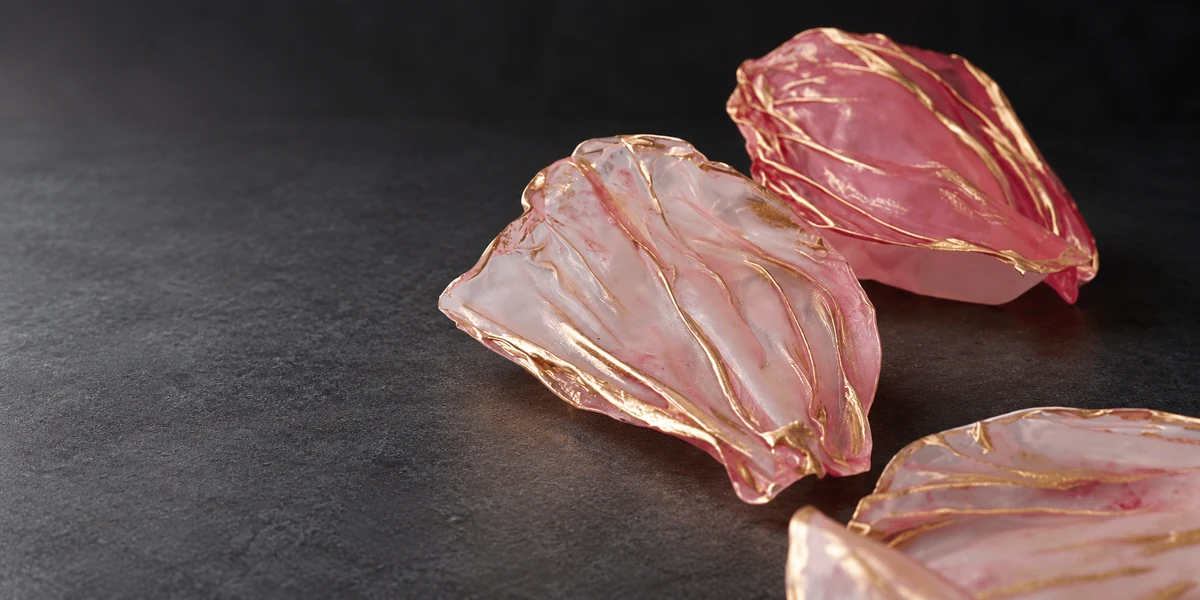
Edible rice paper can form translucent sails, waves and abstract folds. Once softened, it follows the shape of its support; after drying, it becomes firmer and holds those curves.
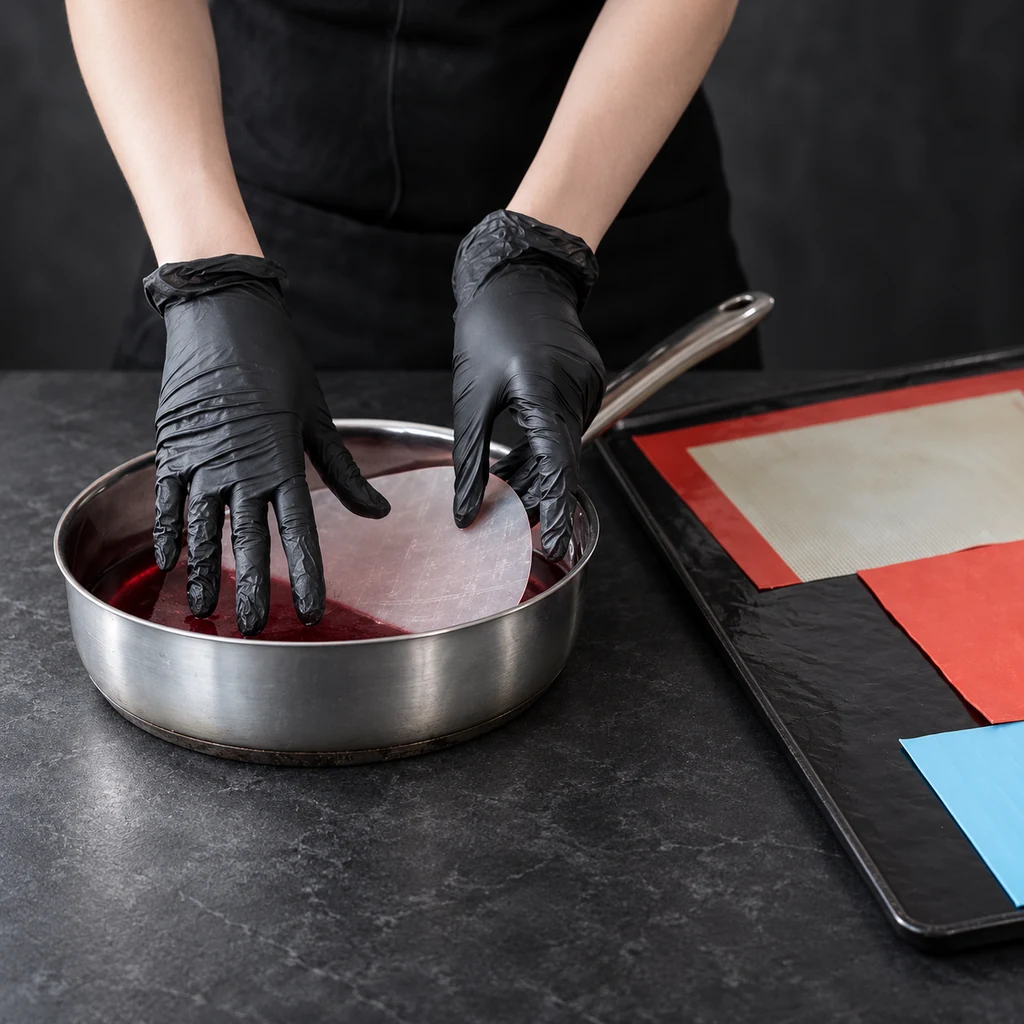
Use edible rice paper intended for food preparation, water-soluble food colour, a shallow dish of cold water and a clean silicone mat. Rice paper and wafer paper are different materials, so do not expect the same wetting method to work for both.
You can raise parts of the mat with a rolled paper support underneath it and hold the mat with clips. Keep non-food-safe supports out of direct contact with the edible sheet. If using an oven, every support and clip inside it must be suitable for that heat.
Make a rice paper sail step by step
Prepare the folds and support before wetting the sheet. Rice paper continues softening after it leaves the water, so a brief dip is usually more controllable than waiting until it is completely limp.
Coloured rice paper sail
One decoration per sheet, depending on the design
Ingredients
- as needed edible rice paper sheets
- enough for dipping cold water
- as needed water-soluble food colour
- optional edible lustre colour and a food-grade medium approved for it
Method
- Colour the water. Add food colour to the shallow water bath within the product's dosing guidance. Mix evenly.
- Dip briefly. Immerse a sheet for about 5–10 seconds, then lift carefully. Give it a moment to soften further outside the water.
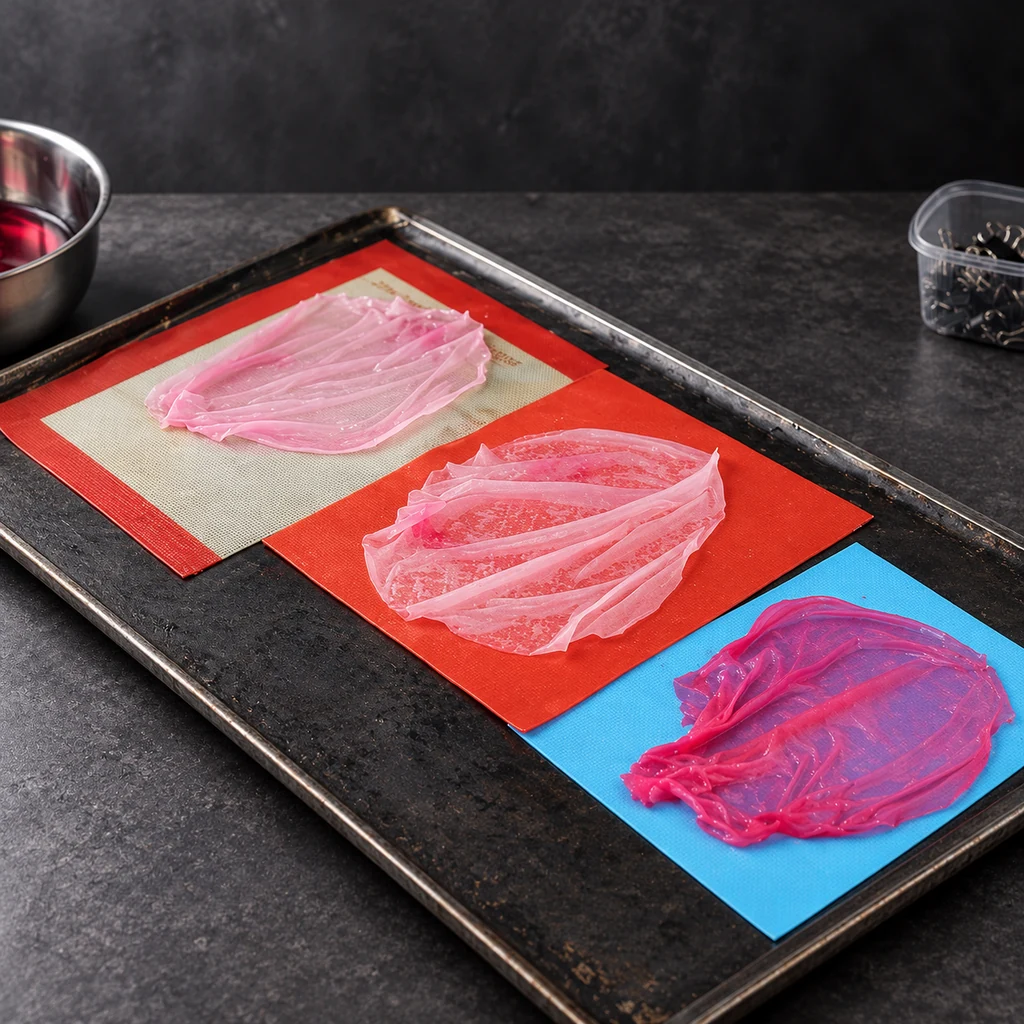
- Shape. Lay the softened sheet over the silicone mat. Form the desired folds using the shaped mat and supports beneath it, without tearing the sheet.
- Dry. Leave until fully dry and able to hold its form. Air drying can take around 12 hours, depending on humidity and thickness. An oven at 50–70°C (120–160°F) with airflow can be used if the whole setup is heat-safe; begin checking around 10–15 minutes rather than assuming it is finished.
- Finish. Remove the dry sail carefully. If desired, brush the edges with an edible lustre preparation mixed according to its instructions. Let that coating dry before attaching.
Drying time varies with the sheet, folds, room and oven.
Use colours explicitly labelled edible, not merely non-toxic craft dust.
Build volume through the support
A flat mat produces a flatter decoration. A raised fold or gentle curve beneath the mat creates height without needing to hold the wet sheet by hand.
Avoid pulling the wet paper repeatedly. It becomes more fragile as it softens, and a torn edge may not support the intended shape. Work with deliberate folds and let the support do most of the shaping.
For several sails, make small variations in height and direction while keeping a consistent colour palette. A few coordinated shapes can be more effective than a large cluster that hides the cake.
Check the folds before calling it dry
Thicker overlaps and deep folds often dry later than the exposed edges. Touch only with clean, dry hands and check that the decoration keeps its form when the support is gently released.
Do not force a partly dry sail off the mat. If it bends heavily or sticks, return it to the support and allow more drying time. Conversely, very dry thin edges can be brittle, so handle them with care.
Keep finished decorations protected from humidity. A closed dry storage arrangement can help, but a container does not make a damp decoration dry. Do not seal it while moisture remains.
Protect the contact point from a wet cake finish
Rice paper can soften again when it absorbs moisture. A wet cream, fruit filling or condensation can distort the sail after attachment, even if it was fully dry beforehand.
Plan the position on the cake before fixing it. A small chocolate contact point can help isolate the paper from a moist surface. A suitable ganache or buttercream may also work, but test the actual finish rather than assuming every cream behaves the same way.
Attach close to serving when practical and keep the cake's own refrigeration needs in mind. Do not leave a dairy-filled cake warm simply to protect a decoration; choose the decoration and timing around the cake.
Choose a chocolate mixture with the right structure for its job.
Prepare a firm chocolate attachment where the design needs one.
Adapt the shape to the size of the cake
A single pale sail can suit a restrained design. A group of waves can suggest movement, while smaller folded pieces can resemble leaves or butterfly-like forms. These are shape ideas, not a requirement to copy a particular cake.
For a small bento cake, keep the decoration light and proportionate. For a larger cake, consider the centre of gravity and the strength of the attachment before increasing height.
An edible colour along the edge can emphasise the fold without colouring the entire sail. If combining with flowers or other decorations, make sure each separate element is food-safe and supported appropriately.
Keep the decoration proportionate to a small bento cake.
Explore a softer textured decoration for a different effect.
Common questions
Is rice paper the same as wafer paper?
No. They behave differently when wet. Use edible rice paper for this dipping-and-shaping method.
Why does the sheet soften after I remove it from water?
It continues taking up and distributing moisture. A brief dip lets you control the shape before it becomes too fragile.
Will every sail dry in 15 minutes?
No. Oven airflow, sheet thickness and folds change the time. Check the whole decoration, especially overlaps.
Why did it collapse on the cake?
It may not have dried fully, or it may have absorbed moisture from the finish or condensation. Review both the drying and attachment.
Can I use any gold craft dust?
No. Use a product explicitly labelled edible and prepare it according to its food-use instructions.