
Cakes & pastry
Poppy Seed Sponge Cake with Milk and Oil
This poppy seed sponge uses 50 g dry poppy seeds with 5 eggs, 200 g sugar, 220 g flour, 130 g milk and 100 g oil. Whip the eggs well, then alternate the dry mixture with the milk and oil. Bake at 165–170°C (330–340°F), checking the centre around the suggested 50-minute mark.
5 min read
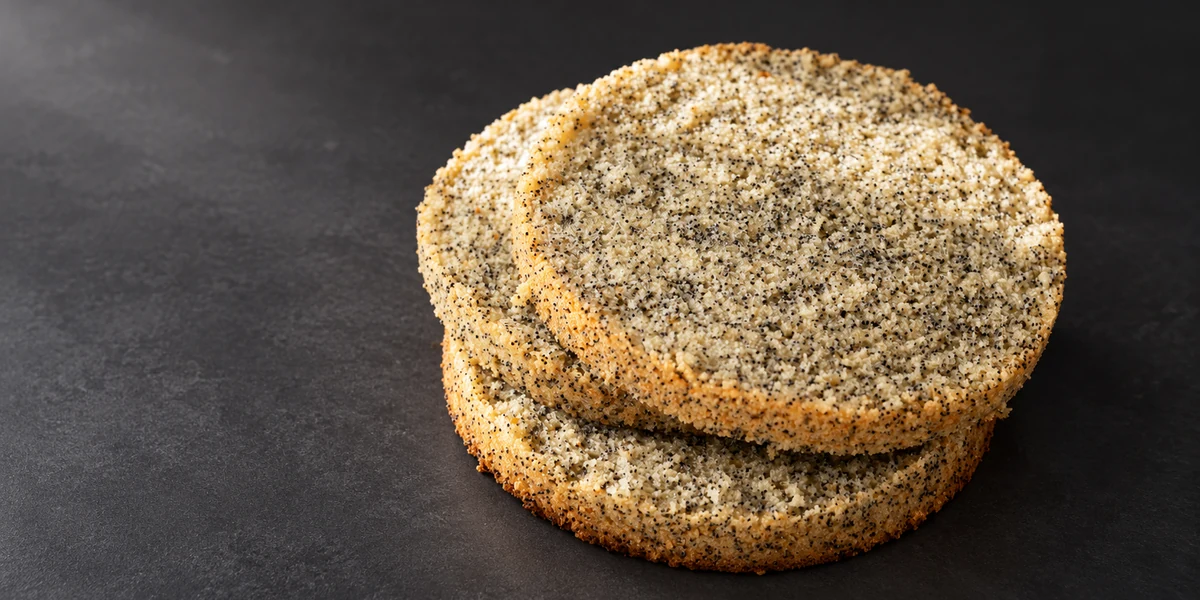
A soft sponge with the texture of poppy seeds
Poppy seeds bring small points of texture throughout the crumb. Milk and oil make this a richer cake than a lean three-ingredient sponge, while the whipped eggs and baking powder help it rise.
The seeds are used dry in this formula. Soaking or grinding them changes the texture and liquid balance, so start with the version as written before making a separate variation.
The cake can be paired with citrus, berries or a gentle cream. Its texture is distinctive enough that the filling does not need to compete with many other strong flavours.
Poppy seed sponge recipe
Prepare the pan before whipping. The starting setup is a 16 cm diameter, 10 cm high ring with a securely sealed foil base on a tray. Check actual capacity as you fill it and leave room for expansion; do not force excess batter into a pan that is too small.
Use eggs, milk and oil at compatible room temperatures so the liquid mixture combines smoothly. Keep the poppy seeds fresh-tasting and free from an unpleasant stale or oily smell.
Milk-and-oil poppy seed sponge
One deep 16 cm sponge, subject to pan capacity
Ingredients
- 5 eggs, consistent in size
- 200 g sugar
- 220 g plain flour
- 50 g dry poppy seeds
- 130 g milk
- 100 g neutral vegetable oil
- 10 g baking powder
Method
- Prepare dry ingredients. Sift flour and baking powder together. Stir in the dry poppy seeds until evenly distributed.
- Prepare liquids and foam. Mix milk and oil separately. Whip eggs and sugar until pale, fluffy and thick enough to leave a visible trail.
- Fold in stages. Fold half the dry mixture into the egg foam. Add all the milk-and-oil mixture and fold gently. Add the remaining dry ingredients and fold from the bottom up until uniform.
- Fill the pan. Transfer to the prepared ring, leaving adequate rising space. If the actual batter volume exceeds the pan's safe capacity, bake the excess separately rather than overfilling.
- Bake. Bake at 165–170°C (330–340°F), conventional heat, for approximately 50 minutes. Check the centre with a skewer; it should emerge without wet batter.
- Cool. Let the cake cool fully before releasing and slicing. Protect it from drying if assembly will happen later.
Leave room for the batter to rise; use an additional suitable tin for any excess.
Measure the cooled sponge before deciding how many layers to cut.
Distribute the seeds without deflating the batter
Mixing the poppy seeds into the flour first helps spread them throughout the batter. Adding a pile of seeds at the end would require more mixing to distribute them.
Fold with a spatula that reaches the bottom of the bowl. Milk and oil can sit underneath a light foam, so check for a heavier layer before transferring the batter.
Stop when the mixture is even. The goal is not to leave flour streaks in the name of gentleness, but to complete the mixing without unnecessary beating.

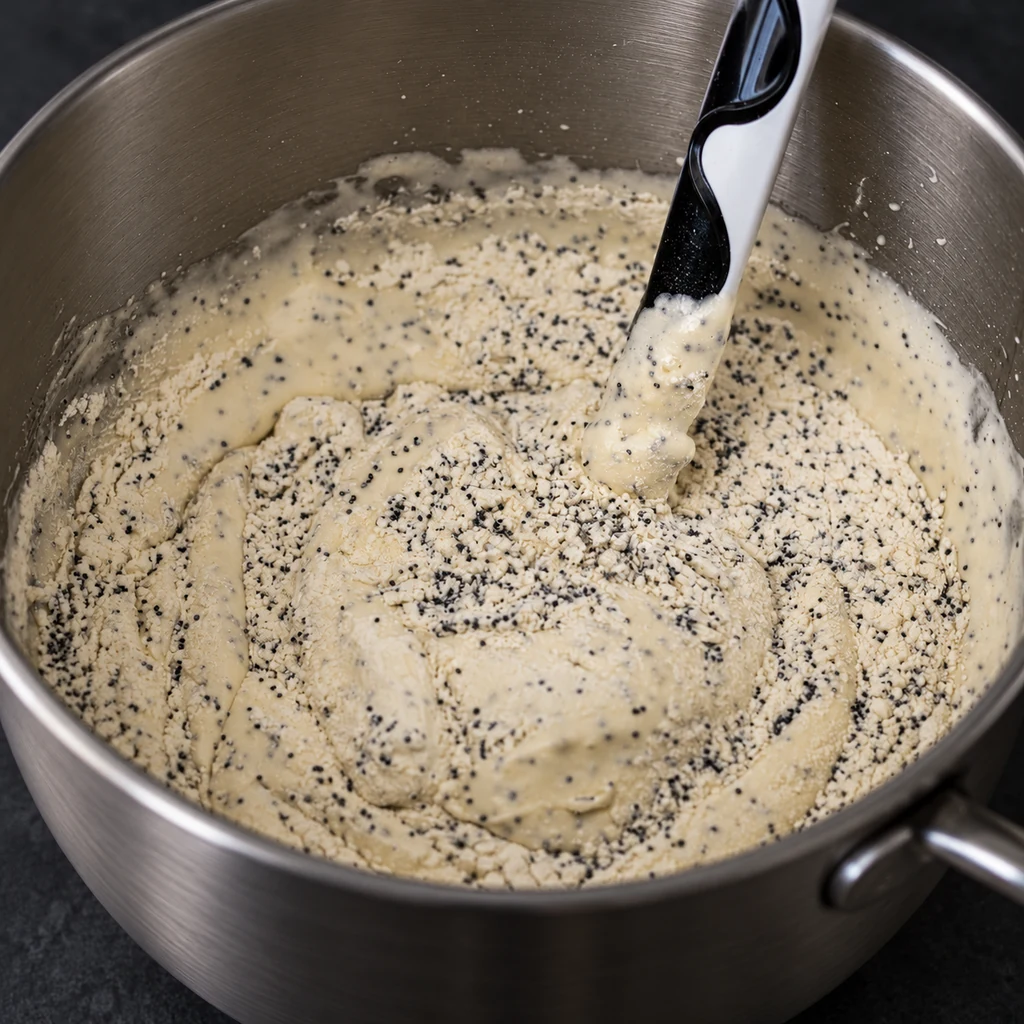
Dry, soaked or ground poppy seeds are different choices
Dry seeds remain more noticeable in the finished crumb. Soaked seeds give a softer impression, while grinding breaks them into smaller particles and changes how they mix with the batter.
Those options are not simple finishing touches. A soak introduces liquid, and grinding changes the seed structure. If you test either, record the treatment and use a formula balanced for it rather than adding an unmeasured amount of milk.
For the first bake, keep the 50 g dry-seed quantity. Adding more does not simply intensify flavour; it also changes the texture and proportion of the other ingredients.
Check depth and doneness
A deep cake needs time for the centre to set. Surface colour alone cannot tell you that a tall sponge is baked through. Test near the centre down towards the bottom, without confusing a wet filling with batter because this cake has no filling yet.
If the top colours early, review oven heat and pan position. If a different pan is used, recalculate the ingredient factor for the intended depth and expect the time to change.
Do not slice while hot. The tender crumb can compress under the knife and give a misleading impression of density.
Calculate the factor before moving to a wider or shallower pan.
Pair with lemon, berries or a mild cream
Lemon zest or a lemon filling gives a bright contrast to the poppy seeds. A cream cheese component can soften that acidity while keeping the cake's flavour clear.
A berry filling adds another option, especially when it has enough structure to stay between the layers. Cool cooked fillings fully and avoid saturating the sponge with both a very wet filling and a large quantity of syrup.
A mild custard or cream can let the seed texture remain the focus. Choose the finished combination by taste and firmness, then repeat the amounts that worked rather than changing every layer at once.
Make a lemon component for a citrus contrast.
Common questions
Should I soak the poppy seeds?
Not for this formula. It uses 50 g dry seeds. A soaked version changes the liquid balance and needs a separate test.
Can I use ground seeds?
That changes the texture. Make the dry whole-seed version first, then record any variation rather than assuming an identical result.
Does the cake need soaking syrup?
Not automatically. Consider the cooled crumb and filling moisture, then add only what the finished cake needs.
Can I change the pan diameter?
Yes, after calculating the ingredient factor for the intended depth and checking capacity. Baking time may change.
Why is the bottom denser?
Check whether milk or oil remained at the bottom of the mixing bowl, whether the foam deflated and whether the deep centre finished baking.