
Cakes & pastry
Mini Pavlovas with Lemon Curd and Mascarpone Cream
These mini pavlovas combine meringue nests, lemon curd and mascarpone cream. Warm the whites and sugar together before whipping, bake the shaped nests gently at 90°C, and cool them completely. Add the cold fillings close to serving to preserve the contrast between crisp shell and soft cream.
8 min read
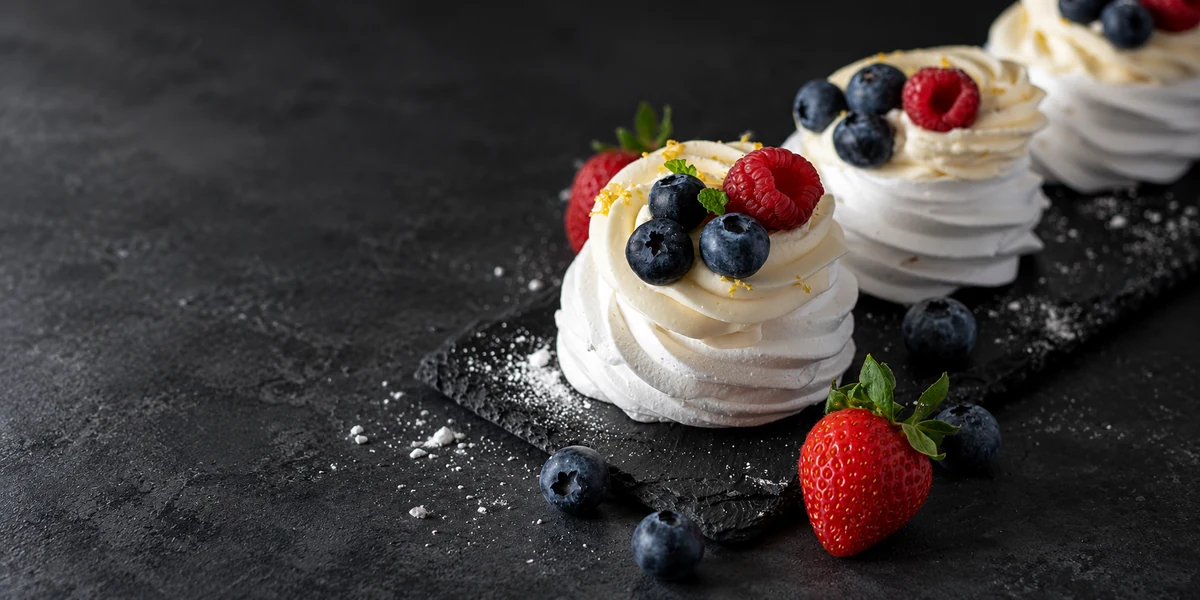
Three components, three different textures
A pavlova is built around contrast. The outside of the meringue should form a delicate shell, while the centre remains soft. Lemon curd cuts through the sweetness, and the mascarpone cream adds a cool, rounded dairy layer. Fresh berries can finish the dessert without hiding its shape.
This recipe makes individual nests rather than one large cake. Pipe a flat base and then a raised edge to hold the filling. Similar-sized nests bake more evenly and make portioning easier.
The meringue uses a Swiss-style method: heat the whites and sugar over gently simmering water until the sugar dissolves, then whip. This is a different preparation from pouring hot syrup into whites for Italian meringue.
See how the hot-syrup method differs in Italian meringue frosting.
Plan the components before you begin
Make the meringue shells first, or cook the curd while the shells are in the oven. Both need to be fully cool before assembly. Whip the mascarpone cream when you are close to filling the desserts.
Use clean, grease-free equipment for the meringue. Separate eggs one at a time into a small bowl before adding the whites to the main bowl. That way, a broken yolk does not contaminate the whole batch.
Weigh the whites for this version: use 120 g with 240 g sugar. Counting eggs alone is less consistent because the amount of white varies. The curd uses three yolks; reserve any extra yolks separately for another recipe.
Have a heatproof bowl, a saucepan for the water bath, a mixer, flexible spatula, piping bag and lined baking tray ready. A large open-star nozzle gives a defined pattern, but a plain opening can also make a usable nest.
Make the meringue nests
The sugar needs to dissolve before whipping. Stir continuously over the water bath, and keep the bowl above the water rather than touching it. Check a small cooled dab between your fingers: it should feel smooth, not gritty.
After whipping, the meringue should be dense, glossy and able to hold a piped edge. It should not be a loose, flowing foam. Fold the cornflour in evenly, then pipe the nests without an unnecessary delay.
Pavlova meringue nests
A tray of individual nests; the count depends on the diameter and amount piped into each nest
Ingredients
- 120 g egg whites
- 240 g caster sugar / fine granulated sugar
- 30 g cornflour / cornstarch
- 1 pinch citric acid
Method
- Prepare the oven and tray. Preheat to 90°C (195°F), conventional top-and-bottom heat. Line the tray with good non-stick baking paper or a suitable non-stick baking liner.
- Dissolve the sugar. Combine the whites, sugar and citric acid in a heatproof bowl. Set it over gently simmering water, without the base touching the water. Stir constantly until the sugar has dissolved completely.
- Whip. Remove the bowl from the heat and whisk the mixture until dense, glossy and firm enough to hold its shape. Check the peak and the body of the meringue rather than relying on an exact mixing time.
- Fold in the starch. Add the cornflour and fold with a spatula until evenly distributed. Avoid leaving powder at the bottom of the bowl.
- Pipe the nests. Transfer to a piping bag. Pipe a circular base for each nest, leaving space between them. Add another ring around the outside edge to create a hollow for the filling.
- Bake gently. Bake for approximately 1½–2 hours. The outside should be set and the base should release from the liner, while the centre remains soft. Nest size and the actual oven temperature affect the timing.
- Cool. Move the baked nests carefully to a rack and let them cool completely before adding any filling.
These are individual pavlova shells, not fully dried meringue kisses. A soft centre is part of the intended texture.
Keep the cornflour quantity as written for this recipe. A different starch or quantity changes the result.
A few surface cracks do not necessarily make a pavlova unusable. Check that the base and rim can still hold the filling.
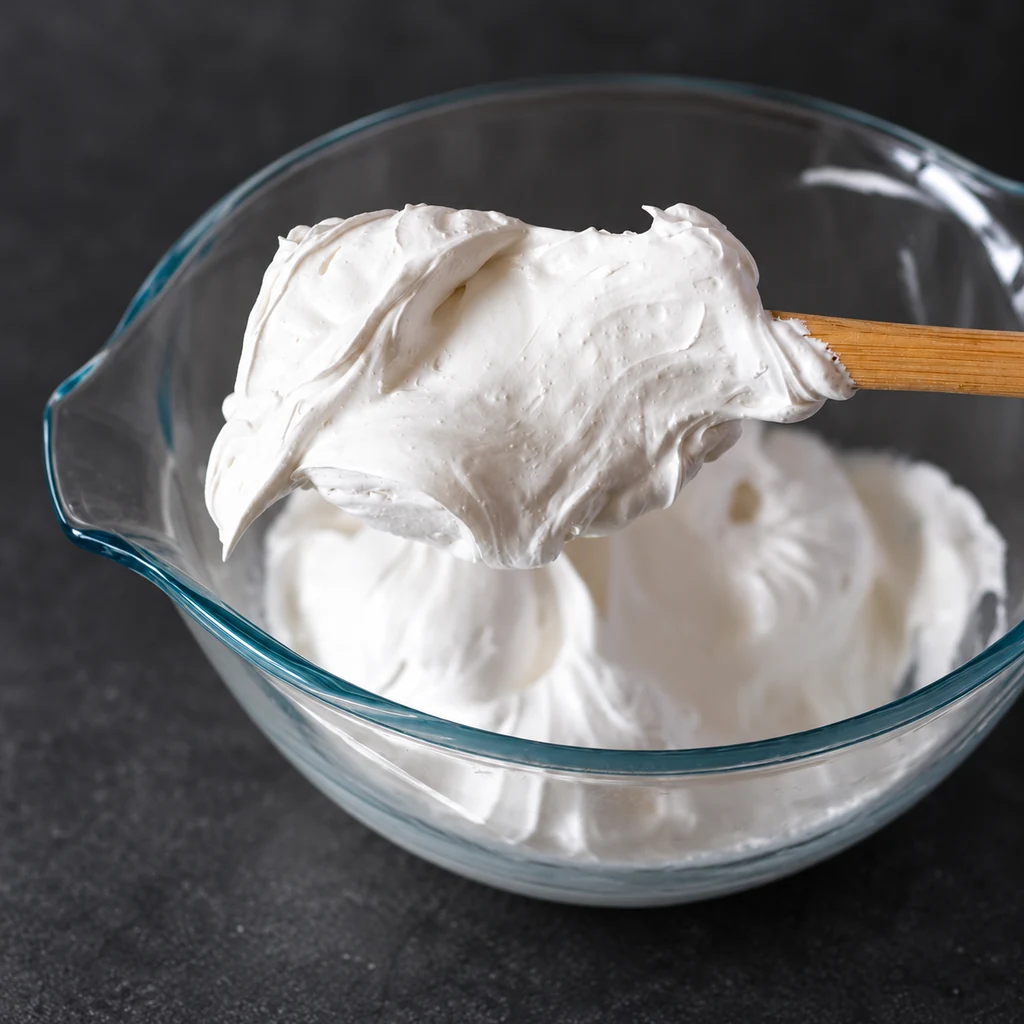
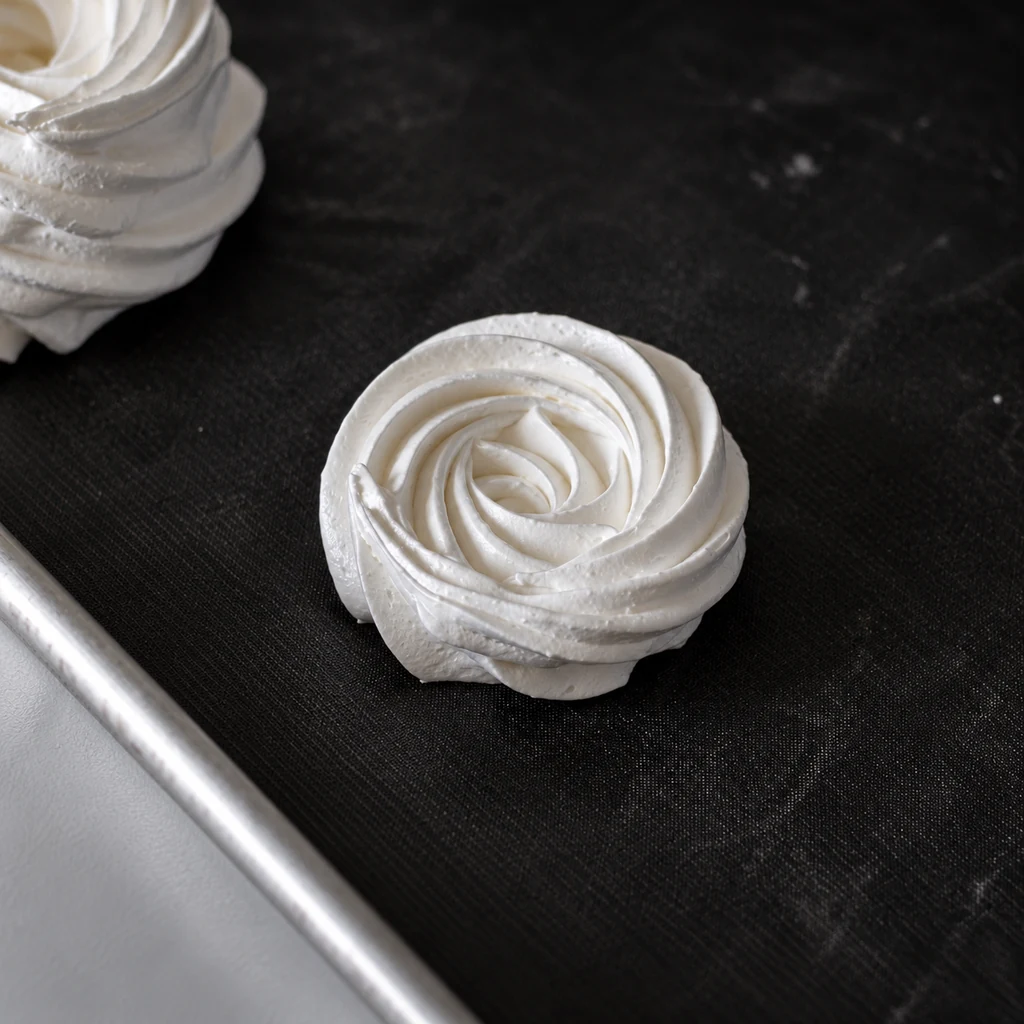
Check the bowl, whites and mixing stage if the meringue stays loose.
Cook the lemon curd
The curd should be tart and smooth, with enough body to sit inside the nest. Use the coloured part of the lemon zest and avoid scraping in the bitter white pith. Weigh the juice rather than assuming every lemon gives the same amount.
Control the heat and keep stirring around the base and corners of the pan. The goal is a thickened egg-and-lemon mixture, not a hard boil. If you see small cooked-egg flecks, strain the mixture for smoothness; a badly overcooked flavour will not disappear through straining.
Lemon curd for the pavlovas
Ingredients
- 50 g lemon juice
- 3 egg yolks
- 40 g sugar
- 50 g butter
- 1 lemon finely grated zest
Method
- Combine. Mix the yolks, lemon juice, sugar and zest in a small saucepan until even.
- Thicken carefully. Cook over controlled medium-low heat, stirring continuously, until the curd coats the spatula and a line drawn through the coating stays open. Avoid boiling it vigorously.
- Add the butter. Remove from the heat and stir the butter into the hot curd until smooth. Strain if needed for a finer texture.
- Cool and refrigerate. Transfer to a shallow, clean container, cover the surface and cool promptly, then refrigerate until cold. Put the chilled curd into a piping bag when ready to assemble.
Use cold curd for assembly. Warm curd will soften the cream and the meringue shell.
Explore the lemon curd guide for more detail on texture and uses.
Whip the mascarpone cream
Keep the mascarpone and whipping cream cold. This filling should be light enough to eat easily but firm enough to pipe. Stop when it has a smooth, defined shape: continuing to whip after that point can make it coarse.
Use a bowl that allows the beaters to reach the mixture properly. If the batch is spread across the bottom of an oversized bowl, it may be difficult to judge and aerate evenly.
Mascarpone topping
Ingredients
- 200 g mascarpone, cold
- 150 g 33% whipping cream, cold
- 40 g icing sugar / powdered sugar
Method
- Combine the ingredients. Put the mascarpone, cream and icing sugar in a mixing bowl. Start at a moderate speed to combine them without splashing.
- Whip to a piping consistency. Increase the speed as needed and stop when the cream is airy, smooth and firm enough to hold a piped shape. Do not keep beating simply to reach a fixed number of minutes.
- Bag and keep cold. Transfer to a piping bag with the nozzle you want to use. Keep the cream refrigerated if assembly is not immediate.
This is a mascarpone filling. Replacing it with another cheese may change the texture and flavour.
Read the visual cues that help you stop whipping at the right stage.
Fill close to serving
Set the completely cooled nests on the serving plate or tray. Pipe a small amount of cold lemon curd into the hollow, then add the mascarpone cream. Keep the filling inside the rim so the shell remains visible and the dessert is easy to lift.
Finish with berries that have been washed and dried well. A few pieces of fruit, a little zest or a small edible decoration are enough. Wet fruit and excess juice can soften the shell quickly.
The filled dessert will gradually lose its crispness as moisture moves from the curd and cream into the meringue. Assemble close to serving for the clearest contrast. Refrigerate filled pavlovas while they wait; the softening is a reason to plan the timing, not to leave a dairy dessert warm.
For transport, a chilled container and a stable tray help protect both the cream and the delicate shell. Keep the desserts upright and leave room around them so the decorations are not pressed into the lid.
What can you prepare ahead?
The components are easier to manage separately than as fully assembled desserts. Keep the cold curd covered in the refrigerator. Make the cream close to assembly and keep it cold. Protect the cooled shells from humidity and crushing; their soft centres mean they should not be treated as long-storage, fully dried meringues.
If you need to work ahead for an event, make a small trial with your actual nest size, kitchen humidity and filling quantities. Check texture at the time you intend to serve. A general number of hours cannot guarantee the same crunch in every setting.
Prepare only as many assembled pavlovas as you expect to serve. You can pipe a fresh round of filling into the remaining shells later rather than leaving every shell in contact with moist cream from the start.
Try a meringue roulade when you want a sliceable cream-filled dessert.
Common questions
Should the centre be dry like a meringue kiss?
No. This pavlova is intended to have a set outer shell and a soft centre. Baking until the whole nest is dry gives a different texture.
Why is my meringue gritty?
Check that the sugar dissolved completely over the water bath before whipping. Use fine sugar and stir continuously, keeping the bowl above the water.
Can I fill the shells while they are warm?
Let them cool completely first. Warm shells or curd can soften the cream and make the assembled dessert less stable.
Can I make one large pavlova with these quantities?
The ingredient batch can be shaped differently, but one large pavlova changes thickness, drying and cooling time. This method and timing are written for individual nests.
Can I swap lemon curd for berries?
A suitable cold fruit filling can change the flavour, but avoid adding loose juice. Keep the quantity controlled so the shell is not saturated.