
Cakes & pastry
Classic Eclairs with Pastry Cream
Eclairs start with a cooked flour paste that takes in beaten egg gradually. Pipe the smooth dough, bake until the shells are well expanded and dry, then cool before filling. This recipe uses water-based choux, a cornflour pastry cream and a 160°C baking starting point; shell structure matters more than the timer alone.
6 min read
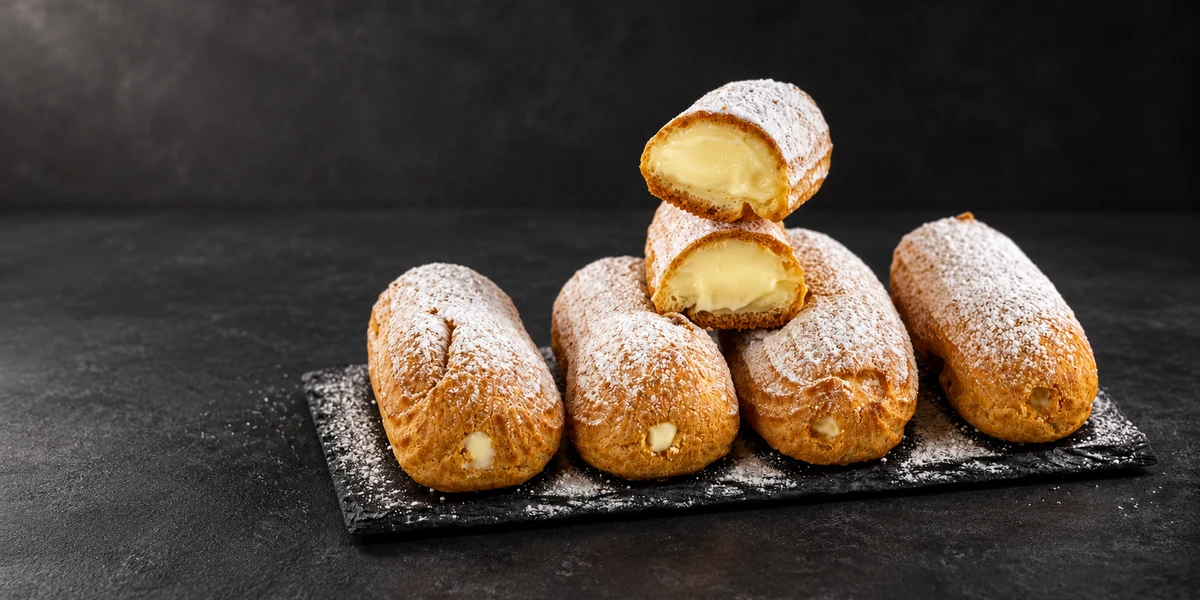
Prepare the shells and filling separately
A good eclair has a light shell with enough strength to hold a soft filling. The choux is not an ordinary batter: flour is cooked in boiling water and butter, then egg is mixed into the warm paste. Steam expands the dough in the oven, and continued baking sets the shell around the cavity.
Make the pastry cream early enough to chill it thoroughly. Filled shells gradually take up moisture, so a dry unfilled shell and a cold cream give you more control over the final texture. The number of filled eclairs depends on the piping diameter, finished length and how generously they are filled.
Make the choux pastry
Use butter with about 82% fat and flour with approximately 11–12% protein. Weigh the egg without its shell and mix it before adding. Reserve the last portion so you can stop when the dough reaches its working consistency.
Water-based choux pastry
Ingredients
- 250 g water
- 100 g unsalted butter, about 82% fat
- 160 g wheat flour, approximately 11–12% protein
- 250 g whole egg, beaten; adjust the final addition to consistency
- 10 g sugar
- 3 g salt
Method
- Heat the liquid. Combine the water, butter, sugar and salt in a heavy saucepan. Bring to a full boil with the butter melted, without leaving it boiling unnecessarily.
- Cook the flour. Add all the sifted flour at once. Stir firmly until there are no dry patches, then return to medium heat and keep working the paste until a thin film begins to form on the base.
- Cool the paste. Transfer to a bowl and let the paste cool to approximately 50°C (122°F). Use a mixer on low speed or a sturdy spoon: the aim is mixing, not whipping air into it.
- Add the egg gradually. Mix in the beaten egg in several additions, fully incorporating each before the next. Add the last portion a little at a time. Stop when the dough falls from the spatula in a smooth ribbon; your batch may need slightly less or more than the nominal egg weight.
- Pipe even lengths. Transfer to a piping bag fitted with an open-star nozzle. Pipe approximately 11 cm lengths on a lined tray, leaving room for expansion. Keep the pressure and nozzle angle consistent.
- Bake and dry. Lightly brush the surface with a little neutral oil if desired. Bake in a preheated 160°C (320°F) oven for approximately 35 minutes as a starting point. Keep the door shut while the shells are expanding. Continue until the shells are coloured and firm enough to hold their shape, then cool fully.
The oil is a light surface treatment rather than an extra measured dough ingredient. A light dusting of icing sugar or cocoa butter powder is another surface option, not a guarantee against cracks.
Do not add raw flour to an egg-rich runny choux dough to force it back to the desired texture. Prevent the problem by controlling the last egg additions.
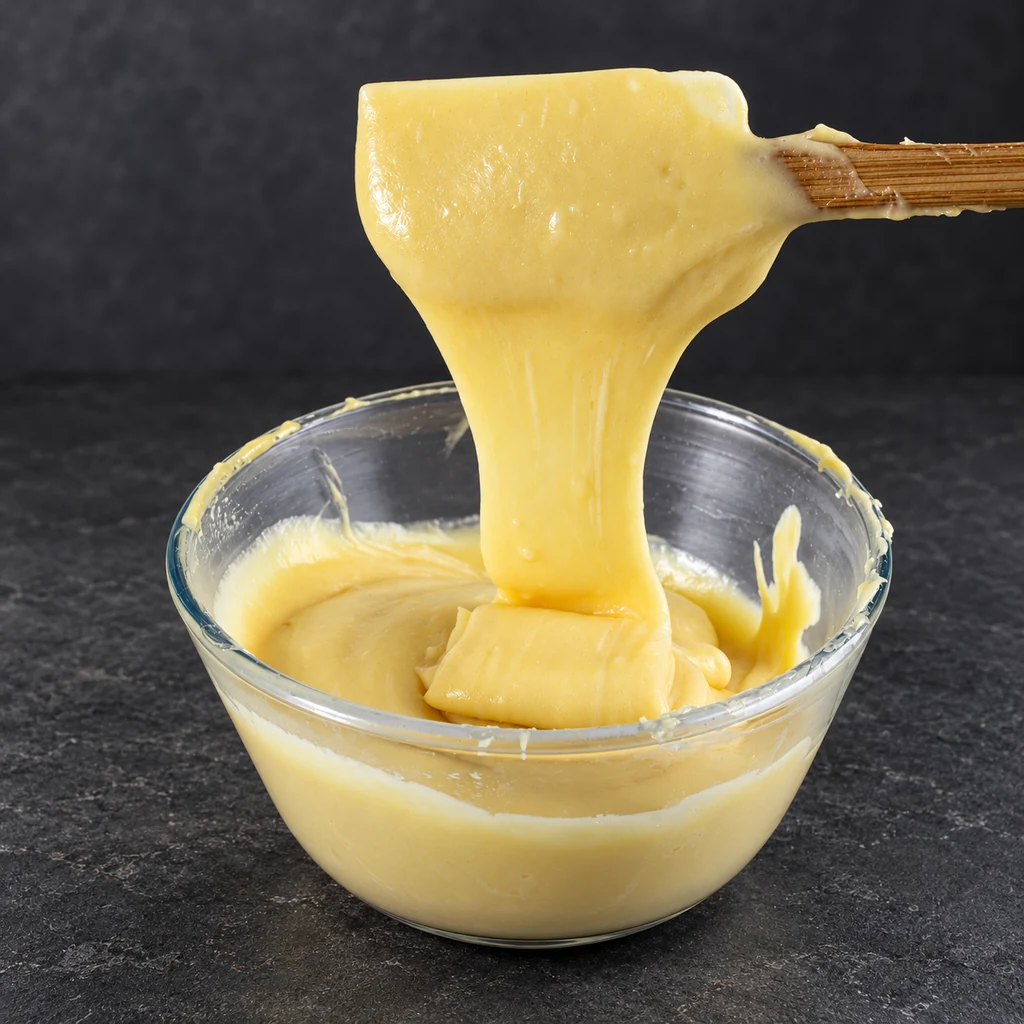
Cook and chill the pastry cream
Mix the yolks with the cornflour before adding hot milk. This disperses the starch and makes it easier to obtain a smooth filling. Scrape the base and corners of the saucepan throughout cooking.
Pastry cream
Ingredients
- 200 ml milk
- 60 g egg yolks
- 15 g cornflour (cornstarch)
- 50 g sugar
- 20 g unsalted butter
Method
- Heat the milk. Warm the milk and sugar in a saucepan until steaming and approaching a boil.
- Temper the yolks. Mix the yolks and cornflour until smooth. Whisk in a little hot milk, then return this mixture to the saucepan with the rest of the milk.
- Cook the cream. Heat gently while stirring continuously until the cream is evenly thickened and the starch is cooked. Keep moving the whisk over the bottom and edges to avoid catching.
- Add butter and chill. Remove from the heat and stir in the butter. Spread the cream in a shallow container, cover its surface and cool promptly before refrigerating until fully cold.
- Fill the shells. Stir the chilled cream smooth, transfer to a piping bag and fill the completely cooled eclair shells. Keep the filled eclairs refrigerated.
Vanilla or a little citrus zest can flavour the milk; neither is needed to change the stated base formula.
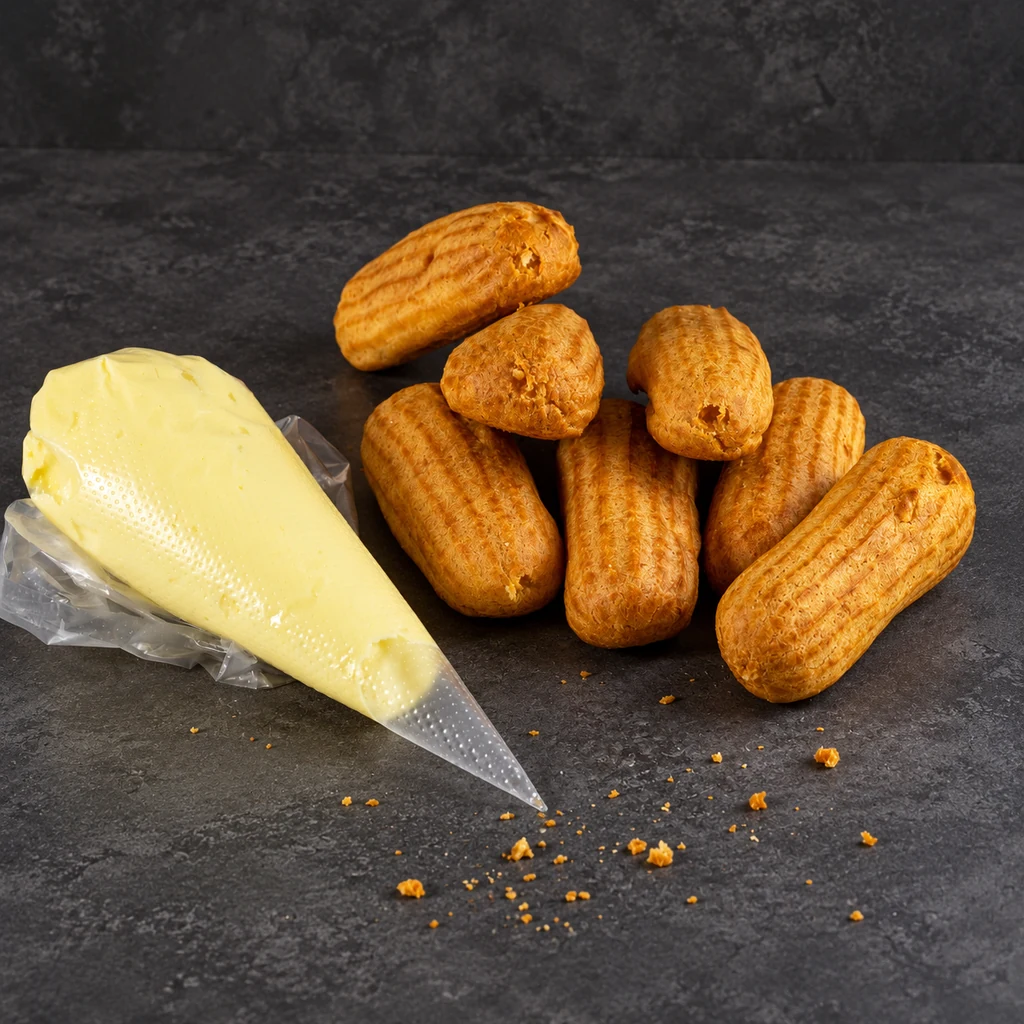
Check the paste before it reaches the tray
A paste that stays in broken, heavy lumps needs more egg; a paste that pours freely has already gone too far. Look for a smooth ribbon and enough body to keep the piped shape. The amount of water lost while cooking the flour explains why the final egg addition needs judgement.
Dry flour pockets should be eliminated while making the paste, before adding the eggs. Sift the flour in advance and stir firmly at the cooking stage. Passing finished choux through a sieve is not a substitute for a properly cooked, homogeneous paste.
If the piped lines spread, stop and diagnose the consistency before filling another tray. If the shells rise and then collapse, the baking and drying stage also needs attention; these are different problems.
Diagnose choux dough that spreads instead of holding its shape.
Finish the eclairs after cooling
A thin chocolate coating, a drizzle or a little cocoa can finish the top without overwhelming the filling. Let any warm topping cool to a suitable working temperature before bringing it near the cold cream. Add fresh fruit close to serving and keep it from wetting the shell.
Fill only shells that are fully cool. Refrigerate cream-filled eclairs and bring out the amount you intend to serve. For a crispest-shell result, keep the unfilled shells and cream separate until closer to serving; this also makes it easier to see whether the shell itself was baked dry enough.
Try a different cream texture with milk-chocolate coffee namelaka.
Common questions
Why should I hold back some egg?
The cooked paste loses different amounts of water depending on the pan and cooking time. Add the final egg gradually so the dough does not become too loose.
Can I open the oven to check them?
Keep it closed during expansion. A shell that has not set can collapse when the temperature suddenly drops.
Can I put warm cream in the shells?
Cool both components first. Warm filling adds moisture and makes the assembled eclairs harder to handle.
Are 35 minutes always enough?
No. The stated time is a starting point for approximately 11 cm eclairs. Judge colour, firmness and a dry, stable shell in your oven.