
Cakes & pastry
Eclair Fillings: Five Creams and How to Pipe Them
Choose eclair filling by texture and serving style. Pastry cream gives a classic custard centre; mascarpone or whipped cream gives a lighter dairy filling; meringue gives a sweeter, egg-white-based centre. Fill fully cooled shells, keep dairy and egg fillings refrigerated, and pipe close to serving for the best texture.
10 min read
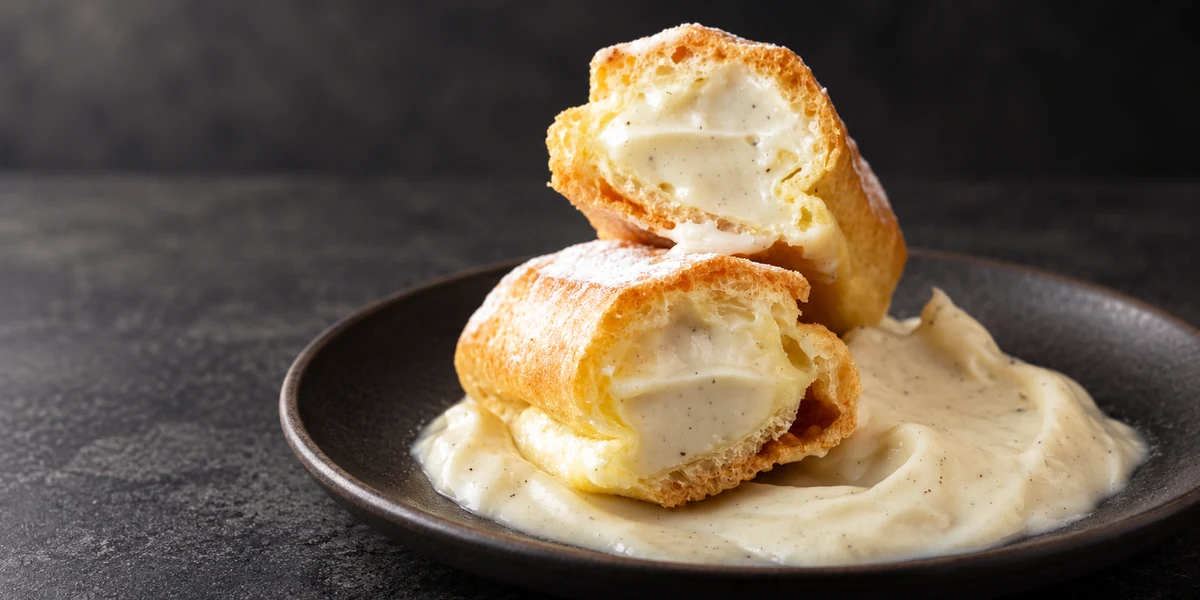
Choose the cream for the eclair you want
The shell is only one part of an eclair. A smooth custard creates a different bite from whipped mascarpone, or a sweet meringue. Think about richness, sweetness and whether the cream will be enclosed in the shell or displayed through an open top.
The five recipes below use different structures, so their methods are not interchangeable. Make one formula as written before adding extra flavourings or changing the dairy. Additional juice, puree or alcohol can change the texture considerably.
How many eclairs a batch fills depends on shell size and how generously you pipe. Measure what your own shells take rather than relying on a universal number of portions.
| Filling | Texture | Useful choice when |
|---|---|---|
| Vanilla pastry cream | Smooth, custard-like | You want a substantial centre without a large amount of butter |
| Mascarpone cream | Rich and aerated | You want a dairy filling that can also be piped visibly |
| Italian meringue | Sweet and airy | You prefer an egg-white-based filling without dairy |
| Cream with condensed milk | Light and simple | You need a short ingredient list |
| Curd-cheese cream | Tangy and creamy | You want the flavour of fresh curd cheese |
Prepare the equipment and ingredients
Have a suitable mixer, flexible spatula, piping bag and heavy-bottomed saucepan ready. An immersion blender is useful for smoothing the curd-cheese filling. For cooked sugar syrup, use a probe thermometer that measures the syrup itself; an infrared surface reading is not equivalent.
Use whipping cream with about 33–35% fat, well chilled. Keep mascarpone and the other dairy ingredients cold where the recipe specifies it. Butter stirred into hot pastry cream can be cool and cubed.
Choose sweetened condensed milk, not evaporated milk. For butter, use a real butter around 82% fat rather than a reduced-fat spread. For pastry cream, the thickener here is cornstarch, not cornmeal.
Use pasteurised egg whites suitable for whipping in the meringue fillings. Hot syrup alone is not a guarantee that every part of the whites reaches a pasteurising temperature. Follow the product directions as some liquid egg products are not designed to whip.
1. Vanilla pastry cream
This is a whole-egg, cornstarch-thickened cream. Cook it evenly, then cool it completely before piping. Keeping the eggs moving as the mixture heats helps prevent cooked lumps around the base and sides.
Vanilla pastry cream for eclairs
Ingredients
- 400 g milk
- 130 g sugar
- 2 medium eggs
- 40 g cornstarch
- 80 g butter, around 82% fat
- To taste vanilla
- A pinch salt
Method
- Weigh the ingredients. Put the milk, sugar, vanilla and salt into a heavy-bottomed saucepan. If using vanilla sugar, include it within the total sugar amount.
- In a bowl, whisk the eggs and cornstarch until smooth. Gradually whisk in some of the still-cool milk mixture to loosen the paste, then return everything to the saucepan.
- Cook over moderate heat, whisking continuously across the base and corners. Bring to a bubbling boil and continue whisking for about one minute so the starch-thickened cream cooks through.
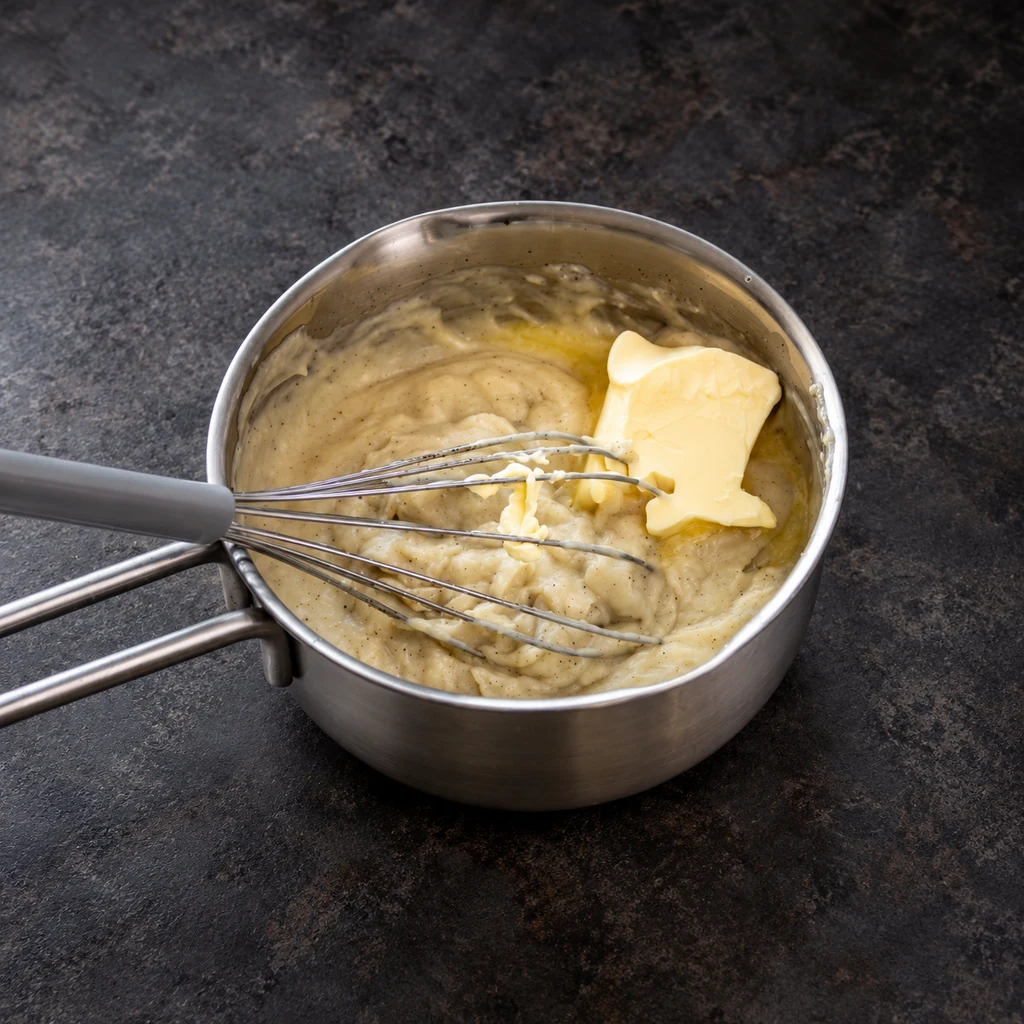
- Remove from the heat. Add the cubed butter and stir until fully combined. If you find small lumps, pass the hot cream through a suitable sieve.
- Spread into a clean, shallow container and cover the surface directly with food-safe film or an appropriate cover to limit skin formation. Cool promptly in the refrigerator.
- When completely cold, stir or whisk briefly until smooth. Transfer to a piping bag and fill the cooled eclair shells.
Use medium eggs and keep the size consistent between batches.
This boiling instruction applies to the cornstarch-containing formula above, not a starch-free custard.
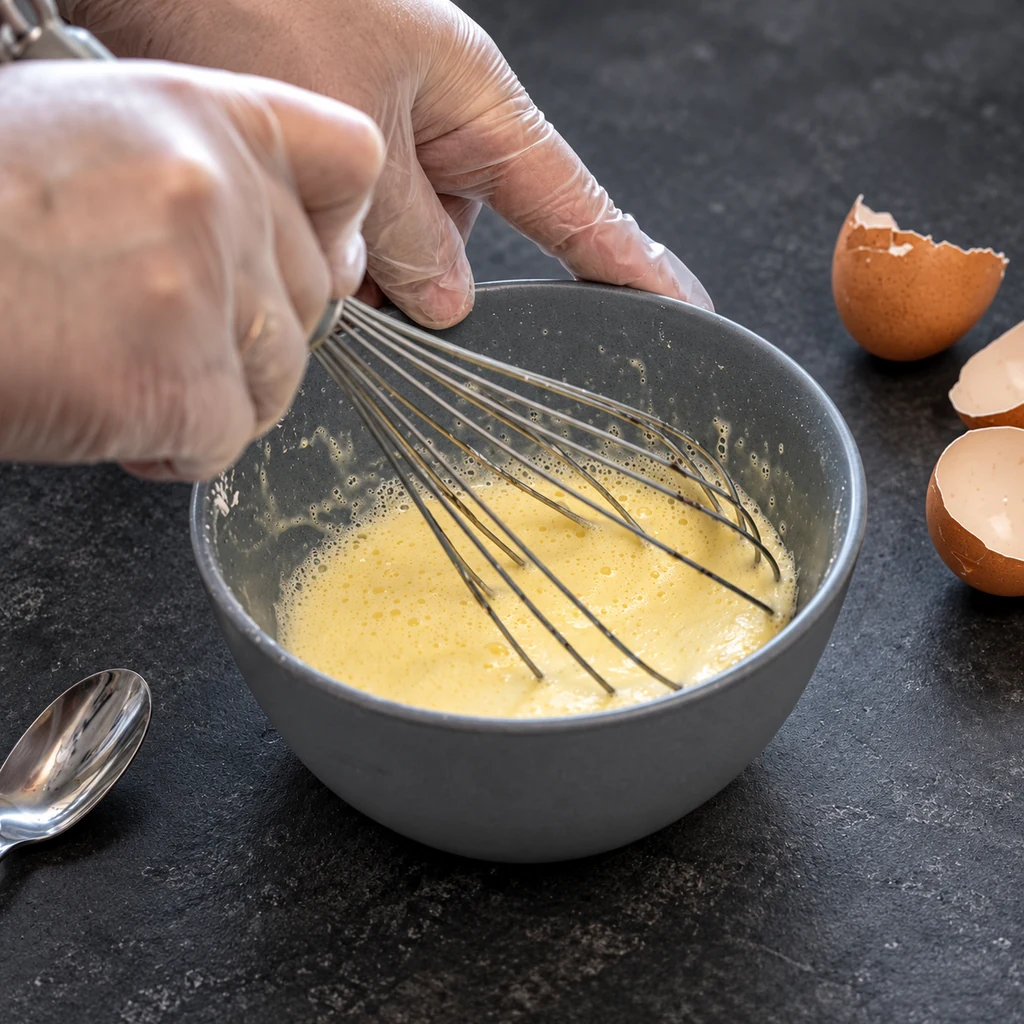
Finish and cool the custard before filling
Add the butter after the cooked cream comes off the heat and mix it in completely. The result should be smooth, without an oily layer. Work carefully while the cream is hot.
Do not leave a deep saucepan of custard on the counter until the centre is cold. A shallow container cools more efficiently. Refrigerate promptly, and keep the filling cold until you are ready to use it.
If your pastry cream is still loose after chilling, check the quantities and cooking stage before making a random addition. It should be firm enough to remain inside the shell without running from the filling holes.
2. Mascarpone cream
This version combines mascarpone, cream and sweetened condensed milk. The cheese provides richness while the whipped cream lightens the texture. Keep the ingredients cold and stop mixing when the cream holds its shape.
Mascarpone filling
Ingredients
- 150 g mascarpone
- 150 g whipping cream, 33–35% fat
- 80 g sweetened condensed milk
Method
- Chill the mascarpone, cream and condensed milk. Weigh the ingredients and divide the cream into two equal portions.
- Mix the mascarpone with half the cream and all the condensed milk just until smooth and combined.
- Add the remaining cream and whip until the filling is aerated and firm enough to pipe. Watch the texture closely; excessive whipping can make it grainy.
- Transfer to a piping bag and fill cooled eclair shells. Refrigerate the filled pastries.
Do not substitute a watery spread for mascarpone and expect the same result.
3. Italian meringue filling
Italian meringue is made by pouring cooked syrup into whipping egg whites. The temperature of the syrup controls its concentration; it does not by itself establish the final temperature throughout the whites. Use pasteurised whites for this filling.
Italian meringue filling
Ingredients
- 50 g pasteurised egg white suitable for whipping
- 100 g sugar
- 30 g water
- 15 g vanilla sugar
- A small pinch citric acid or cream of tartar
Method
- Put both sugars and the water into a small saucepan. Heat to dissolve the sugar, then cook the syrup while monitoring it with a probe thermometer.
- Put the whites and the small pinch of acid into a clean, grease-free mixer bowl. Begin whipping as the syrup approaches its target so the whites form a soft foam in time.
- Cook the syrup to 118–121°C (244–250°F). Do not substitute a guess based on the way it drips from a spoon.
- With the mixer running, pour the syrup in a thin, steady stream into the whites. Aim between the moving whisk and the bowl, avoiding the whisk wires and taking care not to splash.
- Continue whipping until the meringue is glossy, holds a usable peak and has cooled. Pipe into the cooled shells and keep refrigerated until serving.
A small bowl and a mixer that reaches this quantity are important for a 50 g white batch.
Acid supports the foam but does not rescue grease-contaminated whites.
4. Whipped cream with condensed milk
Two ingredients make this the shortest formula in the group. Its success still depends on cold cream, a suitable fat content and stopping at the correct whipping stage.
Cream and condensed-milk filling
Ingredients
- 200 g whipping cream, 33–35% fat
- 100 g sweetened condensed milk
Method
- Chill both ingredients and use a cool mixing bowl and whisk.
- Combine the cream and condensed milk. Whip while watching the texture until the mixture is thick and aerated enough to pipe.
- Stop before the cream turns grainy or releases liquid. Fill the cooled shells and refrigerate.
A warm mixing bowl or low-fat cream can make the filling difficult to whip.
5. Curd-cheese cream
This filling uses tvorog, a fresh curd cheese. Use a fine, well-drained version around 9% fat. It is not the same as a tub of salty, wet cottage cheese, and it is not interchangeable with mascarpone in every formula.
Blending the curd cheese with condensed milk first gives the filling a smoother texture. Add the whipping cream afterwards and use the mixer for aeration rather than continuing with the immersion blender.
Fresh curd-cheese filling
Ingredients
- 180 g fine curd cheese (tvorog), around 9% fat
- 100 g whipping cream, about 33% fat
- 70 g sweetened condensed milk
Method
- Weigh the cold ingredients. Blend the curd cheese and condensed milk with an immersion blender until smooth.
- Add the cream. Switch to a mixer and whip until the filling is thick and sufficiently aerated.
- Transfer to a piping bag and fill cooled eclair shells. Refrigerate until serving.
Ricotta, tofu and other cheeses differ in moisture, fat and structure. They are separate recipe tests, not guaranteed direct replacements.
Fill a closed eclair through small holes
Let the baked shells cool completely. Make neat holes in the underside or ends with a small suitable tool before inserting the piping tip. Piercing with the bag itself can push crumbs into the nozzle and block it.
Use a filling tip or a small plain nozzle that fits the hole. Pipe slowly, moving between holes as needed so the cream reaches the length of the shell. Feel for the shell becoming heavier and stop before pressure splits it.
A small trace of cream at the opening can show that the nearby cavity is filled, but it does not prove that the opposite end is full. Check one eclair from the batch to learn how your shells fill. Wipe away excess cream and keep the finished pastries cold.
Or pipe a visible cream into an open shell
For an open eclair, cut off the top cleanly and pipe the filling into the base with a plain or decorative nozzle. Replace the lid or use the cream as part of the decoration.
This format makes it easier to add small fruit pieces or a second component that would not fit through a filling tip. Keep those additions controlled so the shell remains easy to eat.
Open eclairs are more delicate to transport. Assemble close to serving and support them in a suitable container. If you do not have a piping bag, a spoon can fill a cut-open shell, although the finish will be less precise. A strong food-safe bag with a snipped corner is another option for a smooth filling.
Keep the filling cold and plan the assembly
Treat the egg and dairy fillings as perishable. Refrigerate them promptly, keep them cold during storage and avoid leaving filled eclairs at room temperature for extended periods. As a practical limit, refrigerate within two hours of preparation or serving, sooner in hot conditions.
Fill as close to serving as practical for the best shell texture. Moist cream gradually softens choux pastry, even when it has been stored correctly. Keeping shells and filling separate until assembly helps you control that texture.
There is no universal shelf life for all five creams. Ingredients, cooking, hygiene, cooling and storage temperature matter. Do not assume that condensed milk makes a filled eclair safe for a week at room temperature or that an unfilled shell stays fresh for weeks.
Make only the amount you need for the planned occasion. If a filling has been left out too long or handled improperly, do not try to make it safe by adding sugar or giving it a quick reheat.
Common questions
Which filling is the classic choice for eclairs?
Pastry cream is a widely used classic choice. The whole-egg vanilla formula above gives a smooth custard centre, but other creams suit different flavours and serving styles.
Can I fill the shells while they are warm?
Let them cool first. Warm shells can soften a whipped or butter-based filling and trap unwanted moisture.
How many eclairs will each recipe fill?
It depends on the size and internal space of your shells, the filling and how generously you pipe. Fill one, weigh the cream used and estimate the rest from that measured amount.
Can I skip the thermometer for Italian meringue?
Use a suitable probe thermometer. Spoon-drip descriptions are less reliable than measuring the syrup temperature, especially in a small batch.
Do I have to use a piping bag?
A bag makes closed shells easier to fill evenly. For a cut-open shell, a spoon or strong food-safe bag can work, with less control over the finish.