
Mousse & pastry
Why Eclairs Collapse After Baking
Eclairs commonly collapse when the shell has risen but has not baked and dried enough to support the hollow centre. A dough that is too wet, an unsuitable oven profile or early door opening can contribute. Look at the raw shape, the baked base and a cut shell before changing the recipe. Colour alone does not prove that the inside is ready.
6 min read
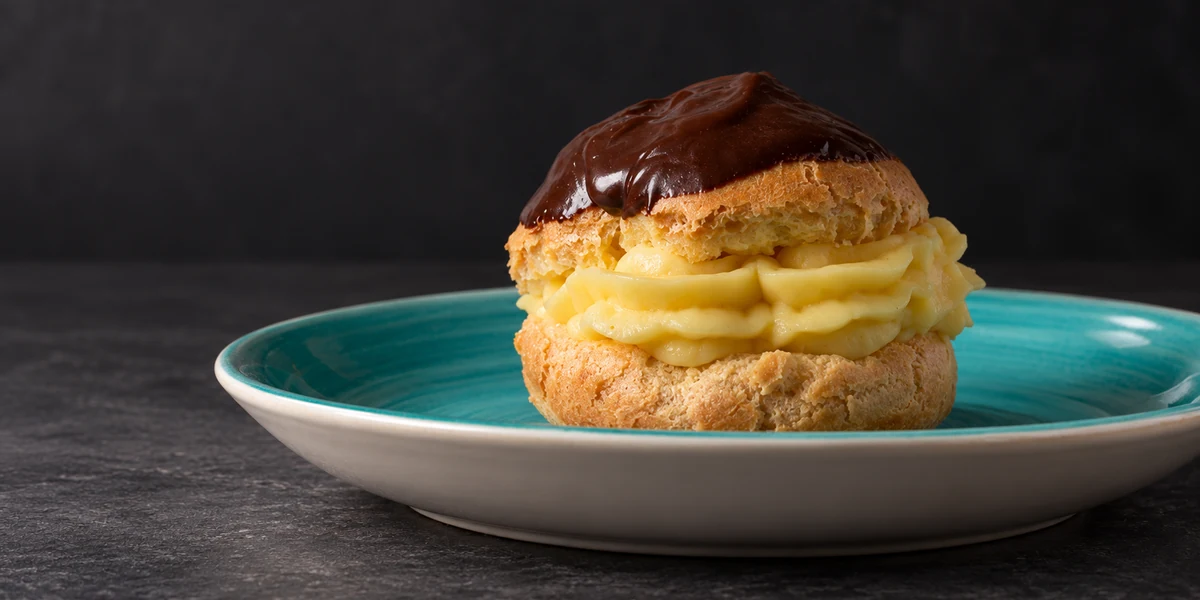
Separate spreading from collapse
If the piped dough spreads into a flat strip before baking, start with dough consistency. If it holds its shape, rises in the oven and later sinks, the baking and drying stages deserve closer attention. The same flat final shape can have a different history.
Photograph one tray before and after baking and cut a cooled shell across the middle. Note whether the walls are thin, the base is soft or there is a heavy wet layer inside. Those details are more useful than changing every ingredient at once.
A hollow interior is the intended structure, but a large hole alone is not proof of a finished shell. The walls must also be firm enough to hold it.
Check the flour and cooked paste
Use the flour specified by the recipe before experimenting with stronger or weaker alternatives. Protein level and absorption affect how the paste handles, but expensive high-protein flour is not a universal requirement for successful choux.
Cook the flour paste thoroughly while stirring, reaching a cohesive mass and the recipe’s drying endpoint. A film on a stainless-steel pan can be one cue; the same cue may be less visible on non-stick cookware. Do not scorch the paste just to create it.
A change of flour or batch size can alter how much egg the paste accepts. Keep notes of the brand, liquid weight, cooked paste weight if measured, and actual egg addition. These are useful controls for the next tray.
Control egg addition and the piped shape
Add beaten egg gradually to the appropriately cooled paste. Mix each addition until the dough is uniform before judging the next one. Stop near the recipe’s endpoint: a slow, thick ribbon from the paddle and a piped shape that settles without becoming a puddle.
Pipe consistently sized shells with enough room between them. A French-star tip is a common choice for eclairs, but the recipe and intended shape should determine the tip. Unequal lengths and thicknesses make one tray difficult to bake evenly.
Have the oven and tray ready before piping. Do not leave an uncovered tray standing for a long time while you prepare the rest of the kitchen. If the recipe includes a refrigerated rest, follow that planned method instead of improvising an ambient wait.
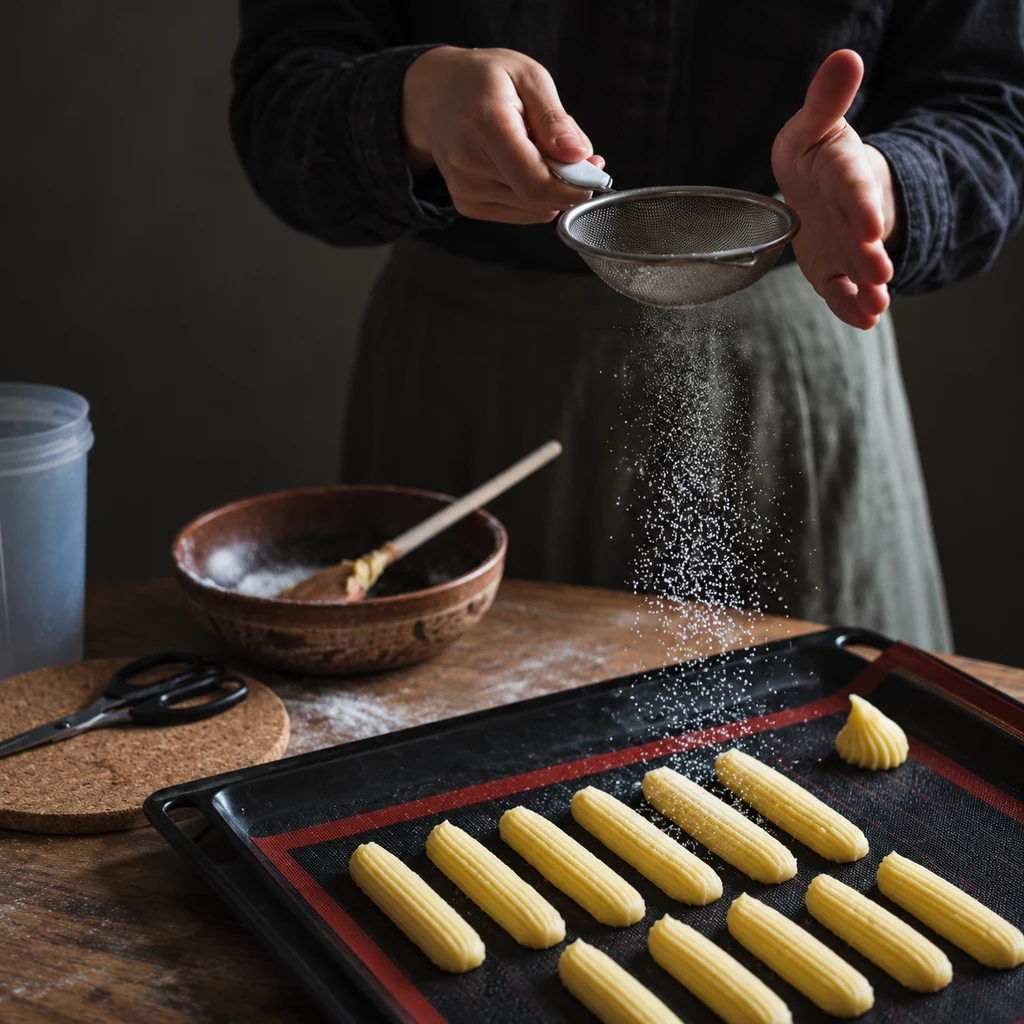
Use a complete oven profile
Preheat fully and follow one recipe’s temperature sequence. Some choux methods use a steady moderate oven; others begin hotter and reduce the heat. Combining the hottest start from one recipe with the shortest time from another is not a reliable shortcut.
A conventional-oven starting point around 180°C (356°F) appears in many eclair methods. A two-stage method may begin around 200°C (392°F) before reducing the temperature. These are examples of different approaches, not instructions to switch your current batch to a new profile halfway through.
Fan strength, tray material, shell size and oven accuracy all influence the result. Use an oven thermometer and keep the tray position consistent. If the outside colours very quickly while the interior remains wet, review the heat profile rather than simply accepting the colour as doneness.
Avoid opening the door during the early expansion stage. Once the shells have set and most of the bake is complete, a brief controlled check is different from repeatedly opening the oven while they are still rising.
Check the shell, not only the colour
Near the end of the expected baking time, check a representative shell. Its base should be firm and the shell should feel light for its size. Cut it to inspect the walls and centre; a heavy wet band needs more attention even when the surface is golden.
If the structure is formed but still needs drying, continue with the recipe’s finishing stage. Some methods include venting the shells or a short rest in the switched-off oven with the door slightly open. Use that as a drying step after a proper bake, not as a replacement for cooking an underbaked shell.
Cool the shells with airflow before filling. Putting warm shells into a closed container traps moisture and can soften the walls you have just dried.
What can you do with a collapsed batch?
A fully collapsed shell will not usually become a tall, hollow eclair again by adding cream or reheating it. If the shell is merely soft, unfilled and otherwise properly baked, a brief re-crisping step may improve texture, but it cannot rebuild a failed shape.
Do not fill a visibly wet, underbaked shell and expect the filling to correct it. Evaluate whether it is suitable for another use or whether a new batch is the better choice. Keep any perishable filling refrigerated while you decide.
Choose one useful next-tray test
If the raw dough spread, repeat the formula while controlling panade drying and the final egg addition. If the raw shape held but the centre was wet, keep the dough method and test the finishing bake. If one side of the tray consistently fails, examine placement and heat distribution.
Record the actual time, temperature setting, oven mode, shell size and result. The aim is a repeatable baking profile for your setup, not a search for one temperature that suits every oven.
Common questions
Why do eclairs sink as soon as they leave the oven?
The walls may not be baked and dried enough to support the cavity. Inspect the base and cut a shell; a golden surface can hide a wet interior.
Do I need bread flour for eclairs?
Use the flour specified by your recipe first. Different flours change absorption and structure, but stronger flour does not replace correct paste consistency and baking.
Can I open the oven to check them?
Avoid opening during the early rise. Near the end, once the structure has set, a brief check of a representative shell helps you judge the inside.
Will filling restore a collapsed shell?
No. Filling adds weight and moisture; it does not rebuild the hollow baked structure. Solve the shell problem before assembly.