
Cakes & pastry
Chiffon-Style Sponge Cake with Oil and Hot Milk
This chiffon-style sponge is an oil-enriched whole-egg cake: whip 4 eggs with 160 g sugar, fold in 180 g flour and 10 g baking powder, then add 40 g neutral oil and 50 g hot milk. Bake in an 18 cm ring at 170°C (340°F) for about 50–60 minutes. Unlike a separated-egg chiffon, this version whips the whole eggs together.
6 min read
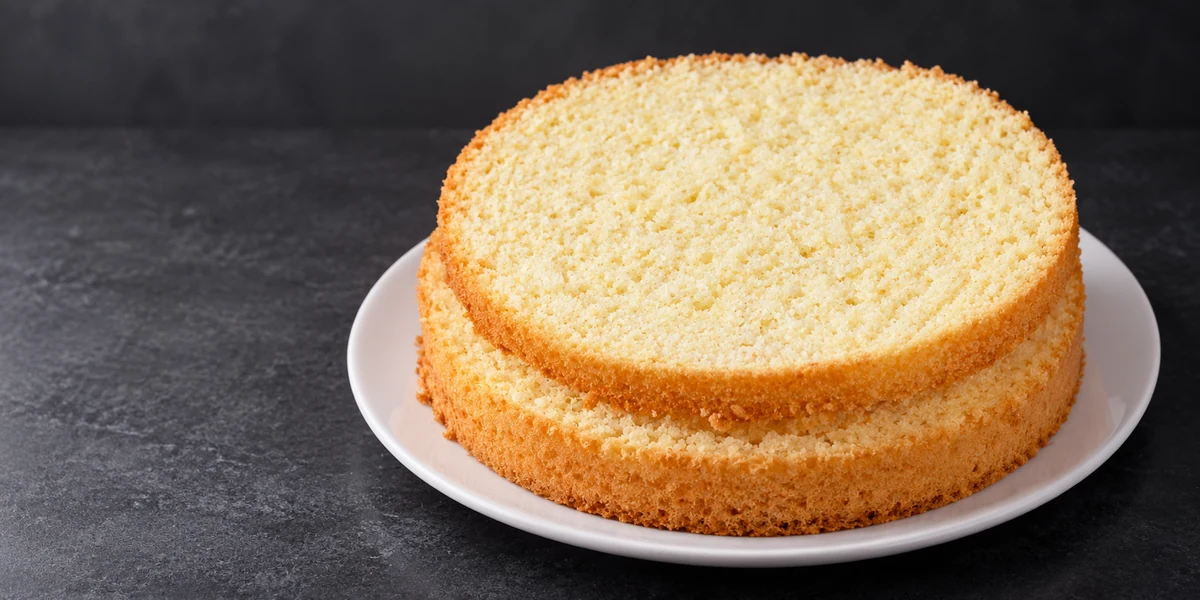
A whole-egg variation for a soft layer-cake sponge
Oil and milk give this sponge a different character from a lean egg-sugar-flour cake. The egg foam still matters, but the formula also includes baking powder and a small amount of liquid fat.
Traditional chiffon methods often separate the eggs. This version uses whole eggs whipped with sugar, so follow that method throughout rather than importing steps from a different chiffon recipe.
The sponge can be used as a cake base with a compatible cream or fruit filling. Decide whether it needs syrup after checking the cooled crumb and considering the moisture already supplied by the filling.
Chiffon-style sponge recipe for an 18 cm ring
Use a neutral oil so that its flavour does not dominate. Prepare an 18 cm diameter, 10 cm high ring on a flat baking tray with a secure foil base. Preheat the oven before whipping the eggs.
Have the milk ready to heat near the end of mixing. The recipe calls for hot milk, but that is different from leaving it boiling while the rest of the ingredients wait.
Oil and hot-milk sponge
One cake in an 18 cm diameter, 10 cm high ring
Ingredients
- 4 eggs, consistent in size
- 160 g caster sugar / fine granulated sugar
- 180 g plain flour / all-purpose flour
- 50 g milk
- 40 g neutral vegetable oil
- 10 g baking powder
- 1 pinch salt
Method
- Whip the eggs. Put the eggs, salt and all the sugar in the mixer bowl. Whip until pale, very fluffy and thick enough to fall from the whisk in a ribbon that leaves a visible trail.
- Fold in dry ingredients. Mix the flour and baking powder separately, then sift them over the egg mixture. Fold gently until combined.
- Add oil and hot milk. Add the neutral oil. Heat the milk until it just reaches a boil, then remove from the heat and add it hot. Fold smoothly from the bottom up until the batter is uniform, without prolonged mixing.
- Bake promptly. Transfer to the prepared ring. Bake at 170°C (340°F), conventional top-and-bottom heat, for approximately 50–60 minutes. A skewer inserted into the centre should come out without wet batter.
- Cool. Let the cake cool fully. The ring can be inverted over a rack only if it safely supports the cake without pressing the top into the rack; otherwise cool upright. Protect the cooled cake in food wrap and chill overnight before slicing.
Choose a ring with enough room for the cake to rise.
Keep the oil at 40 g for the first bake. Reducing it changes the crumb.
Invert only when the pan can rest securely on a suitable support; otherwise cool it upright.
Build a proper ribbon-stage foam
At first the whole eggs and sugar look fluid and bubbly. As whipping continues, the mixture becomes paler and thicker. Lift the whisk to see whether a falling ribbon stays visible briefly on the surface.
Baking powder does not remove the need for this egg foam. If the mixture is barely aerated before flour goes in, extra mixing later cannot rebuild it in the same way.
Use the visual cue rather than a rigid whipping time. Mixer power, bowl shape and egg temperature all affect how quickly the foam develops.
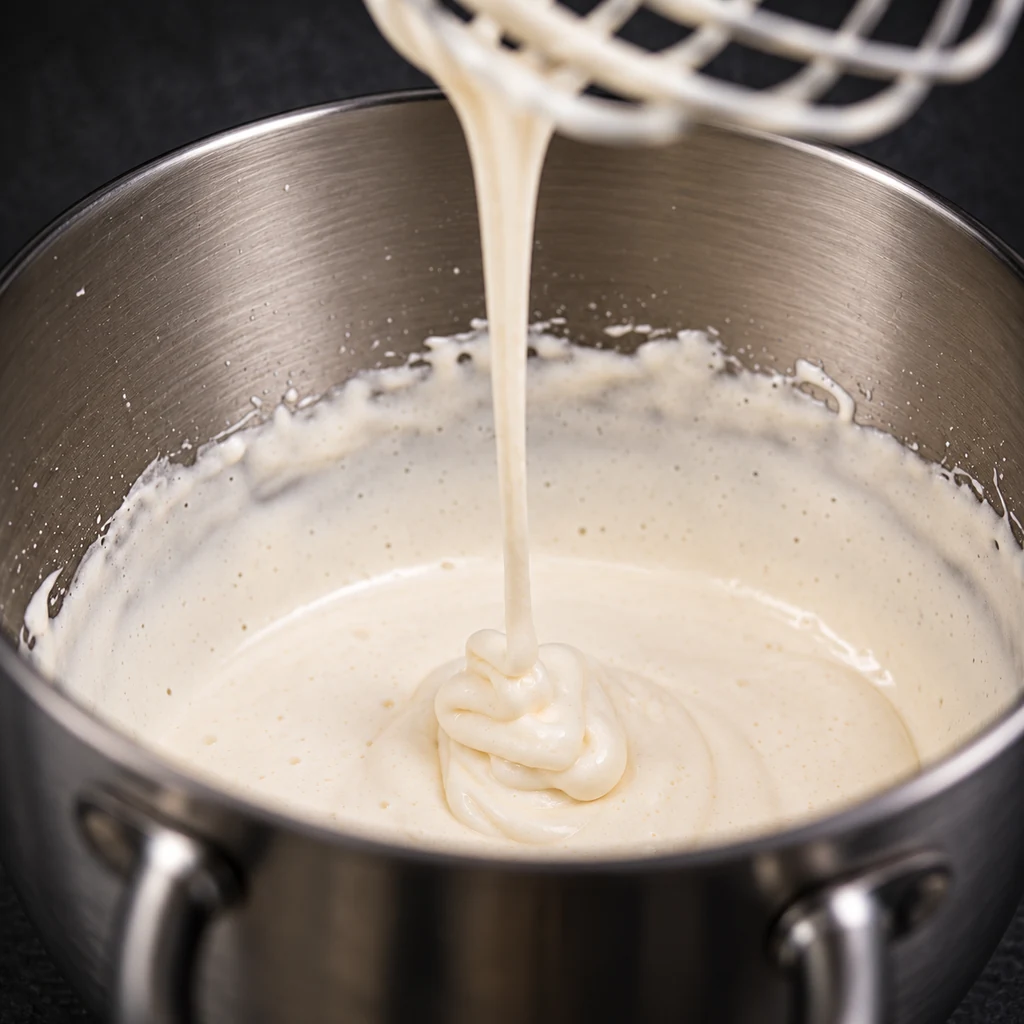
Incorporate the oil without leaving a heavy layer
Liquid oil can sink through the foam, so scrape through the base of the bowl as you fold. A surface that looks combined does not prove that everything underneath has been incorporated.
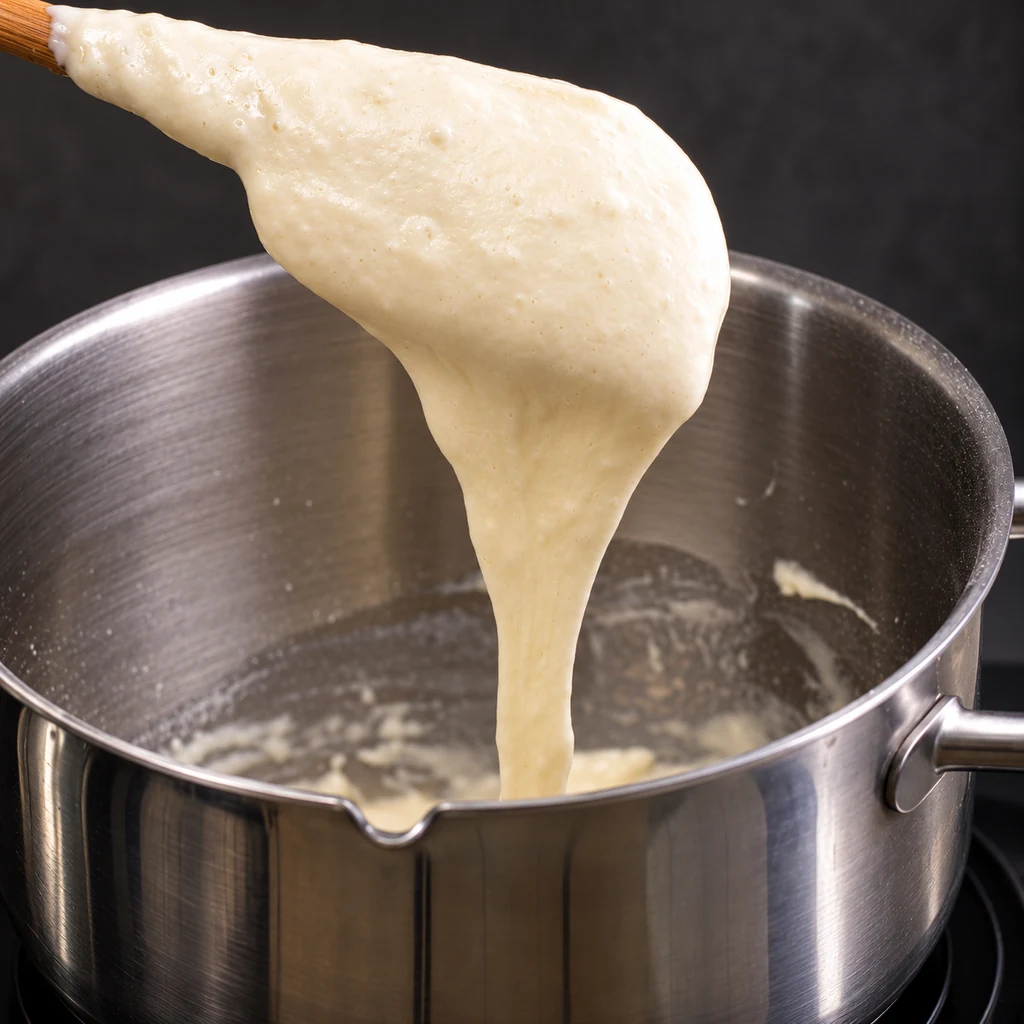
The hot milk also needs to be distributed evenly. Fold with smooth, deliberate movements and stop when the batter is uniform. Repeated beating after that point loses air and can make the crumb denser.
Do not leave the finished batter waiting. Put it in the prepared ring and into the hot oven promptly. This is why weighing, pan preparation and preheating belong before the final mix.
Bake through without drying the sponge
Keep the oven closed during the early part of baking while the cake is still fragile. Start checking near the expected end, and test the centre rather than a thin edge.
A skewer should not bring out wet batter. Surface colour alone is not enough, particularly in a deep ring. If the top has coloured but the middle is still wet, review your oven behaviour and pan depth rather than assuming the cake is done.
Cool fully before cutting. A warm, soft crumb can tear or compress even if it was baked correctly. Chilling the protected sponge makes it easier to organise the filling and assembly work.
Plan cooling and storage when the cake will be assembled later.
Choose a filling that suits the soft crumb
A cream cheese filling, a fruit layer or a suitable ganache can all work as part of a planned cake. Check the firmness of each component at the temperature at which you will assemble it.
Do not automatically soak every layer heavily. This sponge contains oil and milk; a wet fruit filling may already contribute enough moisture. If you decide to add syrup, use a modest amount and reassess.
For a larger cake, calculate the ingredient factor before changing the pan. The same batter in a wider ring makes a shallower cake, and a different depth changes the baking time.
Choose a cream cheese texture for filling and finishing.
Apply syrup according to the sponge and filling rather than habit.
Common questions
Do I separate the eggs for this recipe?
No. This particular chiffon-style sponge whips the whole eggs with sugar. It is not the same method as a separated-egg chiffon.
Can I reduce the oil?
Make the formula as written first. The 40 g oil contributes to the texture, so reducing it creates a different formula.
Why is the milk added hot?
Hot milk is part of this version's mixing method. Heat it just before use and fold it through promptly rather than boiling it for a prolonged time.
Does the cake always need soaking syrup?
No. Check the cooled crumb and the filling you plan to use. Add a small amount only when it serves the finished cake.
Why is there a dense band at the bottom?
Check whether oil or flour remained at the base of the bowl, whether the foam deflated and whether the centre was fully baked. Diagnose the method before changing several ingredient amounts.