
Cakes & pastry
Cake Pops with Dulce de Leche and a Chocolate Coating
Cake pops are fine cake crumbs mixed with a binder, shaped around a stick and coated in chocolate. This version uses vanilla sponge and equal weights of butter and dulce de leche. Secure the sticks with a little chocolate, chill the centres until firm, then dip and let excess coating drain.
5 min read
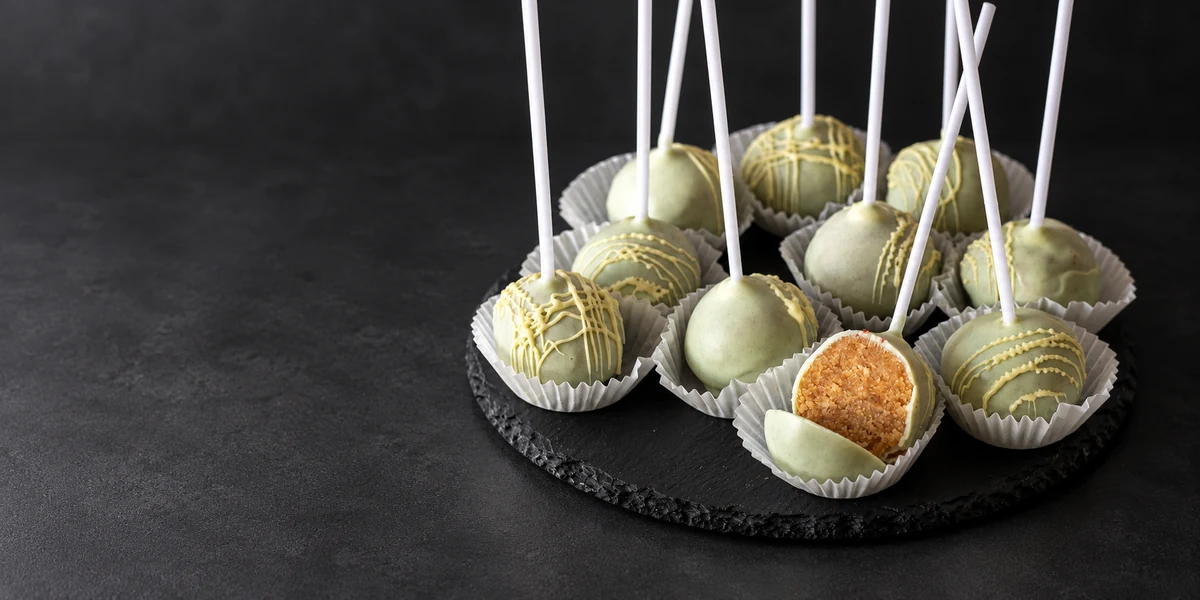
Three parts make a cake pop
The sponge provides the crumb, the butter-and-dulce-de-leche mixture binds it, and chocolate gives the outer coating. A centre should hold together without becoming a wet paste. Its texture depends on the moisture of the actual sponge.
The recipe includes a fresh sponge so the whole process is available in one place. If using suitable leftover sponge, do not assume any quantity of crumbs needs the entire binder batch. Add gradually and judge the mixture.
A stick changes the handling. Large, heavy centres and a loose binder make dipping harder, even if the same mixture would work as a small cake served on a plate.
1. Bake and cool the sponge
Prepare the pan before whipping. Choose one with room for the batter to rise, and check the centre for doneness.
Vanilla sponge for cake pops
One batch for crumbling
Ingredients
- 2 eggs
- 60 g sugar
- 65 g plain flour
- 5 g baking powder
- 30 g butter
Method
- Whip. Whip eggs and sugar until pale and fluffy. Melt butter separately and let it cool slightly while staying fluid.
- Fold. Mix and sift flour with baking powder. Fold into the egg foam, then fold in butter, checking the bottom of the bowl.
- Bake. Transfer to a prepared pan and bake at 170°C (340°F) until set. A skewer should show no wet batter and the surface should spring back gently.
- Crumble. Cool completely, then blend or rub into fine, even crumbs. Do not mix hot cake with the binder.
The number of cake pops depends on the shape and portion size.
2. Bind the crumbs without making them greasy
Butter and cooked condensed milk should be at similar, workable room temperatures. A cold ingredient mixed with a very soft one is harder to beat smooth.
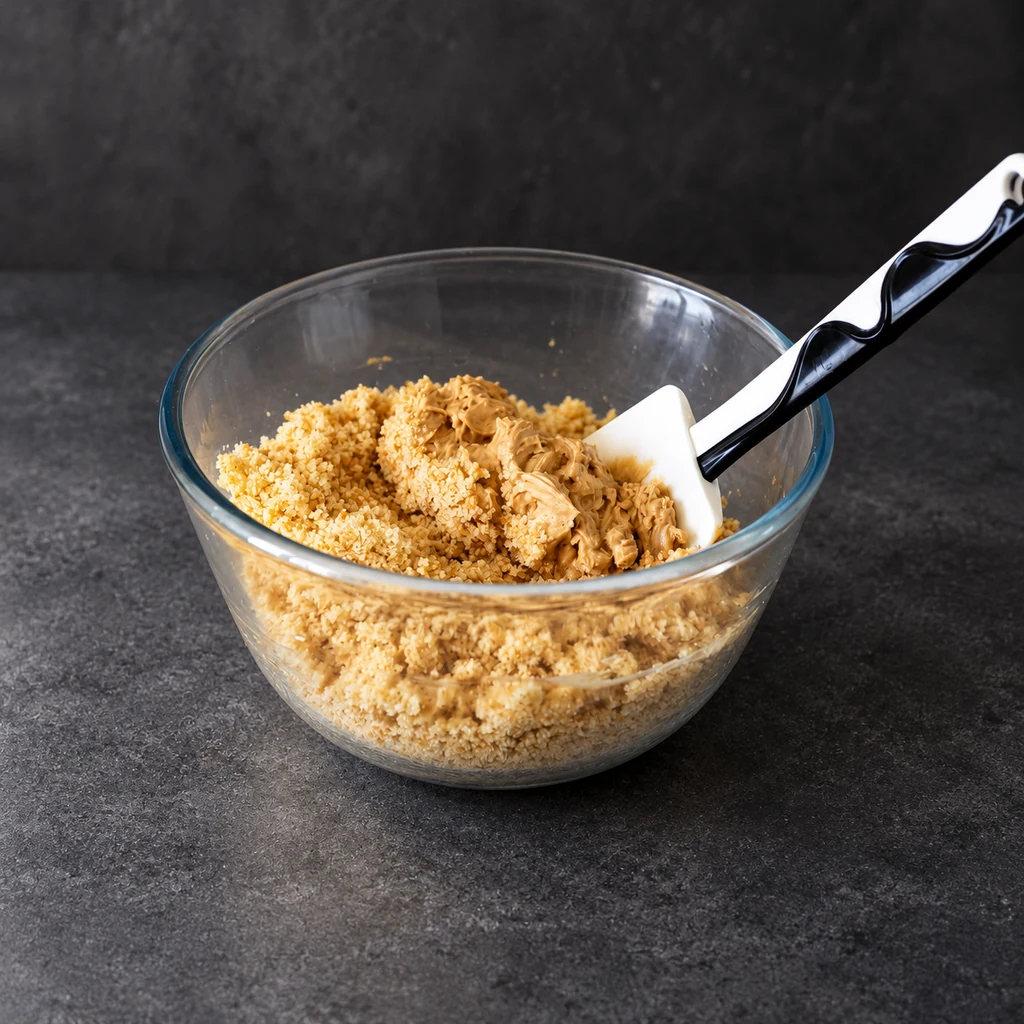
Add binder gradually. A small pressed portion should hold its shape without loose cracks, but should not ooze or feel like a bowl of frosting.
Dulce-de-leche binder
One batch for the sponge above
Ingredients
- 50 g butter, softened
- 50 g cooked sweetened condensed milk / dulce de leche
Method
- Beat. Beat butter and dulce de leche until smooth.
- Combine. Mix with cooled crumbs progressively, checking the texture.
- Shape. Form evenly sized balls or small ice-pop shapes. Keep them a comfortable weight for the sticks.
3. Secure the sticks and chill
Dip the end of each food-safe cake-pop stick into a little melted chocolate, then insert it into the centre. The chocolate sets as a small anchor; it does not compensate for a centre that is too soft or heavy.
Chill until firm. A freezer rest of about 20–30 minutes is a starting option, but avoid frost or condensation before dipping. Very cold centres and warm coating can create a difficult temperature contrast.
Handle a small group at a time. If a stick loosens, check the binder, weight and anchoring before continuing.
4. Coat with chocolate and cocoa butter
Cocoa butter makes the coating more fluid. It is different from dairy butter, so keep the ingredients separate when weighing.
Choose chocolate for the colour and flavour you want. If colouring, use a fat-soluble product intended for chocolate; water-based colour can seize it.
Chocolate coating
One dipping batch; some coating remains in the vessel
Ingredients
- 150 g chocolate
- 30 g cocoa butter
- optional fat-soluble food colouring
Method
- Melt. Melt chocolate and cocoa butter separately in short intervals, stirring regularly and avoiding scorching.
- Combine. Mix until smooth and add suitable colour if using. For a firm, stable chocolate finish, temper the cocoa-butter-based mixture with appropriate chocolate guidance and test a small smear.
- Dip. Dip a firm centre while holding the stick, then lift and let excess drain without vigorous shaking.
- Set. Stand securely or place on a suitable lined surface. Let the coating set and keep the dairy-containing centres refrigerated as appropriate.
Bring the cake centres and coating to suitable working temperatures before dipping to reduce the risk of cracking.
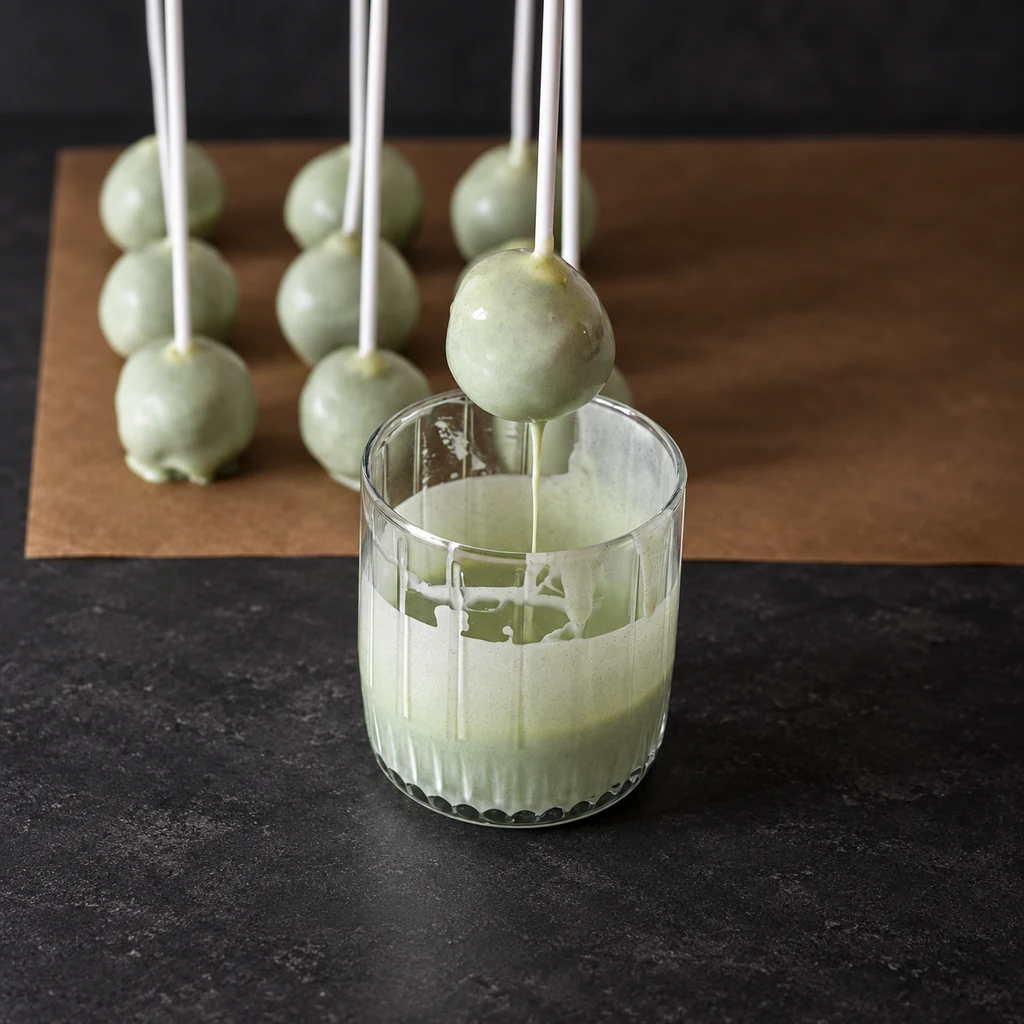
Decorate at the right stage
Fine nuts, coconut or sprinkles adhere while the coating is wet. For piped lines, let the base set first so the layers do not simply run together.
Keep decorations light and give each pop enough space. A heavy topping can pull on a small stick-supported centre while the coating is still fluid.
A sound sponge is the starting point. Crumbling does not repair a burnt flavour, underbaked batter or poor storage.
Choose a chocolate sponge for a separately balanced variation.
Test one pop before dipping the whole batch
A small trial shows whether the centre stays on its stick, the coating drains evenly and the decoration attaches cleanly. It is easier to adjust before the whole batch is coated.
If the surface is streaky, check crystallisation and the setting environment. If cracks form, consider the temperature difference and coating thickness as well as the centre.
| Problem | First check |
|---|---|
| Centre crumbles | Crumb fineness and binder amount |
| Soft or greasy centre | Excess binder or warmth |
| Pop slips off | Centre weight and chocolate anchor |
| Thick coating | Temperature and crystallisation |
| Cracked coating | Temperature contrast and coating thickness |
Common questions
Can I use leftover cake?
Yes, if properly handled and stored. Add binder gradually because its moisture may differ from this sponge.
Is cocoa butter the same as butter?
No. The coating uses cocoa butter; the sponge and binder use dairy butter.
Why did the pop fall off?
Check centre weight, firmness and stick anchoring. A chocolate-dipped stick tip helps, but the centre must still hold together.
Can I use water-based colour?
Not directly in this chocolate coating. Use a suitable fat-soluble colour.
Does freezing prevent every crack?
No. Chilling helps the centre hold its shape, but temperature contrast and condensation can also cause trouble. Test one pop first.