
Cakes & pastry
Honey Layer Cake with Sour Cream
Medovik is assembled from thin honey layers that begin crisp and soften as they absorb moisture from the cream. This version makes six 16 cm layers with a sour-cream and whipped-cream filling. Bake the scraps for the crumb coating, then allow at least eight hours in the refrigerator for the assembled cake to soften.
5 min read
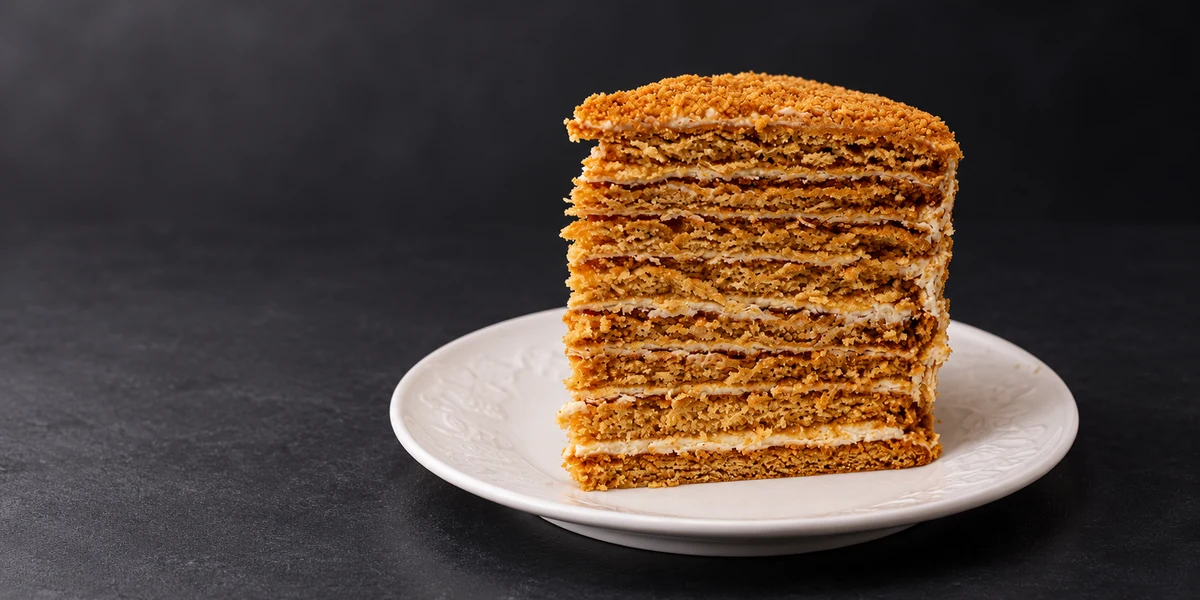
A crisp layer becomes a soft cake
The texture changes after assembly. Freshly baked honey layers are firm and brittle once cool, which is expected. The cream gradually softens them into a sliceable cake; skipping the refrigerator rest gives a very different result.
Start draining the sour cream before making the filling and cool the dough completely before rolling. You can prepare the dough ahead, but keep it covered so the surface does not dry. The recipe is designed around six thin 16 cm discs, with the trimming scraps baked separately for coating.
Prepare the honey dough
A mild floral honey gives a clear honey flavour without overpowering the cream. The dough looks sticky while warm. Do not immediately add extra flour: cooling changes its firmness.
Honey cake layers
Ingredients
- 380 g wheat flour
- 2 medium eggs
- 150 g sugar
- 100 g honey
- 110 g unsalted butter
- 6 g baking soda
Method
- Heat the honey and sugar. Combine the sugar and honey in a heavy saucepan. Heat while stirring until the sugar has dissolved into the mixture.
- Add soda and butter. Stir in the baking soda, allowing space for foaming, then add the butter and stir until melted.
- Cool before the eggs. Mix some of the measured flour into the hot mixture, then allow it to cool below 60°C (140°F). Stir in the eggs. The flour added here comes from the 380 g total.
- Finish the dough. Add the remaining flour in several additions and mix. The warm dough will be sticky and soft. Cover and refrigerate until completely cold, or leave it covered in the refrigerator overnight.
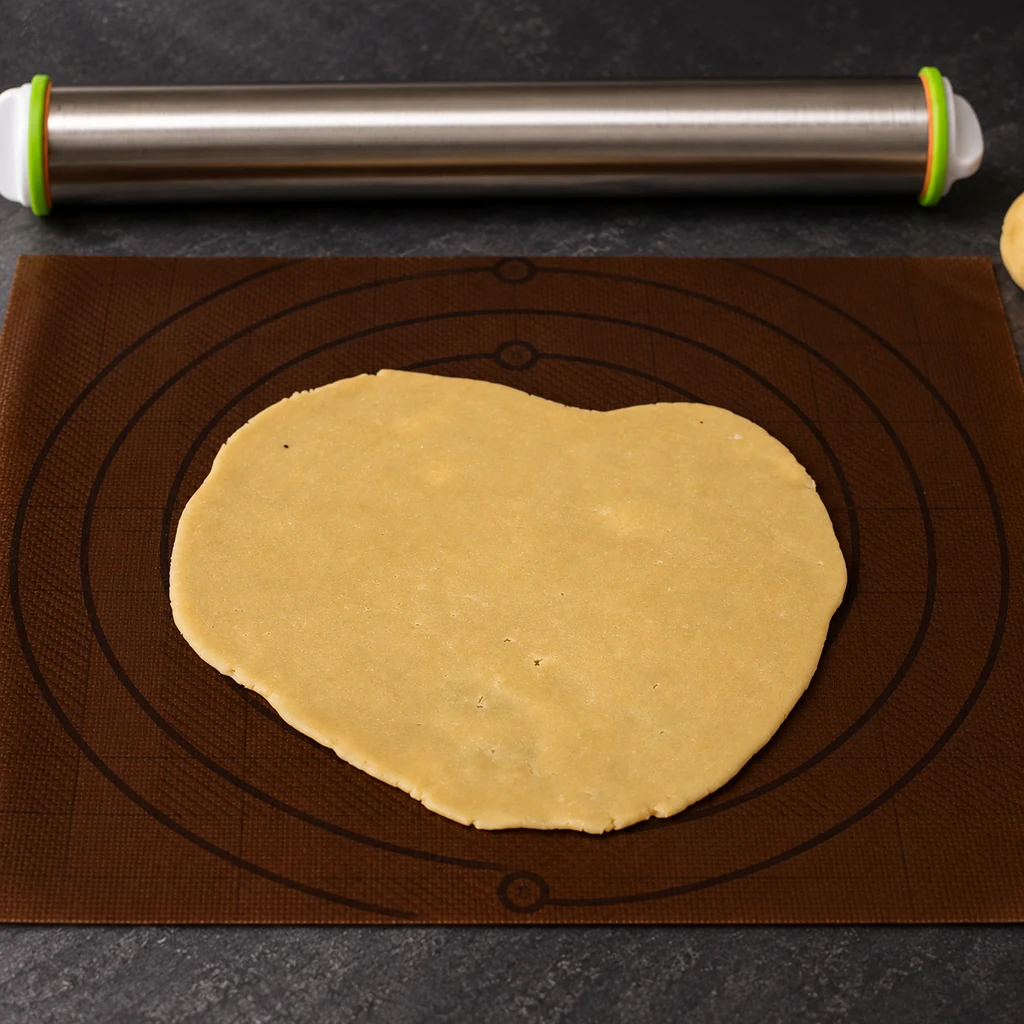
- Roll and cut. Divide the cold dough into six equal portions. Roll each to 2–3 mm thick, preferably directly on baking parchment. Prick with a fork and cut a 16 cm circle. Gather and roll the scraps for the crumb coating.
- Bake. Bake the discs and scraps in a preheated 180°C (356°F) oven until golden, about 7–8 minutes for each thin layer. Cool completely before lifting and stacking carefully.
Use part of the measured 380 g flour for the initial hot mixture and keep the remaining flour for the final addition; do not add flour beyond the total.
Golden syrup or invert syrup changes both flavour and behaviour. Honey is the intended ingredient for this recipe.
Drain and whip the filling
Drain the sour cream under refrigeration rather than on the counter. This removes free liquid and helps the filling stay between the layers. The listed 500 g is the amount to start with before draining.
Sour-cream filling
Ingredients
- 500 g sour cream, 20% fat, before draining
- 100 g whipping cream, suitable for whipping
- 80 g sugar
Method
- Drain the sour cream. Line a sieve with several layers of clean cheesecloth and set it over a bowl with clearance for the liquid. Add the sour cream, cover, apply a small weight and refrigerate for at least two hours.
- Whip the cream. Whip the cold cream until firm enough to hold its shape, stopping before it becomes grainy.
- Combine. Mix the drained sour cream with the sugar until smooth, then fold in the whipped cream with a spatula.
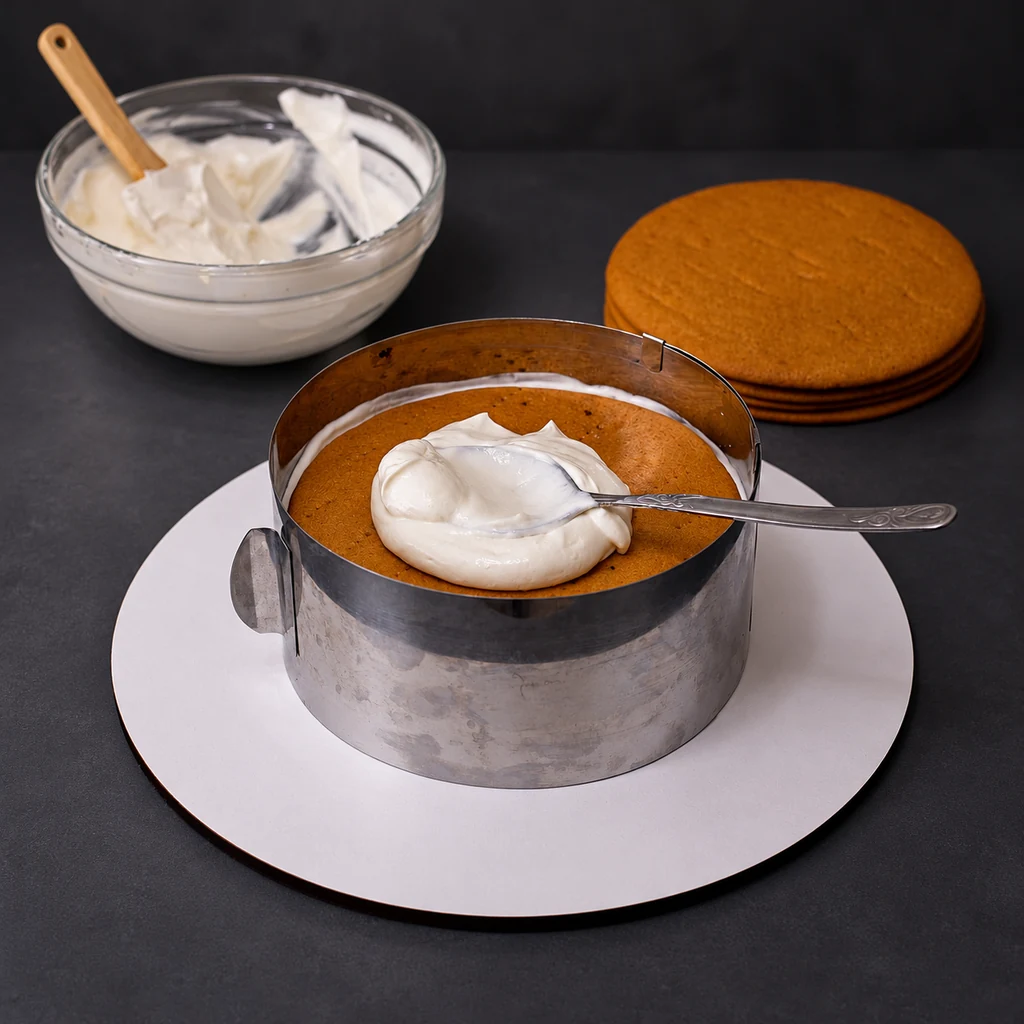
- Assemble. Place the first cooled honey layer in an adjustable cake ring. Alternate the layers and cream, reserving enough cream to cover the top and sides.
- Rest and coat. Cover and refrigerate for at least eight hours; a longer overnight rest lets the layers soften more evenly. Crush the cooled baked scraps, coat the cake with the reserved cream and cover with crumbs.
Use cream labelled for whipping; a low-fat pouring cream is not a direct substitute.
Keep thickness and moisture even
Rolling guides make the 2–3 mm thickness easier to repeat. A very thin edge browns before a thick centre, so look at the whole disc and rotate trays if your oven heats unevenly. Move the parchment rather than stretching a thin raw layer by hand.
Pricking with a fork limits large bubbles. Bake the trimmings as well: raw dough is not suitable for the crumb coating. Grind the scraps only after they are fully cool so the crumbs remain loose.
Use similar amounts of cream between each pair of layers. A ring supports the cake during its rest and helps keep the stack level. The eight-hour minimum is a softening stage, not an invitation to leave the cake at room temperature.
Estimate filling and coating separately when planning a different cake size.
Finish with crumbs and cut cleanly
A coating of honey-layer crumbs uses the same flavours as the cake and needs no additional recipe. Press crumbs gently against the sides and leave the cake chilled until it is stable enough to move. A few berries or toasted nuts can be added near serving.
For clean slices, use a sharp knife dipped in warm water and wiped dry between cuts. Keep the assembled cake refrigerated because of its dairy filling. If preparing components ahead, wrap the dough and cooled unfilled layers separately; do not apply a blanket room-temperature storage rule to the filled cake.
If the layers still resist the knife after the rest, check their original thickness, how much cream was used and whether the filling was drained excessively. Extend the refrigerated resting period before deciding the cake needs additional soaking syrup.
Explore a softer baked base when you want a sponge-style layer cake.
Common questions
Why are the baked layers hard?
They are meant to become firm after cooling. Moisture from the cream softens them during the refrigerated rest.
Should I add flour while the dough is sticky?
Cool the dough first. Adding flour immediately to a warm mixture can make the finished layers unnecessarily dry.
Do I weigh sour cream before or after draining?
The 500 g quantity is the starting amount before draining in this recipe.
Can I slice the cake immediately after assembly?
Allow at least eight hours in the refrigerator. The layers need time to soften and the stack needs time to settle.