
Cakes & pastry
Hazelnut and Almond Praline Paste: A 50:50 Recipe
Praline paste is roasted nuts blended with caramelised sugar. This recipe uses 100 g hazelnuts, 100 g almonds and 200 g sugar, plus salt: a 50:50 nut-to-sugar ratio. Roast the nuts, coat them in caramel, let the mixture cool completely, then blend from crumbs into a paste.
7 min read
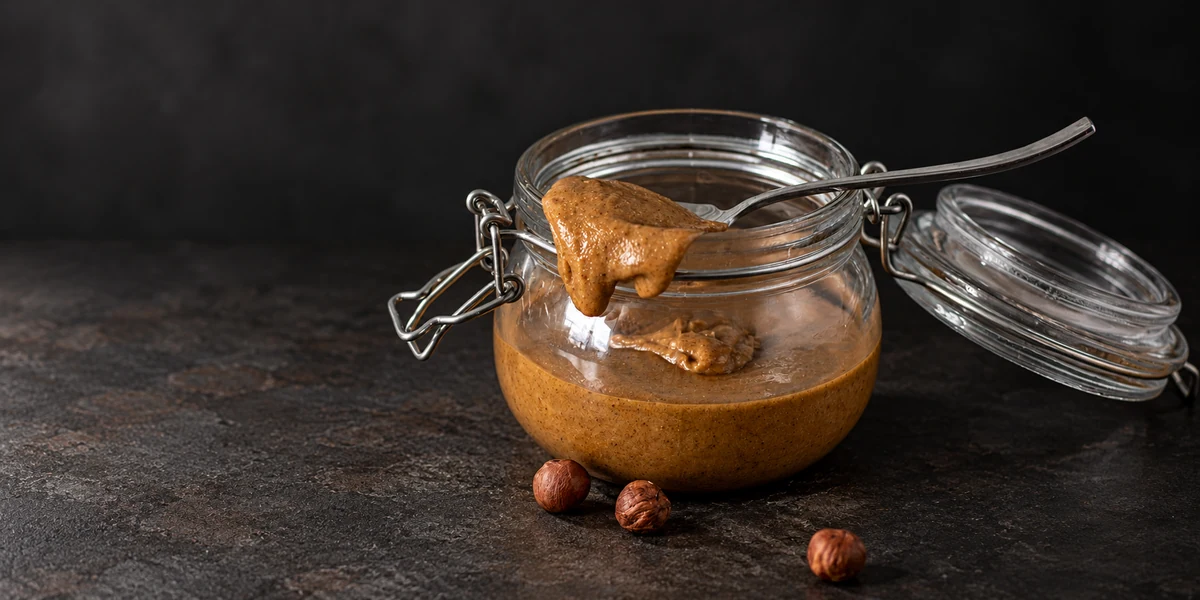
What is praline paste?
For pastry making, praline paste means nuts and caramelised sugar ground together until the nuts release their oil. It combines roasted-nut flavour with the deeper sweetness of caramel. The mixture first becomes a brittle sheet, then crumbs, and finally a spreadable paste.
The word praline can also describe individual sweets, including filled chocolates and creamy pecan confections. Those are different products. Here we are making the nut-and-caramel paste used as a component in creams, fillings and desserts.
Hazelnuts give a pronounced roasted flavour, while almonds make a more restrained partner. The equal quantities of the two nuts are part of this formula. Make that version first so that later changes have a clear point of comparison.
Ingredients for hazelnut and almond praline
A 50:50 praline contains equal weights of nuts and sugar before cooking. In this recipe, the 200 g of nuts is split between hazelnuts and almonds. The notation does not mean equal amounts of the two nut varieties: that is a separate choice in the ingredient list.
Use fresh-tasting nuts and a processor capable of making nut paste. A weak blender may turn the mixture into crumbs but struggle to carry it through to a smooth paste. Follow the appliance's load and running-time limits. Have a heatproof silicone mat or suitable baking parchment ready before cooking the caramel.
Hazelnut and almond praline paste
About 400 g before processing losses
Ingredients
- 100 g hazelnuts
- 100 g almonds
- 200 g granulated sugar
- ½ tsp salt
Method
- Roast the nuts. Preheat the oven to 180°C (355°F). If the nuts have been rinsed, dry them thoroughly first. Spread them on a lined tray and roast for approximately 7–10 minutes, until lightly golden and aromatic. Watch closely near the end.
- Remove loose hazelnut skins. Rub the roasted nuts in a clean towel to loosen the hazelnut skins. You do not have to remove every trace. Keep the prepared nuts nearby while you make the caramel.
- Melt the sugar in stages. Put a thin, even layer of sugar in a heavy-bottomed pan over controlled heat. Tilt and gently shake the pan to help it melt evenly. Once that layer has melted, add more sugar in stages. Gentle stirring can help incorporate later additions without leaving dry pockets.
- Coat the nuts. Once all the sugar has melted into caramel, stir in the salt. Add all the roasted nuts and carefully turn them through the caramel until coated. Do not touch or taste the hot mixture.
- Cool completely. Spread the nut caramel in an even layer on the prepared heatproof mat or parchment. Leave until it is fully cool and hard, then break it into pieces that fit comfortably in the processor.
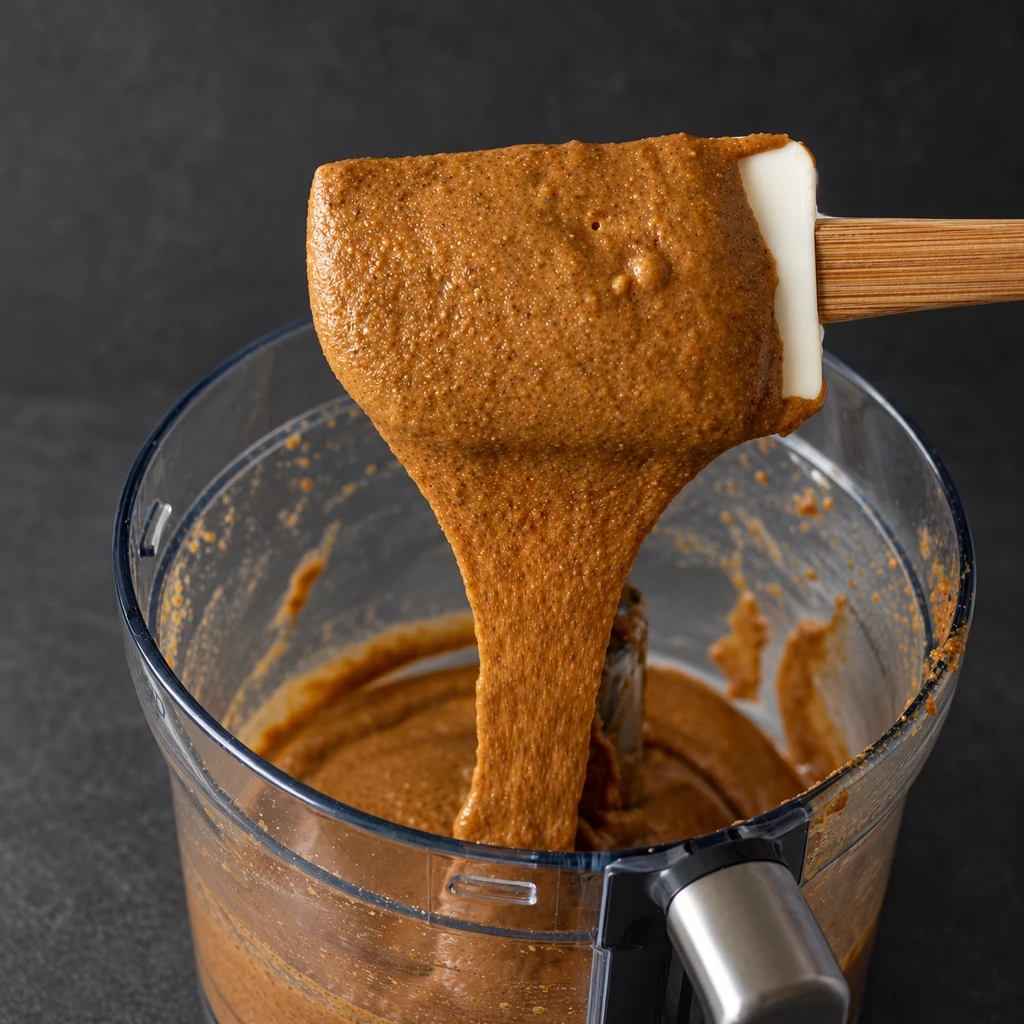
- Blend into a paste. Process the pieces, pausing and scraping down as needed. The mixture will pass through coarse crumbs and a finer meal before becoming a paste as the nuts release oil. Give the machine breaks according to its instructions. Stop at the texture you want: slightly crunchy or as smooth as the equipment can make it.
The nut-to-sugar ratio is 200 g to 200 g. Salt is additional and is given by volume, so different salt crystal sizes can change its perceived strength.
The oven time is a guide. Nuts should smell roasted and look lightly golden, without scorched patches.
No water or cream is added to this praline formula. Do not pour liquid into the processor to force the crumbs to become a paste.
Develop flavour without burning the nuts or sugar
Roasting develops the nut flavour before the nuts meet the caramel. Check the tray rather than relying only on the timer, especially if your oven browns unevenly. Burnt nuts will remain bitter in the finished paste; blending does not remove that flavour.
This is a dry caramel method: the sugar goes into the pan without added water. Start with a thin layer and give it time to melt before adding more. A deep mound of cold sugar over a very hot patch can leave you with burnt caramel underneath and unmelted crystals above.
Keep the work area clear and use heatproof tools. Hot caramel sticks to skin and can cause serious burns. Spread the coated nuts onto a heatproof surface and leave them alone until cold; do not test their temperature with a finger.
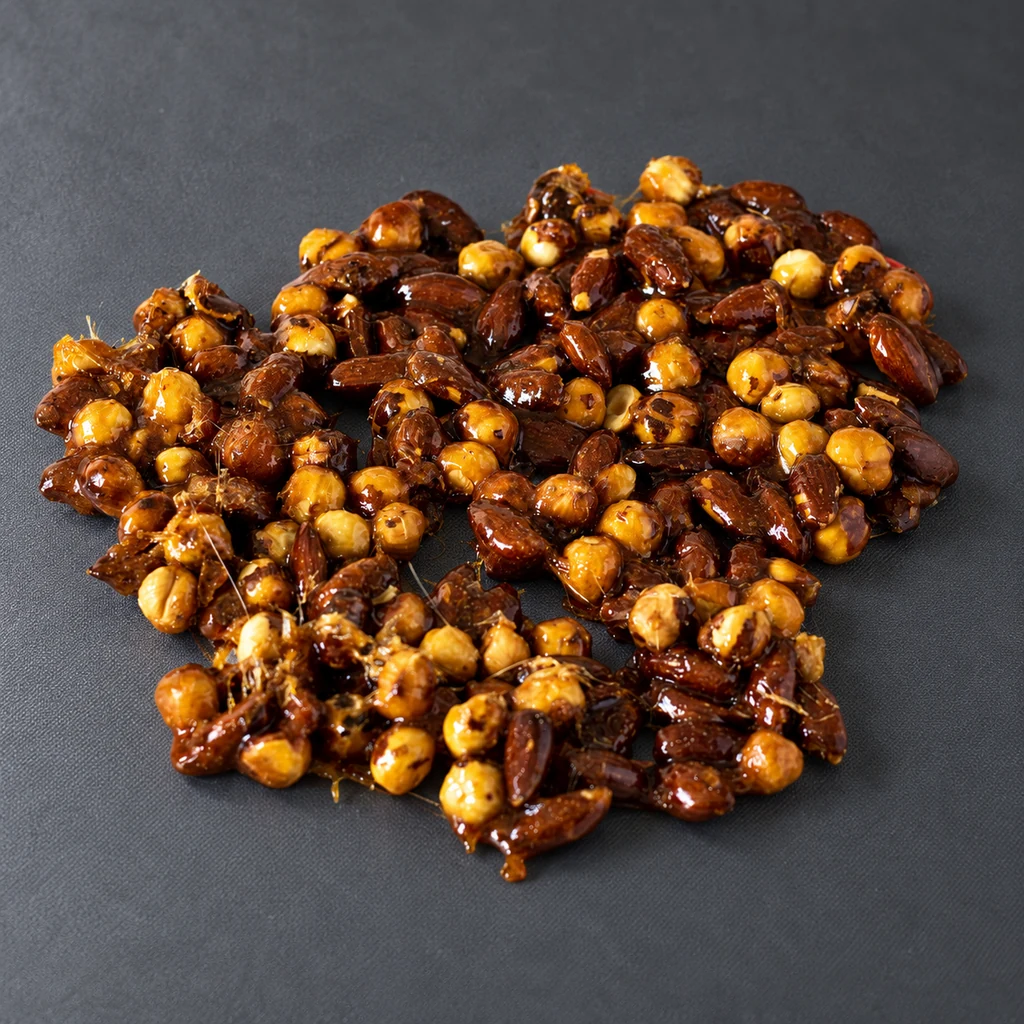
Identify grainy, burnt or unevenly melted caramel before using it in a filling.
Why praline starts as crumbs before becoming a paste
The first processing stage breaks the caramel and nuts into small pieces. A dry-looking meal at this point is normal. Further processing breaks down the nuts enough to release their oil, which binds the particles into a paste.
Scrape down areas that sit above the blades, and avoid filling the processor beyond its recommended capacity. An unsuitable batch size can make the ingredients circulate poorly. If the machine becomes hot or struggles, stop and let it rest rather than holding the motor on continuously.
Home equipment may leave a little texture even when the paste flows. That is different from adding broken pieces deliberately for crunch. Choose the endpoint for the intended use: a creamy filling calls for a finer paste, while a crunchy decoration can stop much earlier.
| Stage | What it means |
|---|---|
| Hard sheet | The nut caramel has cooled and can be broken up |
| Coarse crumbs | Suitable as a crunchy decoration if the pieces are comfortable to eat |
| Fine, dry-looking meal | An intermediate blending stage |
| Thick paste | Released nut oil has brought the mixture together |
| Smoother, flowing paste | Further refining has reduced the particle size |
Use praline in fillings, creams and decorations
Praline paste adds both fat and sugar to a filling. It is useful in chocolate desserts, éclair fillings, macarons and layered cakes, but it should be included as part of a balanced formula. Spoonfuls added at random can make an already soft cream looser or much sweeter.
For a crunchy topping, reserve some fully cooled nut caramel and chop it instead of blending the whole batch. Keep the pieces small enough to eat comfortably. A crunchy layer enclosed in a wet filling will gradually soften, so consider when the dessert will be served.
Use a prepared praline component where the recipe calls for one. Nut butter without caramel is not a direct flavour match: it lacks the caramelised sugar and can have a different consistency. A commercial praline with a different nut percentage may also alter sweetness and texture.
Choose a filling structure before adding a new flavour to an éclair.
Understand the different balances in dark, milk and white chocolate ganache.
Build contrasts between creamy, soft and crunchy components in dessert cups.
Store the paste carefully and adapt it deliberately
Transfer the cooled paste to a clean, dry, tightly closed container. Protect it from heat, light, strong odours and moisture. Use a clean, dry spoon each time, and label the date and ingredients. Nuts can become rancid even in a sugar-rich mixture.
A storage period for plain praline cannot be carried over to a cream, ganache or filled chocolate made with it. Once dairy, fruit or other ingredients are added, the finished recipe has its own storage requirements.
Other nuts can create interesting flavours, but start with a separate, recorded variation. Keep track of the nut type, roast and sugar proportion. Changing the ratio is a recipe change, not simply a way to rescue a processor that has not yet made a paste.
Common questions
What does 50:50 praline mean?
It means equal starting weights of nuts and sugar. Here that is 200 g total nuts and 200 g sugar, with salt added separately.
Is praline paste the same as nut butter?
No. Praline includes caramelised sugar as well as nuts. Plain nut butter usually has no caramel and will not give the same sweetness, flavour or balance in a filling.
Why is my praline still powdery?
It may be at an intermediate blending stage. Check the appliance capacity, batch size and circulation, then continue in suitable intervals. Do not overheat the motor or add water to force the change.
Do I have to remove every hazelnut skin?
No. Rub off the loose skins after roasting. More complete removal gives a lighter-looking paste, but a few remaining traces are not a reason to discard the batch.
Can I stop before the mixture becomes smooth?
Yes. Cooled, chopped nut caramel can be used as a crunchy component. Choose the particle size for comfortable eating and remember that moisture in a dessert can soften the crunch.