
Cakes & pastry
Fruit Jelly with Gelatin
For a chilled fruit jelly, arrange prepared fruit in serving glasses, dissolve bloomed gelatin into a warm lemon-sugar syrup and pour it over the fruit. Refrigerate until set. Reserve the gelatin’s soaking water from the measured total, and use cooked or canned pineapple and kiwi rather than raw fruit that can interfere with setting.
4 min read

Choose fruit that suits the setting method
Cut the fruit into pieces that are comfortable to eat with a spoon. Firm berries and neatly cut fruit give a clear pattern in individual glasses. Very soft fruit can break down while you arrange it or when warm syrup is poured over it.
Some raw fruits, including pineapple and kiwi, contain enzymes that can interfere with gelatin. Use a suitable cooked or canned version for this dessert. A quick splash of hot water is not a reliable way to treat every piece.
Serve the jelly in glasses for the simplest result. Unmoulding demands a firmer set and depends more strongly on the gelatin strength, fruit and size of the mould.
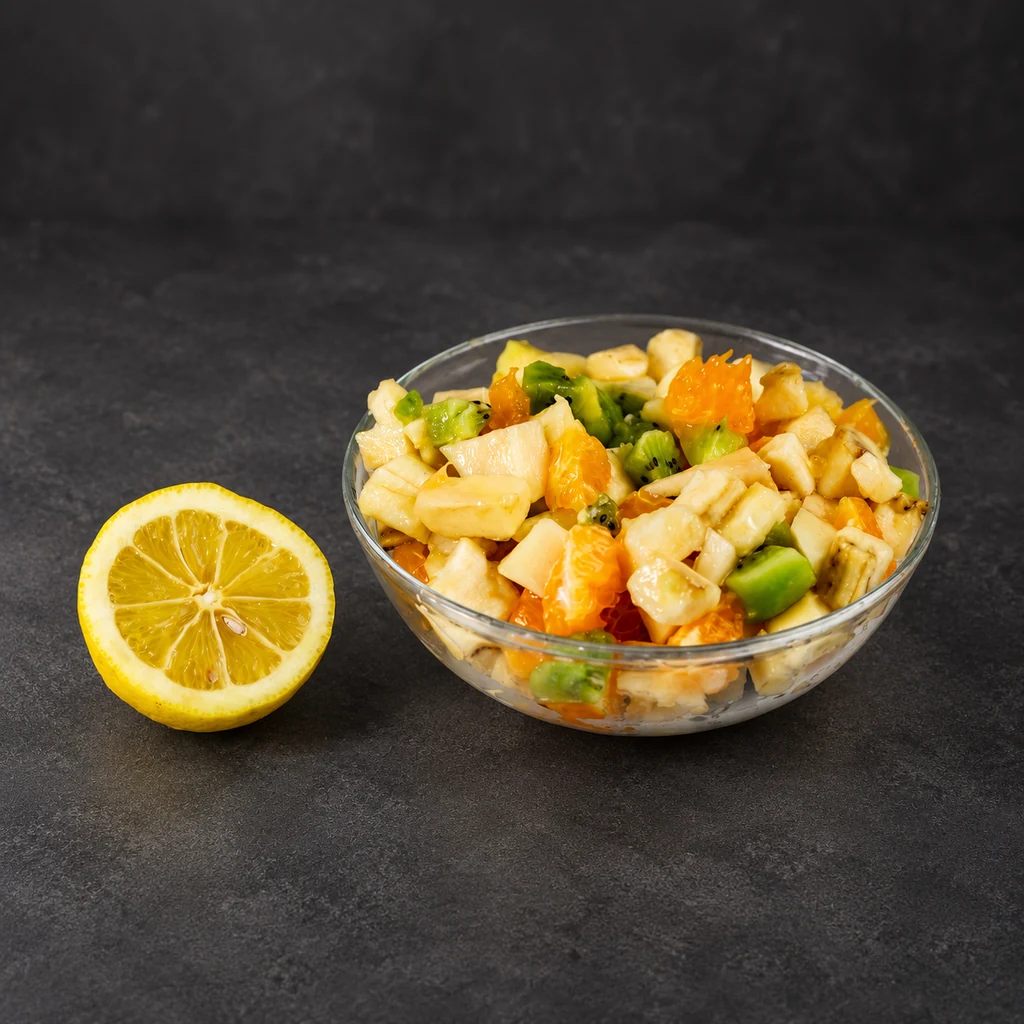
Prepare the fruit and syrup
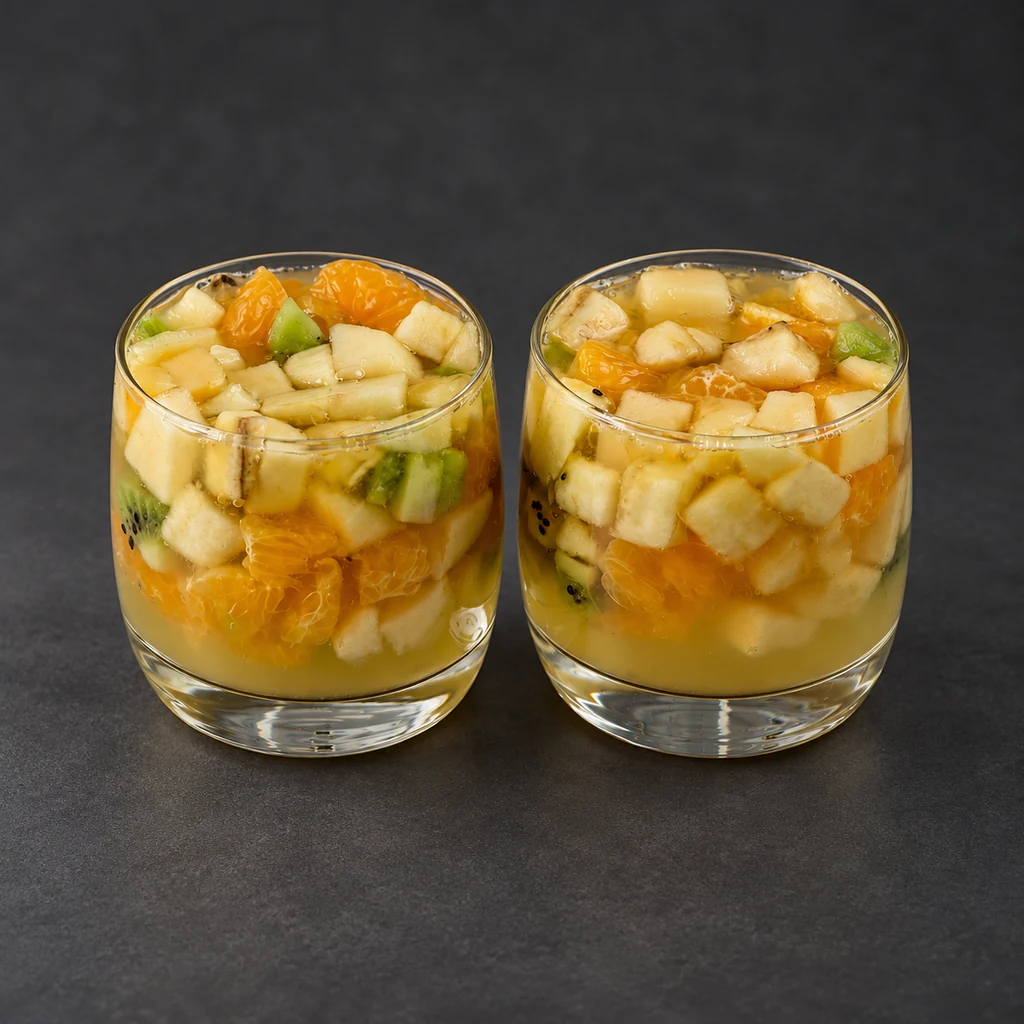
Fruit jelly in serving glasses
Ingredients
- 330 g prepared fruit or berries
- 60 g sugar
- 1/2 lemon, juice reserved
- 250 ml total water, including the portion used to bloom gelatin
- 10 g powdered gelatin
Method
- Bloom the gelatin. Reserve part of the measured 250 ml water as cold soaking water, following the gelatin packet’s hydration instructions. Sprinkle in the gelatin and let it hydrate fully.
- Prepare the fruit. Wash and prepare the fruit, using cooked or canned versions where needed. Cut into small pieces and toss gently with the juice from half a lemon.
- Make the syrup. Heat the remaining measured water with the sugar until the sugar dissolves and the syrup reaches a boil. For more lemon aroma, add the clean spent lemon half briefly, then remove it and strain the syrup.
- Dissolve the gelatin. Remove the syrup from the heat. Add the fully bloomed gelatin and stir until dissolved. Do not keep boiling after adding it.
- Fill the glasses. Arrange fruit in clean serving glasses. Let excessive heat leave the syrup, then pour it over the fruit without crushing the pieces.
- Chill to set. Refrigerate undisturbed until the jelly is set through the centre. Keep refrigerated until serving.
Gelatin strength and fruit composition affect firmness. Check your product’s recommended liquid ratio before making an unmoulded version.
All blooming water comes from the stated 250 ml; do not add an unmeasured extra portion.
Hydrate before heating
Blooming allows dry gelatin to absorb water evenly. A dry clump dropped into hot syrup may develop a hydrated outside while powder remains trapped inside. Use cold water and give the powder time to swell before dissolving it.
The syrup should be warm enough to dissolve the gelatin completely. Stir through the base of the pan and inspect for visible grains before pouring. If gelatin has not dissolved, longer refrigeration does not correct the uneven distribution.
Use the total water carefully. Adding a generous extra bowl of soaking water dilutes the dessert and can leave it much softer than intended.
Compare gelatin with agar before changing the gelling ingredient.
Build the fruit pattern in the glass
Small portions cool and set more evenly than one deep bowl. Leave enough room above the fruit for the syrup without filling each glass to the rim. Move the glasses carefully so fruit pieces do not shift into one crowded corner.
If you want fruit suspended at different heights, let a thin first layer begin setting before adding the next layer. Keep the remaining syrup fluid but not hot enough to melt the first layer. This takes longer than filling the glasses at once.
Judge the set at the centre, not just at the cold surface. The dessert should hold the fruit and yield cleanly to a spoon. If a test portion does not set, review gelatin measurement, hydration, total water and fruit choice before repeating the full batch.
Serve as a fresh refrigerated dessert
Keep the portions covered in the refrigerator once cool and set. Fresh fruit remains a perishable ingredient even though it is surrounded by jelly. Make the dessert close to serving and use clean utensils.
This is a chilled dessert, not a canning recipe. Pouring it into a jar and closing the lid does not establish a room-temperature storage life. Gelatin also gives a different texture from the pectin used in many fruit preserves.
For a layered dessert, combine components only after considering their temperatures and moisture. A hot cream can melt a gelatin layer; a fully cold layer needs enough strength to support what is added above it.
Common questions
Can I use raw pineapple or kiwi?
Use a suitable cooked or canned version. Enzymes in the raw fruit can prevent a reliable gelatin set.
Is the soaking water extra?
No. Reserve it from the recipe’s total 250 ml water.
Can I unmould this jelly?
The formula is easiest to serve in glasses. An unmoulded version needs a suitable gelatin strength and a verified firm set.
Can I preserve it in sealed jars?
No. This is a fresh refrigerated dessert, not a tested canning process.