
Cakes & pastry
Condensed Milk Custard for Layer Cakes
This custard combines milk, eggs, flour and sweetened condensed milk, then takes in butter while still hot. Cooking thickens the base; chilling firms the butter. It is designed for layered cakes, especially flaky pastry layers, and should be cooled before assembly.
4 min read
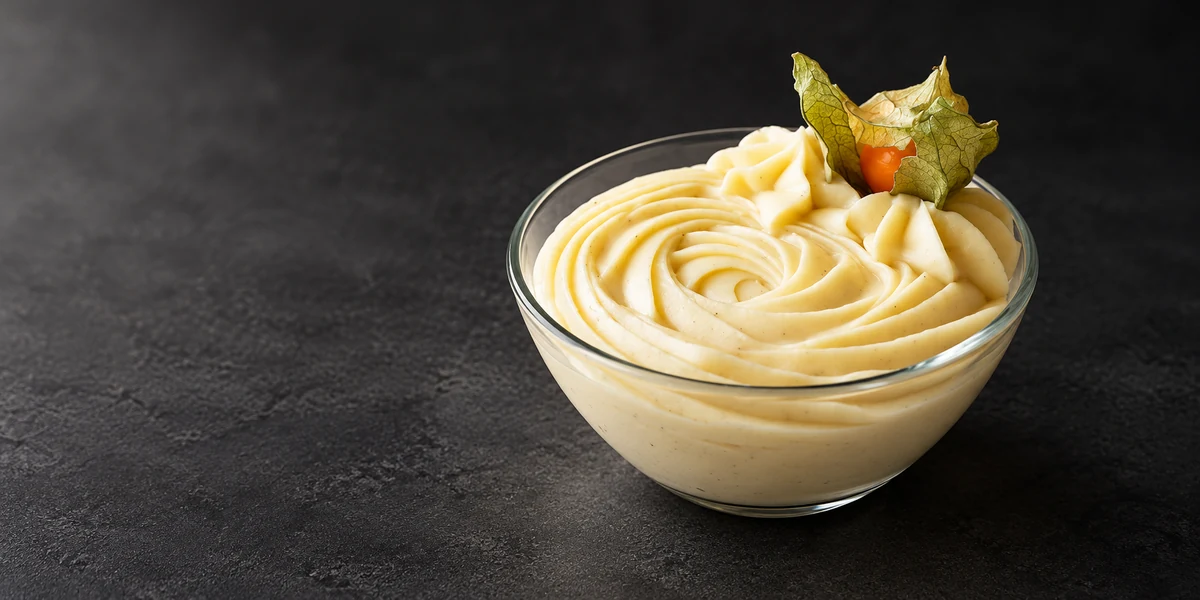
Cook the dairy-and-egg base first
Although this filling contains a substantial amount of butter, it is not made by whipping condensed milk into soft butter. The eggs, flour and milk are cooked together first, and the butter is incorporated into the hot custard.
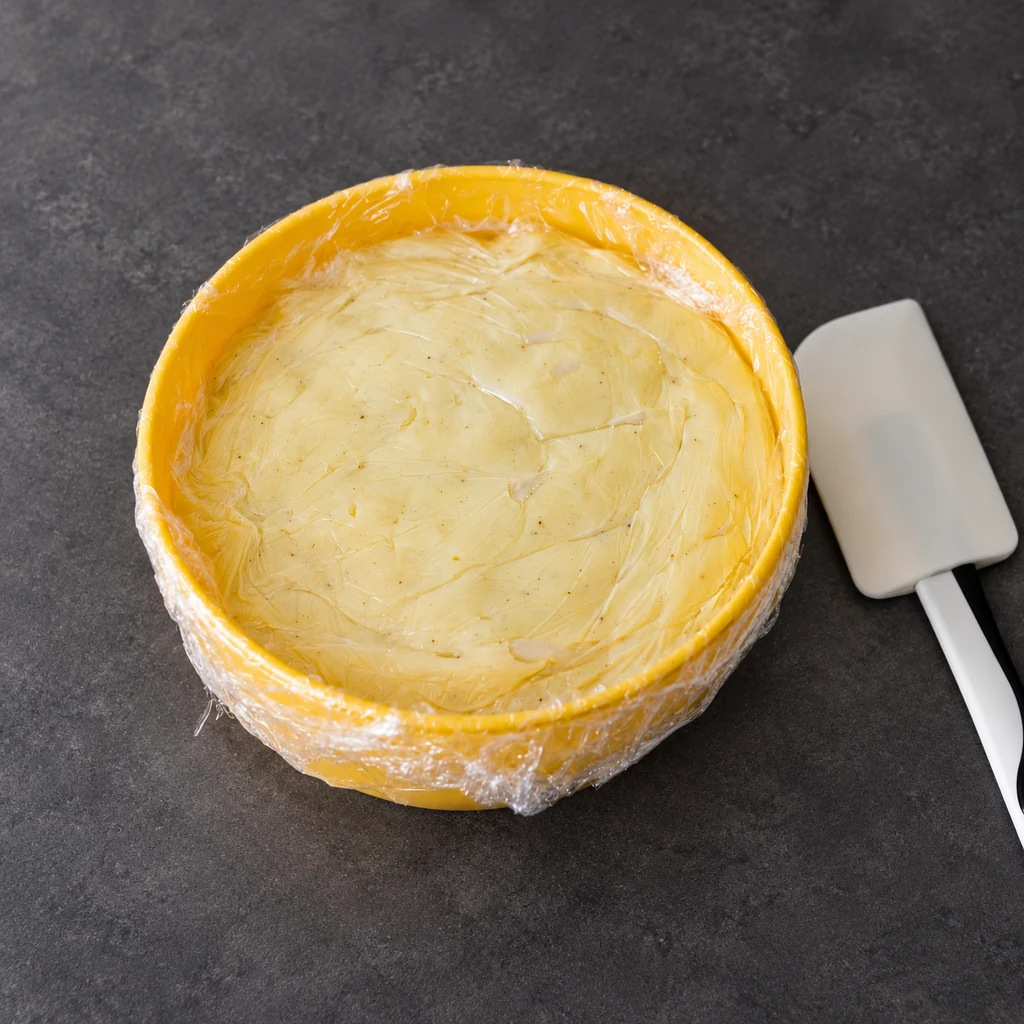
The finished texture depends on both cooking and cooling. A base that is still thin will not behave like one cooked to a proper custard consistency, even if both receive the same amount of butter. Prepare a shallow container and a cover for cooling before starting.
Compare with the buttercream made from condensed milk, butter and whipped cream method.
Cook the custard and add the butter
Condensed milk custard
Ingredients
- 300 g milk
- 50 g sugar
- 2 eggs
- 40 g wheat flour
- 250 g unsalted butter, about 82% fat
- 200 g sweetened condensed milk
- to taste vanilla, optional
Method
- Mix eggs and sugar. Whisk the eggs with the sugar until evenly combined.
- Add condensed milk and flour. Mix in the sweetened condensed milk, then the flour. Work out dry pockets before adding the remaining liquid.
- Add milk. Pour in the milk and whisk until the mixture is completely uniform.
- Cook. Heat in a heavy saucepan over moderate to gentle heat, stirring constantly until the custard thickens and the flour is cooked. Scrape the bottom and corners so the base does not catch.
- Strain if needed. If small lumps remain, pass the hot custard through a sieve. Straining cannot remove a burnt flavour.
- Add butter. While the custard is hot, add the butter in two or three additions and stir until fully incorporated. Add vanilla if using.
- Cool. Transfer to a shallow container, cover the surface, cool promptly and refrigerate until ready for assembly.
As a planning reference, this quantity is used for a 16 cm, nine-layer Napoleon-style cake including a thin crumb coat. Actual needs depend on layer thickness and filling depth.
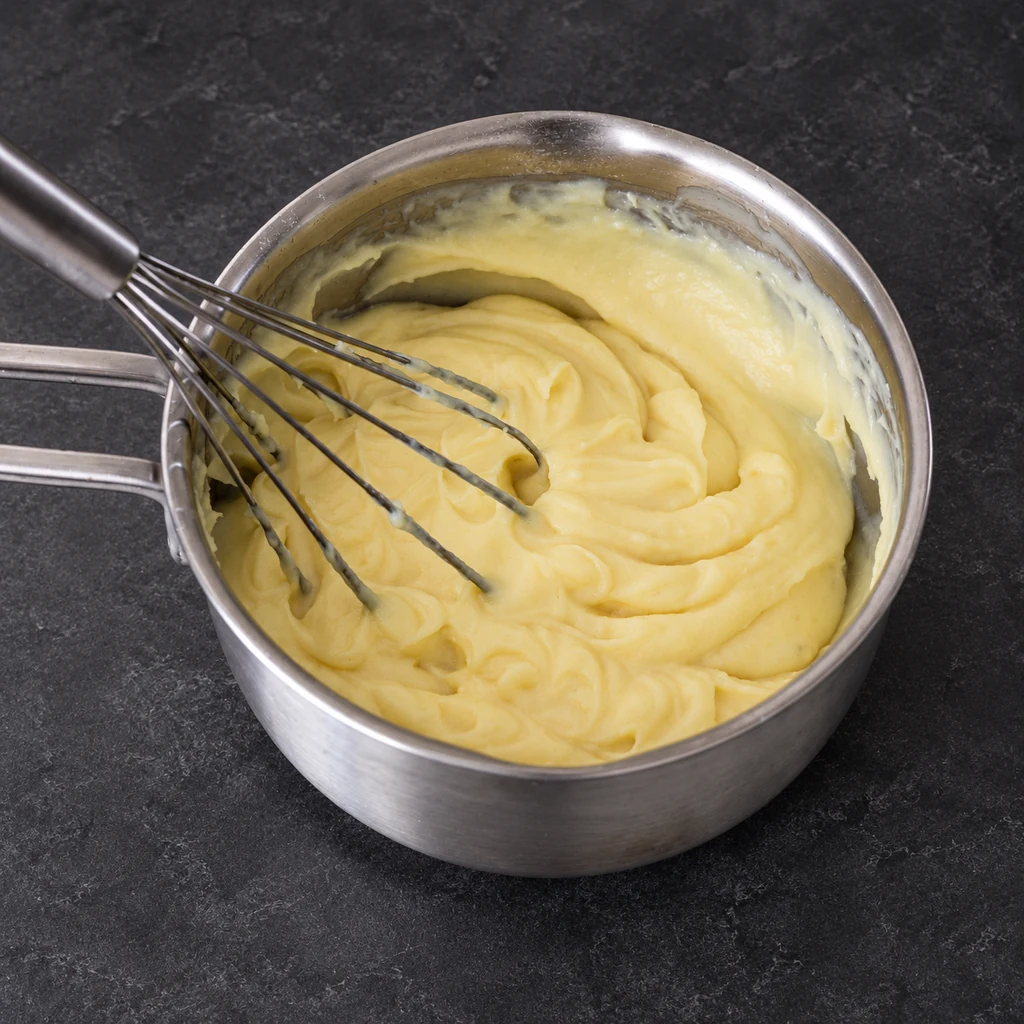
Prevent lumps before the pan heats
Mix the flour into the egg-condensed-milk base thoroughly before adding all the milk. A smooth cold mixture is easier to cook evenly than one with dry flour hidden inside clumps.
Keep stirring while the cream heats. The bottom of the saucepan thickens first, so scraping it is part of cooking, not an occasional extra step. If the stove heats aggressively, lower the heat; a heavy pan helps distribute it.
A water bath can offer gentler heating, but it takes longer. Whichever method you use, the endpoint is a fully cooked, evenly thick custard. Stop and assess if the base smells scorched instead of trying to bury that flavour in more sugar or vanilla.
Check the cooking and cooling stages before trying to make a loose custard firmer.
Weigh the filling between layers
For a consistent cut, weigh a similar amount of cream onto each layer and reserve the exterior portion in advance. Keep the stack level as you build it. The butter firms during chilling, but the custard still contains moisture that gradually softens pastry.
Do not promise that a custard-filled flaky cake will remain completely crisp indefinitely. Assembly time, layer thickness and cream quantity determine how much softening occurs. Choose the texture you want and plan the chilled rest accordingly.
A light, evenly distributed weight can help a supported layer cake settle, but too much pressure squeezes filling out and crushes delicate layers. Use restraint and check the cake rather than placing an arbitrary heavy object on top.
Choose straightforward ingredients
Use sweetened condensed milk made from milk and sugar and butter with the intended fat content. Dairy spreads or products with a different composition may produce a different set. Vanilla is an optional flavour, not a way to disguise undercooked egg or flour.
Keep the cooled custard covered in the refrigerator and use clean tools when portioning it. A large deep bowl cools more slowly than a shallow container. Keep the assembled dairy-and-egg dessert refrigerated until serving.
If you prefer a cocoa-flavoured cooked filling, use a balanced chocolate custard formula rather than stirring an unmeasured amount of cocoa into this finished batch.
Common questions
Is condensed milk added after cooking?
No. It is mixed into the egg base before the flour and milk, then cooked with them.
When is the butter added?
Add it to the hot cooked custard in two or three portions and stir until incorporated.
Will this keep Napoleon layers completely crisp?
Moisture still migrates into pastry. The amount of cream and the resting time affect how soft the layers become.
Can I remove lumps with a sieve?
Small lumps can be strained from the hot base, but a sieve does not fix a burnt flavour or insufficient cooking.