
Cakes & pastry
Baked Chocolate Cheesecake
This baked chocolate cheesecake has a biscuit base and a cream-cheese filling enriched with dark chocolate. Bake the crust first, fill it with a gently mixed batter, then bake at 150°C in a water bath. A set edge and softly trembling centre tell you more than a completely firm middle; chilling finishes the texture.
5 min read

Use a 20 cm tin and plan an overnight chill
The filling is dense and creamy rather than aerated like a mousse. Room-temperature cream cheese combines more smoothly with the other ingredients, while melted chocolate needs to be warm enough to flow but not hot enough to heat the entire batter.
Choose a 20 cm tin with enough height for the biscuit sides and filling. If the tin can leak, make it watertight before placing it in the water bath, or use a suitable solid tin. The water belongs outside the cheesecake tin. Allow time for a slow initial cooling and an overnight refrigerator rest before slicing.
Compare this baked texture with a layered chocolate mousse cake.
Make and pre-bake the biscuit crust
The crumbs should look loose in the bowl but hold together when squeezed. The recipe uses softened butter; mix it through thoroughly before deciding whether the milk needs a small adjustment.
Chocolate biscuit crust
Ingredients
- 400 g chocolate biscuits or cookies
- 100 g unsalted butter, softened
- 30 g milk
Method
- Crush the biscuits. Reduce the biscuits to fine crumbs using a food processor, or place them in a sturdy bag and roll with a rolling pin.
- Bind the crumbs. Mix the softened butter evenly into the crumbs, then add the milk. Squeeze a little mixture in your hand: it should hold together. If your biscuits are unusually dry, add only a little extra milk as needed.
- Line the tin. Press the mixture into the base and up the sides of the 20 cm tin. Aim for an even layer rather than a thick corner where the base meets the wall.
- Pre-bake. Bake at 180°C (356°F) for about 15 minutes. Remove and allow the crust to cool before adding the filling.
The 30 g milk is the starting quantity; biscuit absorbency varies. Do not make the crumb mixture wet.
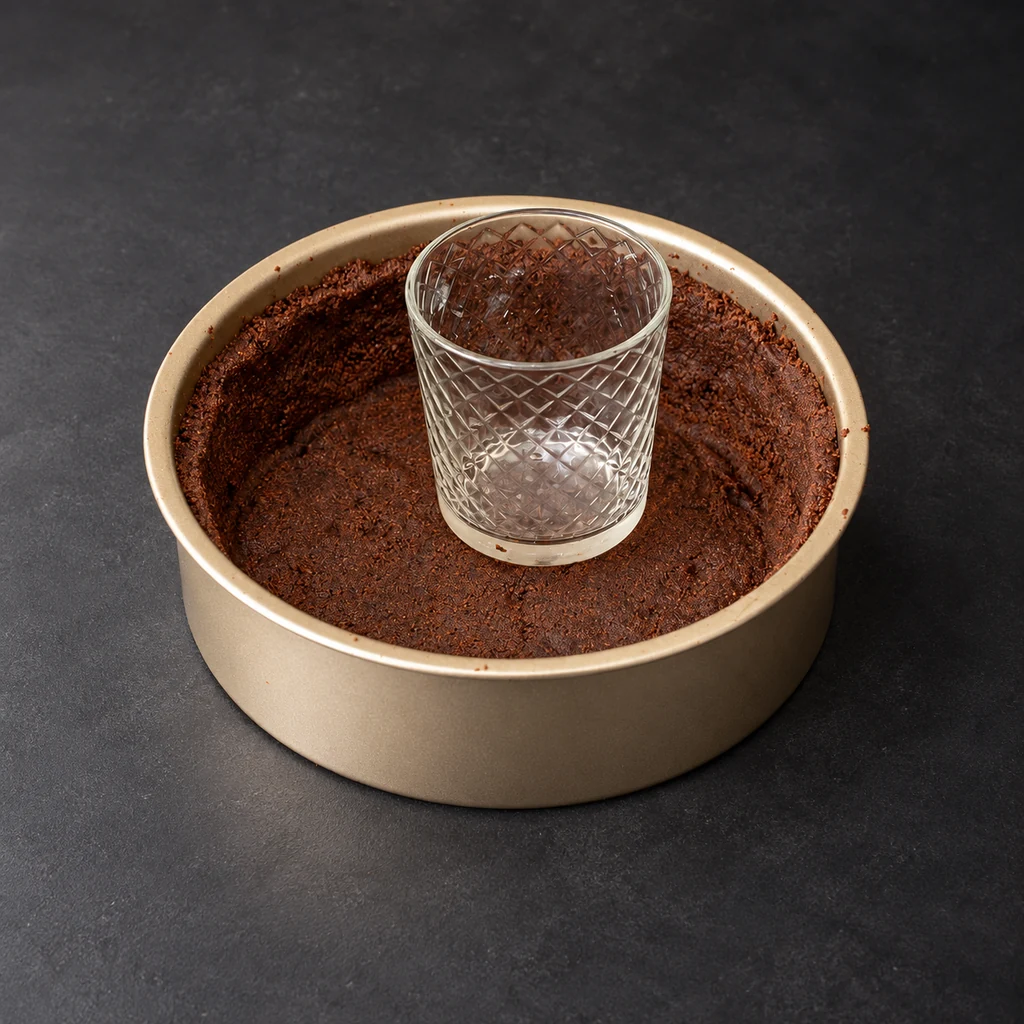
Mix and bake the chocolate filling
Beat only enough to smooth the cream cheese, then mix rather than whip. Excess air can rise and collapse during baking. Add the eggs after the chocolate mixture is incorporated, keeping the mixer slow.
Dark chocolate cheesecake filling
Ingredients
- 600 g full-fat cream cheese
- 200 g whipping cream, 33% fat
- 150 g dark chocolate, chopped
- 80 g icing sugar
- 3 eggs
Method
- Smooth the cheese. Mix the cream cheese with the icing sugar until smooth, scraping the bowl as needed.
- Melt the chocolate. Combine the cream and chopped chocolate in a microwave-safe bowl. Heat on low power in short intervals, stirring until the chocolate has melted and the mixture is smooth. Let excessive heat dissipate.
- Combine. Mix the chocolate cream into the cream cheese. Add the eggs and mix gently until uniform; do not deliberately whip the filling.
- Prepare the bath. Pour into the cooled crust. Put the protected tin in a larger roasting tin and carefully add hot water around it, keeping water out of the cheesecake.
- Bake gently. Bake at 150°C (302°F) for approximately 50–60 minutes. The outer part should look set while the centre still trembles gently when the tin is nudged; it should not slosh like liquid.
- Cool gradually. Switch off the oven and leave the door slightly open for about an hour. Remove the cheesecake, let the remaining excess heat escape, then refrigerate overnight before unmoulding and cutting.
Remove the cheesecake tin from the bath carefully. Do not leave a dairy-and-egg dessert standing out indefinitely while waiting for perfect room temperature.

Control lumps, bubbles and cracks
Cold cream cheese is harder to smooth, so soften it before mixing rather than trying to beat lumps out of a finished egg-rich batter. Scrape down the bowl between additions and make sure the cream-chocolate mixture is homogeneous.
A water bath moderates heat around the tin, but it cannot correct a leaking base or excessive baking. Keep the filling below a vigorous puffing stage. If the centre becomes completely rigid in the oven, the cheesecake can be drier after chilling.
A small surface crack does not automatically mean the whole cake has failed. Once cold, assess the texture before covering the top. For the next batch, review mixing speed, oven temperature, baking endpoint and the cooling sequence rather than changing every ingredient.
Check chocolate that has become thick and grainy before using it in the filling.
Slice cold and keep the finish simple
Unmould after the overnight chill, when the filling and crust can support a clean edge. Use a sharp knife, warm and wipe the blade between cuts, and cut through the biscuit base deliberately rather than dragging it.
Fresh berries, a little grated chocolate or a thin drizzle provide contrast without hiding the cheesecake texture. Add wet toppings near serving. Store the finished cake covered in the refrigerator and follow the shortest storage guidance of the dairy ingredients and any toppings you add.
If you need a different diameter, scale the recipe deliberately and monitor the new baking depth. A larger surface area with the same batter amount makes a thinner cheesecake and changes the baking behaviour.
Common questions
Can I use a springform tin in a water bath?
Yes, if it is properly protected from leaks. Water must stay outside the cake tin; a leaking base can soak the crust.
Should the centre be firm when I switch the oven off?
The edge should be set but the centre should still tremble gently. It firms further during cooling and chilling.
Why chill overnight?
Chilling allows the filling to firm and the chocolate to set, which makes the cheesecake easier to unmould and slice.
Can I replace dark chocolate with white chocolate?
That changes sugar, cocoa solids and the setting balance. Use a formula designed for white chocolate rather than assuming a direct swap gives the same result.