
Learn to hand-fold five dumpling traditions from scratch: Russian pelmeni, Eastern European vareniki (savory and sweet), Georgian khinkali, Japanese-style gyoza, and, on Signature, Italian ravioli. Master the dough, the filling and the fold for each one, then batch-shape and freeze your own stock so a real homemade dinner is always one pot of water away.
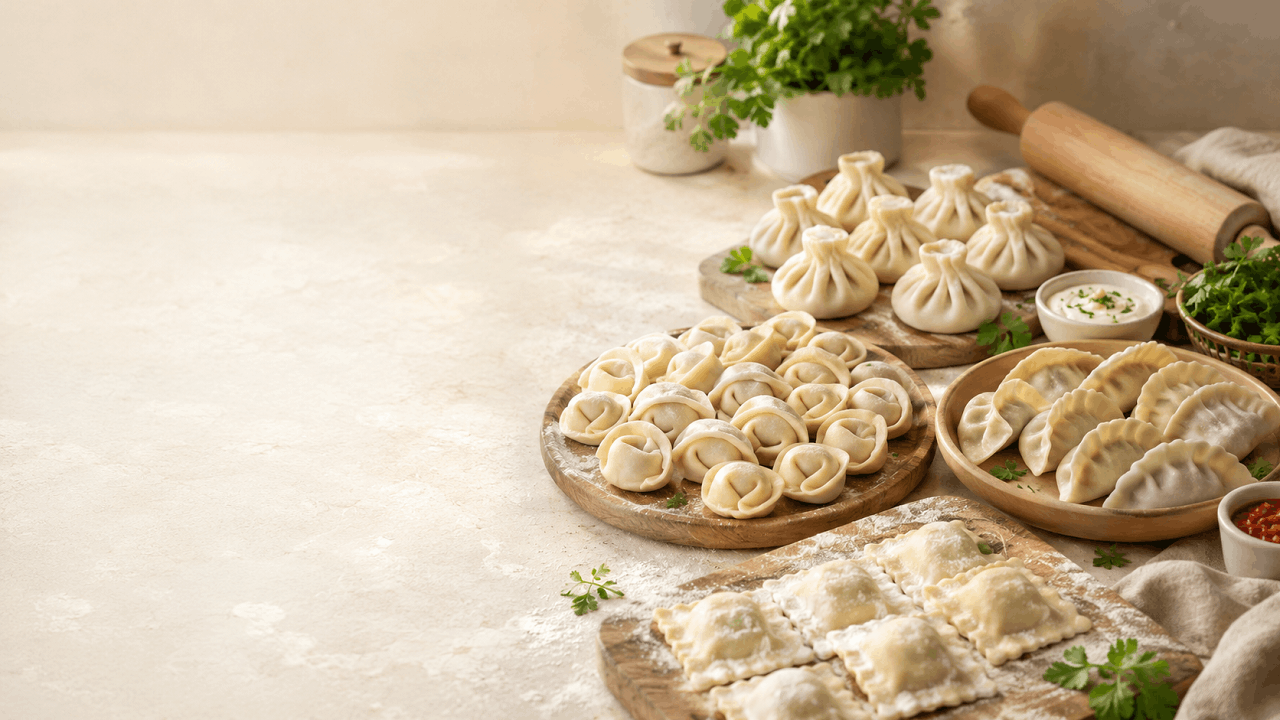
Pelmeni, vareniki, khinkali and gyoza look simple from the outside. The result actually depends on dozens of small details: the dough, the filling, the fold, the freeze and the cook.
Too dense and it's a chore to roll and eat. Too soft and it sticks, tears and won't hold the filling.
There seems to be enough meat, but after boiling you get a dense, dry lump instead of something juicy, especially with poultry, fish or lean meat.
A weak seam, dough that's thin in the wrong spot, or filling that releases too much moisture, and half the batch stays in the water.
You shape a beautiful batch, freeze it, and the pieces crack, stick together or come out completely different after cooking.
Pelmeni, vareniki, khinkali, gyoza and ravioli cannot be made the same way. Each one has its own dough, filling, fold and cooking method.
Not one recipe you memorize, but a clear base: which dough for which style, how to keep a filling juicy, and how to fold, freeze and cook so the result is consistent.
The result is not shaping one batch once. It is a home stock you can rely on for family dinners, guests or a fast weeknight meal.
The course opens with a short history of pelmeni, because where a dumpling comes from tells you how it wants to be folded, boiled or fried. If some of these names are new to you, here is what each one actually is.
Small, thin-skinned dumplings with a raw meat filling, boiled and served with sour cream, butter or broth. Traditionally the whole family shapes a huge batch at once and freezes it for the winter, which is exactly the habit this course builds.
Ukrainian by origin and eaten across Eastern Europe. Bigger than pelmeni, with a thicker, softer dough. The filling can be savory (potato, mushroom, braised cabbage) or sweet (farmer's cheese, cherry, rhubarb), which makes them the most versatile of the five.
Large, hand-pleated Georgian dumplings twisted shut into a top knot. The filling releases broth as it cooks, so you hold the knot, bite a small window, drink the broth first, then eat the rest and leave the knot on the plate.
Thin wrappers, pan-fried on one side and then steamed in the same pan, so the bottom turns crisp while the top stays silky. Known in much of the West as potstickers, and always served with a dipping sauce.
The one you already know, and the reason it closes the course: fine egg dough, delicate cheese and fish fillings, and a sauce rather than a plain boil. Included on the Signature plan.
Five traditions, one pair of hands. Once you understand dough, filling and the fold, the differences stop being intimidating and start being the interesting part.
Seven dough types, one at a time: how moisture, elasticity and rolling change between pelmeni, vareniki, khinkali, gyoza and ravioli, and how to keep dough pieces from drying out while you shape.
Three pelmeni doughs plus dedicated dough for vareniki, khinkali, gyoza and ravioli, each built for how it needs to fold and cook.
Learn what makes dough tear, toughen or stick, and how to fix it before you start shaping.
How to keep dough pieces from drying out while you fold a full batch, so the last piece is as good as the first.
The specific fixes for the three most common dough problems, before you ever touch a filling.
A repeatable system across five dumpling traditions, not one recipe you memorized.
Pelmeni, vareniki, khinkali, gyoza and ravioli, plus the batching, freezing and cooking system that turns single recipes into a real home stock.
The reference recipe: balanced meat, onion and spice, the base every other filling builds on.
A heartier filling with a rounder, more savory flavor.
A lighter filling that stays juicy even with lean meat.
A milder, earthy filling built around mushroom depth.
A juicier blend that balances two textures in one bite.
A fish version with cream and spinach for a softer, brighter filling.
The classic savory filling, built to actually taste like something.
A savory filling with smoke and depth.
A vegetable filling with real sweetness and body.
A sweet filling built on soft farmer's cheese, the classic dessert version of vareniki.
A bright, fruit-forward sweet filling.
The classic Georgian filling, folded with a twisted top so the broth stays inside instead of leaking out.
A bolder, more aromatic take on the classic.
A juicy filling for the pan-fried and steamed method used in Japanese-style gyoza, served with its own dipping sauce.
A vegetarian filling built for the same fry-and-steam technique.
How to shape a full batch and freeze it without pieces cracking or sticking together.
The seam and timing details that keep a batch intact in the pot.
How to cook straight from the freezer with a pan or oven, not just a pot.
What went wrong and how to fix it: torn dough, dry filling, a weak seam or a clump in the freezer.
How to set up for a real batch, not just a handful of pieces.
The everyday sauce for pelmeni and vareniki.
A richer sauce for a heartier filling.
A simple oil finish that works across most of the program.
A sharper, more savory option.
The classic pairing for the pan-fried and steamed dumplings.
A heartier, more rustic filling.
A rounder, slightly sweet filling.
A more complex, aromatic filling.
A lighter, home-style fish filling.
A seafood version for a more refined batch.
A vegetable filling with a Mediterranean lean.
A sweet filling built for a more festive table.
A tart, fragrant sweet filling.
A deeper, more savory khinkali filling.
A seafood gyoza filling with a bright, umami edge.
The complete sauce module covering all five dumpling styles, with notes on reduction, emulsions and plating.
A creamy, Italian-style filling that shows a different fold and a different dough.
A classic Italian filling, sauced rather than boiled plain.
A cheese-forward filling for a more refined, sauced presentation.
.jpg)
“The main thing is to understand the dough, not fear it. Once you feel it with your hands, everything else is simple.”
Dmitrii is LeChefio's dough specialist, the instructor behind the school's bread, laminated pastry and fresh pasta courses. In this course he teaches the dough for pelmeni, vareniki, khinkali, gyoza and ravioli, so you understand the logic, not just the recipe: moisture, elasticity, rolling, folding, freezing and cooking. His teaching style is calm and direct: no restaurant jargon, just practice and results.
Every technique is a clear video you can pause and rewatch, with a downloadable guide to work from.
Cook it in your own kitchen, step by step, with the theory fresh in mind.
On Studio and Signature, send your work to the team and get specific fixes instead of guesses.
Every plan includes the core program across four dumpling traditions. Signature adds the entire ravioli module, more fillings across every style, and the full 17-sauce collection.
Every plan is a one-time payment with instant access and a 14-day money-back guarantee.
Change your mind within 14 days of purchase and we will refund you.
Finish the lessons and homework on Studio or Signature and receive your certificate.
On Studio and Signature, the team reviews your work and answers questions for 12 months.
One year of access on Essentials and Studio. Lifetime access on Signature.
Is this a course about Russian pelmeni?
Pelmeni is the anchor, but the course covers five traditions: Russian pelmeni, Eastern European vareniki, Georgian khinkali, Japanese-style gyoza and, on Signature, Italian ravioli. Each one gets its own dough and technique.
What if I don't have a meat grinder?
A meat grinder is what the course uses for the meat fillings, but a food processor works for most recipes too. Check the equipment list before you start if you are not sure.
Are there vegetarian filling options?
Yes. The program includes mushroom, cabbage, potato and eggplant vareniki, a mushroom and tofu gyoza, and several sweet vareniki fillings alongside the meat and fish recipes.
How does the freezing and batch-cooking system work?
A dedicated module covers shaping a full batch, freezing it without cracking or sticking, and cooking straight from the freezer by boiling, frying or baking.
Will I get a certificate?
Yes, on the Studio and Signature plans, once you complete the lessons and homework.
What's different about the Signature plan?
Signature adds the entire ravioli module, 10 more fillings across the other four traditions, and the full 17-sauce collection, on top of everything in Studio, plus lifetime access instead of 1 year.
Five dumpling traditions, one system for dough, filling, freezing and cooking, taught step by step by Dmitrii.