
Cakes & pastry
White Chocolate Swiss Meringue Buttercream
This buttercream starts with Swiss meringue: egg whites and sugar are warmed together, then whipped and cooled. Add soft butter only after the meringue reaches about 20–22°C, then mix in melted white chocolate that is no longer hot. The result is a smooth butter-based cream for coating, filling and piping.
4 min read

Warm the sugar and whites together
Swiss meringue differs from the hot-syrup method: the sugar and whites are warmed in the same bowl over a water bath. The cream then receives butter and white chocolate, so it is a different product from butter-free Italian meringue frosting.
Use pasteurised whites labelled for whipping: this method warms the mixture to dissolve sugar, without a specified cooking temperature.
Clean the bowl and whisk thoroughly. A trace of fat or yolk can interfere with the initial foam. Prepare the butter and chocolate before starting so the finished meringue does not wait unnecessarily.
Build the meringue, then the emulsion
White chocolate Swiss meringue buttercream
Ingredients
- 100 g pasteurised egg whites suitable for whipping
- 150 g sugar
- 180 g unsalted butter, about 82% fat, softened
- 100 g white chocolate
- a few drops lemon juice
Method
- Warm the whites and sugar. Combine them in a heatproof bowl over a pan of gently simmering water, keeping the bowl above the water. Stir until the sugar is fully dissolved.
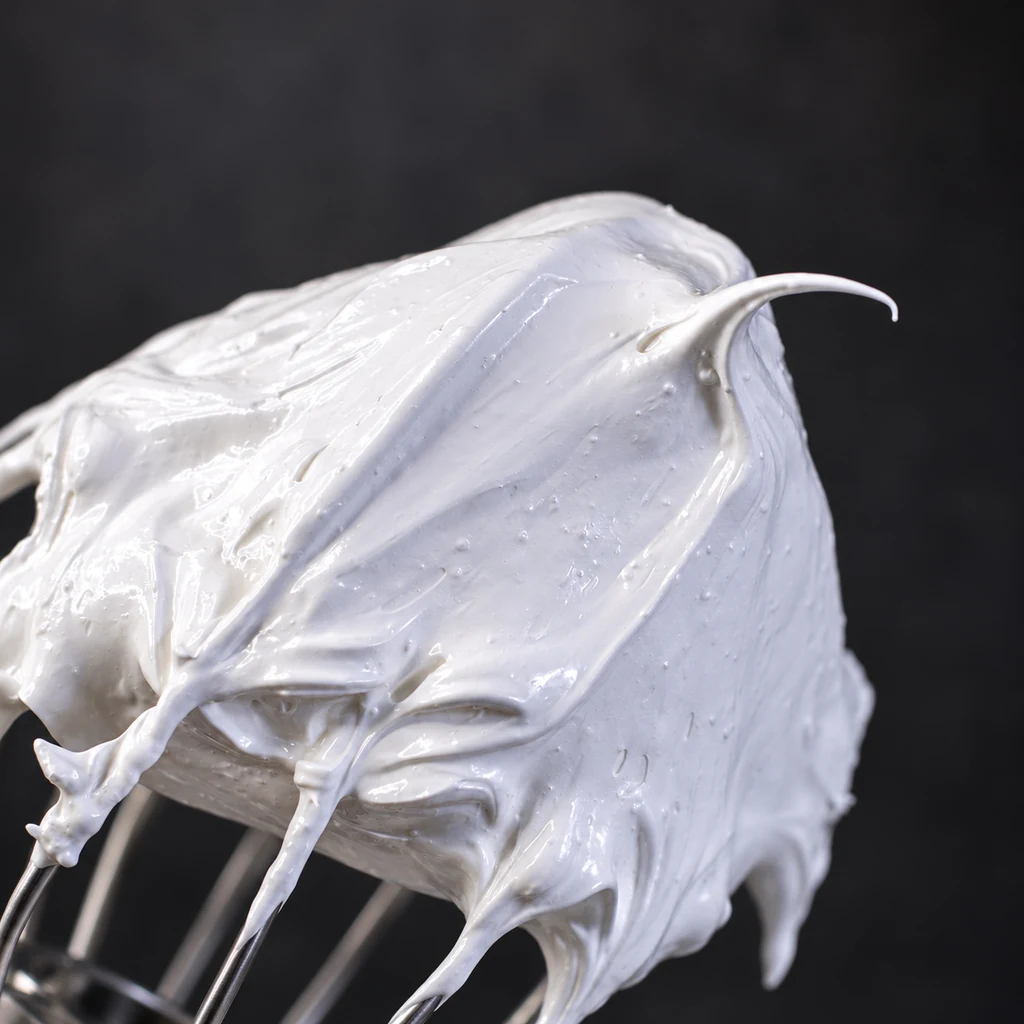
- Whip and cool. Transfer to the mixer bowl, add a few drops of lemon juice and whip, increasing speed gradually, until the meringue is firm and glossy. Continue until the mixture cools to about 20–22°C (68–72°F).
- Add soft butter. Add the softened butter gradually, mixing each addition into the meringue.
- Add chocolate. Melt the white chocolate gently and allow it to cool until fluid but no longer hot. Mix it into the buttercream.
- Finish. Beat until all the components are combined and the cream is smooth. For a cake coating, finish with a spatula or low-speed paddle to remove large air pockets.
Butter that is melted or partly frozen will not behave like soft, pliable butter.
White chocolate should still flow when added; very hot chocolate can melt the butter, while chocolate that has begun to set can form small pieces.

A temporary change in texture needs diagnosis
The mixture can look less uniform while butter is being incorporated. Scrape the bowl and keep the ingredient temperatures in mind before assuming it has failed. A cream with cold butter pieces needs a different response from a warm, soupy mixture.
For a cold, curdled texture, use gentle external warming and mixing. For an overly soft warm cream, chill briefly and then mix again. Apply small adjustments so you do not swing from one extreme to the other.
If the white chocolate formed hard flecks, check whether it cooled too far before addition or met very cold buttercream. Avoid aggressive heating of the whole batch to melt a few pieces; controlling both components before combining is more reliable.
Match the cream to the dessert
Use the cream for a cake exterior, a cupcake cap or a measured layer between sponges. It also works as a richer alternative filling in choux pastries. Its butter and chocolate mean it becomes substantially firmer when chilled.
Pipe at a workable temperature and chill the finished decoration as needed. A cold, firm shape can soften in a warm room, so test the conditions for an event rather than calling the frosting heatproof.
Changing white chocolate to caramel or a liquid flavouring changes the formulation. Small amounts of vanilla are a flavour adjustment; replacing an entire 100 g chocolate component with a different liquid needs its own tested balance.
Chill, thaw and re-mix with care
Keep the buttercream covered in the refrigerator. If freezing it for a later batch, use an airtight labelled container and thaw in the refrigerator before bringing it gradually to working consistency. Re-mix once the butter is pliable.
Storage life depends on ingredients, hygiene and the finished dessert, so do not assume a blanket week in the refrigerator or a fixed freezer period applies to every batch. Keep finished egg-and-dairy desserts cold until serving.
When tasting the final dessert, assess the buttercream at its intended serving temperature. A slice straight from a cold refrigerator will feel much firmer than the same dessert after a brief controlled tempering.
Common questions
Is this Swiss or Italian meringue buttercream?
Swiss: sugar and whites are warmed together over a water bath before whipping.
Why cool the meringue before butter?
Hot meringue can melt the butter and make the mixture loose. Aim for approximately 20–22°C before the butter stage.
Can I omit the white chocolate?
That changes the flavour and structure. Use a formula designed without it rather than assuming the same result.
Does dissolved sugar mean the eggs are pasteurised?
No. Use pasteurised whites labelled for whipping; sugar can dissolve before the eggs are fully cooked.