
A course that teaches the three families of the craft (truffles, slabbed and molded bonbons) as one system built on real chocolate theory. You learn why chocolate behaves the way it does, then prove it with 27 bonbons of your own, or 33 on Signature.
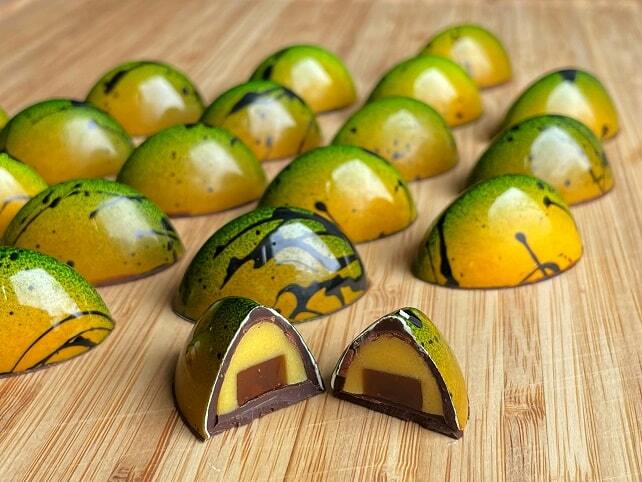
Chocolate is not moody. It is exact. If your batches feel random, the problem is not your hands. It is the theory you were never taught.
Chocolate blooms gray, grips the mold or loses its snap, and the recipe never says why. So you blame the brand, the weather, yourself, and repeat the same mistake with better ingredients.
Ganache splits, caramel leaks, centers dry out instead of staying silky. You followed every step. The balance behind them was never explained.
You spend a whole weekend on a gift box, and it still reads homemade at first glance, however good it tastes. Nothing about it says chocolatier counter.
You can find endless free bonbon videos tonight. What you can't find is a system: theory taught once, properly, with every lesson building on the last.
That's the difference between collecting recipes and learning a craft. By Module 3 you're not copying steps, you're reading chocolate.
A full block of dedicated theory lessons comes before any practice. By the time you make your first ganache, you understand chocolate and fillings so well that mistakes have nowhere to hide.
Exactly what you need for the course, what to buy and what you can safely skip.
What the package actually tells you: cocoa content, fats, and which chocolate to buy for which job.
How chocolate is made, its types and differences, how it stores and why it behaves the way it does.
What tempering really is and why one degree separates gloss from gray streaks. Chocolate, down to the molecule.
How to work with infrared thermometers, even when they lie.
How and with what to wash molds, so every shell releases with a mirror shine.
How to choose one, and whether you need one at all. Every bonbon can be finished without it.
Deeper into the material: every ingredient of chocolate and fillings taken apart, what it does and why it is there.
Filling types, what goes into them, and the ideal scheme for a ganache that never splits.
The course is built to leave you with results you can repeat on purpose, not a folder of recipes.
45+ video lessons with downloadable guides. After the theory block, each family opens with its own intro and you build flavor by flavor.
The family where your hands and palate get calibrated. You learn how ganache emulsifies, why it splits and how to keep it silky, working on hand-rolled centers with no mold between you and the chocolate.
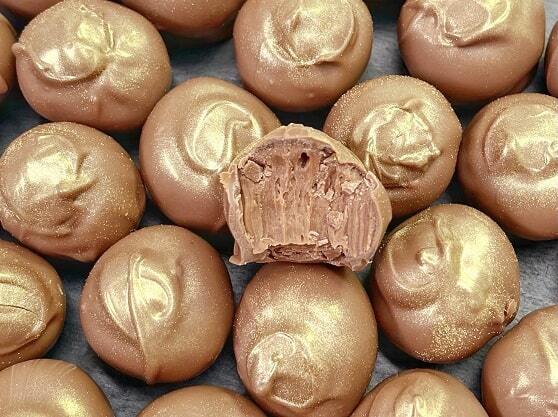
Roll it on your tongue and warm baking spices bloom through soft dark ganache dusted in bittersweet cocoa.
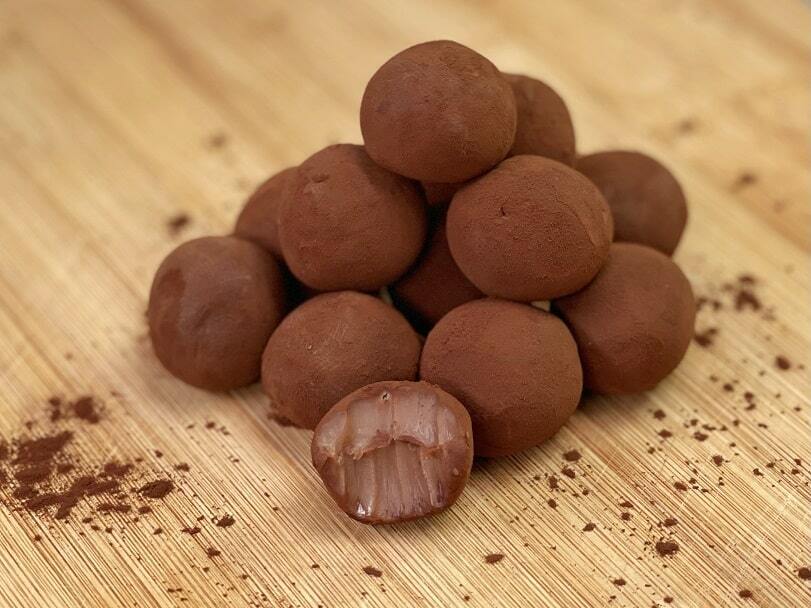
A cocoa-dusted shell gives way to velvety ganache laced with floral honey that lingers sweet and slow.
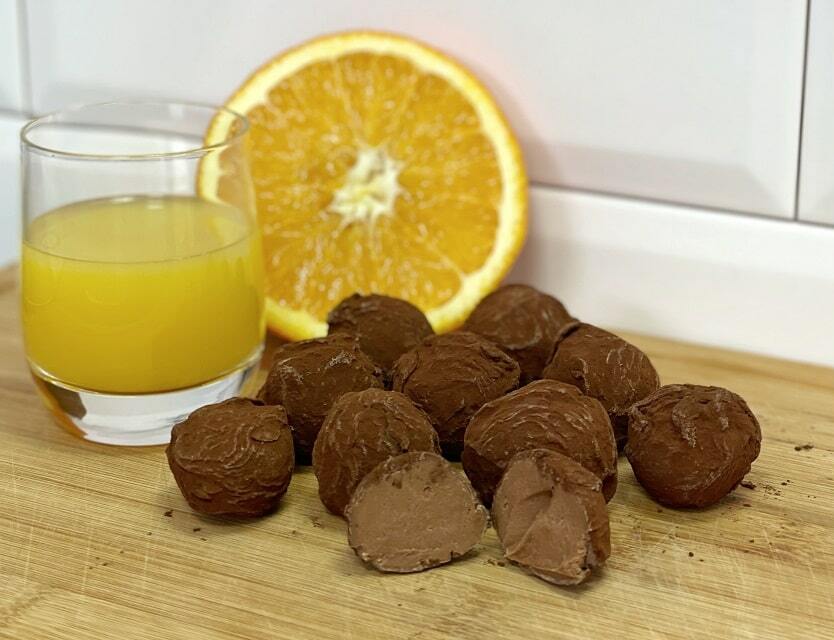
Bite through the cocoa coating into silky ganache brightened by zesty orange oil and candied peel.
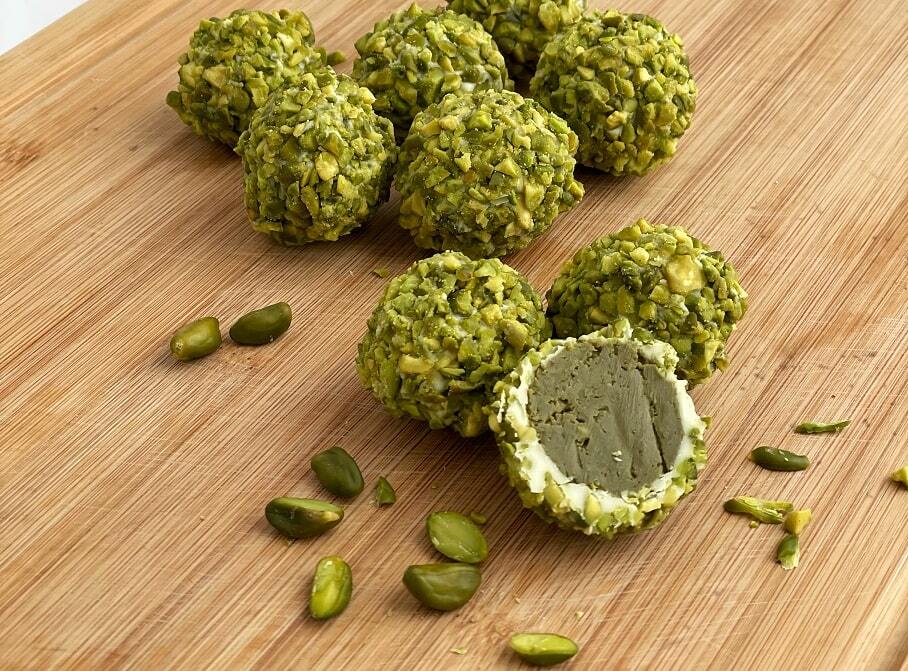
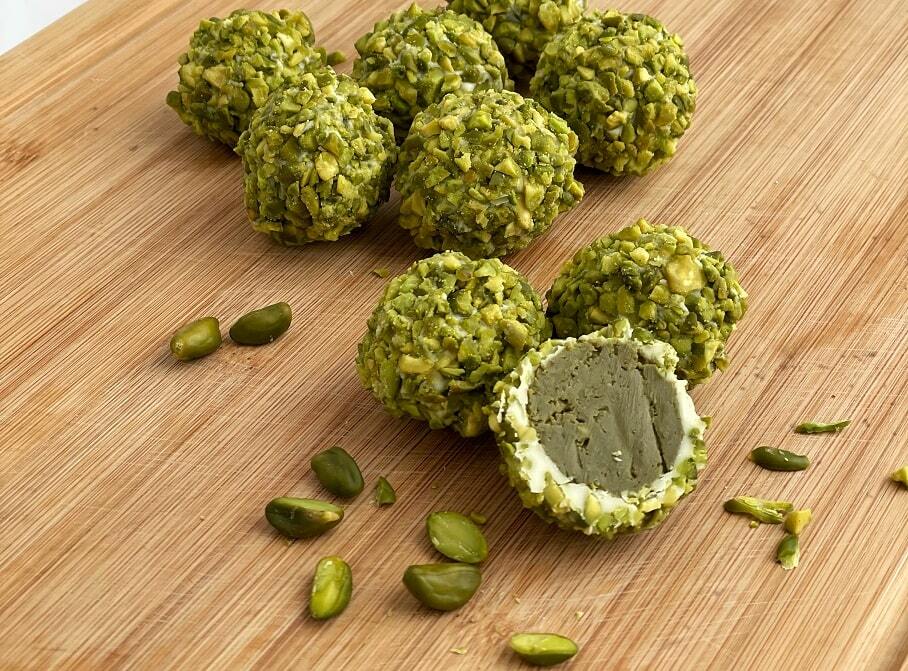
A sculpted green shell cracks to reveal roasted pistachio ganache, nutty and buttery down to the last bite.
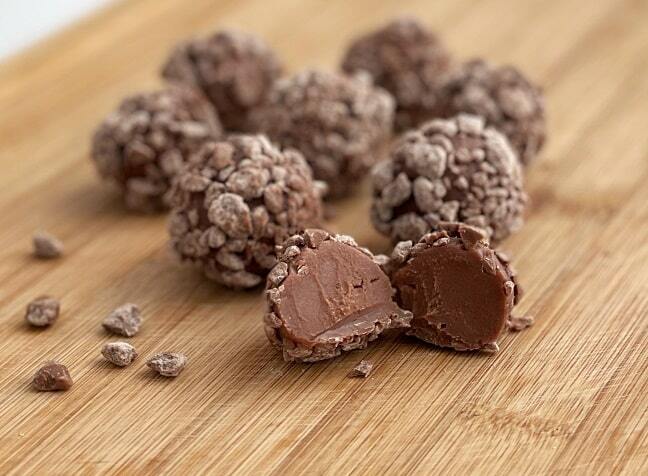
Tart cranberry cuts through creamy dark ganache under a soft dusting of cocoa, tangy against the sweet.
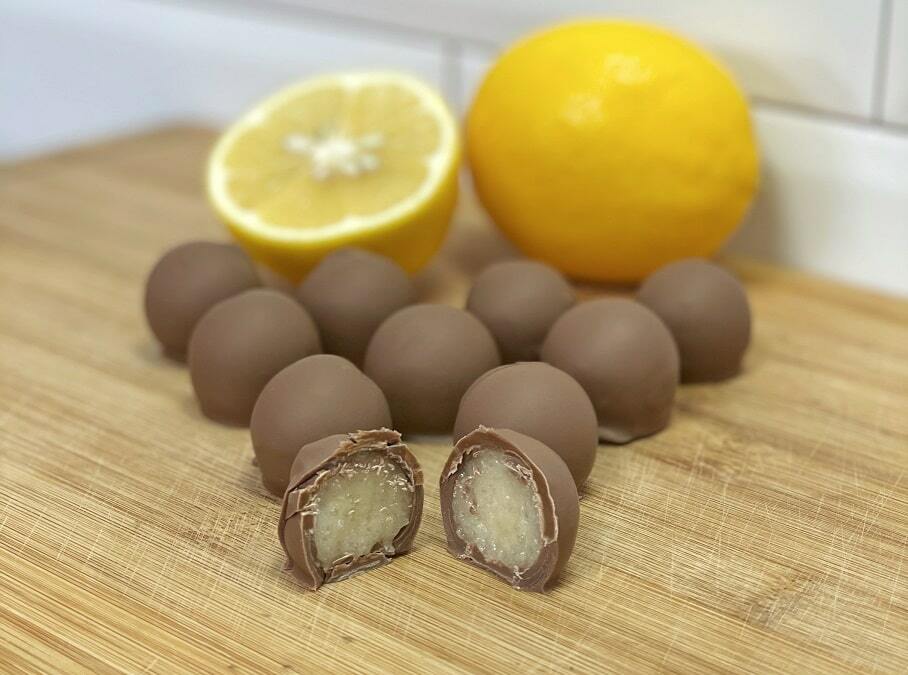
Cool ganache carries bright lemon zest inside a cocoa coat, puckering and smooth in the same mouthful.
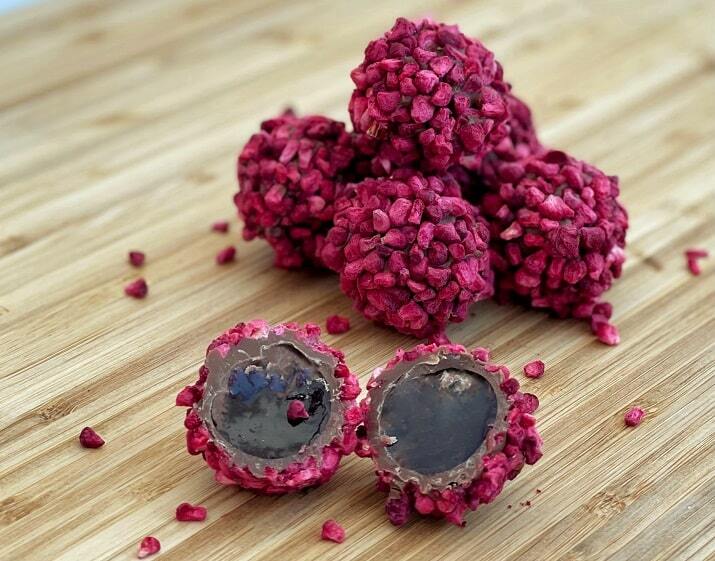
Ripe strawberry meets a green whisper of basil in soft ganache rolled and rounded by hand.
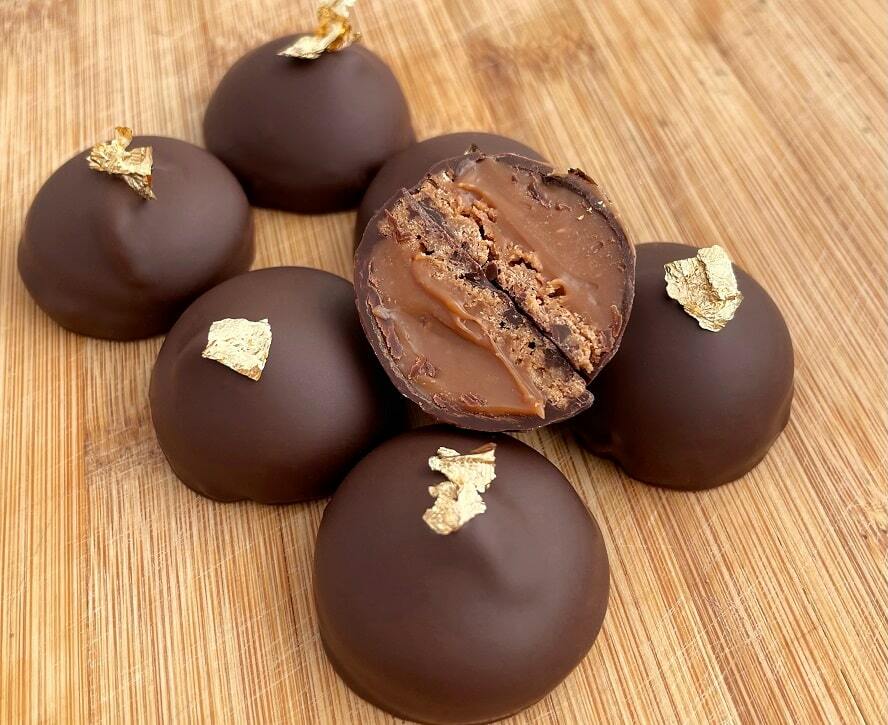
Flowing caramel folds into dark ganache, finished with flaky salt that snaps against every sweet note.
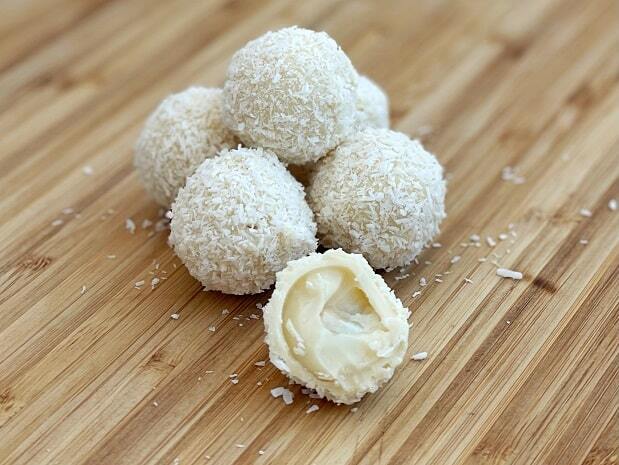
Toasted coconut wraps a creamy white ganache center that melts into tropical warmth on the tongue.
Fillings poured into frames, set and cut into clean squares. This family teaches you to build flavor in layers and control how each one sets, from silky ganache to caramel to pâte de fruit.
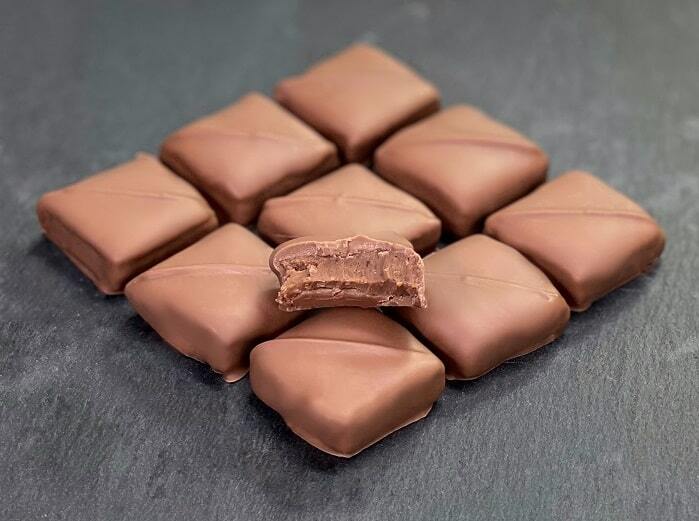
Cut clean from a slab, layered ganache releases dark roasted coffee that deepens with every square.
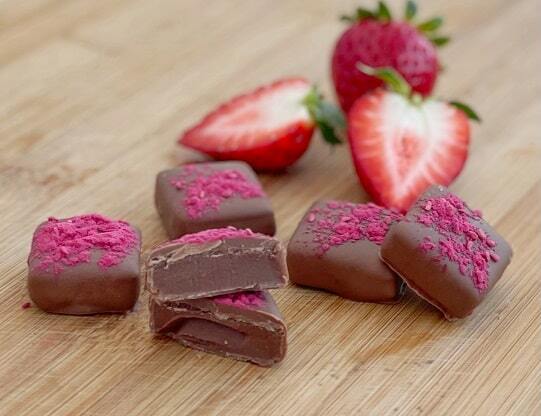
A neat square of layered ganache breaks open to fresh strawberry, bright and jammy against smooth chocolate.
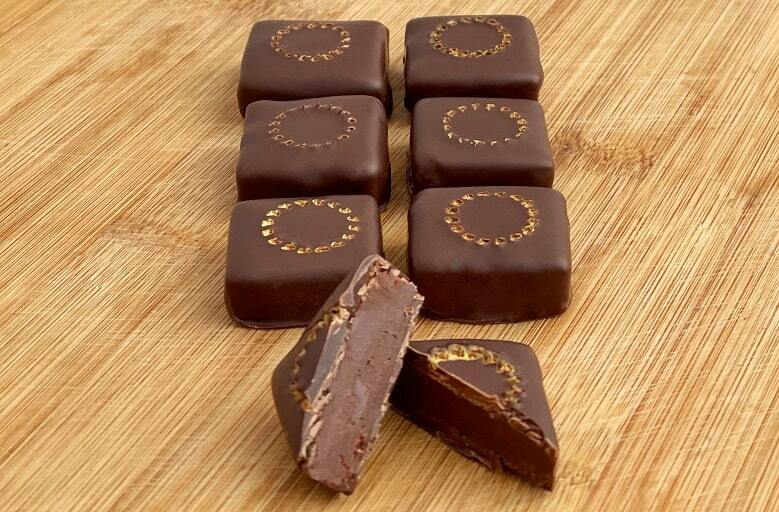
Toasted almond and soft caramel sit in slabbed layers, cut square for crunch, chew, and melt at once.
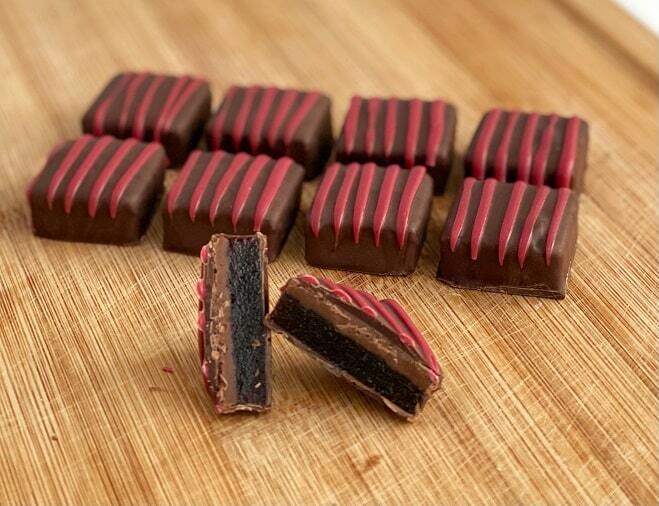
Tart hibiscus and warm cardamom weave through layered ganache, cut into squares that taste floral and spiced.
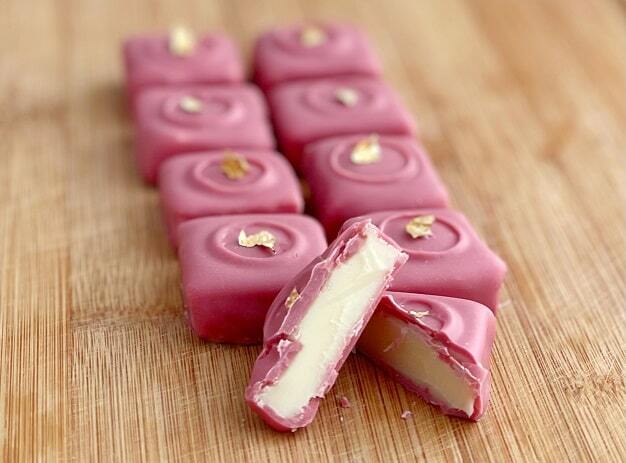
Slabbed ganache carries the blush of rose wine, cut square and softly perfumed as it melts.
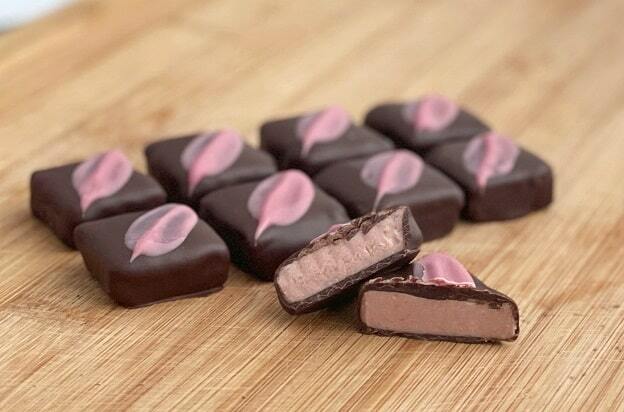
Layered strawberry ganache snaps with a fizzy spark, cut into squares that tingle bright on the tongue.
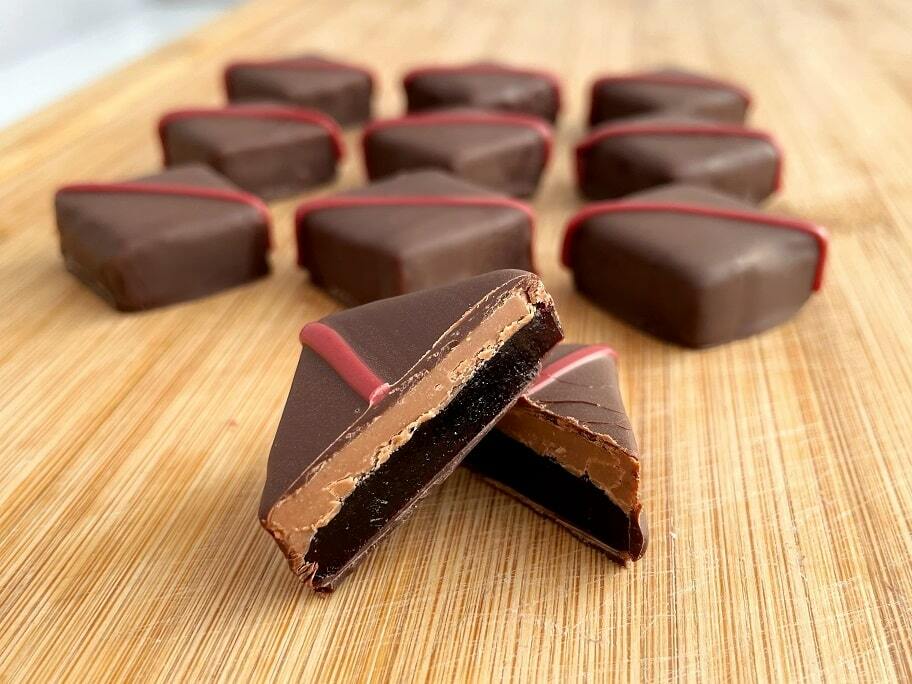
Sour cherry meets roasted peanut in slabbed layers, cut square for a tart, salty, buttery bite.
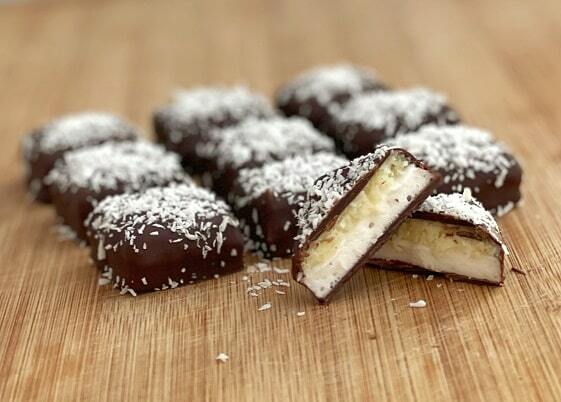
Two coconut layers stack in slabbed ganache, cut square and creamy with toasted tropical depth.
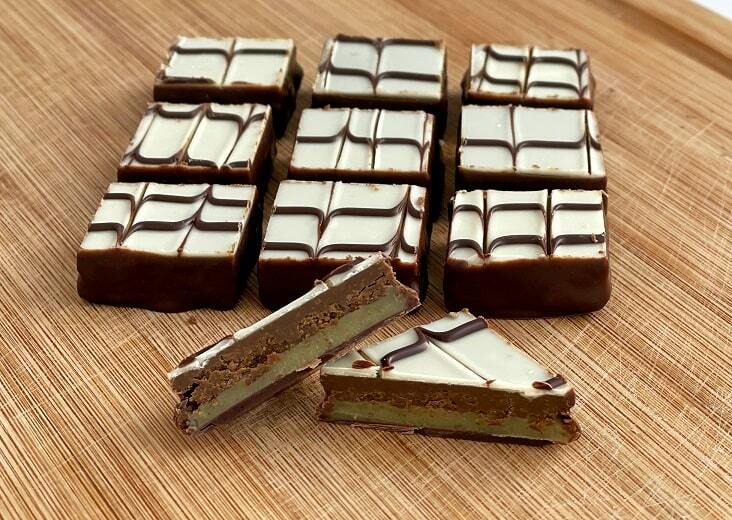
Twin pistachio layers slab together, cut into squares that turn nutty, green, and buttery as they melt.
The chocolatier-counter classic: cast shells, layered centers, a sealed base and a glossy release. Everything from the first two families comes together here, with decor and optional airbrush work to finish each piece.
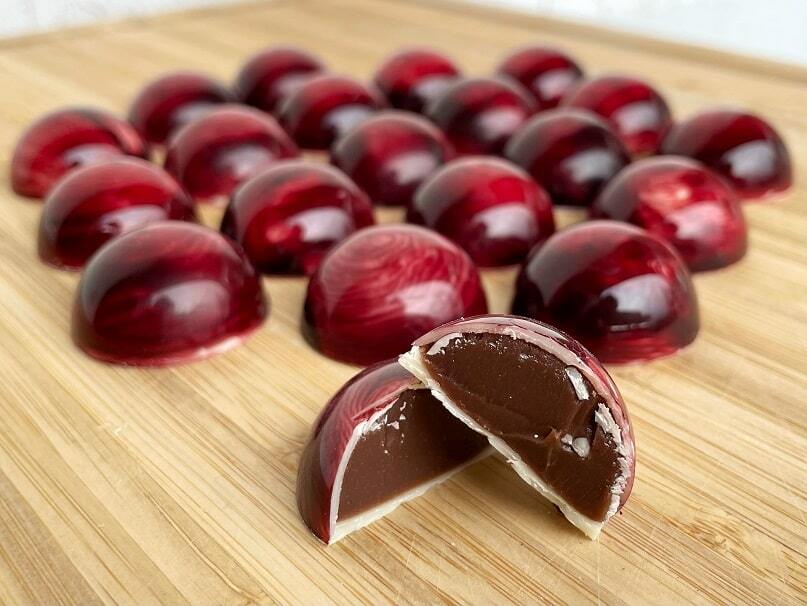
A glossy shell cracks to release smooth wine ganache, fruity and warm behind the snap of chocolate.
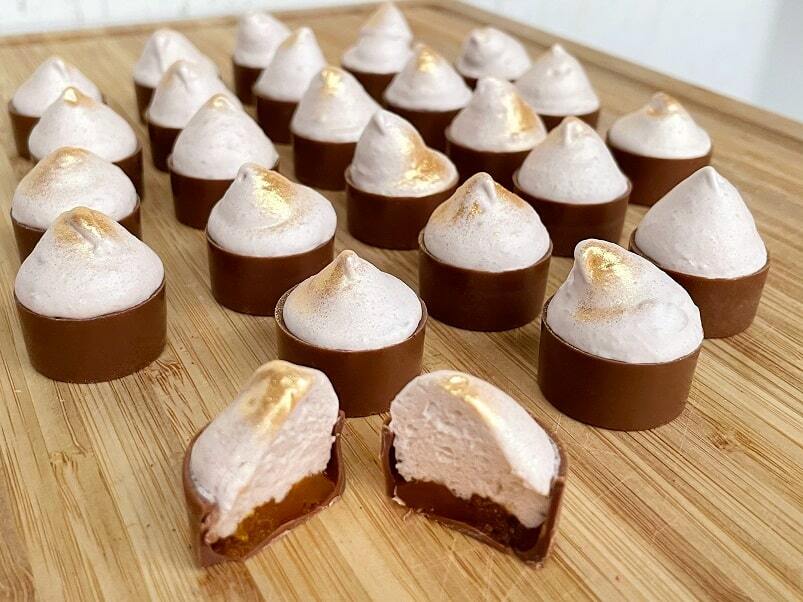
Break the ruby shell and pillowy marshmallow meets bright mango compote, tangy, pink, and light.
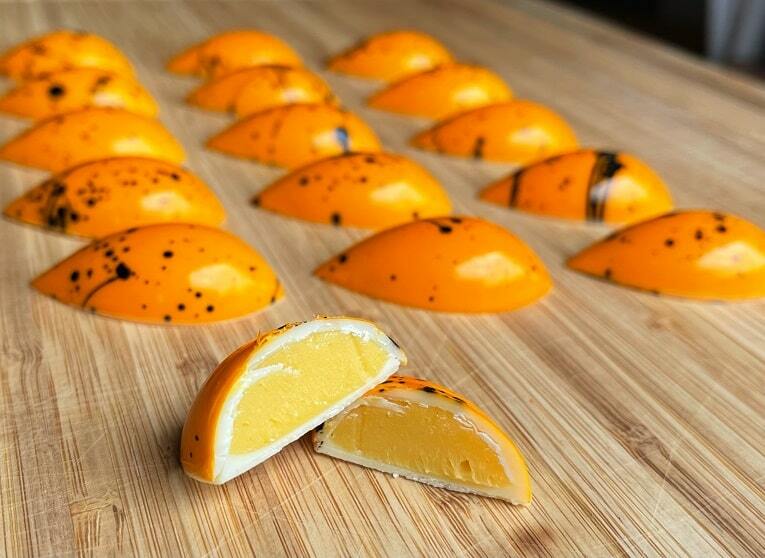
The polished shell snaps into tart passion fruit that floods the bite with sharp tropical brightness.
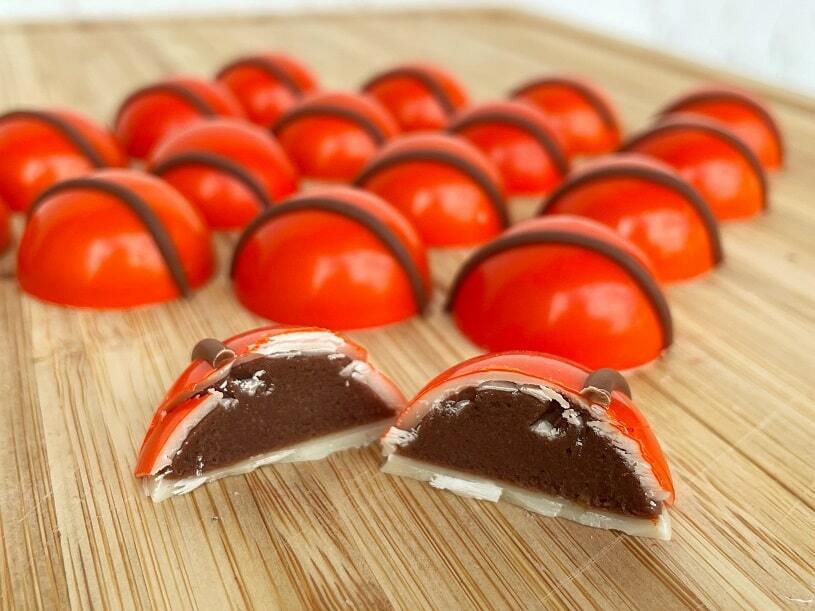
A firm shell breaks to a burst of orange, zesty and juicy inside glossy dark chocolate.
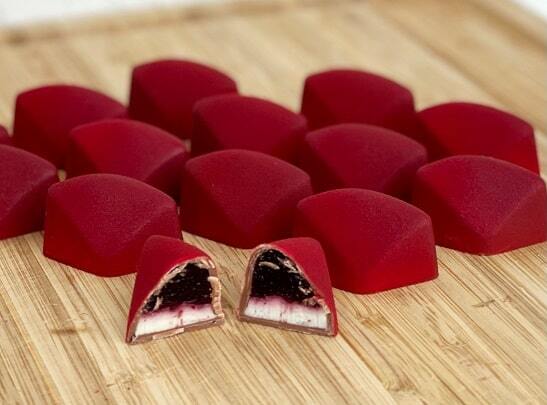
The shell snaps to blackberry and a savory whisper of gorgonzola, sweet fruit against salty tang.
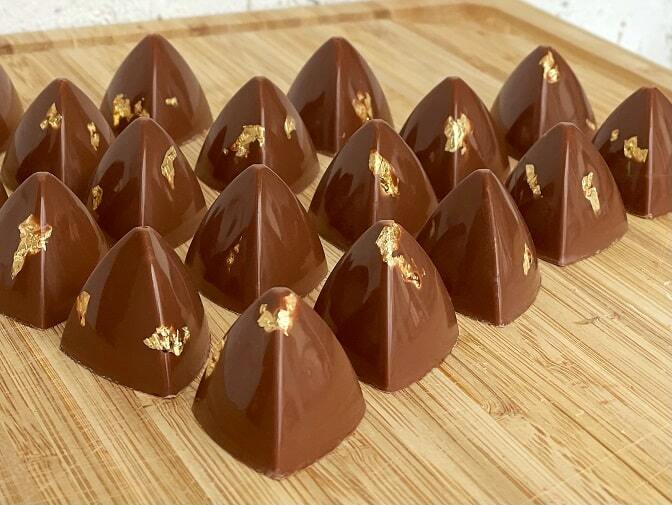
Crack the glossy shell into two layers of roasted almond and dark coffee, nutty over bitter depth.
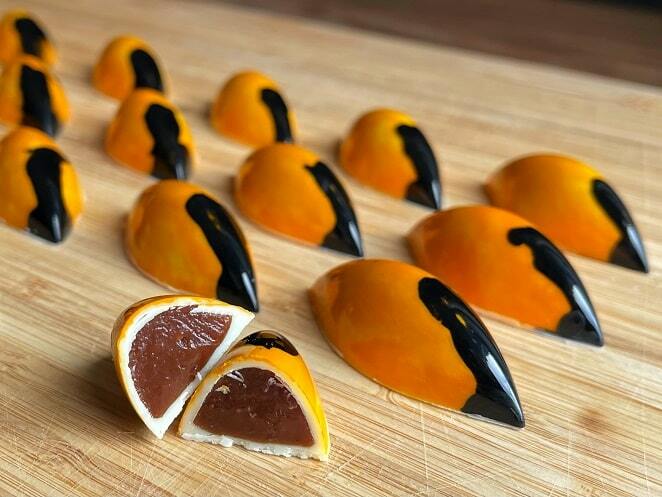
A hard shell breaks to caramelized banana, deep and toffee sweet against the clean snap of chocolate.
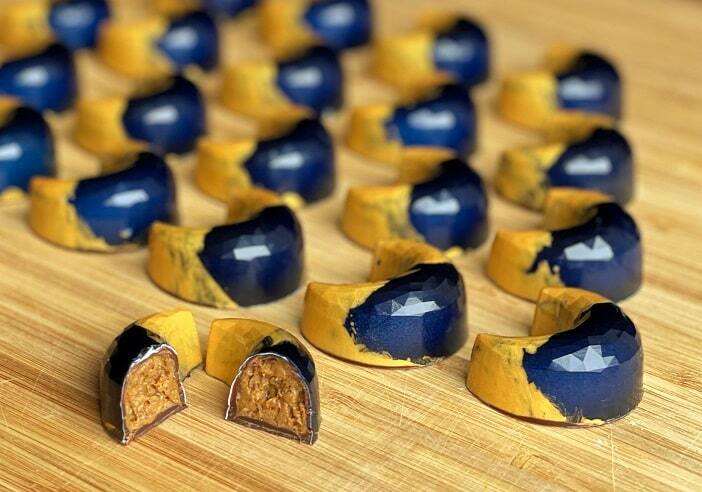
The shell cracks into a filling shot with crisp bits, crunch and smooth colliding in one bite.
Snap the shell and mango meets passion fruit, a bright tropical rush behind glossy chocolate.
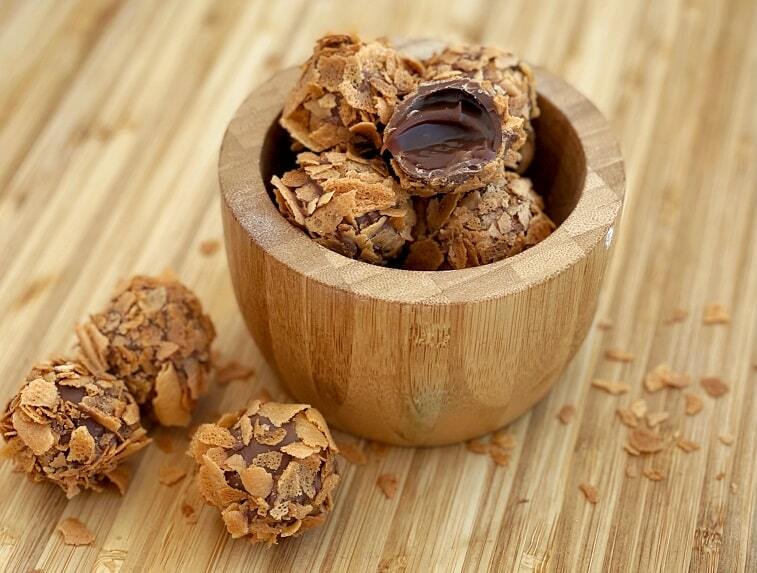
Soft, deep caramel in a hand-rolled truffle. A lesson in taking sugar exactly as far as it should go.
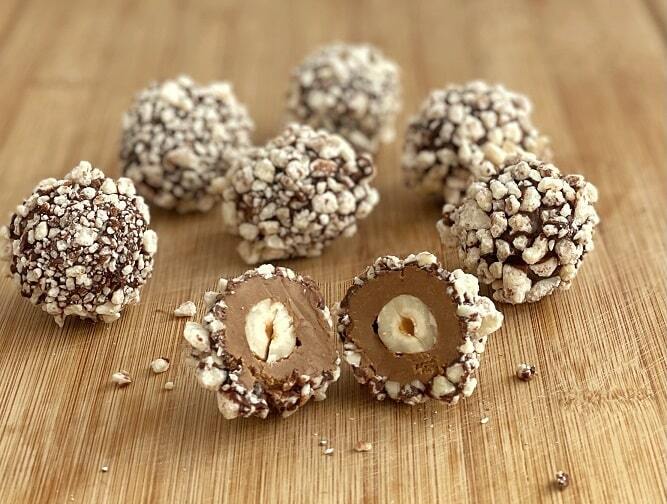
The crunchy, nut-studded classic, made the chocolatier way.
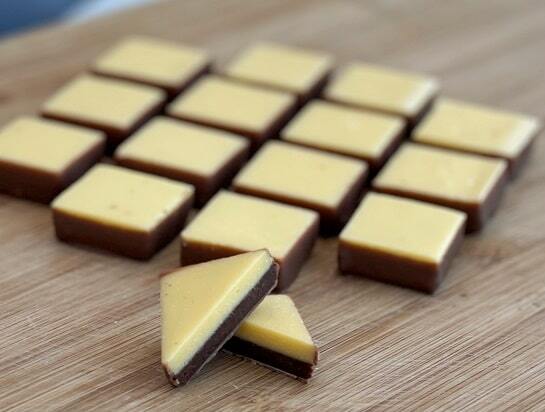
Bright tropical acidity against round vanilla. A study in balancing sharp and smooth.
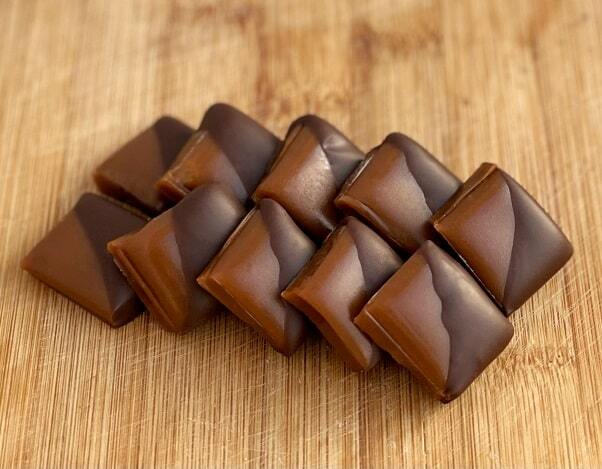
Slow caramel with real vanilla, set in a frame so it cuts clean instead of leaking.
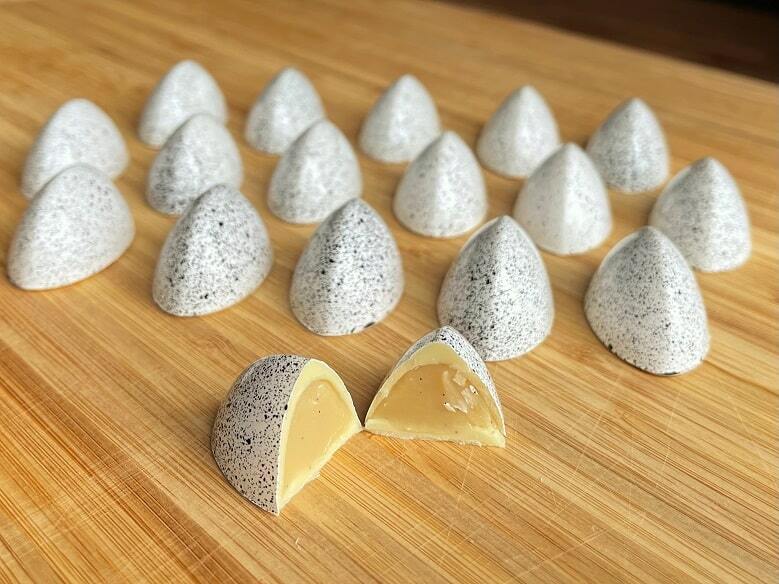
One flavor pushed to its full depth. Proof that simple can carry a molded shell.
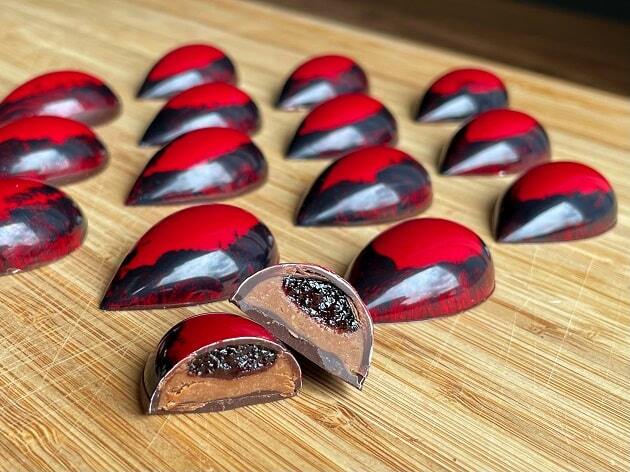
Toasted nut against dark berry in one shell. A lesson in pairing by contrast.
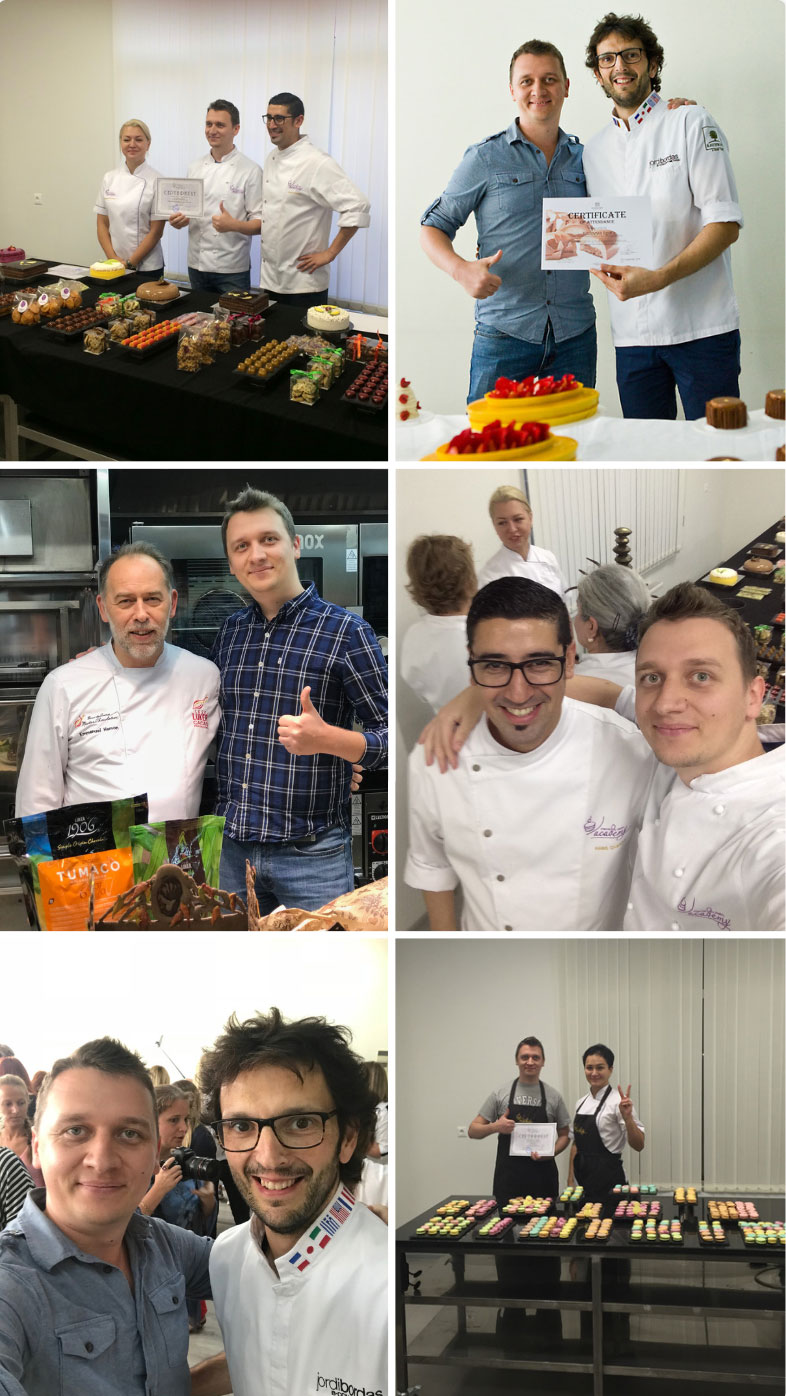
“Anyone can give you a recipe. I want you to understand why it works, because the why is what sets you free in the kitchen.”
I'm Egor Kozlovskii, founder and head instructor of LeChefio, and I still work as a pastry chef. Bonbons are part of my everyday work, not just something I film. I built Bonbons 2.0 the way I wish chocolate had been taught to me: theory first, honestly explained, then truffles, slabbed and molded bonbons in an order where each technique feeds the next. I won't bury you in tricks. I'll show you what the chocolate is doing and why, so when a batch misbehaves you can read it, fix it and move on. Bring your patience and a thermometer. I'll bring the system.
Every technique is a clear video you can pause and rewatch, with a downloadable guide to work from.
Temper, fill and finish in your own kitchen, family by family, with the theory fresh in mind.
On Studio and Signature, send your work to the team and get the cause diagnosed, not the symptom.
Making bonbons for your own table? Essentials is the complete system. Want the team diagnosing every batch? That's Studio. Want all 33 and lifetime access? That's Signature.
Every plan is a one-time payment with instant access and a 14-day money-back guarantee.
Change your mind within 14 days of purchase and we will refund you.
Finish the lessons and homework on Studio or Signature and receive your certificate.
On Studio and Signature, the team reviews your work and answers questions for 12 months.
One year of access on Essentials and Studio. Lifetime access on Signature.
How long do I have access?
Essentials and Studio include one year of access from the day you enroll. Signature is the only plan with lifetime access. Any guides you download during your access period are yours to keep.
I'm a complete beginner. Will I keep up?
Yes, if you're ready to practice. The course assumes nothing: you start with how to read a chocolate label and how to calibrate your thermometer, and truffles, the most forgiving family, come before anything molded. Every lesson is a video, so you can pause and rewatch as many times as you need.
What equipment do I need?
A reliable thermometer is the one essential, and the theory section includes a thermometer calibration lesson so you can trust yours. The truffle and slabbed modules work with basic kitchen tools; the molded module needs bonbon molds, and there is a dedicated lesson on mold cleaning. An airbrush is optional: you get an overview lesson, but every bonbon can be finished without one.
What exactly does Signature add over Studio?
Six more bonbons, two in each module: Caramel Truffles, Rocher-Style Bonbons, Passion Fruit & Vanilla, Vanilla Caramel, Super Vanilla and Almond & Blackberry, bringing you to 33 in total. Signature also upgrades you from one year to lifetime access. Homework feedback and Q&A support run for one year on both Studio and Signature.
Is there a certificate?
Studio and Signature include a certificate of completion once you finish the course. Essentials does not; it is built as the self-guided option.
What if the course is not for me?
Every plan comes with a 14-day money-back guarantee, and it's a real one. Enroll, watch the lessons, temper your first batch. If the course is not what you hoped for, email us within 14 days of purchase and we will refund you in full.
Choose a plan, open the theory section and make your first ganache this week. Three families, one system, 45+ lessons, and a 14-day money-back guarantee on every plan. The only thing you stand to lose is the guesswork.